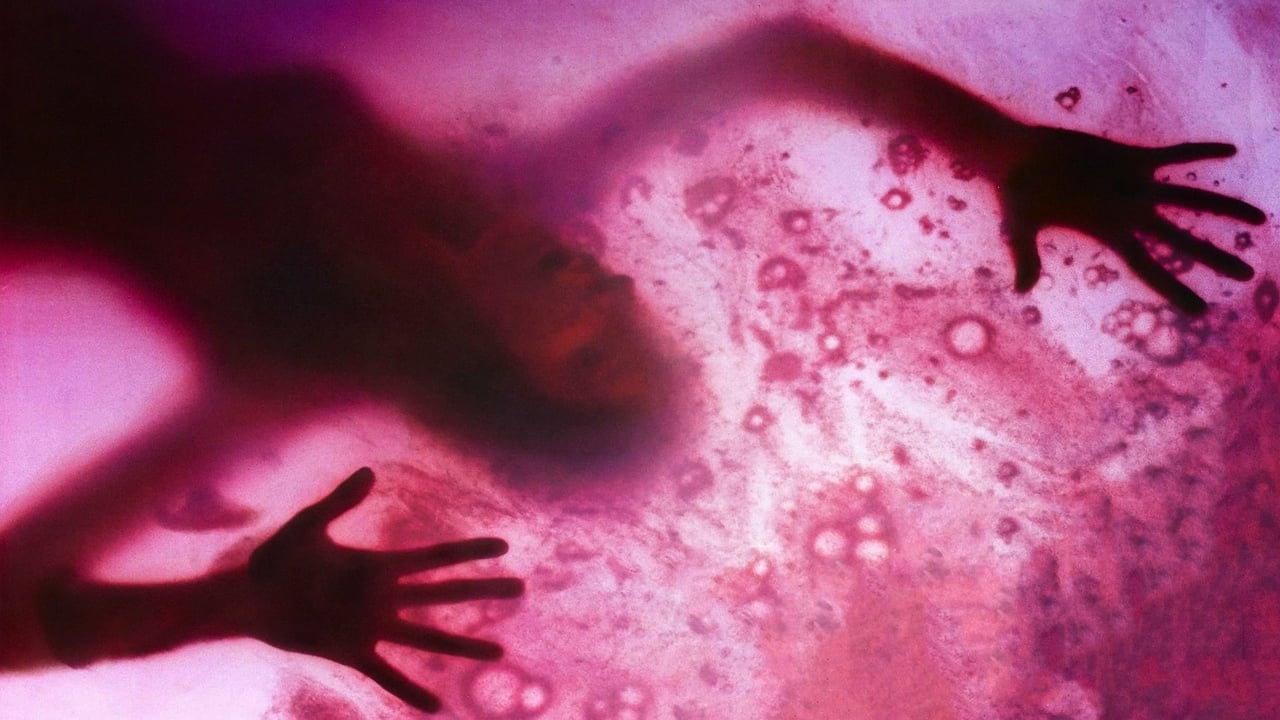

The Blob
“Terror has no shape.”
In Arborville, California, three high school students try to protect their hometown from a gelatinous alien life form that engulfs everything it touches.
About The Blob
What makes The Blob worth revisiting
Think of The Blob as a small-town panic wrapped in a neat, very 1980s package. It begins with a meteorite falling near Arborville and, almost immediately, the ordinary becomes unbearable: an old man finds a strange sphere, and inside is a living mass that will not be ignored.
Chuck Russell directs with economy — the film runs for just over ninety minutes — and he lines up a cast that keeps you invested in the little fights that matter: Kevin Dillon as outsider Brian Flagg, Shawnee Smith as Meg Penny and Donovan Leitch as the footballer Paul. Those relationships give the movie something human to hold onto while the creature does its work. If you only remember The Blob as a monster movie, notice this: it’s as much about how people react to the monster as it is about the monster itself. That gives the film shape — and a pair of ideas bubbling under the surface that are worth paying attention to.
The idea that sets The Blob in motion
The engine is simple and effective: ordinary people encounter something wholly alien and refuse to believe its full danger until it’s too late. That disbelief is dramatized early — after Brian leaves the hospital, Paul sees the rescued man literally fall apart under the Blob’s touch. The film prefers jolts to long explanations.
From there it’s a chain of escalating disbelief and survival. Meg tells Brian about what she’s seen, but he only becomes convinced when the Blob makes its presence impossible to ignore — in one late-night moment the diner's handyman is dragged down through a sink, and the movie stops being something you can shrug off.
The monster behaves like a force of nature: it retreats when exposed to cold, it flows through drains and sewers, and it reappears in places the town thought secure. Those traits keep the story propulsive — every safe place turns out not to be, and that removes audience complacency.
And when the community meets the Blob with institutional responses, things get nastier. Authority tries to contain and quarantine the problem, but containment breeds its own chaos — the film threads personal danger and public panic together until the small town is fighting on every front.
Why Brian Flagg matters
Brian Flagg is the film’s sensible centre — the outsider who ends up doing what people in power will not. Kevin Dillon’s Brian is the kind of character who gets pulled into the middle of town business and just keeps moving: he doesn’t lead a crusade so much as refuse to step back.
That refusal matters because the movie forces him to choose between running and standing up. He’s the one who witnesses escalation — his escape through the sewers, and his decisions in the chaos, mark the difference between a complaint and an action.
The stakes get personal: Meg’s family are directly threatened, her younger brother sneaks into a theatre and ends up in real danger. Those ties make Brian’s choices feel consequential rather than heroic by default — he isn’t the inexplicable saviour, he’s the neighbour who decides to try.
When the solution finally arrives, it’s not a grand speech but a practical, risky gambit: Brian shoots snow at the Blob from a snowmaking truck, doing the blunt, physical work the town needs. He matters because he translates panic into movement.
The Blob has more on its mind than the plot suggests
On the surface The Blob is a tidy horror-sci-fi monster: thing appears, thing eats people, town fights back. Underneath, it runs on two related ideas — authority and freedom — that tilt the story from creature feature to civic parable.
Authority shows up as the institutional response: quarantines, orders and attempts to control. That reaction is blunt and often counterproductive; containment is presented not as calm competence but as a set of inflicted decisions that create collateral harm.
Freedom operates as the counterweight. The young people, the outsiders and those who refuse meek submission push against imposed limits — not just to rescue themselves but to protect others. The film frames freedom as action under pressure rather than an abstract ideal. Put together, those ideas make the Blob more than a monster: it’s a pressure test for how a community handles fear. Does it listen to measured judgment, or does it double down on blunt control? The answers matter to who lives and who doesn’t.
The Blob could not belong to any other decade
Released in 1988, The Blob sits near the close of the decade and wears that timing well. It’s part of the era’s appetite for straightforward genre mixing — a horror film that happily borrows science-fiction logic to explain its monster.
There’s a confidence in 1980s movies to tell lean, high-concept stories and then escalate them without overcomplication. The Blob benefits from that impulse: it sets up its premise quickly and spends the rest of its runtime turning up the heat.
That 80s tilt also means the film trusts practical problem-solving: when a town faces disaster, the answer is often inventive, physical and a bit rough-around-the-edges. It’s a practical sensibility that feels in keeping with the decade’s genre tone.
Seen as an 80s monster picture, The Blob is an example of how the period liked its scares direct and its stakes communal — not cosmic philosophical dread, but neighbourhood survival writ large.
What has aged — and what hasn't
Some of the film’s choices remain clean and watchable. The subplot with Meg’s younger brother sneaking into a movie theatre and getting caught up in the chaos still feels immediate; it grounds the monster threat in everyday family worry.
The movie’s deployment of authority — a military-led operation that quarantines the town and the teens — also reads clearly to modern eyes. It’s an uncomplicated way to show how official responses can heighten panic, and that clarity helps this element survive time.
The film’s solution keeps a practical simplicity that age rarely harms. The discovery that the creature recoils from cold leads to a tangible, risky plan: a snowmaking truck and liquid nitrogen become the literal tools of rescue. That kind of physical problem-solving still has muscle.
What hasn’t aged depends on tolerance: the film’s willingness to let institutions make blunt, consequential errors may feel familiar but also uncomfortable. The town’s collapse into suspicion and violence is effective storytelling, yet it asks the viewer to watch neighbours fall apart in ways that can sting.
Why The Blob still matters
There are moments you don’t forget: a meteorite falling, an old man discovering a sealed sphere, and the story spiralling from a single domestic kindness — three teenagers taking a wounded stranger to hospital — into full town collapse. Those beats keep the movie vivid in memory.
The Blob stages a string of public horrors that lodge themselves in the mind: someone melting away in a hospital bed, a diner sink dragging a man down, the creature slipping into sewers and then into a packed movie theatre. It’s the way ordinary places are invaded that gives the film its long reach.
It also offers a tidy Cold War flavour to its menace — the creature turns out to have been part of a biological experiment launched into space and returned, which neatly turns scientific ambition into local catastrophe. That twist places large political anxieties into a very human-sized story. Finally, the film leaves us with a stubbornly eerie coda: the survivors pin the frozen remains in an icehouse, yet a preacher, burned and unhinged, later shows a jar with a living fragment tucked away. That lingering image — hope, faith or madness keeping the danger alive — is the kind of last beat that keeps people talking.
Does The Blob still hold up?
Yes — if you want a tight, direct monster movie that privileges action and civic tension over allegorical fog. It opens with a meteorite and an odd sphere, and from there three teenagers, led in part by Kevin Dillon’s Brian Flagg, keep the film grounded while the town unravels.
The Blob works because it repeatedly turns domestic spaces into traps: hospitals, diners, sewers, a movie theatre. Those invasions keep the stakes felt locally, and the film’s two organising ideas — authority and freedom — make the panic more than spectacle: they make it a community crisis.
It’s not a perfect film, and it doesn’t pretend to be. But at ninety-one minutes it rarely overstays its welcome. The revelation that the creature began as a biological experiment gone wrong adds a political edge, and the risky, physical answer — freezing the thing with liquid nitrogen — feels satisfyingly earned rather than tacked on.
If you’re choosing how to revisit late-80s genre cinema, The Blob is worth the time. It’s a film that still makes you care about who’s left standing — and it ends on a small, unnerving reminder that the danger might not be entirely gone.