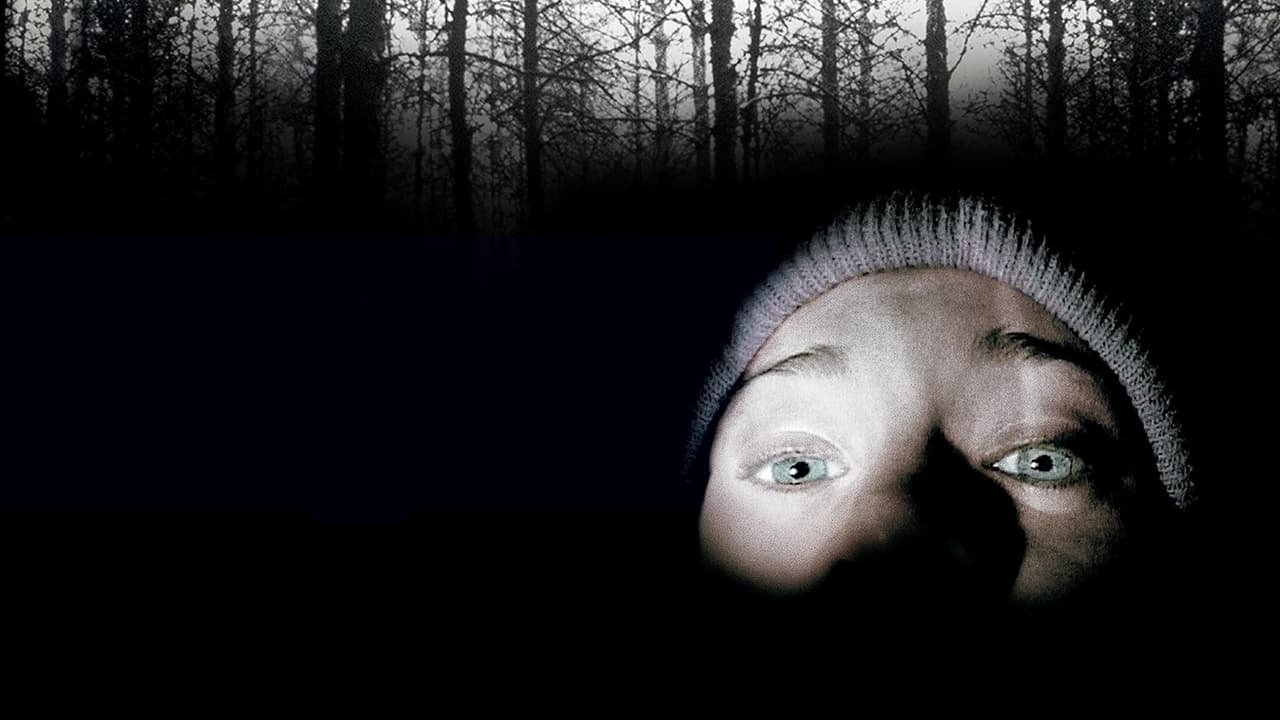
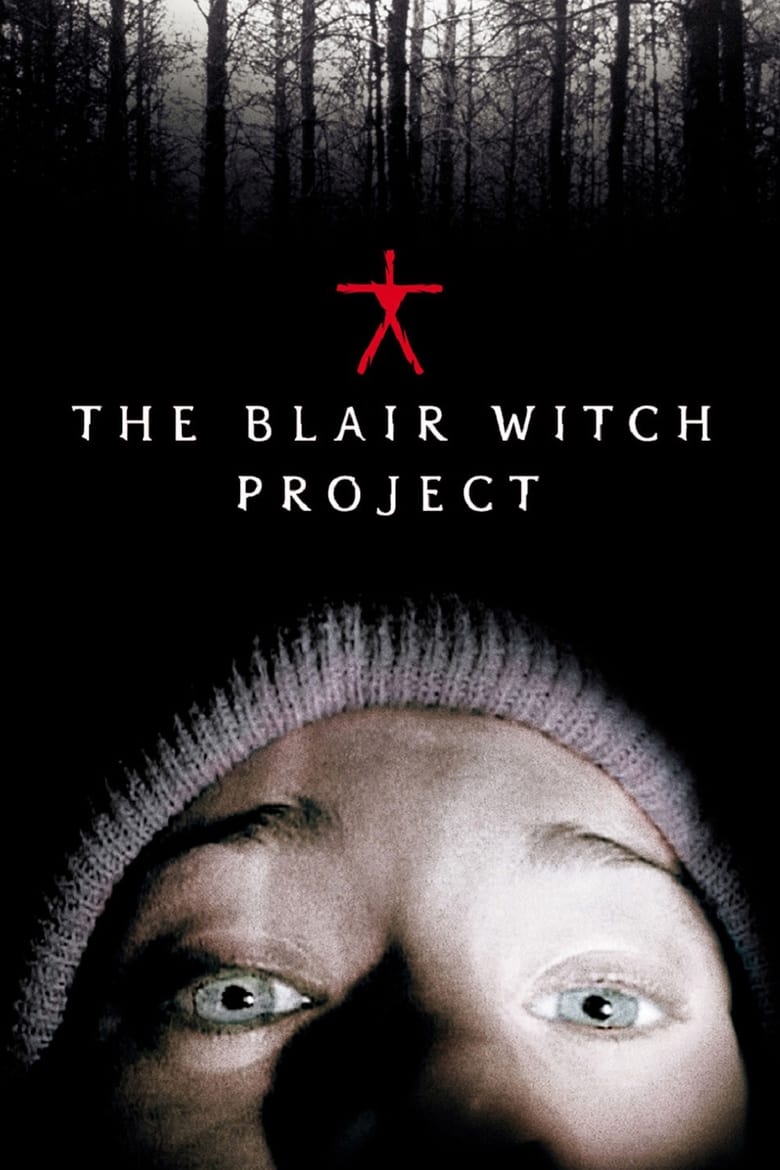
The Blair Witch Project
“Everything you've heard is true.”
In October of 1994 three student filmmakers disappeared in the woods near Burkittsville, Maryland, while shooting a documentary. A year later their footage was found.
About The Blair Witch Project
Why The Blair Witch Project still works
The Blair Witch Project begins with a deceptively ordinary idea: in October 1994, three film students set out to make a documentary about a local legend. That modest premise — students with a camera chasing a story — is almost its own promise. It tells you straight away that the film will live or die by its small, human scale.
It helps that Eduardo Sánchez keeps the runtime tight. At 81 minutes the movie refuses to dawdle; it’s compact, focused and quick to escalate from curious reporting to something darker. The found-footage approach keeps you close to the three of them: you’re not watching a polished reconstruction, you’re watching people try to hold a project together while the world around them unravels. And because it plays as a documentary that becomes a mystery, the film turns townsfolk, fishermen and a handful of interviews into more than local colour — they’re the hesitant frame that pushes the students into the Black Hills Forest and the questions that follow them into the trees.
The idea that sets The Blair Witch Project in motion
Keep this simple: three students head into the woods to trace a local myth. They choose Coffin Rock as their first destination because of its link to the old Robin Weaver story; it’s a sensible, documentary-minded decision that anchors the early footage in something concrete.
That choice is what makes the shift away from a research trip feel cunning. You go into the film expecting interviews and archive-style curiosity. Instead, the forest becomes an opponent that rearranges the rules.
A single night under canvas offers the movie its turn. After an unknown force shakes the tent, the trio run out and hide in the trees until dawn — a compact set-piece that changes everything. The practical act of fleeing a shaken tent is where the documentary slips its harness and becomes a story about people trying to survive confusion and fear.
From that point on, the film doesn’t waste time on spectacle; it moves through a sequence of simple escalations — cairns, snapped sticks, the feeling of walking in circles — each one smaller than a scream but cumulative enough to make the audience feel lost too.
Why a fictionalized version of herself matters
Heather Donahue is credited as playing a fictionalized version of herself, and that choice gives the movie an emotional anchor. She isn’t a horror stereotype; she’s a figure you can imagine leaving a lecture theatre and borrowing a camcorder to chase a story.
The film’s human focus means moments that could be swept aside gain weight. One of those moments is Heather recording a tearful apology to the mothers of the group — a private confession captured on camera. It converts the footage from ‘this happened’ into ‘this happened to real people’.
That private confession is also where family and responsibility surface. Her spoken apology reframes the film’s terror as something that spills into other lives, and it makes the danger feel less like an abstract monster and more like a wound with names attached.
So Heather-as-character matters because she’s the conduit for the film’s intimacy: the audience isn’t only watching events, they’re listening to someone who feels the consequences and tries, in the only way she can, to answer them.
The Blair Witch Project has more on its mind than the plot suggests
At the surface level the film is a horror-mystery; under the skin it keeps circling the same handful of human concerns. Loss is obvious — people disappear, belongings are disturbed, the camera becomes a record of absence — and the movie asks, quietly, what remains when someone is gone.
Family and parental protection appear not as tidy moral arguments but as lived anxieties. The footage of Heather apologising to the mothers reframes their project as something that has consequences for other households, not just for three adventurous students.
Mortality is threaded through the material in small, specific ways: the stories the locals tell, the cairns found in the graveyard, the ritualistic details unearthed at Coffin Rock. These elements accumulate into a portrait of danger that feels old and social rather than purely supernatural. Put together, the themes make the film feel like more than a set of scares. It’s a short, insistent study of what happens when curiosity meets uncontrollable forces — and how the people left behind try to explain the unexplainable.
The Blair Witch Project could not belong to any other decade
There’s a neat literalness to saying The Blair Witch Project is of the 1990s: the story begins with film students heading into the woods in October 1994, and the finished piece reached audiences in 1999. That span — student project to released film — sits squarely across the decade.
As a found-footage horror made at the end of the 1990s, it carries the era’s appetite for experiments in form: small crews, rough cameras and stories that favour suggestion over gloss. The film feels like a product of the decade because its production and conception both come from that world of hands-on, low-budget storytelling.
Because the movie is short and direct, it also matches a 90s sensibility that favoured brisk, idea-driven pieces in independent cinema. It’s a film that trusts a simple conceit and explores it thoroughly rather than dressing it up.
So yes, it wears its decade lightly — not as fashion but as method. The Blair Witch Project belongs to the 90s because its whole logic comes from people with a camera trying to make sense of a story, and turning that small act into something unnerving.
Why The Blair Witch Project still matters
People who grew up with this film often remember the way it builds unease out of small, human details. The students’ decision to travel to Burkittsville and interview residents supplies the movie with local lore — stories about Rustin Parr, missing children and strange returns — that colour every later discovery.
Those local tales feed the film’s slow escalation. Finding seven small cairns, hearing sticks snap at night, and the fact that search parties once came back to find bodies displayed on Coffin Rock are the kinds of precise, grisly images that lodge in the mind. They’re memorable because they feel specific rather than generic.
Then there are the moments that personalise the terror: a map gone missing, a fight that changes the group’s dynamic, the bundle of twigs tied with fabric from a shirt and the terrible evidence it contains. Details like these make the horror feel accidental and terrible, not theatrical.
Lastly, the interviews and the locals — the fishermen, the Burkittsville resident, the waitress and others — give the tale social texture. The film’s legacy rests on its ability to turn a handful of conversations and a few found objects into a persistent, unsettling story people still talk about.
Does The Blair Witch Project still hold up?
Yes — but conditionally. If you want a tightly-paced, 81-minute exercise in creeping dread that begins with film students trying to make a documentary and ends with a handful of unforgiving mysteries, this film still delivers. The set-up is simple: students go into the Black Hills Forest to research the Blair Witch myth, they lose their bearings, the map disappears after a fight and the group’s dynamic unravels as objects and sounds point to something wrong.
The strengths aren’t bombast. They’re the small decisions: walking in circles, stick figures on trees, a bundle that contains terrible evidence and a recorded apology to the families affected. Those moments accumulate into a sensation of inexorable loss that feels, crucially, human rather than theatrical.
If, however, you expect a polished, effects-driven spectacle you’ll be frustrated — this is a film about three people in the woods, and it asks you to accept the camera’s limited vantage. That constraint is also its virtue: it keeps the story intimate and, at its best, emotionally sharp. So watch it if you’re curious about how a modest documentary project can become a study of disappearance and responsibility. It remains worth seeing because it turns a simple idea — students with a camera — into a sustained, uncomfortable experience about what happens when the people left behind try to make sense of loss.