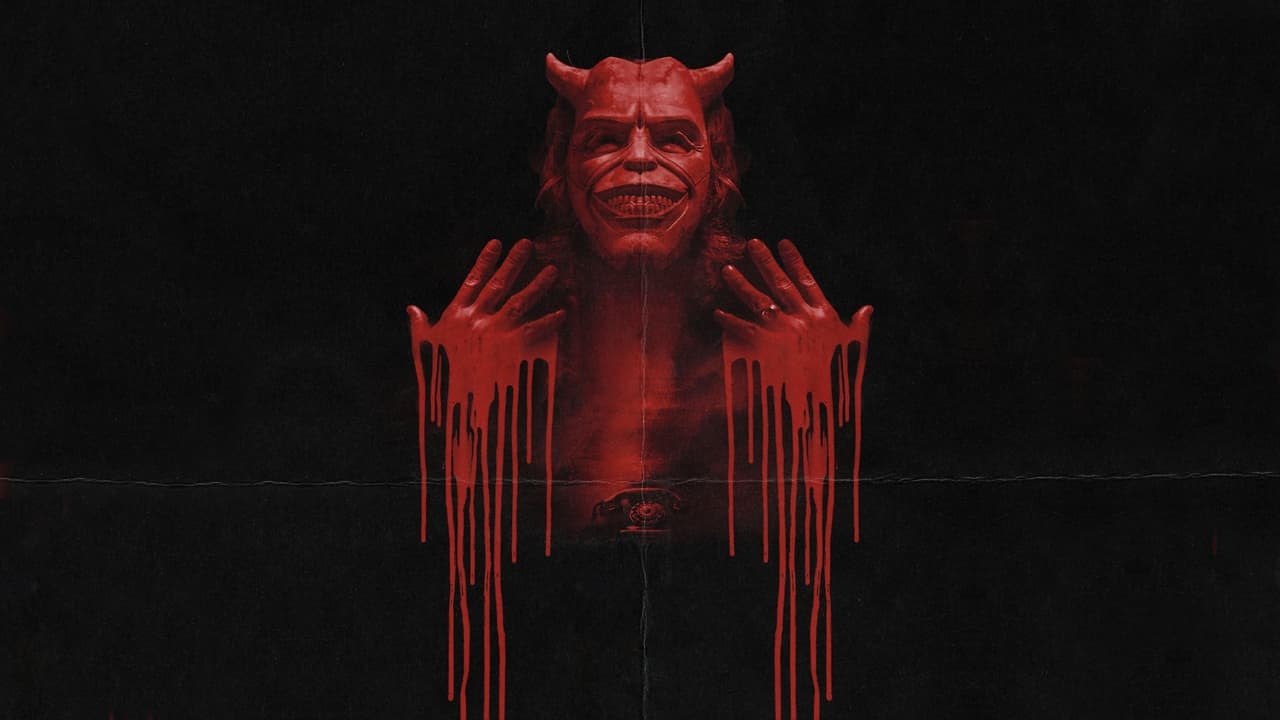

The Black Phone
“Never talk to strangers.”
Finney Blake, a shy but clever 13-year-old boy, is abducted by a sadistic killer and trapped in a soundproof basement where screaming is of little use. When a disconnected phone on the wall begins to ring, Finney discovers that he can hear the voices of the killer’s previous victims. And they are dead set on making sure that what happened to them doesn’t happen to Finney.
About The Black Phone
What The Black Phone gets right
Put simply: The Black Phone knows which buttons to press. It sets up a small, recognisable world — North Denver in 1978 — and populates it with people who feel lived-in and uneasy. Against that suburban sprawl prowls a single, terrible presence: the Grabber.
That central threat is concrete — a local serial child abductor — and the film gives him a stubborn, chilling presence. Ethan Hawke is credited in the part, but the movie’s fear also comes from the way ordinary things go wrong: a house you think you know, a father who can't be trusted, a phone on a basement wall that should be powerless but rings anyway. Clocking in at 102 minutes and directed by Scott Derrickson, The Black Phone keeps its shape tight. It doesn’t overstay its welcome, and it doesn't muddy the basic engine that makes it worth revisiting: a kid taken from home, the eerie calls that arrive like lifelines, and a small cast of characters tied to that same neighbourhood.
The idea that sets The Black Phone in motion
The Black Phone begins in a domestic strain: siblings Finney and Gwen live with a father who’s broken and violent. That tense household is the obvious private danger, but the public danger — the Grabber — comes from outside, and it quickly collides with their fragile home life.
When the Grabber first takes Robin and then Finney, the film moves from quiet dread to one very focused problem: how do you escape a locked basement when everything that should help you is gone? Finney wakes to a disconnected black rotary phone on the wall. It should be a piece of dead décor. Instead it rings.
Those calls are the film’s clever pivot. At first they’re static, then one of the voices offers a real tip — a floor tile to pry up — and the whole survival story becomes a layered puzzle supplied by past victims who, impossibly, can still reach him.
Even when an escape plan seems to work — a moment where Finney sneaks out and opens the front door — the world outside is not safe enough to make the victory permanent. The setup keeps you feeling hopeful and terrified in almost equal measure.
Why the Grabber matters
The Grabber is the sort of antagonist that works because he's not loud about being frightening — he lives in the spaces people think are ordinary. The fact that he prowls a North Denver suburb in 1978 reminds you that the film's terror is local and human, not cosmic.
Ethan Hawke is the credited face of that menace, but what makes the Grabber stick in the mind is how his presence distorts normal rules. He abducts children from the neighbourhood, then plays at being almost casual: bringing Finney a meal, leaving the basement door unlocked at times, treating violence like part of a cruel ritual.
The Grabber's cruelty is also procedural. Past victims call Finney and explain brutal games the captor plays — threats of beatings at the stairs, false chances to escape — which makes him feel less like a one-note boogeyman and more like a predator who enjoys the architecture of fear.
The character’s place in the story matters because he forces other people to act. An eccentric local, Max, is connected to the case; the police search the neighbourhood; and the Grabber's violence escalates to killing someone who tries to help, which pushes the story to its lethal finale. He's the engine that makes the children either hide or try to fight back.
The Black Phone has more on its mind than the plot suggests
Under the screams and the locked doors, the movie is quietly obsessed with what home actually means. Homes are supposed to be safe; here they are fragile containers — a place where a father's failings can be as dangerous as an outsider's knives.
Freedom shows up as more than geography. Escaping the basement is one thing. Escaping the roles people have been forced into — the bullied boy, the protective sister, the drunken parent — is another. The story keeps returning to the small acts that make someone feel in charge of their life again.
Authority is tricky in this world. Police knock and ask questions, neighbours gossip, but those systems don't always protect the vulnerable. The film uses that gap to make its young characters' attempts to be brave feel both necessary and isolated. And family threads through every choice. Whether it’s a sister acting on visions, a father trying and failing to hold things together, or a kid learning to fight back, the human bonds are what give the scares weight. Remove them and you’re left with empty shocks.
The Black Phone could not belong to any other decade
This is a 2022 film. That simple fact anchors it: The Black Phone is resolutely a 2020s movie, released and received in an era hungry for stories that mix genre beats with intimate human stakes.
Calling it of the 20s doesn't mean it dresses like the decade or loudly signals a trend. Rather, its placement in 2022 matters because the film uses familiar horror language — supernatural touches, thriller pacing, and a focus on a community’s dark secret — in a way that speaks to contemporary tastes for compact, emotionally driven scares.
It’s a modern horror film in construction and timing: efficiently told, tight at 102 minutes, and clearly aimed at delivering a propulsive, character-rooted experience rather than indulgent world-building.
That combination — compact running time, clear genre identity and an emotional throughline — is very much of the 2020s cinema landscape, where economy of story often counts as much as atmosphere.
What has aged — and what hasn't
There are parts that age well. The film’s insistence on home and family as the emotional stakes keeps it grounded. Those concerns are timeless: a child’s feeling of being unsafe at home, and a sibling trying to help, still hit in the gut.
Some narrative choices feel less surprising on a second look. The reveal that Finney is being held in the home of an eccentric local, Max, and that the Grabber is tied into that familiar neighbourhood orbit, is a tidy twist. It’s effective, but it’s not trying to reinvent how we think about suburban menace.
Likewise, the escalation from games of cruelty to outright murder — the Grabber killing someone who tries to intervene — keeps the stakes immediate. That unpleasant clarity still reads as sharp rather than gratuitous.
What doesn’t age as neatly is anything that relies on shock by repetition. When the film pulls its cruel games into the foreground, they can feel intense in the moment and harder to sit with after the fact. Still — emotionally and thematically — the core beats about safety and family remain intact.
Why The Black Phone still matters
People remember The Black Phone because it marries a simple, high-stakes premise — a child taken and trapped — with a connective idea: that the voices of past victims can become a resource, not just a haunting. Those calls turn isolation into a kind of community resistance.
The film's cast of neighbourhood characters — the battered family at the centre, the worried detectives, the eccentric local who unknowingly houses the danger — gives the story a social texture. It isn't just one child's nightmare; it's the whole street being implicated and forced to act.
Key beats stick with you. Gwen's dreams, the black rotary phone in a soundproofed basement, a series of calls from past victims guiding escape attempts, the police finding bodies in one house while the real danger sits across the street — these images fold into a convincing memory of the film. And the arc matters: a bullied kid who learns to stand up, a father who admits failure and asks for forgiveness, and the small, raw choices that turn fear into a form of courage. Those are the elements that keep the movie in conversation long after the credits roll.
Does The Black Phone still hold up?
Yes — but with a small rider. The Black Phone delivers a compact, effective horror-thriller that still does what it sets out to do: make you care about a frightened kid and then make you root for his getting out. It’s a 2022 film by Scott Derrickson that trusts a tight runtime and a clear premise to do the heavy lifting.
If you’re in it for atmosphere alone, some moments will sting and others will feel familiar. If you’re in it for the human beat — family damage, a sister's troubling visions, a father’s violent denial and eventual plea for forgiveness — the film lands more often than it misses. Those things give the scares weight.
The Grabber, the phone, the network of past victims calling in with directions — they form a neat mechanic that converts fear into a plan. And when the police and neighbours finally collide with the danger, the payoff is as much about who chooses to act as it is about who survives.
So watch it. For a modern audience The Black Phone remains a lean, moral little horror: it remembers that real courage is about the small choices, the calls you answer, and the people you refuse to leave behind.