The Abominable Dr. Phibes
“Love means never having to say you're ugly.”
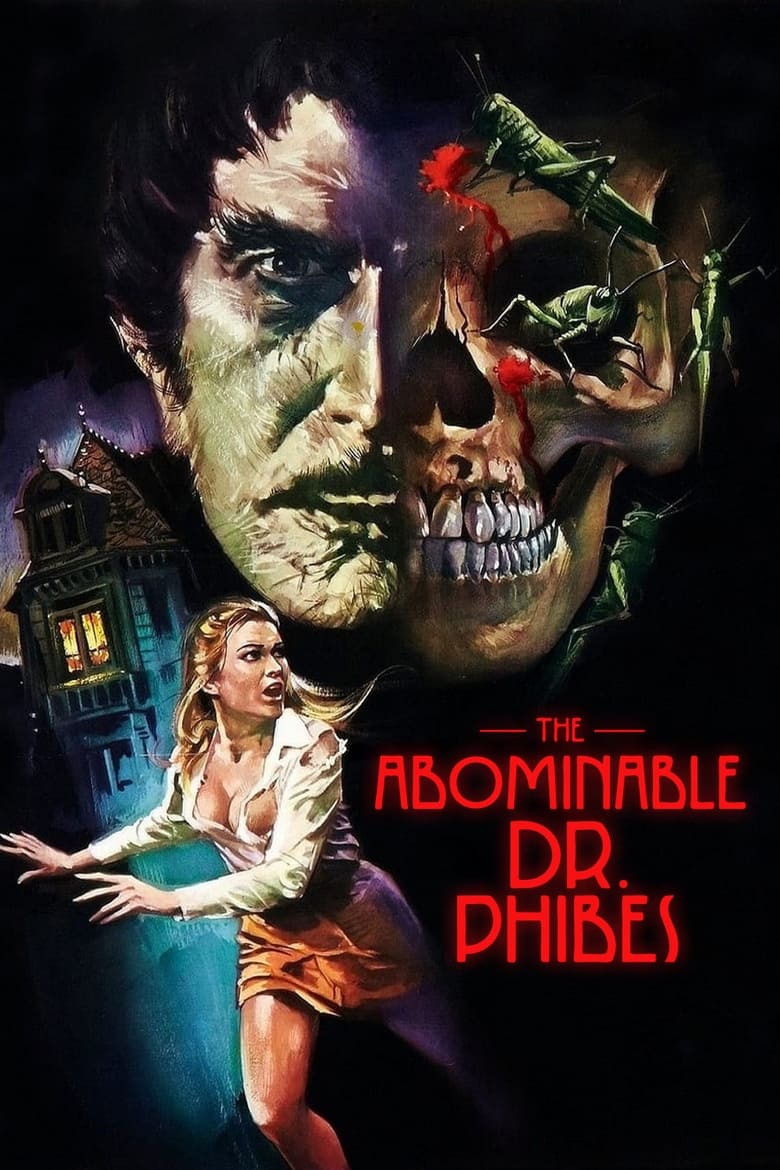
After a team of surgeons botches his beloved wife's operation, the distraught Dr. Phibes unleashes a score of Old-Testament atrocities on his enemies.
About The Abominable Dr. Phibes
Why The Abominable Dr. Phibes is still worth talking about
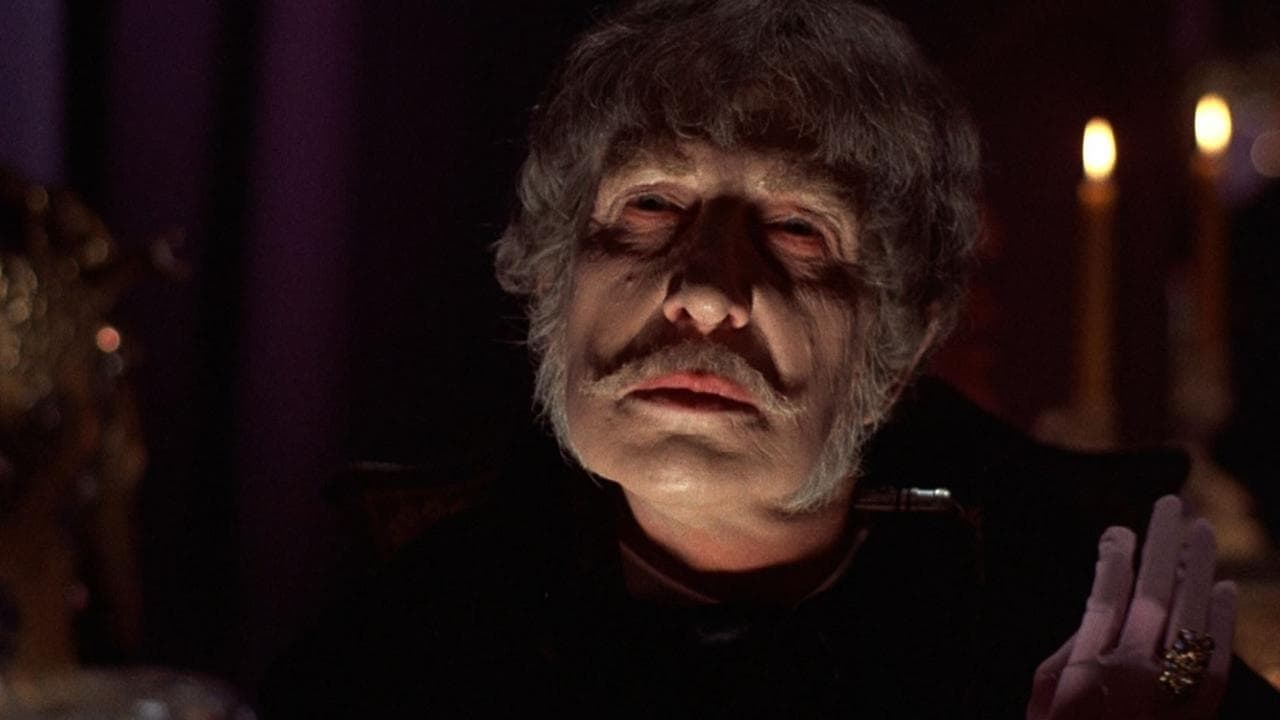
You remember the set-piece before the story: a musical mind with respectable degrees and a taste for drama. The film introduces Dr Anton Phibes as a famous concert organist and scholar whose life collapses when his wife dies on the operating table. That premise gives the whole thing its odd, operatic pulse.
Robert Fuest directs with a neat economy — it’s a 94-minute picture that never feels padded. Vincent Price occupies the centre of it as Phibes, and everything the movie does spins off that single decision: to make its grief theatrical, methodical and, at times, darkly playful. If you haven’t seen it, expect a cocktail of genres — fantasy, horror and comedy rubbing shoulders — and a tone that prefers invention over brutality. The plot’s clever little rhythms — a series of murders patterned after a famous biblical sequence, a silent, enigmatic assistant — are the hooks. They make the film feel less like a simple whodunit and more like a staged revenge opera, with family and loss humming under the surface.
The idea that sets The Abominable Dr. Phibes in motion
The engine that moves the film is straightforward: a string of medical men start turning up dead, and Scotland Yard’s Inspector Trout begins to see a pattern. The common thread is a team of doctors connected to one surgeon, Dr Vesalius.
Once that connection is made the stakes sharpen. One of the film’s tightest sequences forces Vesalius into an impossible, surgical dilemma — his son’s life is at stake, and there’s a clock counting down.
Phibes’s gambit is clinical and theatrical in equal measure: he has hidden a mechanism close to the boy’s heart that must be removed under pressure to free him before acid meant to kill is released. The setup works because it turns a cruel puzzle into something personal — a professional’s skill tested by familial fear.
It’s short, clear and urgent. The idea gives the police-detective framework a human cost: this isn’t only about stopping a killer, it’s about whether a father can be forced to choose between his duty and his child’s life.
Why Dr. Anton Phibes matters
Phibes is not just another masked villain; he arrives with a backstory that does the heavy emotional lifting for the film. We’re told he was a celebrated concert organist and a scholar — the sort of cultured figure who suggests refinement and control rather than savagery.
Crucially, he is presented as someone whose life was upended by a personal catastrophe: he’s believed to have died while racing home after news of his wife’s tragic fate in surgery. That belief — of sudden, terrible loss — is the hinge on which his motives turn.
Because family is the engine beneath the film’s plot, Phibes becomes memorable not merely for what he does, but for why he does it. The movie asks the audience to follow a man whose private grief leads him to orchestrate public punishments.
That’s what makes him stick in the mind: he isn’t evil for evil’s sake. He’s theatre with teeth — a figure whose taste for meticulous revenge is driven by something unmistakably human.
The Abominable Dr. Phibes has more on its mind than the plot suggests
At face value it’s a revenge thriller dressed in capes and stagecraft. Underneath, the movie keeps returning to a small set of human worries: family, loss and the hard arithmetic of mortality.
The parent-child axis matters. Much of the film’s urgency comes from a father’s fear for his child — the plot’s traps aren’t abstract puzzles, they are perverse tests aimed at the bonds that hold a family together.
Loss sits at the film’s heart. Phibes’s actions are the crooked echo of grief: instead of private mourning he stages public judgement. That tilt gives the film an oddly mournful quality even while it delights in contrivance. There’s also a whisper about authority — the idea that professional competence can be fallible, and that those in power can be punished when their errors lead to personal ruin. It’s not shouted, but it’s there, a quiet pressure beneath the spectacle.
The Abominable Dr. Phibes could not belong to any other decade
This is an early-1970s film by chronology and temperament: it was released in 1971, which helps explain its readiness to mix tones and refuse simple categorisation.
That blend — a bit of fantasy, a bit of horror, some comic flourishes — feels very much of the period when genre boundaries were being nudged and sometimes cheerfully ignored.
So while the movie wears period credentials in its release date, what ties it to the decade is less fashion and more a willingness to play: to let a premise be theatrical and morbid and oddly affectionate all at once.
Viewed as a product of the 1970s, the film sits comfortably among movies that liked their pleasures a little queer and their moral questions neatly askew.
What has aged — and what hasn't
The emotional core — a man broken by loss — still reads. The film’s central setup, about a celebrated musician whose life collapses after a surgical tragedy, gives the story a clarity that hasn’t dimmed with time.
Because family is woven into the plot’s machinery, the personal stakes still land. A father racing to save his child under impossible conditions remains a recognisable and gripping scenario.
Where the film can feel of its time is in how theatrical it lets its revenge be; modern audiences used to grittier realism may find that flourish quaint or willfully artificial. But that very artifice is the movie’s personality.
In short: the feelings — loss, protection, the dread of mortality — are intact. The costume of theatrical revenge around them might look vintage, but the heart beneath still beats.
Why The Abominable Dr. Phibes still matters
There are a few concrete things the film leaves behind that explain why people keep circling back to it. First: the central conceit. Phibes resurfaces after tragedy and sets in motion an elaborate vendetta against the doctors he blames — it’s precise, theatrical and immediately memorable.
Second: the mechanics of that vendetta. The murderer’s use of a structured, almost liturgical pattern — inspired by a famous sequence from scripture — gives the killings a cold, narrative logic rather than random cruelty. That makes each set-piece feel like a chapter from a grim, baroque book.
Third: the personal gambits that raise the stakes. Kidnapping Vesalius’s son and forcing the father into a six-minute, surgical race to free him turns the film’s puzzles into emotional crucibles. Those moments lodge in the memory because they turn moral pressure into literal, breathless drama. Finally, the ending business — Phibes’s retreat to a private tomb and the story’s final, concealing gesture — leaves a lingering image. The police search, the missing antagonist, and the film’s last favoured symbol of closure all contribute to a conclusion that stays with you.
Does The Abominable Dr. Phibes still hold up?
Yes — if you approach it on its own terms. The film’s premise is plain and potent: a wronged, cultured figure who refuses to accept loss in private and stages exquisite retribution in public. That simplicity keeps the narrative tight across its 94 minutes.
You shouldn’t watch it expecting realism or modern sensibilities about subtlety. Instead, accept the theatricality. The story’s major beats — Phibes’s return and vendetta against the medical team he blames, the kidnapping of Vesalius’s son, the desperate six-minute rescue — still provide real tension because they’re rooted in family and mortality, not spectacle for spectacle’s sake.
Robert Fuest’s film is best enjoyed as a grim parable with a comic edge: a genre cocktail that knows what it is and doesn’t apologise for the flourishes. The last image — a private interment and a concealing final gesture of darkness — leaves you with that peculiar mix of sadness and satisfaction.
So should you watch it? If you like your horror with a theatrical wink, moral pressure and a clearly human motive at its centre, then yes. The Abominable Dr. Phibes still rewards curiosity — just don’t be surprised if, by the end, you find sympathy where you didn’t expect it.