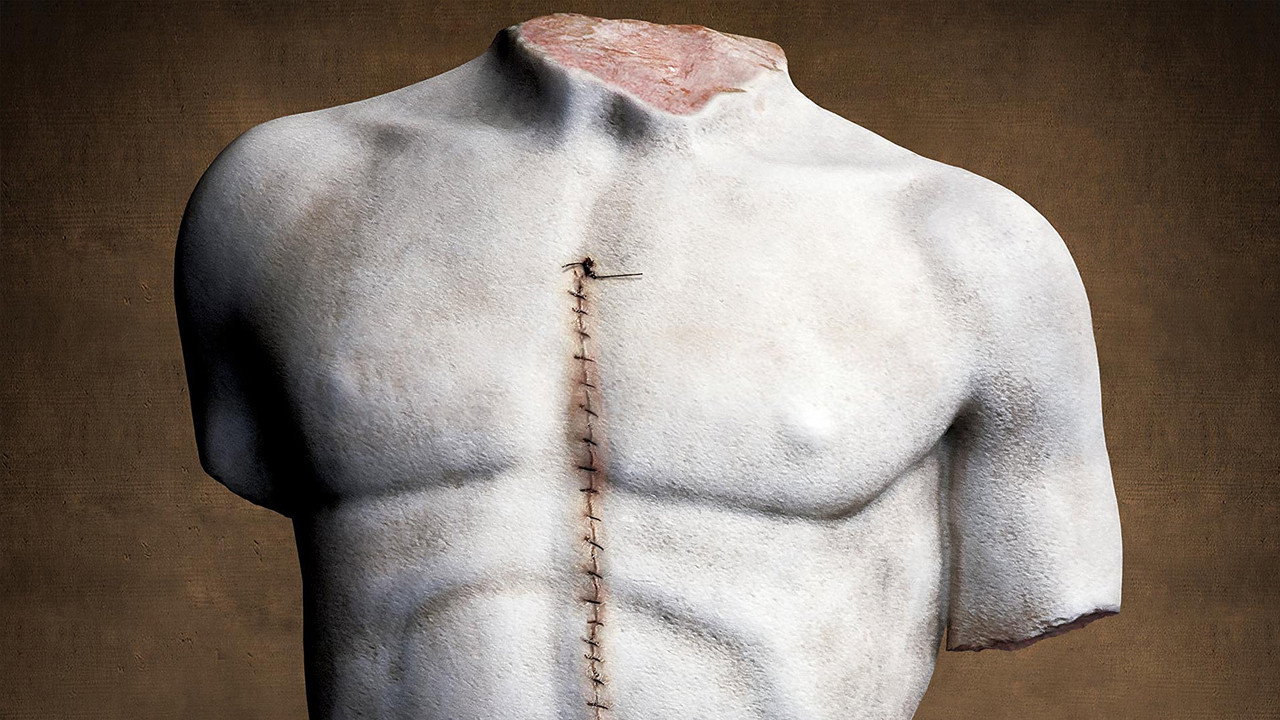
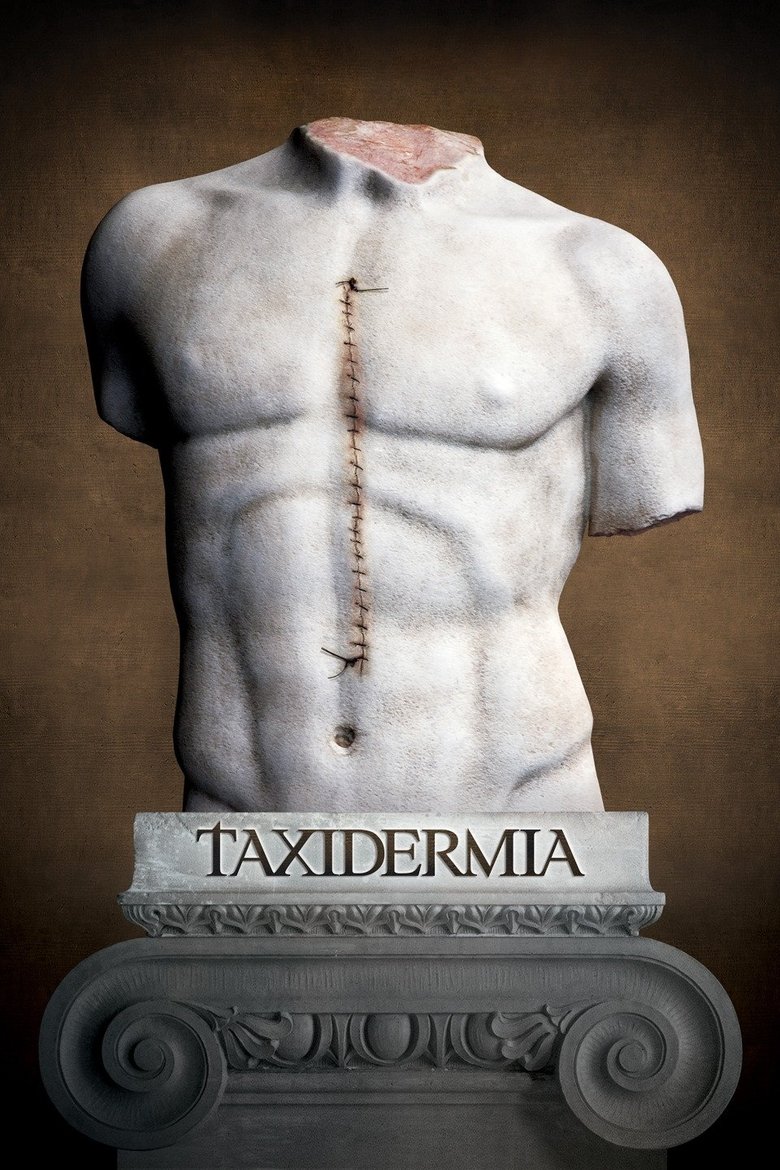
Taxidermia
“Three stories. Three generations. Three men. One bizarre and shocking universe.”
Three stories. Three ages. Three men. Grandfather, father, son. One is an orderly, one is a leading sportsman, and one is a master taxidermist. One desires love, the other success, and the third immortality.
About Taxidermia
Morosgoványi Vendel is still the reason this movie works
There’s a particular kind of horror that lives in small, humiliating details — and Taxidermia finds it in an unheated shack at the back of a Hungarian military post. That’s where Vendel Morosgoványi sleeps and works, carrying out menial tasks while the life of the officer’s family happens a few paces away.
György Pálfi’s 2006 film doesn’t ease you in. It presents a man whose head is full of feverish, often perverse daydreams, and then asks what those private worlds reveal about the people around him. It’s an abrasive, concentrated ninety-one minutes; nothing is wasted. Put simply: Vendel’s small, ruined life is where the movie’s appetite — for shock, for pity, for comedy and for disgust — all starts. Follow that thread and you’ll see how the rest of the strange family story unspools.
The idea that sets Taxidermia in motion
Taxidermia threads three lives across generations, but the practical engine is simple: people driven by single, obsessive aims. One strand follows Kálmán Balatony and his partner Gizi — competitive speed-eaters whose personal life collides with the brutal logic of their sport.
When Gizi’s pregnancy becomes complicated after a public demonstration, Kálmán’s response is practical and oddly tender: he tells her to stop competing until the baby is born. It’s a small, sensible decision, but in a film of escalating extremes even ordinary care feels fraught.
The seed of the later tragedy is domestic and recognisable: family obligations, competitive vanity, and the brittle certainties people build around their roles. Those tensions are what push the characters toward the film’s darker turns.
At its best, the setup lets Pálfi move from the intimate — arguments between parents, petty shames — to the grotesque without pretending the leap isn’t deliberate. The ordinary choices are the most interesting ones here.
Why Morosgoványi Vendel matters
Csaba Czene’s Morosgoványi Vendel is the film’s first, unsettling invitation. He’s not an obvious tragic figure: he’s a subordinate, sleeping in a hut near the latrines and doing the jobs nobody else wants. That proximity to squalor gives his fantasies a particular flavour — the private life of a man who barely exists in anyone else’s story.
Those fantasies are not mere comic relief. They sketch a person who is desperate for agency, and who retreats into brilliant, perverse imaginings precisely because real connections are denied to him. The humiliation of the outpost matters because it explains why Vendel’s head becomes its own dangerous world.
By opening the film with someone so minor-seeming, Pálfi makes a broader point about family and inheritance: small cruelties at the bottom of a hierarchy ripple up. Vendel’s existence sits adjacent to the Balatony family’s life, and that adjacency will have consequences.
When the film later displays taxidermied bodies and preserved tableaux, remember that it started with this quiet man. Vendel’s misery is not decorative; it’s the tile the whole mosaic is built from.
Taxidermia has more on its mind than the plot suggests
On the surface this is a succession of shocking tableaux, but underneath it’s gossip about family: how we raise children, what we protect them from, and what we refuse to look at. The film repeatedly returns to familial bonds — and what happens when care mutates into obsession.
Parental protection appears in odd guises. Kálmán’s decisions around Gizi’s pregnancy suggest a protective instinct, yet the same man will prioritise training, ambition and public performance over steady companionship. That contradiction is the spoonful of salt in every supposedly loving gesture.
Technology — literal machines and mechanical procedures — also threads through the film. It appears where humans try to control, preserve or stage-manage life; whether in preserves, harnesses or clinical interventions, technology becomes the blunt tool for fixing what is fragile. So yes: family, protection and technology. The film sets those ideas against one another until you can see how attempts to fix or preserve a life often turn grotesque when they’re pursued as an absolute.
Taxidermia could not belong to any other decade
Released in 2006, Taxidermia sits in the 00s appetite for cinema that mixed arthouse daring with genre instincts. It wears its oddness plainly — there’s no apologetic art‑film distance here, nor is the grotesque merely for shock.
The film’s fixation on performance — literal competitive eating, bodily spectacle — feels of its moment: the decade loved to test the limits of what could be shown and talked about on screen, and Pálfi pushes that curiosity further than many contemporaries.
That willingness to blend outré imagery with domestic drama follows a 00s pattern where filmmakers were unafraid to complicate audience sympathy. Taxidermia’s tone — part black comedy, part fable, part horror — is very much a product of that period’s adventurousness.
It’s still recognisably a 2006 movie in how it mixes register and refuses to sit in a single, comfortable genre. That restless identity is part of its personality.
What has aged — and what hasn't
The film’s core concerns — family loyalties, the compromises parents make, and how ambition can hollow domestic life — remain persuasive. Those human tensions don’t depend on a fashion or a trend; they’re recognisable now as they were then.
Scenes about training, about choosing public spectacle over quiet steadiness, still sting because they show choices people make all the time. Kálmán’s prioritising of his competitive life during Gizi’s pregnancy reads as a timeless mistake rather than a dated affectation.
Where Taxidermia is harder for modern viewers is in its unapologetic grotesquery. The decisions the characters make to preserve or control bodies — and the machine‑like measures they take — can feel extreme in ways that don’t always translate into a cosy ‘cult classic’ warmth.
But that extremity is part of the point. If you approach the film wanting moral comfort, it will unsettle you. If you accept it as a deliberate, unsettling parable about preservation and parental failure, much of its force remains intact.
Why Taxidermia still matters
People remember Taxidermia because it leaves few neutral impressions. Vendel’s fevered inner life — his recurring, explicit fantasies — marks the film’s opening so decisively that it becomes part of how viewers describe the whole picture.
Some images from the film stick because they’re simple and awful: a child born different, a family secret handled badly, bodies preserved and displayed. Those are narrative shards you don’t easily forget, and they give the film a lasting emotional aftertaste.
There’s also a moral curiosity at work. Viewers who grew up with the film often cite how Pálfi stages preservation — of animals, of people, of memory — as a way of asking what we’re protecting and why. The film’s tableau moments are less about spectacle alone and more about asking uncomfortable questions. So its legacy isn’t influence in the usual industry sense; it’s memory. Taxidermia remains the kind of film that turns up in conversation because it left a clear, strange mark on anyone who saw it.
Does Taxidermia still hold up?
Yes — if you’re willing to be unsettled. Taxidermia is not a comfortable watch, and it does not apologise for that. Its core concerns about family and parental protection are still resonant, and they’re given shape by images that refuse tidy interpretation.
Pálfi’s 2006 film is compact — ninety-one minutes that refuse to meander — and that economy helps. There’s no fat: the choices characters make, however extreme, are presented as inevitable escalations of earlier decisions about ambition, care and shame.
If you dislike cinema that mixes grotesque spectacle with everyday sorrow, this won’t convert you. But if you appreciate films that force you to reckon with what people do to protect, perform, or preserve themselves — sometimes with machines and sometimes with cruelty — Taxidermia remains a memorable provocation.
Final word: watch it when you’re ready to be challenged, not comforted. It’s a film about preservation that refuses to preserve anything pleasant.
Director & Cast