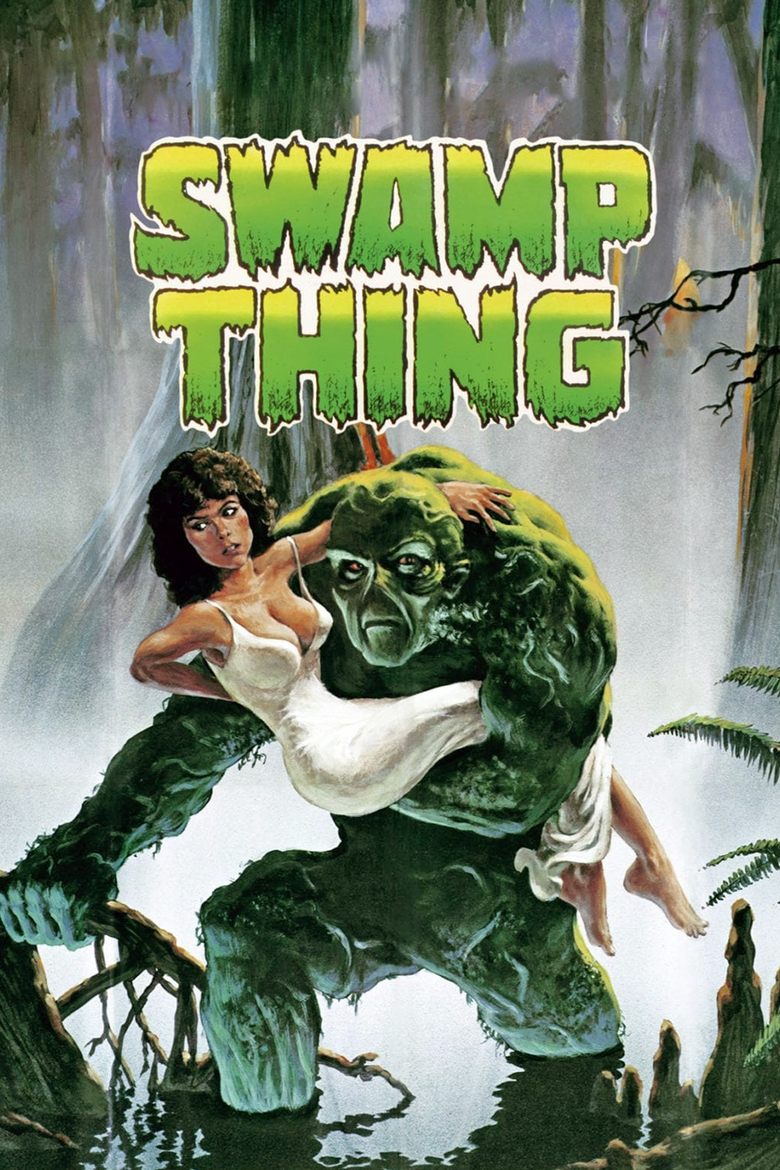
Swamp Thing
“Science transformed him into a monster. Love changed him even more!”
Mutated by his own secret formula, Dr. Alec Holland becomes Swamp Thing, a half-human, half-plant superhero who will stop at nothing to rescue government agent Alice Cable and defeat his evil arch nemesis...even if it costs him his life.
About Swamp Thing
Why Swamp Thing still works
There’s an unmistakable personality to Swamp Thing: it’s part creature feature, part comic-book oddment and part small-scale melodrama. That mix is exactly why people keep returning to it — it doesn’t sit politely in one box.
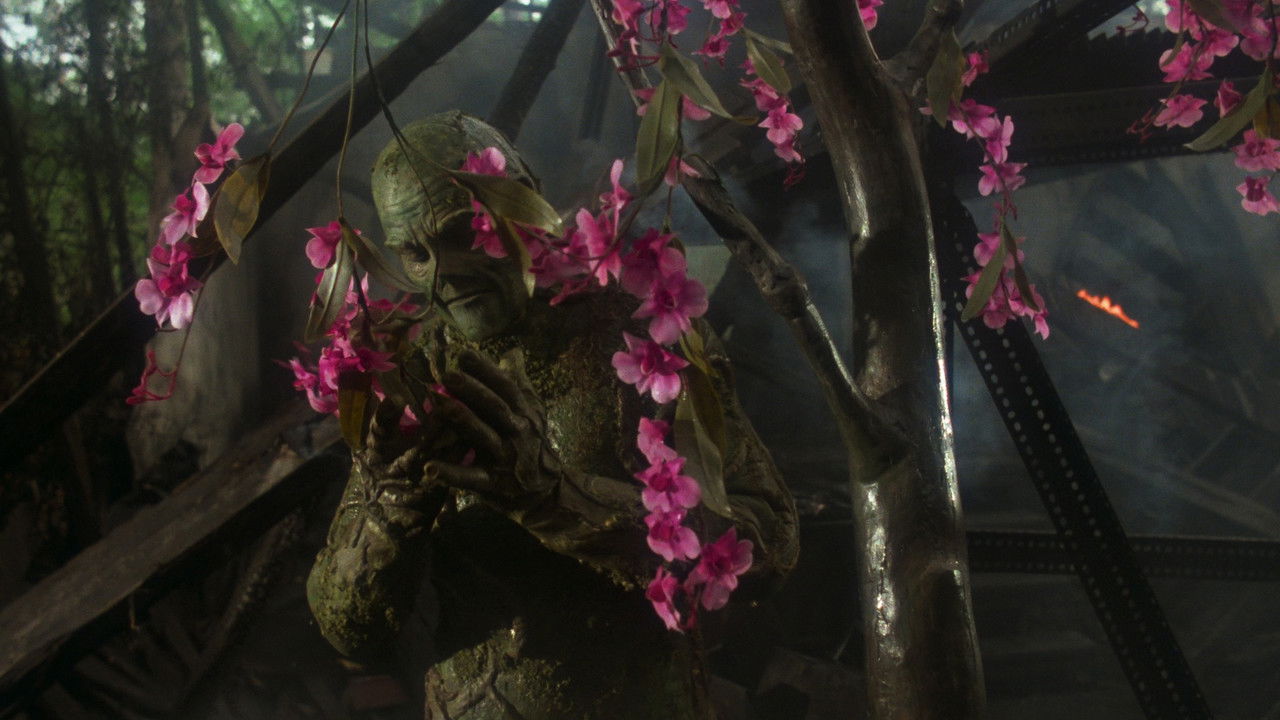
Wes Craven directed this 91-minute 1982 curio, and the movie’s energy comes from that push-and-pull: tender moments between humans and a monstrous figure rub shoulders with outright menace. Adrienne Barbeau’s Alice Cable arrives to replace a dead scientist, and the film never forgets that it’s sprung from a scientific disaster that turned personal. On the other side of the swamp sits Anton Arcane — Louis Jourdan’s presence as the looming threat gives the film a proper antagonist — while Dick Durock’s titular creature stands in for the story’s stubborn refusal to be owned or explained away.
The idea that sets Swamp Thing in motion
At the centre of the picture is a simple, efficient premise: a scientific project goes wrong, a researcher dies, and a replacement—Alice Cable—turns up to pick up the pieces. That starting point immediately gives the film a human entry point into something strange.
The laboratory’s breakthrough is a glowing, plant-based formula with explosive potential. It’s the kind of invention that feels equal parts wonder and trouble — the exact thing you’d expect to attract the wrong kind of attention.
That wrong kind of attention arrives in force. Henchmen burn the premises and scrub away the work, and what started as a research site quickly becomes a field of suspicion and theft.
From there the stakes narrow and sharpen: a missing notebook, a chased woman, a kidnapped ally. The film uses those simple mechanics to keep the movie moving and to make the swamp itself feel like the only place where answers, and safety, might still exist.
Why Anton Arcane matters
Anton Arcane isn’t just a moustache-twirling baddie; he’s the organising force of the film’s threat. From the gossip around the lab to the moments when his identity is revealed as something more sinister, Arcane drives the plot by turning scientific curiosity into something greedy and violent.
Louis Jourdan takes the role, and the way Arcane functions in the story is straightforward: he’s the paramilitary presence who intends to hijack the experiments and control what the Hollands were trying to build.
That ambition is important because it sets up the film’s moral opposition. The Hollands’ work is rooted in study and, in Alec’s case, admiration of the swamp; Arcane treats it like a commodity to be stolen and weaponised.
His looming menace pushes everyone else into reactive positions — it’s Arcane’s threat that convinces unlikely allies to trust each other and, eventually, to trust the creature who emerges from the mire.
Swamp Thing has more on its mind than the plot suggests
On paper the film is a creature-feature slash caper. Underneath it there are three neat ideas that keep nudging the action: freedom, fear and loss.
Freedom appears in the creature’s stubborn autonomy: the story repeatedly asks who gets to own knowledge, bodies and nature. That question makes the monster more interesting than a simple threat — it’s a being refusing to be turned into property.
Fear is the engine that turns curiosity into panic. The film’s villains thrive on exploiting terror: they use force to erase the Hollands’ work and to make everyone scramble, which is how the swamp becomes a refuge as well as a battlefield. Loss runs through the movie like a low tide. The initial death, the stolen research, the damage to lives — those absences give the quieter moments weight, and they make the creature’s role feel less like spectacle and more like an attempt to mend what’s been broken.
Swamp Thing could not belong to any other decade
This is very much a 1982 movie — not because of any one visual tic but because of the way it mixes genre impulses without apologising. It piles on science fiction, horror and a bit of comic relief and lets the whole thing play out briskly.
There was appetite in that period for films that felt slightly hand-made but wildly imaginative; Swamp Thing fits that appetite by turning a comic-book concept into a compact, pulpy adventure.
Its willingness to be both silly and serious at the same time is of a piece with other early-80s efforts that didn’t worry about cosy genre boundaries.
Put simply: its era gave it permission to be bold and a little bit odd, and that temperament is woven into the movie’s bones.
What has aged — and what hasn't
There are elements of the film that still land. Small beats where a scientist walks a newcomer around the swamp and asks them to appreciate it still read as genuine; they give the story a human moment that modern viewers can recognise.
The movie’s use of fear — the way threat arrives and forces characters into tight choices — remains effective. It keeps the momentum and prevents the premise from becoming merely camp.
That said, Swamp Thing is a product of its time in its structure: it moves fast, gives you a handful of strong set pieces, and relies on clear emotional signposts rather than subtlety.
If you watch it now, treat it like a compact genre picture: there’s a sincerity to its quieter scenes and enough menace to give those moments bite.
Why Swamp Thing still matters
People who remember Swamp Thing tend to hold on to particular images and beats: the rescue from the swamp, the creature’s odd tenderness toward a child, and the outrageously pulpy villainy that threatens to swallow the research whole.
There are a handful of sequences that stick: a daring boat crash that turns the hunters into the hunted, a desperate revival of a seemingly lifeless boy by the creature, and a grotesque demonstration of Arcane’s experiments gone wrong.
The film’s smaller choices — a thief’s notebook becoming the McGuffin, a dinner where hubris is punished, the idea that the formula amplifies what already exists in a person — give it a memorable chain of cause and effect. Ultimately it remains the kind of movie that people talk about not because it was flawless, but because it combined genuine emotional beats with a gleeful appetite for genre excess.
Does Swamp Thing still hold up?
Yes — if you approach it on its own terms. It’s a 91-minute 1982 genre stew directed by Wes Craven that asks you to accept a scientist’s death, a stolen notebook and a monstrous protector all within a short ride. If that sounds like fun, the film delivers.
The film’s strengths are structural and emotional rather than technical: the plot moves cleanly from inciting incident to confrontation, the villain’s theft and violence create urgent stakes, and the creature’s interventions give the story an odd, restorative heart.
It won’t satisfy someone looking for subtle character studies or modern production gloss, but it will repay viewers who like compact, pulpy storytelling where themes of freedom, fear and loss actually inform the action.
Watch it for the strange balance — the swamp that protects more than it threatens, and a finale where the creature chooses to leave rather than be caged. It’s a movie that ends with a promise to return, and that feels exactly right for what it tried to be.