Species
“For three million years, the human race has been at the top of the evolutionary ladder. Nothing lasts forever.”
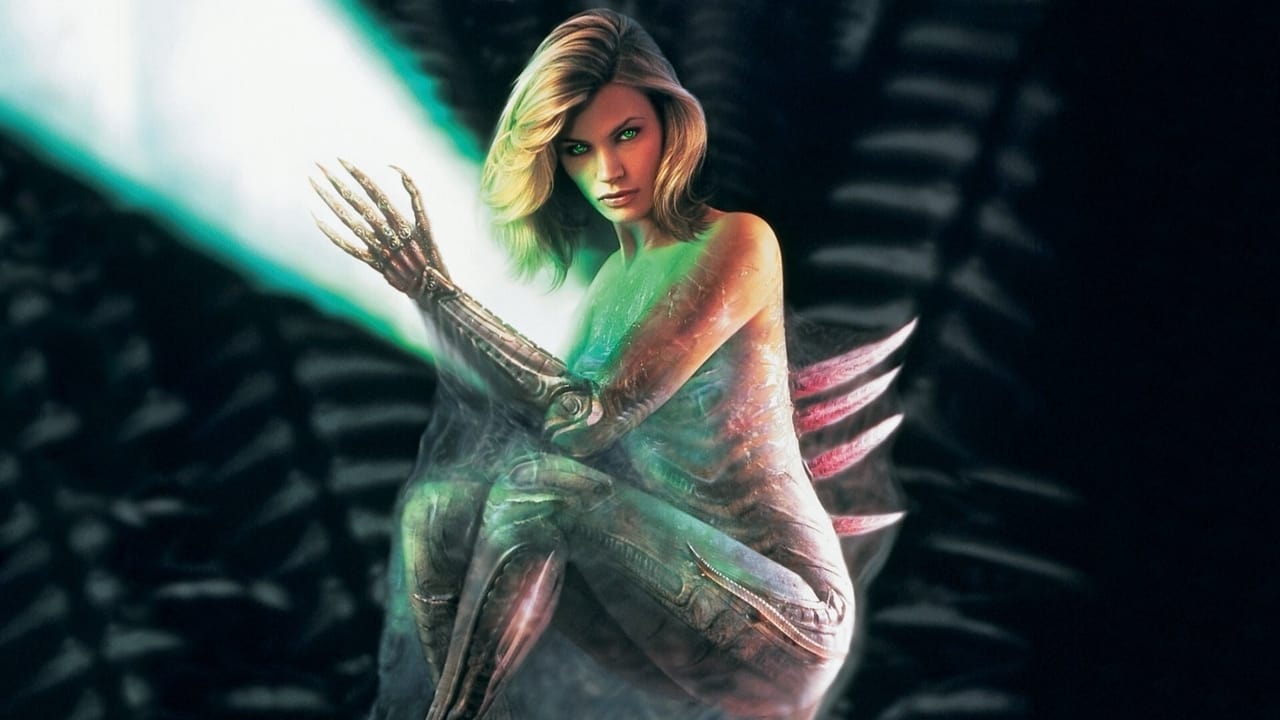
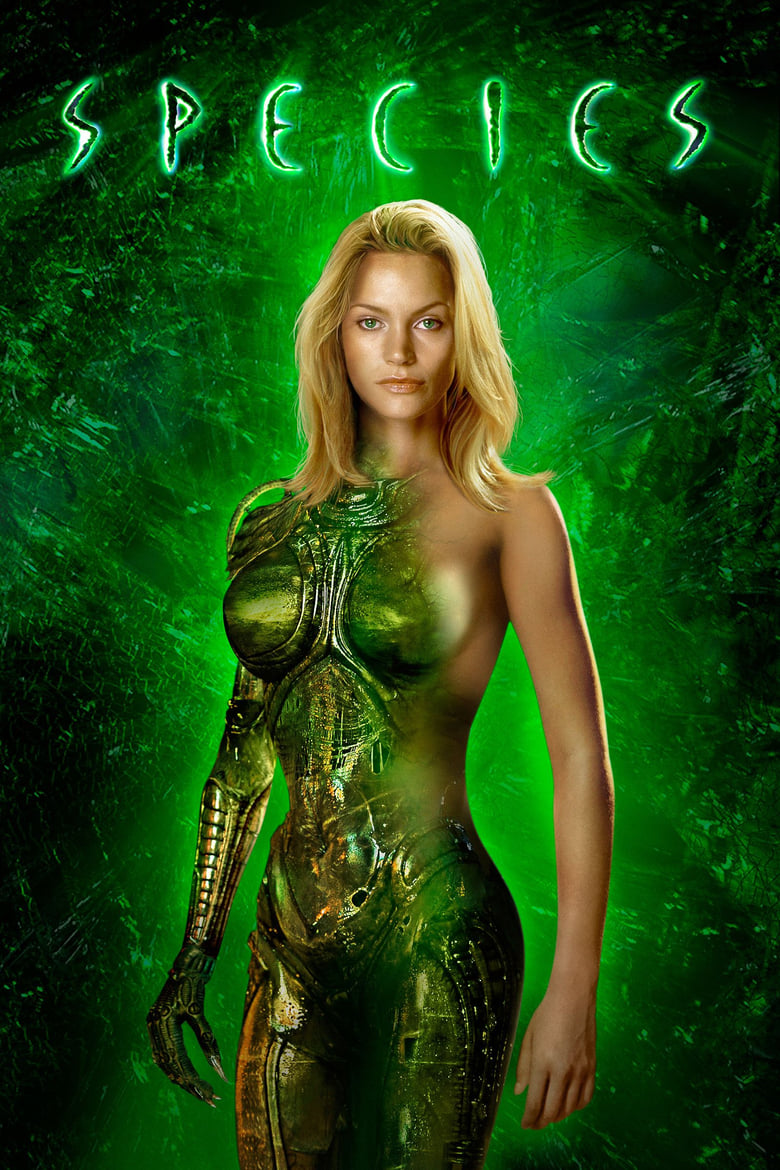
In 1993, the Search for Extra Terrestrial Intelligence Project receives a transmission detailing an alien DNA structure, along with instructions on how to splice it with human DNA. The result is Sil, a sensual but deadly creature who can change from a beautiful woman to an armour-plated killing machine in the blink of an eye.
About Species
What Species gets right
Species grabs you before it ever introduces its cast: the story begins with ordinary scientists doing something very earnest — broadcasting information about Earth into the void in the hope of finding life. That small, we-sent-it-first fact is the first clever shove the film gives you; it makes the later mistake feel both plausible and ominous.
From that premise Roger Donaldson steers the picture into sharper, stranger territory. The transmissions inspire a government experiment that produces a girl codenamed Sil — a being who begins looking human and then grows at an alarmingly fast rate. The setup gives the film a neat moral wobble: it’s not just a monster movie, it’s about hubris dressed up as helpfulness. And at the centre of all this is Sil herself. Natasha Henstridge plays the role that the whole story orbits: a creature who can pass as human, who learns fast and who refuses to be contained. That mixture — curiosity, secrecy and danger — is the specific reason Species still gets people talking.
The idea that sets Species in motion
Species begins with a tidy, science-forward gamble: humanity broadcasts its existence and, in return, receives technical instructions and an alien DNA sample. The scientists interpret that reply as friendly — and the story is off, because that assumption is the logical spark that produces Sil.
The filmmakers keep the mechanics economical. The alien material is spliced into human DNA and, in short order, a girl called Sil appears. She starts life looking human and grows unnervingly quickly; that compressed maturation is what allows the plot to move from laboratory curiosity to street-level threat without a lot of padding.
Once Sil escapes containment the film turns into a hunt. A government team is assembled to track and stop her before she can mate and carry a line that could threaten humanity. That grim premise — prevention before knowledge — is the motor that drives every pursuit scene.
On the road the movie keeps asking the same compact question: can anyone really control an intelligence that was built from an instruction set the creators barely understand? The payload of the plot is not only whether Sil will be stopped, but whether the people who made her ever had a right to assume they could.
Why Sil matters
Sil is the film’s magnet. She starts as an experiment with a code name and very quickly becomes someone — or something — with its own urges. The fact she develops so rapidly (becoming the equivalent of a 12-year-old in three months) gives her an unnerving mixture of naivety and potency.
Her early behaviour complicates sympathy. The scientists witness violent outbursts while she sleeps and decide she’s too dangerous to keep; their solution is lethal containment. That choice makes Sil both victim and threat in the same sentence, and the film deliberately sits on that uncomfortable overlap.
Once free she uses speed, strength and a sharp intelligence to stay ahead of her pursuers, moving into the world and learning how to hide. Part of what makes her stay in the memory is that she doesn’t simply run — she studies the people chasing her, reads their lips, and adapts. That makes the chase feel like a conversation gone wrong.
And because Sil is constructed to provoke fear about mating and offspring, she’s not just an individual adversary; she’s a problem the authorities treat as existential. That amplifies every scene where she’s on the run: she’s wanted for what she might produce, not only for what she has done.
Species has more on its mind than the plot suggests
On the surface Species is a hunt-thriller, but the film keeps slipping in bigger questions. Humanity — what we are willing to make and how we answer our own loneliness in the universe — sits behind almost every decision the characters take.
Freedom is threaded through the story as well. Sil’s escape is less a shock jump-scare and more a refusal to be confined. That refusal bumps up against a machine-like desire for control: a government team commissions the experiment precisely because they think they can design docility into its DNA.
Authority, then, looks fallible and a bit panicked. The assembled team combines scientists, an empath and a black-ops mercenary, which says more than a line of dialogue ever could: when faced with the unknown the response is immediate containment and, ultimately, violence. Fear ties these ideas together. The specific dread in Species isn’t cosmic annihilation so much as the domestic, intimate fear of being replaced or corrupted from within — the worry that what looks like human might carry a future that wipes out the people who made it.
Species could not belong to any other decade
Species is firmly a mid-90s creature: released in 1995, it wears its genre loyalties plainly. It’s simultaneously a science-fiction conceit and a monster movie with horror teeth, which was a comfortable blend for that moment in cinema.
The film’s appetite for big hypothetical questions — if an alien replied to our broadcasts, what should we do? — feels very much of that era’s curiosity about technology and contact. It’s a movie willing to ask an unnerving question and then let the practical consequences play out in grubby, human terms.
That combination — speculative setup plus pulpy pursuit — was part of why the decade produced so many hybrid genre pictures. Species slots into that pattern without apology: it gives you a high-concept premise and then spends most of its running time watching people try to clean up the mess.
Put simply: being from 1995 matters because the film is structured like a decade that liked to imagine plausible nightmares and then chase them through everyday places.
What has aged — and what hasn't
The central, intimate dread at the movie’s heart — fear of an invasive offspring and the lengths authorities will go to prevent it — still reads clearly. The film’s logic about preemptive containment and the decision to treat an unknown intelligence as a threat remains straightforward and watchable.
Some moments that once played purely as thrills land differently now. Scenes where Sil spies on people or uses learned behaviour to manipulate situations can feel more unsettling to modern eyes, because they foreground the idea of an entity teaching itself in private.
The picture’s compactness also helps it hold up. At 104 minutes it rarely overstays its welcome; when it’s hunting or being hunted, the momentum is simple and effective. That makes it an easy rewatch for anyone who just wants the premise delivered without a lot of filler.
Where it shows its age most is in the assumptions that underpin the story — the very quick leap from broadcast to human-alien hybrid to the decision that killing is the only responsible response. Those choices are part of the movie’s design, but a contemporary viewer might find the moral shortcuts cruder than they were in 1995.
Why Species still matters
Part of Species’ staying power is embarrassingly simple: it gave cinema a memorable, unsettling central figure in Sil, and the film’s plot keeps returning to the tension she creates. The experiment that produces her was meant to be controllable — and what it becomes is the story’s persistent provocation.
People who grew up with the movie remember those chase beats and the strange, intimate kills: Sil moves through the world and, crucially, learns how to blend in, cut her hair, change herself and even develop an attraction. Those details keep the character lodged in the mind after a viewing.
The ensemble of characters around her — scientists, an empath, a mercenary and a government lead — matters because they show the different ways institutions try to answer an unexpected danger. It’s less about clever solutions and more about who is willing to get their hands dirty. Finally, the film’s ending note — the sudden, mutating hint left behind — is the kind of small, grim coda that lingers. It’s a reminder that even a decisive victory in the field can leave residual consequences, which is an idea that feels uncomfortably apt long after the credits roll.
Does Species still hold up?
Yes — with a clear asterisk. Species is exactly the film it sets out to be: a brisk, often uncomfortable science-fiction monster movie from 1995 that asks a simple question and refuses to tidy it away. If you want tidy answers, this isn’t the place; if you want a high-concept premise played out at pace, it still delivers.
A lot of the movie’s pleasure rests on the presence of Sil and on the central conceit that scientists, eager to answer and be answered, built something they didn’t fully understand. That combination of curiosity and arrogance is the engine that keeps the story interesting even when the plot takes obvious shortcuts.
Watching it now, you get both the decade and the design: Roger Donaldson’s picture wastes no time, runs to 104 minutes, and keeps its focus on pursuit and prevention. The themes of humanity and freedom remain visible throughout, which means the film still has something to say beyond its jump scares.
If you’re putting on Species for the first time pick it as an entertainingly direct examination of control — and for the record: Sil still makes the movie. She’s not merely an effect or a plot device; she’s the stubborn question the film refuses to answer cleanly, and that’s the reason to watch.