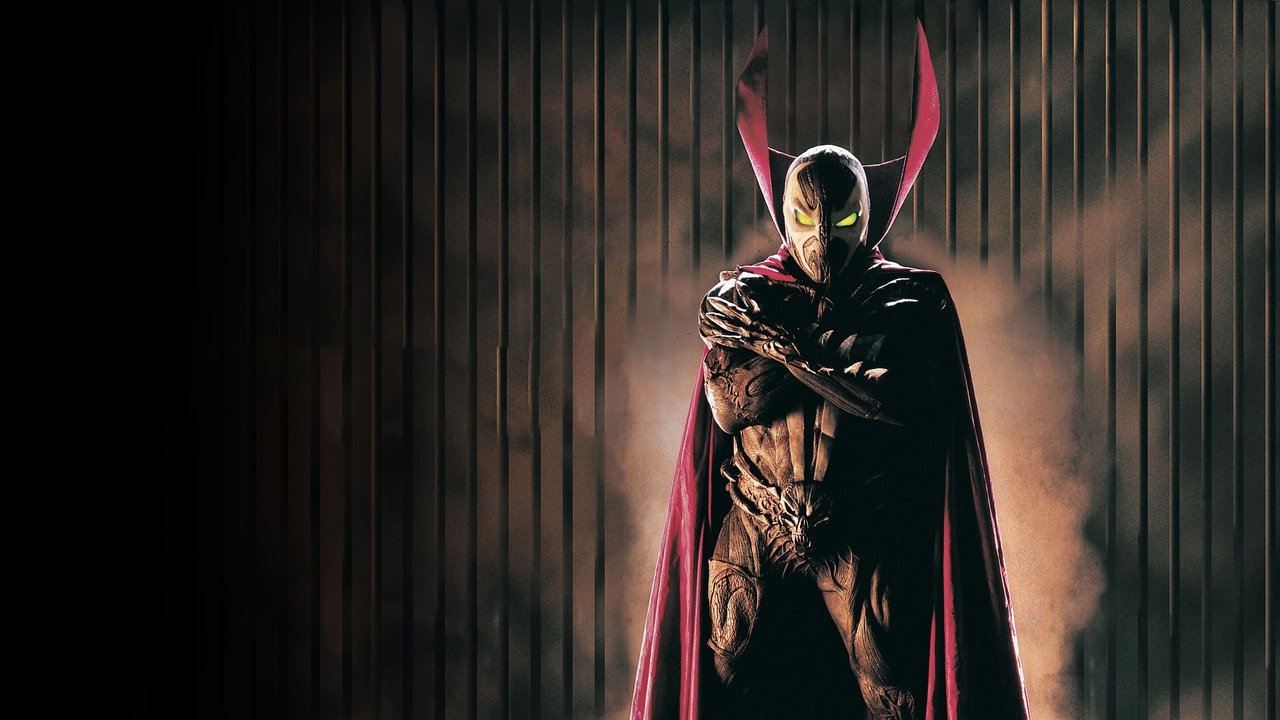
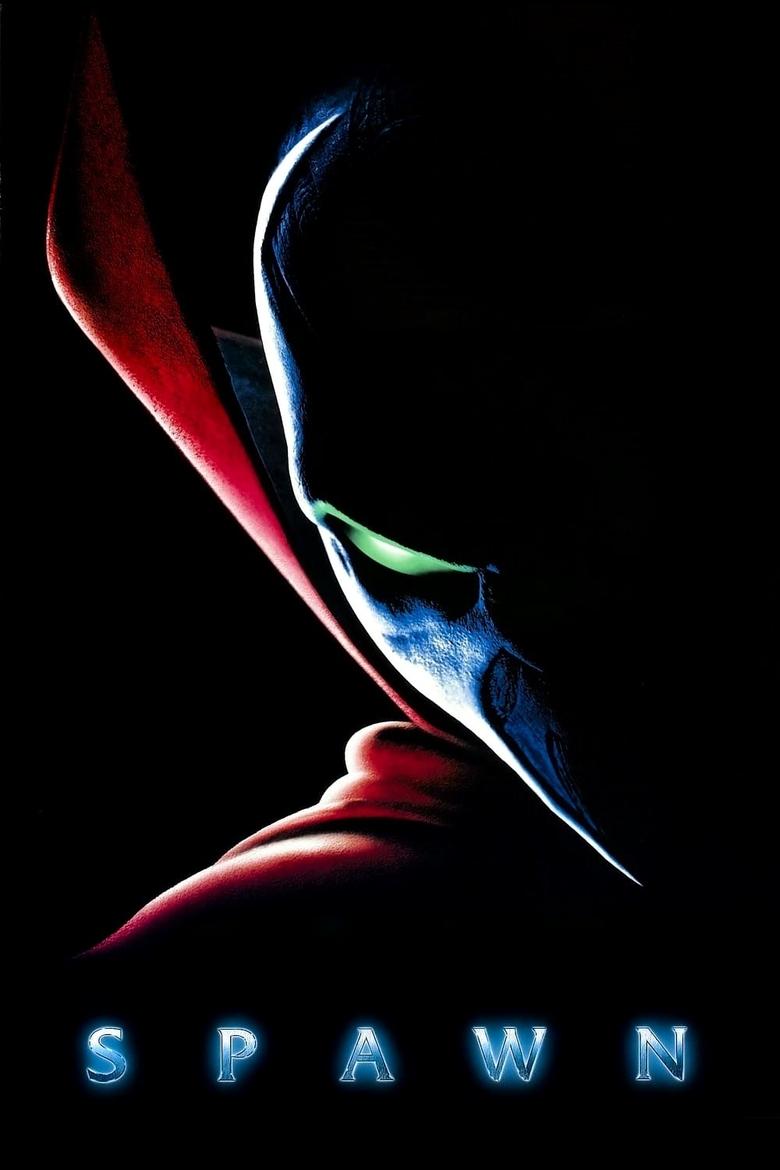
Spawn
“Born in darkness. Sworn to justice.”
After being murdered by corrupt colleagues in a covert government agency, Al Simmons makes a pact with the devil to be resurrected to see his beloved wife Wanda. In exchange for his return to Earth, Simmons agrees to lead Hell's Army in the destruction of mankind.
About Spawn
What Spawn gets right
Spawn opens with a simple, brutal proposition: Al Simmons is sent into a morally dubious mission he doesn’t trust, and the people above him have already decided his fate. That sequence—assignment, betrayal and the fiery end—sets the movie’s tone fast and hard.
From there Mark A.Z. Dippé doesn’t dilly-dally. Simmons returns as a Hellspawn with a debt to a ruler of Hell who promises him a glimpse of the life he lost. It’s grim, it’s strange and it gives the film a clear emotional engine: a man ripped from his family and dropped into an impossible bargain. The cast list reads like a roll-call of familiar faces—Michael Jai White as Spawn, John Leguizamo as the Violator, Martin Sheen as Jason Wynn—and the film keeps things compact, running to about ninety-two minutes. That discipline helps: Spawn never pretends to be everything to everyone. It’s loud, focused and stubbornly single-minded about its darker half of the superhero story.
The idea that sets Spawn in motion
The film’s motor is tidy: Simmons dies, meets one of Hell’s rulers, and accepts a deal that will return him to Earth—as long as he serves a greater, darker purpose. That bargain is the plot’s hinge; everything that follows spins off that single choice.
Back on Earth he isn’t the same man. He’s a Hellspawn, and the clock has moved on—five years have passed and the world he knew has shifted without him.
That loss of home makes the personal threats matter. Violator and Jason Wynn aren’t abstract villains: their actions are aimed at the one thing Simmons still cares about—his family.
The setup works because all the supernatural trappings feed a basic human question: can someone who’s been taken from his life ever find his way back into it? The film answers by turning the answer into physical confrontations rather than long speeches.
Why Spawn matters
Spawn isn’t just a costume and some supernatural rules. He’s a man who’s been ripped away from his life and returned into something that’s partly a weapon and partly a wound. That contradiction—of wanting to protect the people you love while being equipped to destroy—gives the character his push and pull.
The film makes the stakes domestic. Five years have passed; Wanda has moved on and married Simmons’ best friend. That quiet devastation—walking into a life where you no longer fit—is what turns Spawn from a faceless avenger into someone the audience can understand, even amid the demons and mayhem.
Spawn’s relationships also help pin him down. He befriends a lonely kid, Zack, and learns from Cogliostro, a former Hellspawn who’s chosen a different path. Those connections stop him becoming a mere engine of revenge and steer him instead toward protection.
When the story forces him to choose—facing Violator, rescuing his family and ripping the deadly device from Wynn—Spawn’s path becomes clear: there’s no place for him in Wanda’s life, so he chooses the streets and a mission that’s closer to justice than vengeance.
Spawn has more on its mind than the plot suggests
On the surface this is a supernatural revenge adventure. Underneath it’s quietly occupied with courage: the film keeps testing what bravery looks like when the person doing the brave thing has been hollowed out and reassembled by Hell.
Family sits at the heart of the story. The conflict isn’t abstract evil versus good; it’s about a man trying to protect a family that has to live without him. That parental-protection instinct gives several scenes a surprising emotional charge.
Technology turns up as a practical menace. Wynn’s biological weapon and the device rigged to his heart turn human wickedness into a mechanical threat, which makes the danger feel both modern and grotesque. Fear and mortality weave through everything: Simmons’ bargain, the ticking threat to Wanda’s household and the reminder that death here is reversible—but costly. The movie’s darkness comes from that price, not just from its monsters.
Spawn could not belong to any other decade
Spawn landed in 1997, and that placement matters. It comes from a moment when comic-book worlds were being translated to film unevenly and ambitiously—filmmakers were willing to mix tone and risk the odd failure to chase something raw.
The movie feels like a product of its time because it carries the 90s’ appetite for genre-mixing: horror, superhero melodrama and pulpy revenge all sit in the same script. That willingness to mingle styles feels very much of the decade.
It’s also the kind of mid-90s project that didn’t overstay its welcome; at ninety-two minutes the film keeps a briskness that suits the era’s appetite for punchy, high-concept pictures.
Read today, Spawn is a reminder that the 90s were a testing ground for how comics could be translated to the screen—sometimes messy, often bold, and rarely content to play safe.
What has aged — and what hasn't
Some of Spawn’s choices hold up because they’re basic and human. The family material—the grief of a returned husband who can’t slot back in—is still affecting. That domestic core gives the spectacle a touchstone that modern viewers can still feel.
The friendship with Zack and the mentorship from Cogliostro give the film emotional ballast too. Those small connections keep the stakes personal, which helps the movie avoid becoming an empty parade of effects and screams.
Threat scenes—like Wynn destroying Terry’s computer and taking the family hostage—still land as tense, practical peril. They remind you the film can still turn its supernatural rules into immediate danger.
Where it shows its age is mostly in how directly it tells things; it wears its ideas plainly. For some viewers that bluntness is part of the film’s charm. For others, it will feel dated next to the subtler blockbuster storytelling that followed.
Why Spawn still matters
There are a few clear story beats that stick in the memory: the betrayal that kills Simmons, the bargain with a ruler of Hell, and the image of a man returned as something both human and monstrous. Those beats give the film a narrative spine people remember.
The villains are memorable in their own way. Wynn’s betrayal—ordering an assassin to kill Simmons and finally setting him alight—makes the evil feel corporate and personal at once. The presence of a clown-like guide from Hell keeps the antagonism playful and unsettling in equal measure.
The movie also invests in smaller, quieter attachments: a homeless boy who befriends Spawn, an ex-Hellspawn who’s chosen a different path, and a family under threat. Those human touches stop the film being only about spectacle. Finally, the climax—where a biological weapon, a heart-mounted detonator and a desperate rescue collide—wraps the personal and the apocalyptic together. Wynn’s arrest and Spawn’s decision to leave Wanda’s world and patrol the streets give the story a clear, if bruised, ending: protection over possession.
Does Spawn still hold up?
If you come for a clean superhero movie you might leave a little puzzled. Spawn is more of a bruised fable than a cape-and-anthem yarn: a man brought back to solve a problem he can’t fully fix, and who chooses to protect rather than possess.
That framing—personal loss, a supernatural bargain, and a threat that mixes biological technology with human malice—still reads as a compelling shorthand for the era’s anxieties. The film’s tight runtime of ninety-two minutes helps it move without too much flab, and the presence of familiar faces (notably Michael Jai White as the title figure, John Leguizamo as the Violator and Martin Sheen as Jason Wynn) keeps it anchored.
So should you watch it now? Yes, if you’re curious about a 90s comic-book film that doesn’t apologise for being dark, direct and slightly odd. It’s not subtle, but it has heart—often literally—and a clear idea of what it wants to say about courage and family.
And if you don’t buy the mythic elements, there’s still something to enjoy in a movie that opts for protection over possession and leaves its anti-hero on the streets, choosing a messy, human kind of justice.