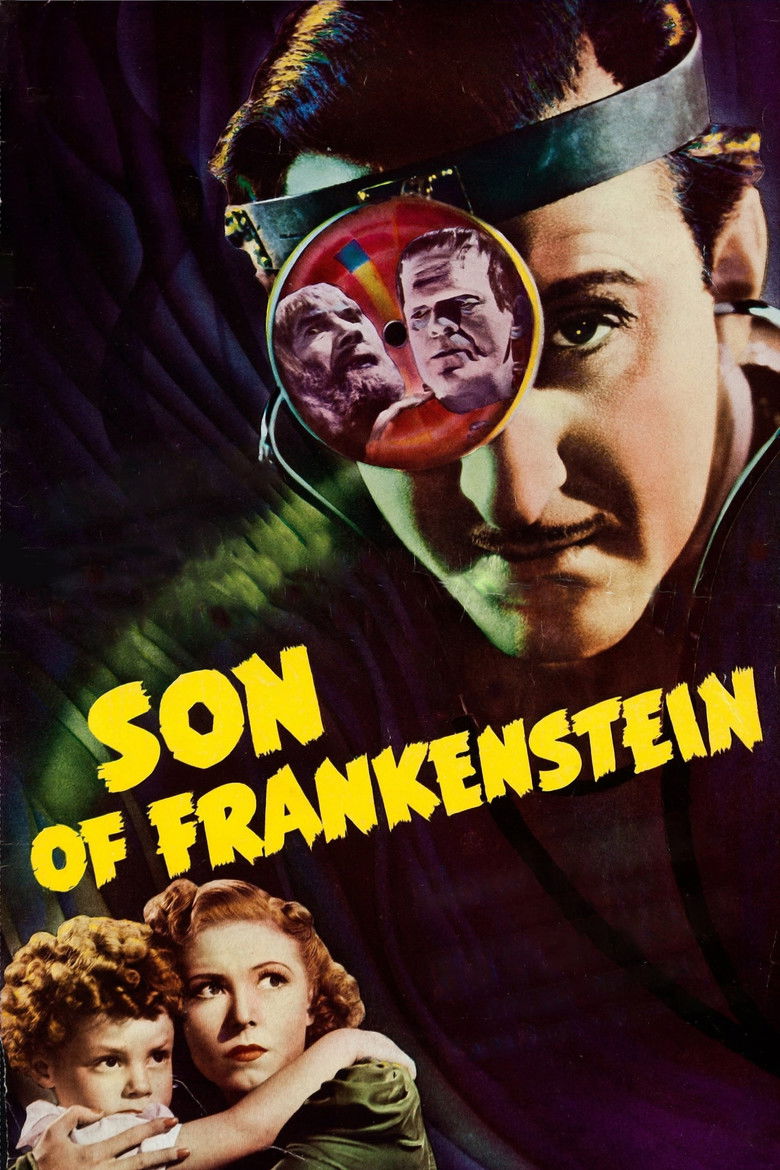
Son of Frankenstein
“The black shadows of the past bred this half-man/half-demon! Creating a new and terrible juggernaut of destruction!”
One of the sons of late Dr. Henry Frankenstein finds his father's ghoulish creation in a coma and revives him, only to find out the monster is controlled by Ygor who is bent on revenge.
About Son of Frankenstein
Wolf Frankenstein is still the reason this movie works
Right away Son of Frankenstein stakes a claim: this is a film about a family that has a very awkward legacy. Baron Wolf von Frankenstein moves his wife Elsa and their small son Peter back into the ancestral castle, and the story proceeds from the simple, stubborn desire to repair a name and keep a family safe.
That desire — and the fact it sits inside a Gothic frame — is what gives Rowland V. Lee's 1939 picture a particular personality. It’s a horror film by genre, sure, but it’s also domestic: the drama lives in who Wolf is trying to protect and why he keeps making dangerous choices on their behalf. Because Wolf’s motive is personal, the movie gets to be brisk (it runs for 99 minutes) without ever short-changing the quieter stakes. The villagers’ distrust, the arrival of Ygor and the discovery of an apparently comatose Monster all push the plot forward; they also keep the central question in view: will Wolf save his family or doom it?
The idea that sets Son of Frankenstein in motion
The film’s engine is simple and tidy: Wolf wants to redeem his father’s reputation, but the villagers still blame the Frankensteins for the earlier wreckage caused by Henry’s Monster. That tension — honour versus suspicion — is the lever the plot uses to crank the gothic machinery.
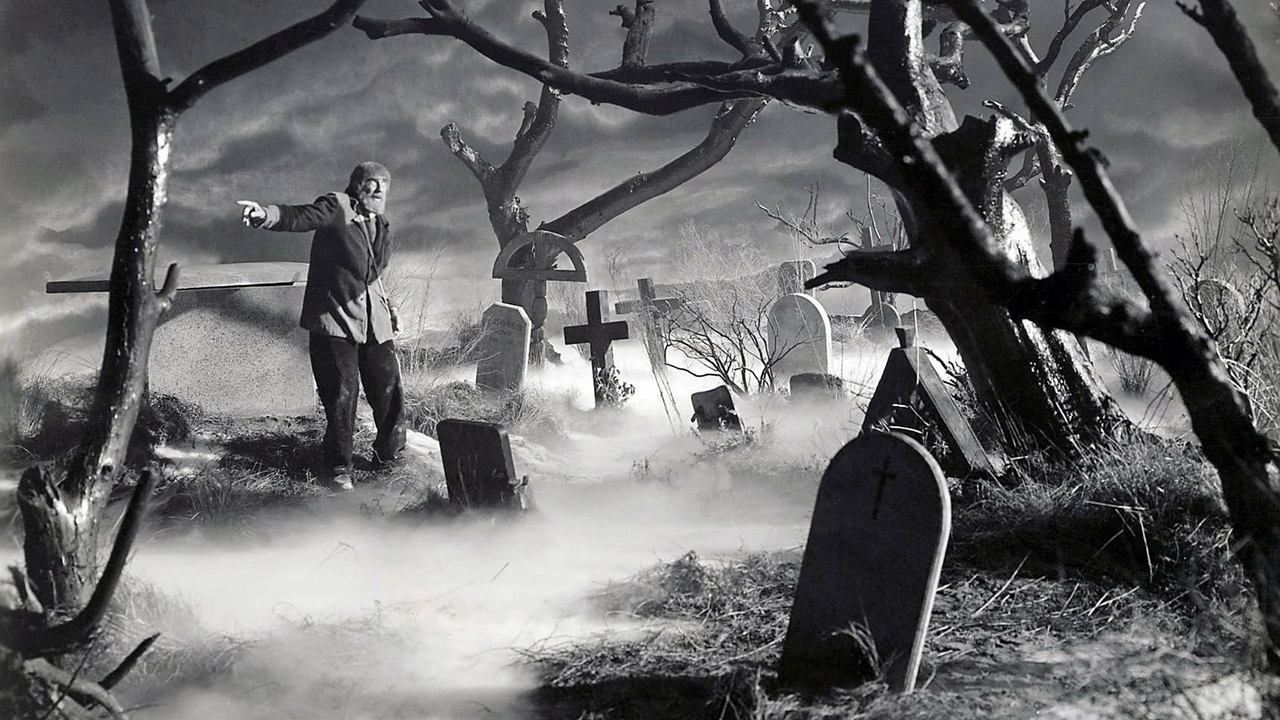
Wolf pokes around his family’s castle and meets Ygor, a blacksmith whose throat was damaged when he survived an attempted hanging. Ygor’s presence is the first real crack in the polite surface of Wolf’s plan; he becomes the human wild card who connects the Frankensteins to the creature in their crypt.
At the same time, the film keeps the personal small: Peter, Wolf’s son, talks about a kindly giant who visits him and brings a picture book. Elsa and the child’s nurse laugh it off as imagination; Wolf and Inspector Krogh, who are carrying the heavier fears, do not.
Then the bodies begin to turn up. What might first pass as accidents — a man crushed by his wagon — are revealed to be part of a pattern. The set-up works because it balances public danger (villagers, murders, suspicion) with private stakes (a worried father, a frightened wife and a little boy who may be seeing more than adults admit).
Why Wolf Frankenstein matters
Wolf is not Frankenstein the showman; he’s Frankenstein the heir who wants to tidy up. He brings Elsa and their son back to the ancestral home precisely because he believes honour can be restored. That motive makes his choices ring truer — even when they are plainly dangerous.
His social world is small. Krogh, the local inspector, is effectively the only other adult Wolf can rely on; the inspector himself bears a physical reminder of the family’s past, wearing an artificial arm because the original was torn off by the creature years before. Friendship here is braided with grievance and history.
The arrival of Ygor and the discovery of the Monster’s comatose body in the family crypt force Wolf into a familiar trap: he revives the creature to prove his father right and to reclaim the family name. That decision shows us everything about Wolf — stubborn loyalty, a belief that science can repair reputation, and a dangerous optimism that what worked once might work again.
In the end, Wolf’s arc keeps the story focussed on family: he refuses to abandon his household, he fights to protect his son and, when things come to a head, he is the one who leaves the keys of the castle to the villagers as he departs. The character matters because the film’s moral weight rests on his attempts to keep a family together against the past.
Son of Frankenstein has more on its mind than the plot suggests
Beneath the monster-chase beats, the film keeps returning to family. Wolf’s project is not curiosity for its own sake; it’s a repair job. He revives the creature because proving Henry right feels like the only way to protect his name and his household.
Mortality sits beside that family concern. The crypt, the sarcophagus and the presence of dead fathers make the idea of inheritance literal: inheritance of land, of a ruined reputation, and of consequences. You feel the weight of past mistakes on the present — and how quickly that past can reach into a living family.
There’s also a quiet humanity threaded through the horror. Peter’s insistence that a kind giant visits him — and the notion that the Monster is at times controlled or controlled by others — gives the film strange sympathies. The Creature is at once object and subject, a manufactured life that still prompts questions about responsibility and loss. Finally, parental protection is the motor of the emotional stakes. Wolf’s choices are reckless because they are protective; the chase, the arrests and the eventual sacrifice all read as attempts to keep the child and wife safe from an inheritance that refuses to stay buried.
Son of Frankenstein could not belong to any other decade
Released in 1939, Son of Frankenstein sits at the tail end of the 1930s cycle of Gothic horror. That timing matters: by then the format — ancestral castles, public suspicion, the intersection of science and the supernatural — had been well established, and this film uses those conventions to ask more domestic questions.
It’s recognisably a product of 1930s movies in the way it combines genre and character economy. The picture doesn’t dawdle; in under an hour and a half it stages village pressure, courtroom resentments, private grief and a family in retreat, which suits the storytelling rhythm of the decade.
The era also favoured tight moral pitches. Son of Frankenstein wears its themes plainly — family honour, the cost of legacy, the human consequences of scientific hubris — and doesn’t feel obliged to disguise them under modern irony or ambiguity.
Put simply: the film reads like a late-30s horror picture because it built on the decade’s vocabulary to tell a story that, while monstrous on the surface, is quietly about ordinary human concerns.
What has aged — and what hasn't
If you watch Son of Frankenstein today, the parts that still land are structural and emotional. The core setup — Wolf bringing his wife and son back to the castle, trying to protect them while fixing a family name — is a tidy dramatic promise that holds up. We still understand those motives.
Themes of family and friendship continue to feel readable. The small circle of allies, the suspicion of the village and Krogh’s complex loyalty make the stakes immediate rather than abstract. Those human relationships keep the film from becoming merely a parade of shocks.
Where it may show its age is in the straightforwardness of its genre moves: the revival of the Monster as a way to restore honour, the neat linking of past crimes to present violence. Modern audiences used to moral grey areas might find scenes simpler than they expect, but that simplicity is also part of the film’s clarity.
On balance, the story’s emotional core — a father trying to protect his family from the consequences of previous generations — still reads, which is why the film can feel surprisingly direct and watchable despite its age.
Why Son of Frankenstein still matters
People who grew up on classical Universal horror tend to keep Son of Frankenstein in rotation because it tightens the family story around the monstrous centre. Wolf’s attempt to redeem his father, and the decision to revive the creature as proof of a scientific theory, give the film a humane spine underneath its shocks.
Ygor’s role in bringing Wolf to the Monster’s comatose body, and the marked presence of the crypt (where Henry’s sarcophagus even bears graffiti calling him a maker of monsters), are the kind of details that kinder memories cling to: tactile reminders that the past in this film never stays buried.
There are also emotionally memorable beats: the odd tenderness of Peter talking about a ‘nice giant’, the Monster’s violent grief when he discovers Ygor’s body, and the moment the creature abducts the child but cannot bring himself to kill him. Those moments complicate the simple monster-versus-man frame. Finally, the film ends as many family dramas do: with a compromise of dignity. Wolf swings the castle’s keys to the villagers and leaves; the gesture acknowledges loss, hands over responsibility and closes the chapter. That mixture of defeat and protection is why Son of Frankenstein still sticks in the mind.
Does Son of Frankenstein still hold up?
Yes — with a caveat. If you come for roaring set-piece horror you’ll get some of that, but the movie earns its place today because it is quietly, stubbornly human. Wolf’s attempt to redeem his father and keep his wife and son safe is the emotional through-line that makes the rest of the film matter.
The film’s themes — family, mortality, humanity and parental protection — remain clear and coherent. The choice to revive the Monster to restore honour is less a clever plot twist and more a character decision, and that keeps the picture’s logic feeling organic rather than gimmicky.
It helps that the story wraps briskly: at 99 minutes, Rowland V. Lee doesn’t dawdle. The movie trusts its set-up, runs the moral complications and reaches a tidy, affecting conclusion — Wolf’s final act of handing the castle’s keys to the villagers is a small, mournful coda that says everything about loss and responsibility.
So if you’re curious about pre-war Universal horror that treats monsters as problems you inherit rather than mysteries to solve, Son of Frankenstein is worth a watch. It’s less about jaw-dropping shocks and more about what happens when a man decides to fight for his family against a past that won’t let go.