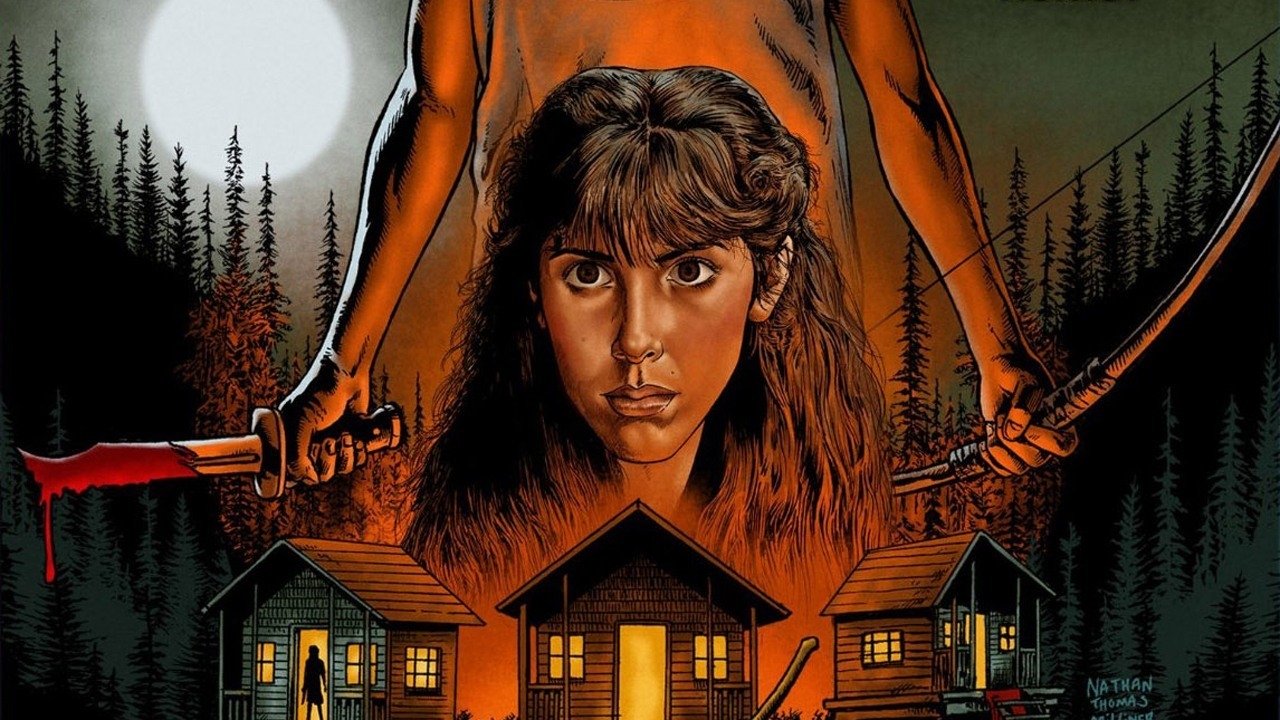
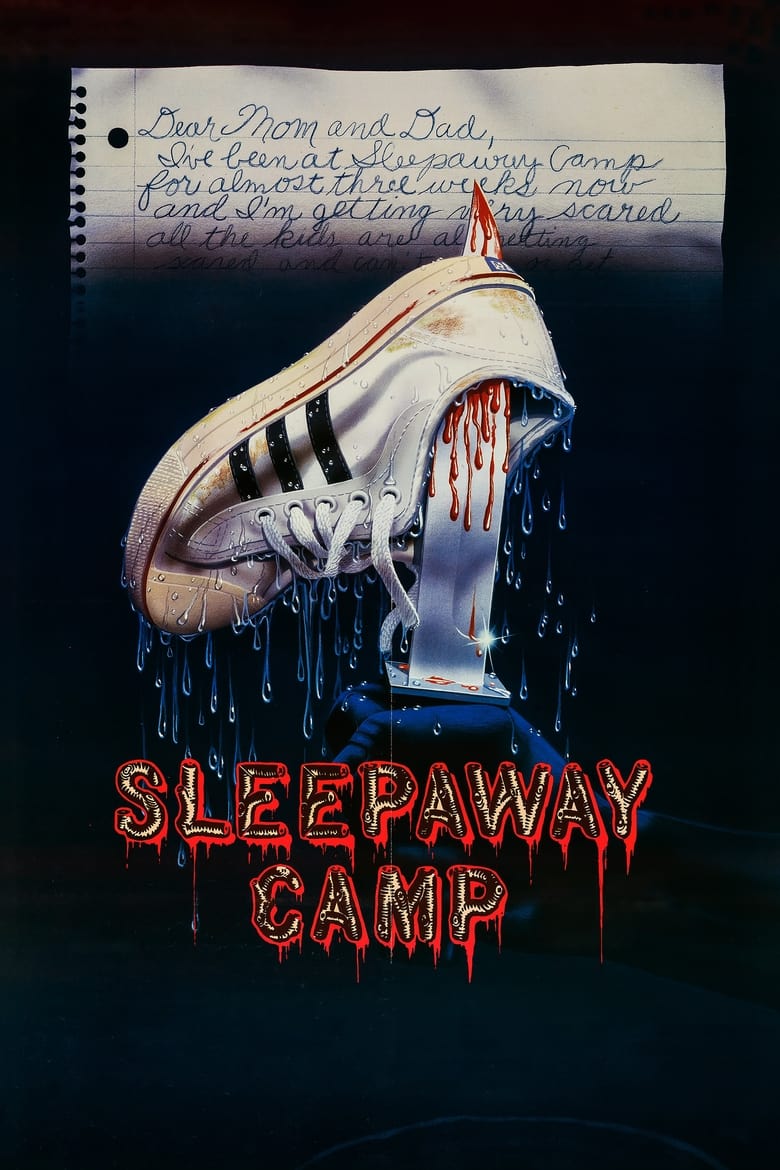
Sleepaway Camp
“…you won't be coming home!”
Years after a terrible boating accident, Angela is sent to Camp Arawak where a series of bizarre and violent "accidents" begin to claim the lives of various campers.
About Sleepaway Camp
What Sleepaway Camp gets right
There’s a moment, early and small, that the whole film hangs on: a family boat trip gone catastrophically wrong. That accident — the sort of thing that stays folded into a childhood — sets the rest of Sleepaway Camp spinning. The movie keeps returning to that wound rather than pretending the summer is just a backdrop for random killings.
Robert Hiltzik’s 1983 picture is short and economical — 81 minutes — and it uses that tight running time to let camp hierarchies and petty cruelties breathe before the horror closes in. Felissa Rose is credited as the face we follow: the camper called Angela (who, by the end, will reveal a far more complicated history). What the film gets right, and why people still talk about it, is how it layers small, human nastiness — bullying, humiliation, bad judgement — on top of a very specific family trauma. It’s not just another slasher that shows bodies; it’s one that keeps circling back to why those bodies are being targeted.
The idea that sets Sleepaway Camp in motion
The germ of the story is simple and grim: a boating accident leaves a family fractured and, years later, a child who carries more than a childhood’s worth of damage. That early collision haunts the picture without the film turning into a therapy session.
Fast-forward to Camp Arawak and you get the familiar slasher scaffolding — cabins, counsellors, jealous couples and cruel kids — but Hiltzik arranges those pieces so the nastiest behaviour keeps landing on the same quiet figure. Small cruelties — taunts, pranks, sexual menace — are threaded through the summer’s social life.
The murders arrive in ways designed to cut the pleasures of camp short: a counsellor violently killed in a shower; a sequence that ends with a particularly brutal death. They feel, in the film’s terms, like escalations of the worse things already happening to the central child.
Underneath the killings is a private truth revealed late: the person everyone has been calling Angela was raised that way after the earlier accident. That fact reframes a lot of what we’ve seen — the bullying, the protectiveness, the misread loyalties — and asks the audience to reckon with who we were watching all along.
Why Angela Baker / Peter Baker matters
On the surface, Angela is the shy, easily picked-on kid — the loner at the edge of camp dynamics who attracts both sympathy and cruelty. But the film never leaves her as a flat ‘outcast’ label; there’s a definite backstory folded into why people react to Angela the way they do.
Felissa Rose is the face we associate with Angela/Peter, but the character concept belongs to the plot’s strange family arrangement: a boating accident that killed one child and left the other in the care of an aunt who made a decision about gender and identity that would define the survivor’s life.
That private history explains why the bullying matters more than usual. When campers mock Angela and counsellors misread incidents — when Ricky and Paul step in to defend or court her — those interactions aren’t just teen melodrama. They are reactions around a person already carrying loss and confusion.
And because the reveal — that the figure known as Angela is actually the brother who survived — rearranges everything, the character is memorable not merely for the shocks attached to the name but because the movie forced you to reassess who you thought you were watching.
Sleepaway Camp has more on its mind than the plot suggests
At a glance the film is a slasher: teenagers in peril, an unseen hand picking off the obnoxious and the careless. But Sleepaway Camp layers that surface violence over quieter ideas about family — how a loss can be folded into someone’s identity and how protection can turn into a coercive force.
Parental protection is present, awkward and misapplied. The person raised by Aunt Martha is both the object of care and the product of someone else’s wish, which scrambles normal family roles and leaves the survivor oddly trapped by someone’s idea of what they should be.
Mortality sits in the background: the boating deaths are never just exposition. They are the reason the camp’s petty cruelties escalate into something deadly — and they keep returning, as memories and flashbacks, to complicate romantic or friendly entanglements. Loss is the engine. The film doesn’t moralise; it accumulates losses and then asks the audience to feel uncomfortable about how those losses were handled by adults and peers alike.
Sleepaway Camp could not belong to any other decade
Released in 1983, Sleepaway Camp arrives at a moment when teen slashers were flourishing and audiences were comfortable with films that paired adolescent life with blunt violence. The film uses that shorthand swiftly — summer camp equals small-scale society — and then lets its family story do the rest.
It’s not about trendy visual signifiers so much as the cinematic moment: short, direct horror that treats teenage social games as a plausible prelude to real harm. The era allowed filmmakers to be economical and take risks with tone that might feel stranger in another cinematic climate.
Because it’s a product of the early 80s it sits neatly alongside other youth-focused horrors of the period, borrowing the slasher rhythm but keeping emotional stakes personal rather than epic.
If you watch it through the decade’s lens, the film feels like a compact example of what 1980s horror could do — quick, a bit raw, and willing to make uncomfortable moral choices without smoothing the edges.
What has aged — and what hasn't
The teen-camp scaffolding still reads clearly: cliques, romantic awkwardness, mean pranks. That structural clarity helps modern viewers follow the story without getting bogged down in exposition.
The family theme — that someone can be reshaped by an adult's desire and grief — remains discomfortingly effective. The reveal about the survivor’s upbringing still forces a re-evaluation of earlier scenes, and that re-frame still surprises.
Some elements are harder to defend. The film leans on shock and an escalation of physical nastiness that can feel excessive rather than meaningful at times. But because the running time is tight, those excesses don’t overstay their welcome.
Ultimately, what plays best now is the way the movie ties petty adolescent cruelty to deeper trauma. When the personal stakes are clear, the horror lands with a reason rather than just spectacle.
Why Sleepaway Camp still matters
People remember Sleepaway Camp because it connects a slice of camp cruelty to a very particular family trauma. That opening boating trip — and the decisions that followed — reverberate through the entire story, so the movie feels less like a series of murders and more like a study of the fallout from one disaster.
The film keeps returning to the survivor’s situation: living with an aunt who raised the child as someone else, then sending them back into the world where ordinary teenagers respond with meanness, curiosity or predation. Those repeated collisions between private history and public humiliation give the movie a distinctive spine.
Scenes that might otherwise be throwaway — the attempted assault in the kitchen, the kids’ taunts, the small kindnesses from friends like Ronnie and Susie — matter because they occur around that specific, buried family truth. The reveal reframes friendships and betrayals in a way that stays with a viewer after the credits roll. And finally, the naked, blood-soaked final image — the survivor standing exposed and vocal in front of stunned campers — is the sort of last shot that lodges in the memory. It’s not just gore for gore’s sake; it’s the moment the private and the public collide.
Does Sleepaway Camp still hold up?
Yes — with qualifications. Sleepaway Camp is 81 minutes of uncomfortable choices, and it remains watchable because it isn’t content-free shock: the boating accident and the subsequent decision to raise the survivor as someone else are the film’s moral engine, and that gives the violence an odd, unsettling purpose.
If you want tidy moral bookkeeping or polished answers, this isn't the film for you. But if you appreciate a slasher that ties its killings back to a private family wound and forces you to rethink earlier scenes after the late reveal, it still rewards a viewing.
It’s also useful as a time capsule of early-80s economy in horror — short, efficient, willing to take tonal risks. Robert Hiltzik keeps the picture focused, and Felissa Rose’s character remains the emotional fulcrum: a survivor whose life was redirected by adults and then tested again by other kids.
So watch it if you can handle a film that prefers to unsettle rather than to explain. You’ll leave remembering the accident that started it all — and noticing how badly the adults around the children handled the aftermath. That, in the end, is the sting that lingers.