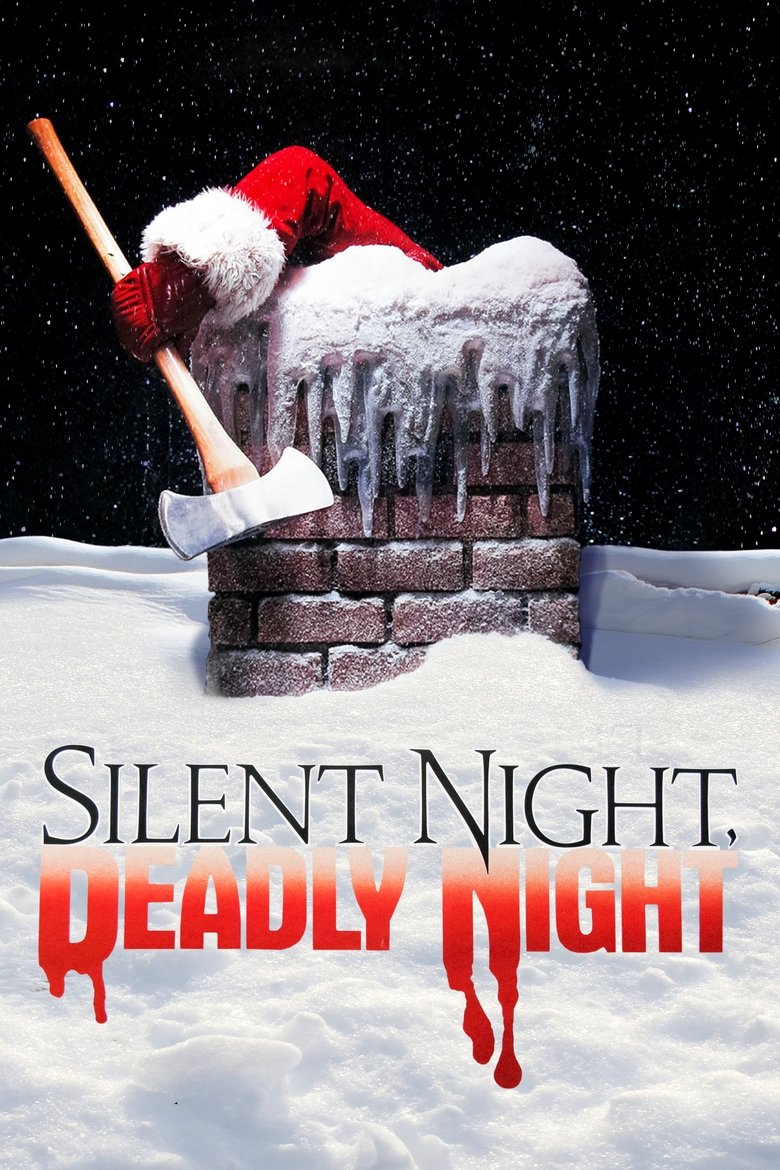
Silent Night, Deadly Night
“He knows when you've been naughty.”
After a man dressed as Santa Claus brutally murders Billy Chapman's parents, little Billy then endures the cruelty of a sadistic nun at his orphanage. Years later, when adult Billy has to fill in for an absent in-store Santa, his childhood trauma brings him to the breaking point.
About Silent Night, Deadly Night
What Silent Night, Deadly Night gets right
The movie opens with a small kid learning a terrible lesson: an elder — his own grandfather — tells him that Santa isn't harmless but a punisher of the naughty. It’s a line that flips the Christmas promise on its head and sets the film’s cold little motor running.
From that domestic shock you speed forward into a film that never lingers. Charles Sellier directs a brisk 79-minute run; there’s hardly a wasted beat. The film knows its tricks and uses them without apology. Part of why it still grabs attention is the way it surrounds that central perversion — the corrupt idea of protection — with familiar figures: Mother Superior at the orphanage, Sister Margaret as the softer counterpoint, and a young Billy whose life is shaped by those early instructions about fear and punishment.
The idea that sets Silent Night, Deadly Night in motion
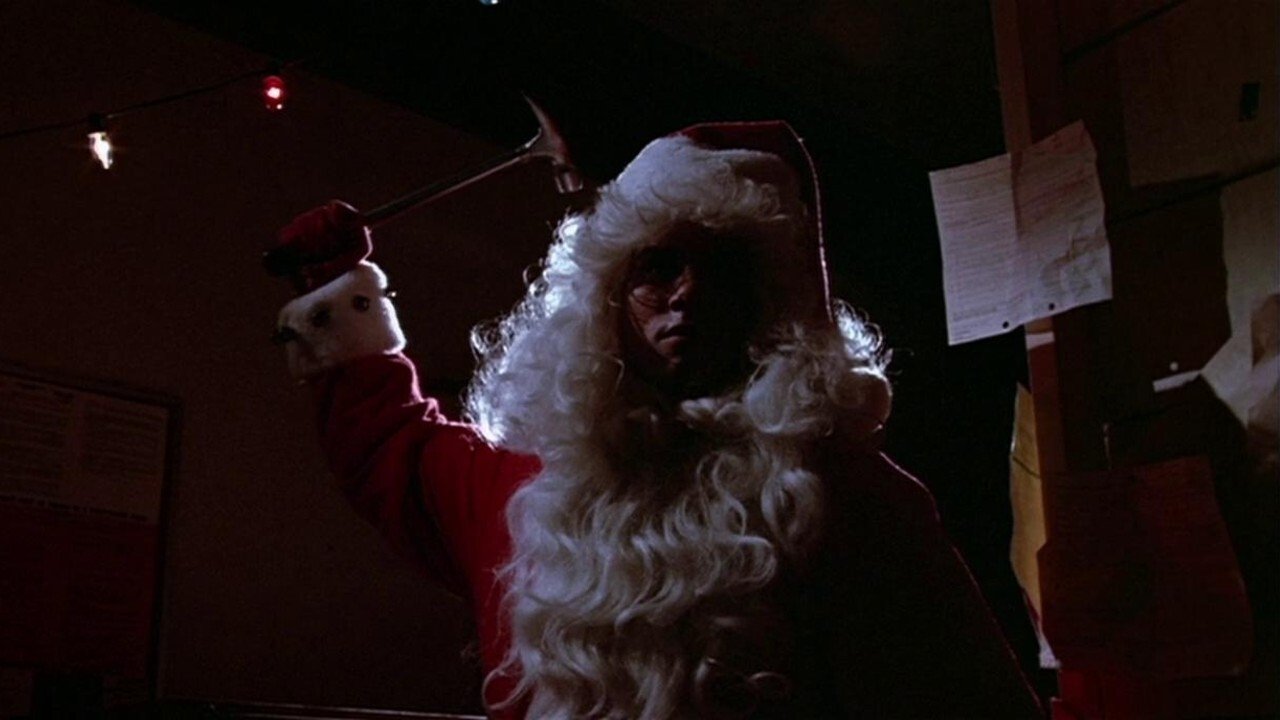
The engine of the film is straightforward: a young man with a terrifying childhood memory ends up in a position — literally inside a Santa suit — where that childhood fear and present temptation collide.
The immediate trigger is painfully simple and grim. After the store party breaks up, Billy follows coworkers and watches Andy assault Pamela. That moment is the spark.
What happens next is the film translating a private horror into public violence: Billy reacts to the assault and then next to other acts of cruelty, drawing a through-line between bullying, sexual violence and his own idea of punishment.
It’s a setup that works because it keeps behaviour rather than motive in the foreground: we see the things that push Billy over the edge rather than being offered a neatly packaged explanation.
Why Mother Superior matters
Mother Superior isn’t just an obstacle; she’s the system that raised Billy. The orphanage she runs is a place where punishment is taught as virtue, and that lesson feeds directly into the film’s logic.
She’s the adult who forces a fearful child into an encounter with Santa — the very symbol that will later be twisted — and the moment when Billy punches the man on Santa’s lap is as telling as anything that follows.
Mother Superior’s presence reaches into the finale too: Billy ultimately returns to the place she rules, and their last confrontation — with her in a wheelchair and him facing her — ties the story back to the authority that shaped him.
That relationship explains why the film keeps coming back to family and protection: Mother Superior embodies a version of adult care that is harsh, punitive and, to the children in her charge, unsafe.
Silent Night, Deadly Night has more on its mind than the plot suggests
At face value it’s a slasher with a seasonal gimmick. Beneath that, the film keeps returning to a cluster of simple, angry ideas about family, home and who is meant to protect whom.
That initial scene at the nursing home — the grandfather’s warning — is tiny but crucial. It puts across the film’s persistent paranoia: even the comforting myths we hand children can be instruments of fear.
Then there’s the violently literal invasion of the Chapman family by a criminal in a Santa suit. An emblem of safety becomes the vehicle of domestic catastrophe, which the film treats as foundational to Billy’s psychology. So the themes aren’t academic; they’re behavioural. The movie stages how failed protection, abusive authority and exploitation of trust can spiral into something far worse than a scary bedtime story.
Silent Night, Deadly Night could not belong to any other decade
Released in 1984, the film wears its decade plainly in its appetite for compact, high-concept horror — a clear premise, little padding and a willingness to push boundaries within a tight runtime.
Billy’s return to the world — the ten-years-later leap to him working at a toy store in spring 1984 — places the story in an era of straightforward genre manufacture: ideas were tested quickly and loudly rather than lingered over.
That kind of filmmaking produced a lot of plainspoken, often abrasive horror that traded subtlety for momentum. Silent Night, Deadly Night is a product of that impulse: short, direct and designed to land its shocks without apologising.
So its connection to the 1980s isn’t about fashion so much as approach — this is a movie that gets to the meat fast, which feels very much of its moment.
What has aged — and what hasn't
What still lands is the film’s moral discomfort. The opening family trauma, the grandfather’s voice warning Billy about Santa, and the carjacker in a Santa suit — those plot choices still unsettle because they upend a basic assumption: that certain figures and places are safe.
Equally durable is the through-line that links childhood abuse and institutional punishment to adult violence. Billy leaving the orphanage and later cracking under pressure remains a readable, if brutal, causal chain.
What hasn’t aged so neatly are the film’s blunt instruments. The story sometimes moves by hitting beats rather than exploring them — a decapitation after a string of humiliations, for example, reads as shock-first plotting rather than subtle character study.
But if you watch it as a terse, moralised nightmare about home and protection, much of that bluntness becomes part of the film’s personality rather than a flaw you can’t forgive.
Why Silent Night, Deadly Night still matters
People remember this film because it dared to make an emblem of childhood into something menacing. The ancestor’s warning about Santa, the orphanage where punishment is taught as virtue and the image of a traumatised boy forced into a Santa encounter are small, repeating ideas that stick.
The movie’s streak of escalation — from workplace violence to night-time house invasions and moments that confront innocence directly, like the scene with the little girl Cindy — keeps the memory vivid in a way a single shock seldom does.
There’s also a stubborn structural neatness to the story: the authority figures who fail or harm (Mother Superior among them) are the ones the narrative keeps returning to, which gives the film a grim kind of coherence. For many viewers who grew up with it, Silent Night, Deadly Night is the childhood story they were never meant to hear: a holiday tale told as a cautionary, violent fable rather than a comfort.
Does Silent Night, Deadly Night still hold up?
Yes — but with a big asterisk. If you want subtle, layered horror you won’t find it here. What you will get is a compact, unvarnished nightmare about failed protection, authority gone wrong and how early trauma can metastasise into violence.
That story is simple and the film knows it: in 79 minutes Charles Sellier lays out the formative horror (the nursing-home visit and the attendant warning about Santa), the abusive structures that follow (the orphanage under Mother Superior) and the consequences for a boy who never really had a safe home.
Watching it now, its brevity helps. The film doesn’t outstay its welcome and the through-lines — family, home and safety, parental protection — remain intelligible and, for better or worse, direct.
So if you’re curious, watch it as a sharp, morally charged piece of 80s horror. It won’t reframe the genre, but it will remind you how disquieting it is when the people and places meant to keep us safe become the scene of the crime.