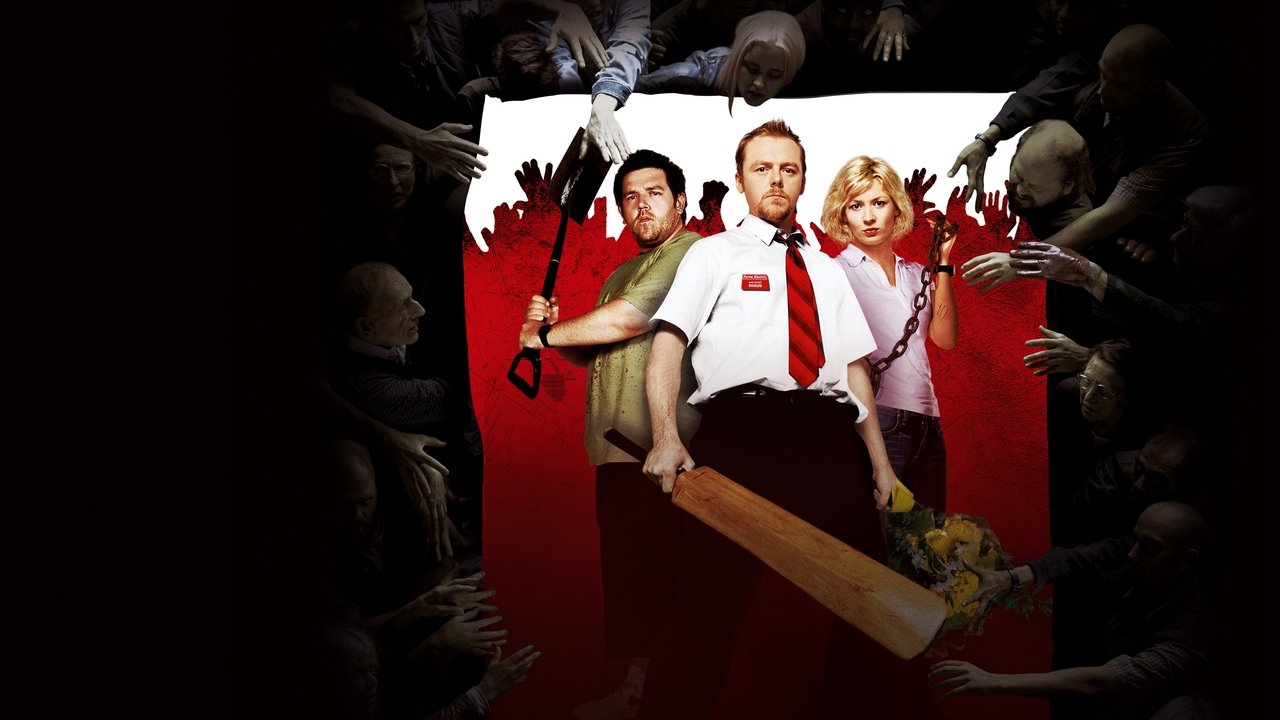
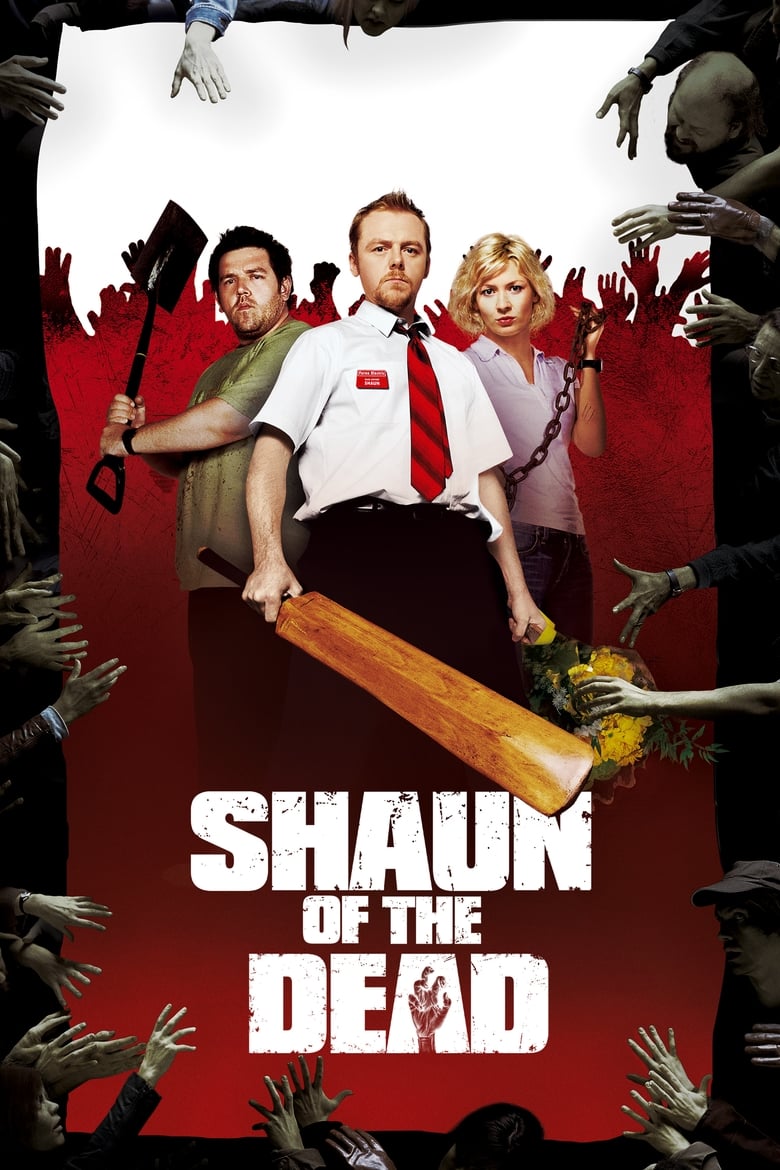
Shaun of the Dead
“A romantic comedy. With zombies.”
Shaun lives a supremely uneventful life, which revolves around his girlfriend, his mother, and, above all, his local pub. This gentle routine is threatened when the dead return to life and make strenuous attempts to snack on ordinary Londoners.
About Shaun of the Dead
Why Shaun of the Dead still works
What makes Shaun of the Dead so easy to bring up in conversation is how ordinary its trouble is. Shaun is 29, stuck in a job that sends him nowhere, getting snapped at by a stepfather and dumped by his girlfriend after yet another anniversary plan fizzles — recognisable failure, not superhero suffering.
That ordinariness is what the film refuses to lose when the extraordinary arrives. Shaun and his mate Ed stumble into the apocalypse the way anyone might miss a deadline: distracted, baffled and a little drunk at the Winchester, their local. The movie keeps both halves — the domestic mess and the undead mess — in play at once. Edgar Wright built a tight 95‑minute ride that treats the pub, the friendships and Shaun himself as the real centre of the story. The zombies matter, but they don’t elbow the characters out of frame; they sharpen them.
The idea that sets Shaun of the Dead in motion
At its simplest the film pairs two very small personal problems with one very large public one. Shaun's life is stalled — work, relationships, being told off by housemates — and the story gives him a literal emergency that forces choices.
The personal and the absurd collide early: Shaun and Ed only notice the outbreak when two zombies stumble into their garden and the pair bludgeon them with whatever’s to hand, including Shaun’s vinyl records. It’s a violent, silly moment that also makes the characters’ incompetence feel believable rather than cartoonish.
From there the plan is straightforward and easy to explain: get Shaun’s mum and Liz to safety and hole up at the Winchester. That cosy idea — a pub as sanctuary — is exactly the kind of domestic, slightly small plan that defines Shaun’s character.
The setup works because the stakes remain human. The plot can sprint through zombie mayhem because underneath it all is a bloke trying not to lose the things that matter to him.
Why Shaun matters
Shaun’s value to the film is simple: he’s an everyman whose small failures make his few brave choices count. He’s not the obvious action hero — he’s 29, a sales advisor with a messy life who spends time drinking at the Winchester with his friend Ed — and that normality keeps the comedy grounded.
Because Shaun starts from a place of real weakness, his attempts at competence feel earned. When he has to protect his mother, or when he improvises to get through a horde by imitating the undead, those moments read as growth rather than luck.
He is also at the centre of the story’s more complicated personal fights. There’s a point where Shaun confronts David over Barbara — that moment underlines how the crisis forces real reckonings between people who had been skirting around the truth.
By the end, the small, domestic choices define him as much as the big ones: whether Shaun keeps the people he loves safe, how he reckons with loss, and what he tolerates in the name of friendship.
Why Simon Pegg's performance matters
There’s a particular scene that sums up what Pegg-as‑Shaun needs to sell for the film to work: Shaun and Ed pretending to be zombies to sneak past a horde, then snapping into an argument when Ed gets distracted on his phone and attracts attention.
That stretch asks for two things at once — believable silliness and a credible switch into urgent drama. The imitation beats let Shaun be ridiculous without losing sympathy; the immediate fallout shows he’s still responsible, even if he’s not perfect.
The performance doesn’t need grand gestures. The film relies on small, clear moments where Shaun’s choices tip the scene from comic to dangerous and back again. Put another way: the film is structured so that Shaun’s reactions anchor the comedy and the stakes, and the scenes around the zombie mimicry and argument are a short hand for that balancing act.
Shaun of the Dead has more on its mind than the plot suggests
Beneath the jokes and the gore, the film is quietly obsessed with friendship. Shaun and Ed’s relationship — two blokes who have carved out a life together of low ambition and easy habits — is the engine that carries the film through chaos.
Family and parental protection are written into the story’s centre. Shaun’s attempts to get his mother and to reckon with his stepfather’s presence give the zombie set pieces a domestic heartbeat; the threats are horrifying because they endanger people who already occupy Shaun’s emotional life.
There’s also a darker current about exploitation. The film doesn’t let the apocalypse be merely spectacle — in the closing shape of the story the idea of the living using the undead turns the monstrous into a form of cheap labour and entertainment, which reframes the survival story into something a little more uncomfortable.
And mortality is never far away. The crisis forces characters into moments where they must choose between keeping themselves safe or trying to save someone else, which is where Shaun’s small, human priorities read as the film’s true stakes.
Shaun of the Dead could not belong to any other decade
Released in 2004, the film wears its decade lightly: it’s not about trends or visual nostalgia so much as a tone of British comedy that felt fresh then — quick, clever, and comfortable mixing genre with everyday life.
What ties it to the 2000s is less fashion and more approach: a willingness to mash up romantic-comedy beats, friendship comedy and horror without smoothing the edges between them. That blend felt especially contemporary at the time.
In other words, it’s very 00s in spirit — an era that was happy to fold genre playfulness into character comedy, and to do so in a compact, under-100‑minute package.
That compactness, together with its tonal mixing, is why it still reads like a film of its moment rather than a pastiche of the decade.
What has aged — and what hasn't
The parts that age best are the human ones. The central friendship and family strands — Shaun’s mess with Ed, his need to look after his mother, the uneasy dynamics with his stepfather — still hit because they’re everyday problems dressed up as apocalypse theatre.
Moments that hinge on small humiliations or household arguments, like the scene where a housemate berates Shaun to get his life together, still register because they’re the kinds of real-world embarrassments that don’t date.
The film’s willingness to let a tender family moment (such as a mother giving her blessing, however brief) lead immediately into horror keeps the tone honest; that jolt still works now. If anything feels more rooted in its time, it’s the casualness of some comic bits that rely on the characters’ lifestyles rather than cultural references — but even those tend to read as character detail rather than throwaway jokes, so they hold up.
Why Shaun of the Dead still matters
People remember scenes. Shaun bashing two garden zombies with household items and records, or the pub becoming a last stand, are specific images you can talk about without summarising the whole plot. Those set pieces are vivid shorthand for the film’s mix of the trivial and the extreme.
The Winchester itself — the idea of a pub as safety and social anchor — is durable. So too are the character beats: Shaun’s attempts to rescue his mum and Liz, the breakdowns of people under pressure, and the way friendships are tested when survival gets serious.
The later shape of the story — an uneasy, slightly black comedic coda where surviving zombies are put to work and Shaun ends up keeping a zombified Ed in his shed — leaves a mark. It turns the comic survival tale into a bleaker satirical afterthought that people still bring up.
All of this amounts to a film that’s remembered not because of a single claim to greatness, but because it combines a clutch of memorable, character‑rooted moments that stick in the mind.
Does Shaun of the Dead still hold up?
Yes — but with a caveat. Shaun of the Dead’s strongest card is its commitment to small, human things in a big mess: Shaun’s stalled life, his nights at the Winchester with Ed, and the way the apocalypse forces ordinary reckonings. Those elements still cut through.
The film is short and economical — 95 minutes of tidy, often sharp shifts between comedy and danger — and that keeps the pace brisk. Edgar Wright keeps the focus on people’s choices, which is why sequences like the keg-lift escape and the pub’s last stand feel earned rather than arbitrary.
There are darker notes that stick once you notice them: the turning of the undead into labour and the image of Shaun keeping a zombified Ed chained in a shed are not tidy or purely cheerful. They give the aftertaste complexity, which is part of what makes revisiting the film interesting.
So should you watch it now? Absolutely — if you want a compact, clever mash‑up that still remembers to care about its characters. It’s a funny, occasionally nasty, and humane little film that wears its heart in a place you wouldn’t expect: behind the bar.