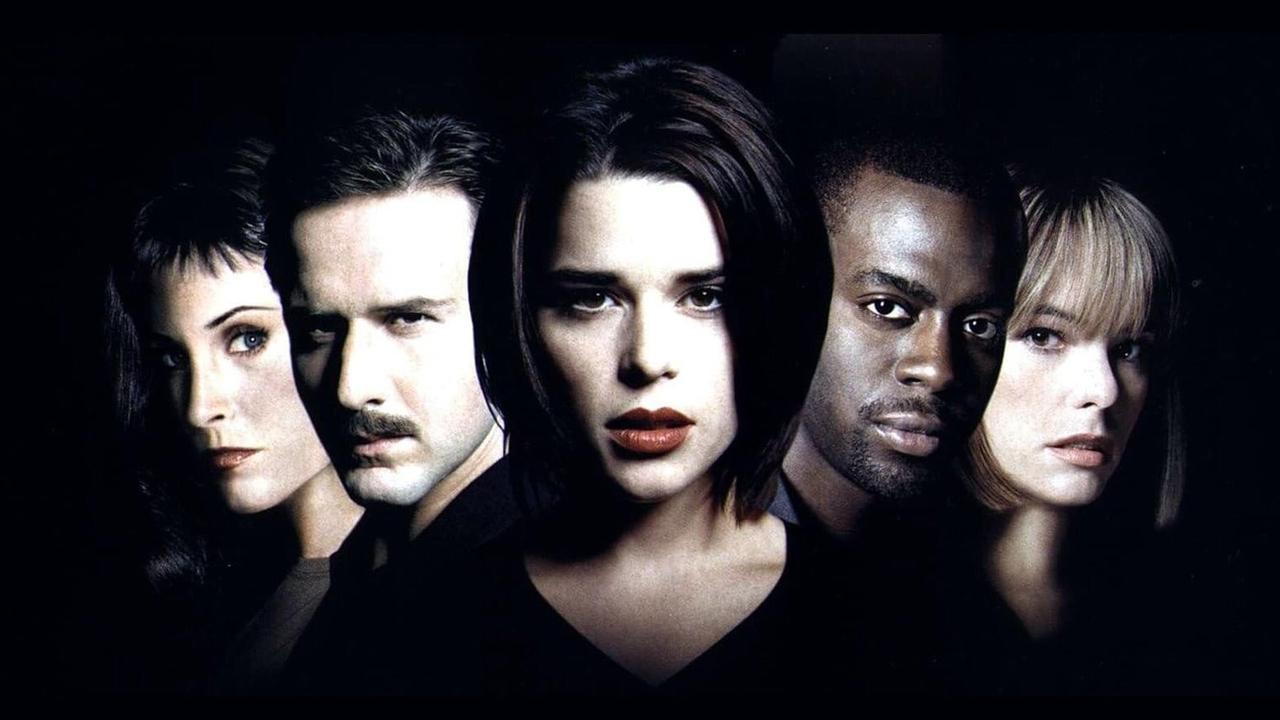
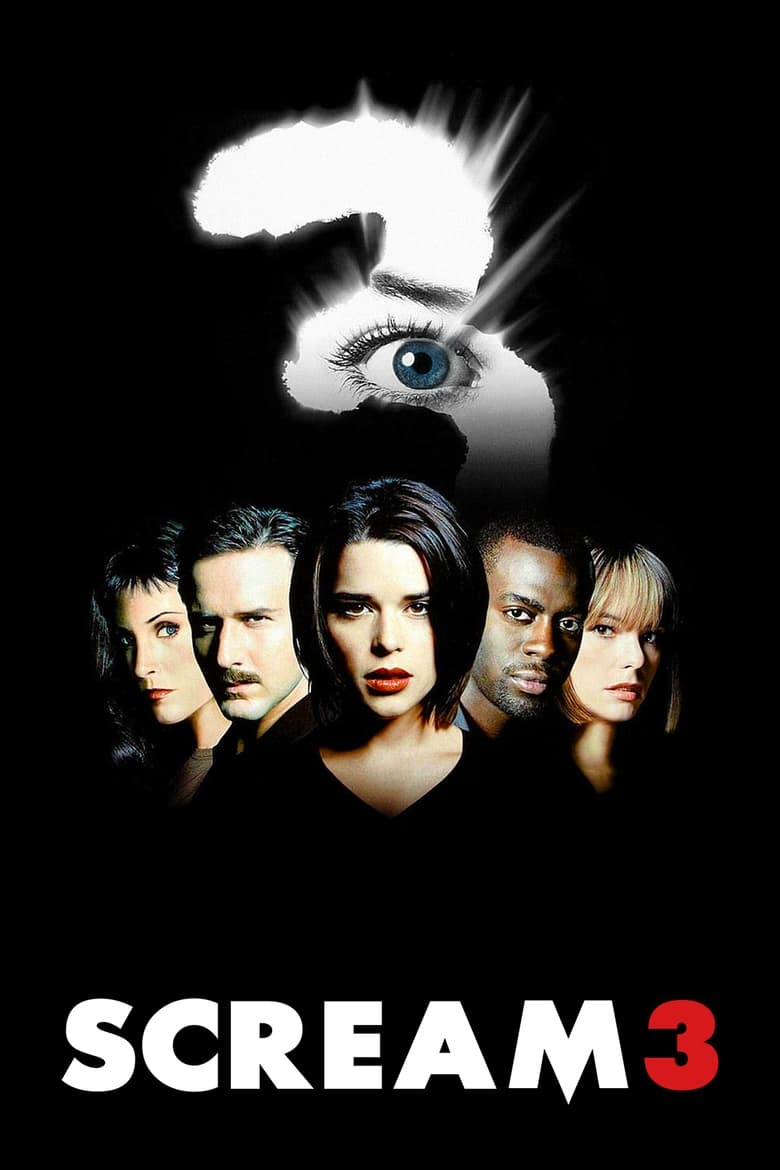
Scream 3
“The most terrifying scream is always the last.”
As bodies begin dropping around the Hollywood set of STAB 3, the third film based on the gruesome Woodsboro killings, Sidney and other survivors are once again terrorized by another Ghostface killer.
About Scream 3
What makes Scream 3 worth revisiting
The film begins with a simple, unsettling beat: Ghostface picking up the phone and asking after Sidney Prescott. It’s the same menace we met in Woodsboro, but now the conversation contains a new, weary sharpness—these calls are no longer random scares, they’re a hunt.
That shift matters because Wes Craven stages the sequel like an examination of what happens after terror becomes headline fodder. The movie keeps its slasher bones but relocates the danger into a place where image and narrative are manufactured—so the threat feels oddly professional and bureaucratic all at once. At the centre of it all is Sidney Prescott, played by Neve Campbell, who returns not as a one-note scream queen but as someone trying to live under an assumed name while the world that made her famous keeps tugging at her. Between studio sets and talk-show notoriety, Scream 3 watches what happens when safety turns out to be negotiable.
The idea that sets Scream 3 in motion
Rather than restarting the formula, Scream 3 extends it: Sidney, who has been hiding, is forced back into the public orbit when the killer figures out where she is. That return to the spotlight is what gets the story moving.
Around her, the bodies keep tallying up. The killer’s reach now includes Hollywood people and productions, which is why Dewey and Gale turn up amidst a film set and behind-the-scenes politics rather than a high-school party.
The suspense in this third instalment depends on that shifting geography. Being pursued on a studio lot, or hunted while trying to work under an alias, gives the familiar calls and slashes a new, exposed feeling.
When the cat-and-mouse finally closes, Roman’s unmasking and the violent showdown that follows end the mystery in personal terms: the killer isn’t an anonymous force of chaos, and the confrontation becomes a grim reckoning.
Why Sidney Prescott matters
Neve Campbell’s Sidney is the reason the movie stakes feel real. She’s not a concept—she’s someone who has been forced into a long sentence of vigilance, and the film keeps returning to that exhausted, careful life.
The threats she faces aren’t abstract. The killer taunts her with a voice meant to sound like her dead mother, which turns grief into a weapon and drags family trauma back into the open. That’s an ugly, specific cruelty and it matters because it keeps the danger intimate.
Sidney’s isolation is also practical: she’s living under an alias and working on a women’s crisis hotline, which reframes her survivorhood as ongoing labour rather than a neatly tied-up past event. She’s busy helping other people while someone keeps trying to unmake her.
At the same time, the film pulls family into its motive. The mystery around Sidney’s background and the revelation of how old hurts connect to present violence ties her survival directly to blood and history—she’s not just surviving killers, she’s reckoning with the past that produced them.
Scream 3 has more on its mind than the plot suggests
Beneath the murders and the meta jokes, Scream 3 keeps returning to the idea of home and its fragility. That’s not just about doors and locks; it’s about what it feels like when the place you should be safest in becomes compromised.
Mortality crops up in two flavours: the blunt horror of people being killed, and a quieter meditation on lifespan—how long a person can live with the aftermath of notoriety and trauma. The film routinely asks whose life is counted and whose ends are merely plot points.
Family is threaded through the motive. The origins of the killings and the manipulations that set them off are tangled with lineage and rejection, which makes the violence feel less like random cruelty and more like a toxic inheritance being passed on. All of that sits against fear and loss. Sidney’s choice to hide and to counsel others turns survival into an ongoing task, and the movie treats trauma as something that reshapes the domestic, the personal and the public at once.
Scream 3 could not belong to any other decade
Released in 2000, Scream 3 sits on the edge of the millennium: a movie that is still playing with the nineties’ meta-horror impulse but nudged into a new era of celebrity press cycles and studio franchises.
It’s a sequel that knows the rules have shifted—audiences expect callbacks and self-reference, and the film makes that expectation part of its premise by setting danger inside a franchise production.
That self-consciousness feels very of its moment: the industry was becoming more reflexive about its own myths, and the film uses that reflexivity to make the set a believable place for horror to mutate.
So while Scream 3 is a slasher, it’s also a snapshot of how horror was adapting at the turn of the century—still playful about its lineage, but increasingly aware that fame and storytelling could be weapons in their own right.
What has aged — and what hasn't
The movie’s preoccupation with home and safety still lands. Scenes that make a familiar house feel unsafe play on universal anxieties, which is why the film’s set pieces involving domestic spaces remain effective.
Family as motive is harder to sanitise with time. The way old abuse and tangled parentage feed into the present violence keeps the story personal rather than procedural, and that personal sting still bites.
Some of the film’s moments of shock—like the attack at a cast member’s home that ends in an explosion—retain an immediacy precisely because they take place in ordinary settings. Turning a domestic gathering into carnage still works as a jolt.
Where the film might feel more dated is in how it folds publicity and celebrity into the plot. That element is very much tied to the era’s take on fame, so viewers with a modern eye may register the studio-as-danger idea differently than audiences did at the time.
Why Scream 3 still matters
A reason people return to Scream 3 is how it folds the franchise back on itself. Dewey turns up on a movie set advising a production about its own horror history, which makes the sequel feel like a conversation with the first films rather than a simple repeat.
The film also keeps Randy Meeks’ last contribution alive: his videotaped warning that the rules of horror don’t necessarily apply in a trilogy gives Scream 3 a rueful self-awareness that still sparks debate among fans.
Sidney’s harassment—especially the way the killer uses a voice to mimic her dead mother—gives the movie a dark resonance. It’s not just about thrills; it’s about how public narratives drag private wounds back into view. Finally, the personal unmasking at the end—that the killer’s plan ties back to family and old grievances, and the brutal showdown that follows—gives the film a weight that lingers. The finale turns motive into a messy human explanation, and that keeps conversations about the film alive.
Does Scream 3 still hold up?
Yes—if your main interest is characters and how horror changes the space around them. Sidney’s attempt to live a low-profile life while being taunted keeps the emotional stakes believable, and that tension holds up.
The film’s penchant for turning familiar spaces—cast parties, homes, even a studio lot—into sites of danger still produces genuine jolts. Some moments feel of-their-time in how they approach celebrity and sequels, but that doesn’t erase the core suspense.
If you want a pure slasher checklist, Scream 3 isn’t the leanest: it cares about motive, about lineage and about the cost of fame as much as it cares about kills. For viewers who like horror that tries to tie its shocks to a messy human backstory, that’s an advantage.
So watch it for Sidney and for the way the movie makes a franchise into part of its own threat. It’s not flawless, but it’s thoughtful in a way that means the film still rewards repeat viewings—like a wound that’s healed badly but remains strangely interesting to pick at.