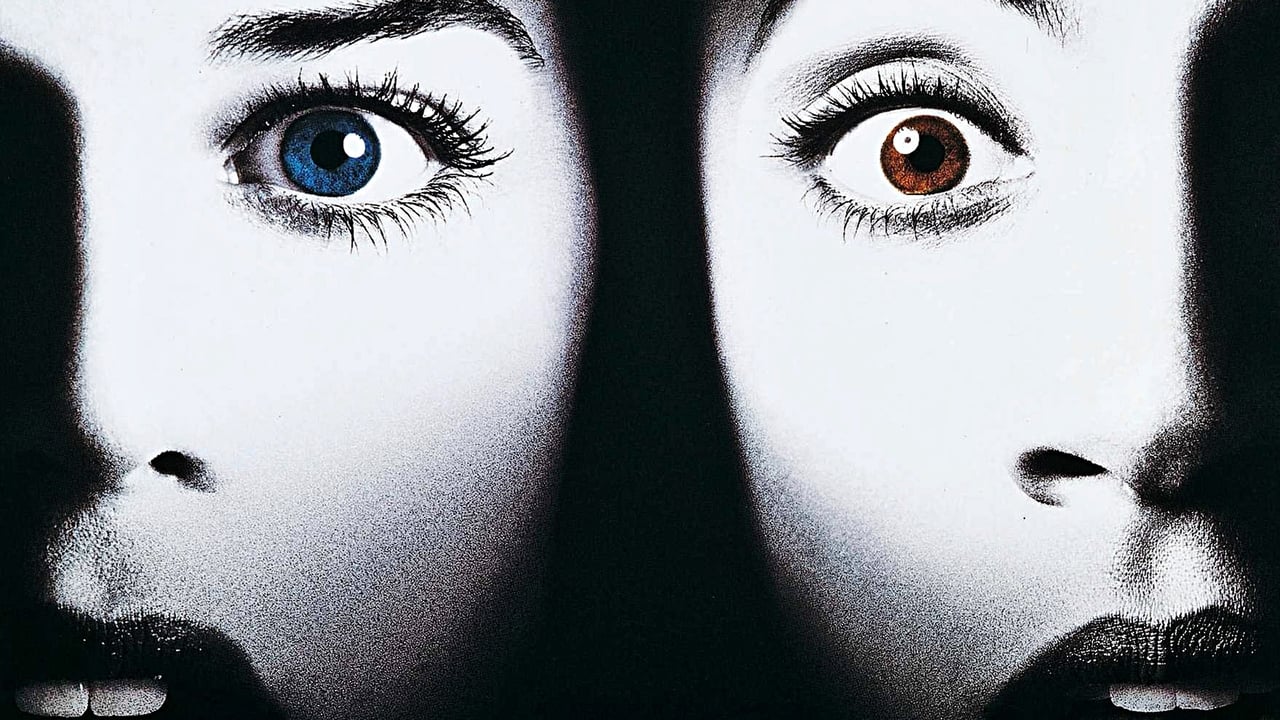
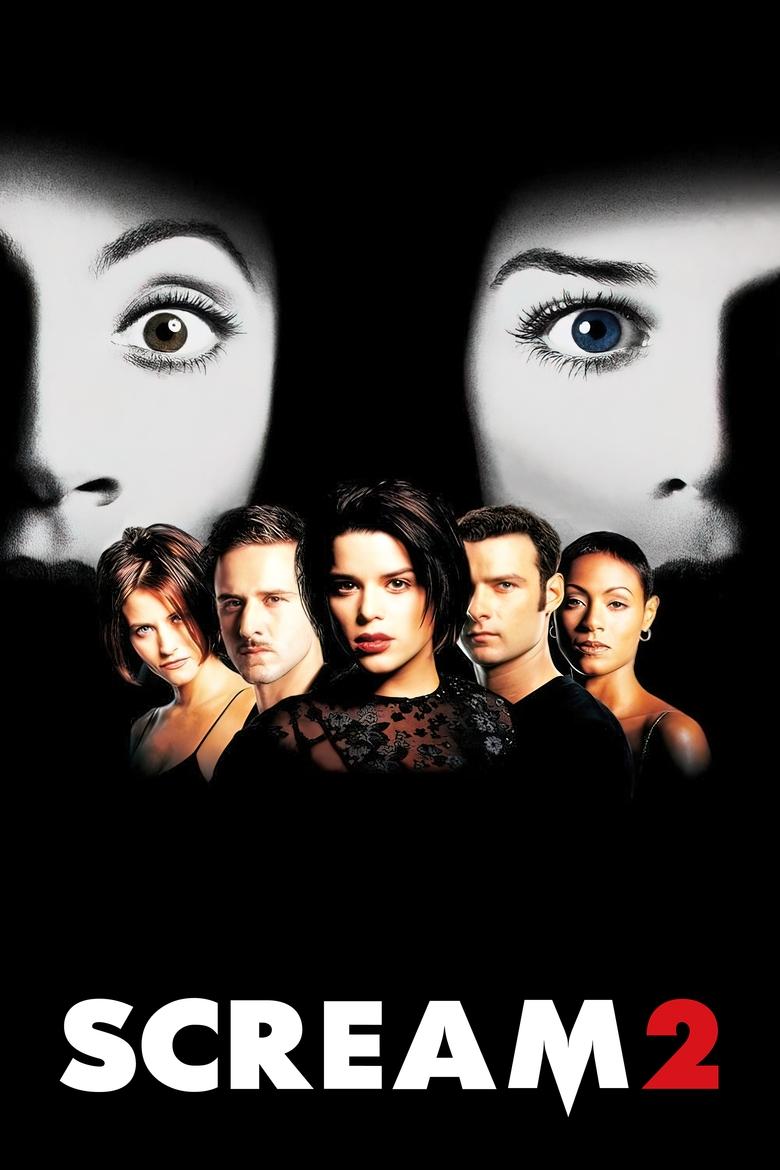
Scream 2
“Someone has taken their love of sequels one step too far.”
Two years after the Woodsboro murders, Sidney Prescott acclimates to college life while someone donning the Ghostface costume begins a new string of killings.
About Scream 2
Why Scream 2 still works
The film wastes no time. What begins as a night at a cinema — a crowd watching a movie about a previous massacre — flips instantly when a character steps out for the toilet and never comes back. That sudden swing from ordinary to horrific still lands the way it did in 1997: private moments become public terror in a room full of strangers.
Wes Craven directs, and the cast give the sequel a clear centre: Neve Campbell’s Sidney Prescott is back at college while old allies arrive — the well-meaning deputy Dewey Riley, the hungry reporter Gale Weathers and Randy, the friend who tries to make sense of murder with genre logic. The film keeps the focus on them even as new deaths ratchet up the stakes. Under the slasher surface Scream 2 cares about familiar things — home and safety, family ties, mortality, the way fear and loss ripple through relationships. It’s a sequel that asks what happens when the headline makers come for the neighbourhood you thought was yours.
The idea that sets Scream 2 in motion
The bookend to the opening cinema shock is a campus that never feels entirely safe. After an early brutal murder at a nearby sorority, Ghostface slips into Sidney’s own house party and attacks; the violence arrives inside places meant for friends and parties.
Gale notices a pattern — small details in the victims’ names — and starts to build a case that the killer is replaying old crimes in a new context. Randy, on the other hand, points the obvious: sequels invite imitation, so perhaps whoever is doing this knows Sidney already.
The film plays the tension between public spectacle and private danger. The killer doesn’t limit their terror to night-time; they interrupt daylight, calling Gale, Dewey and Randy on campus and turning even ordinary errands into risky moments.
Fear has practical consequences. One of the crew who helps cover the story bolts when he thinks he’s next, and Sidney uses a clever public move to shift attention away from herself — she redirects questions to another figure tied to her past — which shows how much of the movie is about surviving the headlines as well as the blades.
Why Sidney Prescott matters
Neve Campbell’s Sidney is the thread the whole film pulls on. She’s a college student now, sharing a life with a roommate and new boyfriend, but the past keeps circling — the newsroom lights up, old accusations surface and people from Woodsboro reappear in ways she can’t ignore.
The arrival of journalists and the media circus around Windsor College forces Sidney into roles she never chose: survivor, public figure, a person whose private grief becomes public content. The movie stages those moments to remind you that being seen can be as dangerous as being alone.
Sidney’s network matters. Friends like Randy, and protectors like Dewey, are part of how she endures this — the film constantly checks who stays and who betrays trust. Family shows up too, not always the comforting sort: old wounds and inherited rage complicate her ability to move on.
There’s even a teasing bit of identity play in the casting, with a performer appearing both as herself and as an echo of Sidney — a small reminder that the film keeps circling questions of image, reputation and who gets to tell someone else’s story.
Scream 2 has more on its mind than the plot suggests
At face value it’s slasher business: kills, chases, the Ghostface mask. But beneath that it’s fixated on where we expect to be safe. Homes, dorms, theatres — none of these feel reliable, and the film keeps shifting the threat into everyday spaces.
Family turns up as both motive and consequence. The past doesn’t stay buried; wounded relatives and abandoned histories amplify the revenge thread, so the killings are personal as much as sensational.
Mortality and fear are handled bluntly. Characters make practical choices — some brave, some cowardly — and those choices change how the story plays out. One supporting figure even flees when he thinks he’s a target, a small fact that underlines how terror reshapes behaviour. Authority gets a nudge too: reporters, cops and exonerated men who want their names back appear across the film, and the story is as much about who controls the narrative of a tragedy as it is about catching a killer.
Scream 2 could not belong to any other decade
Scream 2 hit cinemas in 1997, right at the tail-end of a decade full of horror that liked to talk about itself. That timing matters: it’s a sequel built for a moment when audiences were already primed to recognise genre beats and ask questions about them.
Put simply, the film wears its pedigree on its sleeve — it’s proudly a slasher, mystery and horror picture — and it takes place in a world where media coverage and celebrity chatter are part of how stories spread.
Being a 1997 horror sequel means it leans into sequel logic: repetition, escalation and moments that deliberately call back to what came before.
All of which means the movie feels of its era in an energetic, rather than nostalgic, way — it uses the decade’s appetite for self-aware horror to push the plot into social spaces, not just scare set-pieces.
What has aged — and what hasn't
The emotional bones—concerns about home and safety—remain effective. The idea that familiar places can turn hostile still hits hard, because that’s an easy and immediate fear.
Family and friendship still carry weight: the movie depends on small loyalty tests and choices people make for one another. Those human exchanges keep the stakes grounded even when the carnage gets theatrical.
Fear as a motivator ages well too. A supporting figure’s decision to run when he thinks he’s next is a blunt reminder that panic is practical and sometimes ugly, and that reaction still reads honestly today.
Where the film shows its age is less about themes and more about cultural packaging — but thematically Scream 2’s focus on how violence is public, personal and performative still translates for modern viewers.
Why Scream 2 still matters
It begins with a shocking public murder in a cinema — a scene that doubles as a commentary on spectacle: a crowd mistakes genuine terror for promotion until it’s too late. That opening remains a powerful image of how violence can be misread when it’s packaged as entertainment.
The movie keeps piling on set-pieces that put the media and survivors in awkward proximity: reporters arrive at Windsor College, exonerated figures seek attention, and the campus becomes a stage for headlines as much as an investigation.
Scream 2 also refines the idea that killers can be people you already know. Characters trade theories about motives and mimicry, and when one of Randy’s theories proves tragically relevant the film refuses to let the idea rest as mere genre trivia. Finally, the film’s courtroom-and-revenge angle — relatives of past perpetrators, betrayals, and a final scramble where loyalties are tested — gives it a darker aftertaste than a straightforward slasher. The survivors walk out of the violence changed, and the film makes a show of the messy, compromised ways people react to fame and blame.
Does Scream 2 still hold up?
Yes — but with a small rider. If you’re after a horror sequel that treats its scares as social as well as physical, Scream 2 still delivers. The opening theatre murder, the campus attacks and the way Sidney is pulled into the press cycle give the film a shape that’s more than jump scares.
The cast and the familiar figures matter: Sidney remains the character you follow, Dewey and Gale arrive to protect and exploit in equal measure, and the film keeps asking how much of survival is about relationships rather than plot contrivance.
As a 1997 slasher-mystery it’s exactly the kind of sequel the decade produced — it knows it’s a sequel and uses that to sharpen motives and set-piece choices rather than merely repeat them. At 120 minutes it takes time to let fear bleed into the characters’ public lives, which is one of its smarter decisions.
So watch it. Not because it’s untouchable nostalgia, but because Scream 2 still remembers to make ordinary places feel unsafe, and it cares about the people who have to live with the fallout. That combination keeps it watchable long after the credits roll.