
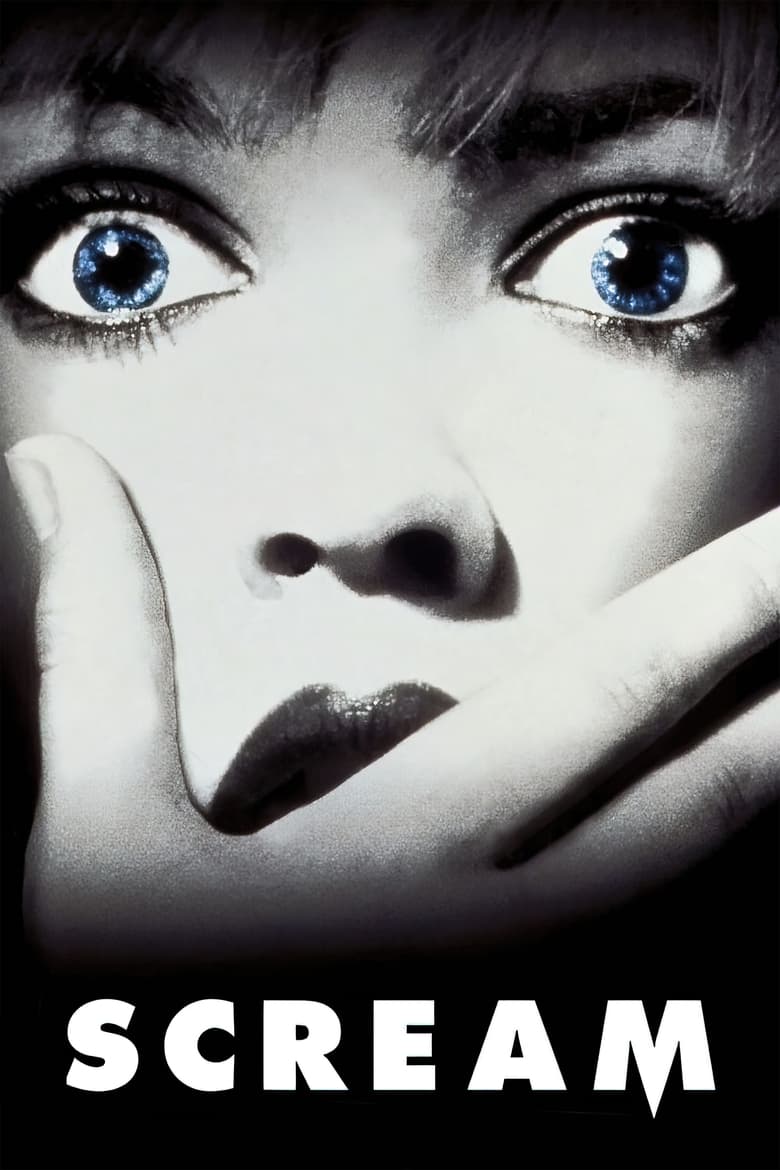
Scream
“Someone has taken their love of scary movies one step too far. Solving this mystery is going to be murder.”
A year after the murder of her mother, a teenage girl is terrorized by a masked killer who targets her and her friends by using scary movies as part of a deadly game.
About Scream
Why Scream still works
It begins like a private nightmare: Casey Becker is home alone when an anonymous caller toys with her, turning trivia into a threat. That sequence does something simple and brutal — it moves horror from faraway places into the most familiar room in the house.
Wes Craven directs, and the movie spends its 111 minutes treating suburban normality as fragile. Neve Campbell’s Sidney Prescott is introduced as someone whose life has already been broken by personal loss, so every small intrusion — a dropped phone, a late‑night knock — lands harder than it might in a less personal story. Scream wears a few labels — horror, slasher, teen, comedy, mystery — but what gives it teeth is how it connects violence to everyday family life and the places we expect to be safe. That, more than anything, is why the film keeps pulling viewers back.
The idea that sets Scream in motion
Scream’s engine is a straight, effective one: an anonymous caller weaponises knowledge of horror films and uses a home‑alone phone call to start killing. The opening gambit — a quiz that becomes fatal when the wrong answer is given — is as economical as it is vicious.
From that domestic breach the story widens. A youthful suspicion falls on Billy Loomis after he climbs through Sidney’s window and drops a cellular phone, which immediately makes him feel less like a rescue and more like a question.
The murders ripple outward: school is suspended, people watch the town’s institutions fray, and even the principal turns up dead in his office. The normal places of routine and authority suddenly seem exposed.
By the time the party at Stu’s house ends in violence, the idea that began with a phone call has tied together personal grief, small‑town exposure and the ways people protect — and fail to protect — each other.
Why Sidney Prescott matters
Sidney Prescott is not a blank final‑girl silhouette. She’s a young woman living under the particular pressure of a violent family history — the rape and murder of her mother — and the anniversary of that loss is an active part of the story.
That grief complicates every ordinary choice: with her father away, she sits waiting at home; a relationship with Billy is stalled because the trauma has prevented them from taking the next step. Those are not throwaway details. They tether the scares to something real.
Sidney’s wary instincts are given concrete beats — she grows suspicious when Billy drops a phone in her room and later faces the nightmare intrusions into the houses and gatherings that should be safe. What makes her memorable is that the movie keeps returning to how vulnerable her private life is.
Put simply: Scream isn’t just about who’s behind the mask. It keeps coming back to who Sidney is when her ordinary world is repeatedly violated, and that recurring vulnerability gives the plot a steady emotional pull.
Scream has more on its mind than the plot suggests
At surface level Scream is a murder mystery; underneath it’s a movie fiddling with the idea of safety. Family and home are constant targets — the crime that started Sidney’s story was personal, and the killers keep attacking domestic spaces.
Authority is threaded through the film as well. Institutions people usually turn to — the police, the media — are present but imperfect, and that uncertainty feeds the film’s tension about who to trust.
There’s also a quiet exploration of freedom and loss: relationships are held back by trauma, and the characters’ sense of liberty is constantly infringed upon by fear and mortality. The killer’s choice to target familiar ground turns ordinary freedoms into liabilities. Finally, the motive that surfaces — an act of vengeance tied to a family betrayal — anchors the violence in human terms. The film doesn’t reduce the killings to pure spectacle; it keeps reminding us that hurt and abandonment can produce destructive responses.
Scream could not belong to any other decade
Scream arrived in 1996, squarely in the middle of the 1990s rather than emerging from some earlier era. That release moment matters: it’s a 90s film in timing as much as temperament.
Being a film of 1996 places it among the decade’s tendency to mix approaches rather than stick to a single tone. Scream moves through different register quickly — sometimes intimate, sometimes sensational — and that restless energy feels of its time.
Because it is a 1996 movie, Scream also reads now as a particular 90s answer to teen horror and small‑town stories: it’s designed to speak to a generation used to genre shifts and quick tonal flips.
What has aged — and what hasn't
The opening phone scene — a teenager alone at home, the anonymous caller escalating a trivia game into terror — still works. The basic mechanics of that scare don’t depend on a time stamp: being hung up on, threatened and alone is a universal anxiety.
Elements that hinge on youth culture remain effective because the movie keeps the focus on character: Sidney waiting at home, the party at Stu’s, the way trauma interrupts young relationships. These are emotional beats that translate to a modern viewer.
Some aspects are uncomfortably tied to the film’s portrayal of family fallout — the revelation that Maureen’s death set off a chain of abandonment and violence is a reminder that the story’s worst harms are personal and intimate, not abstract.
In short: the scares that come from ordinary places — houses, parties, relationships — age better than anything theatrically shocking. The framing of fear as something that arrives in your living room still lands.
Why Scream still matters
People who grew up with Scream remember the way it rearranged familiar pieces — the home‑alone scare, the school party, the intrusive phone calls — and made those things feel dangerous again. The opening with Casey at home and the discovery of her body the next day are the sort of images that stay with you.
The film also turned the town into a kind of public theatre: the morning after the murders the media crowd Woodsboro, and that visibility changes how the community behaves and how characters like Sidney are seen and questioned.
The catalogue of set pieces — a principal found dead in his office, a party that ends in violence, the chaotic scene where the killers are revealed — gives people particular moments to point to and remember. Finally, the dawn‑break sequence — escape, rescue, the ambulance for Dewey and the reporting that follows — ties the night’s horror to the ordinary processes of the town waking up again. That mixture of spectacle and small‑town aftermath is why the film still gets talked about.
Does Scream still hold up?
Yes — but not because it’s a nostalgia relic. Scream remains watchable because its scares start from recognisable, domestic places: a phone call to a girl alone at home, a party that should be safe, the anniversary of a private tragedy that won’t stay private.
Neve Campbell’s Sidney is central to that survivability. The film keeps returning to her grief and to moments when ordinary life is interrupted — waiting at home, a stalled relationship, a dropped phone — so the shocks never feel gratuitous; they feel personal.
It helps that the picture is compact: at 111 minutes the film moves briskly through its set pieces without overstaying them, and Wes Craven’s shape of the story ties together family injury, small‑town exposure and the messy aftermath when the killers are revealed.
If you’re deciding whether to watch it now, go for the way Scream treats everyday things as vulnerable. The film still finds fresh terror in what used to be private, and that’s a hard trick to beat.