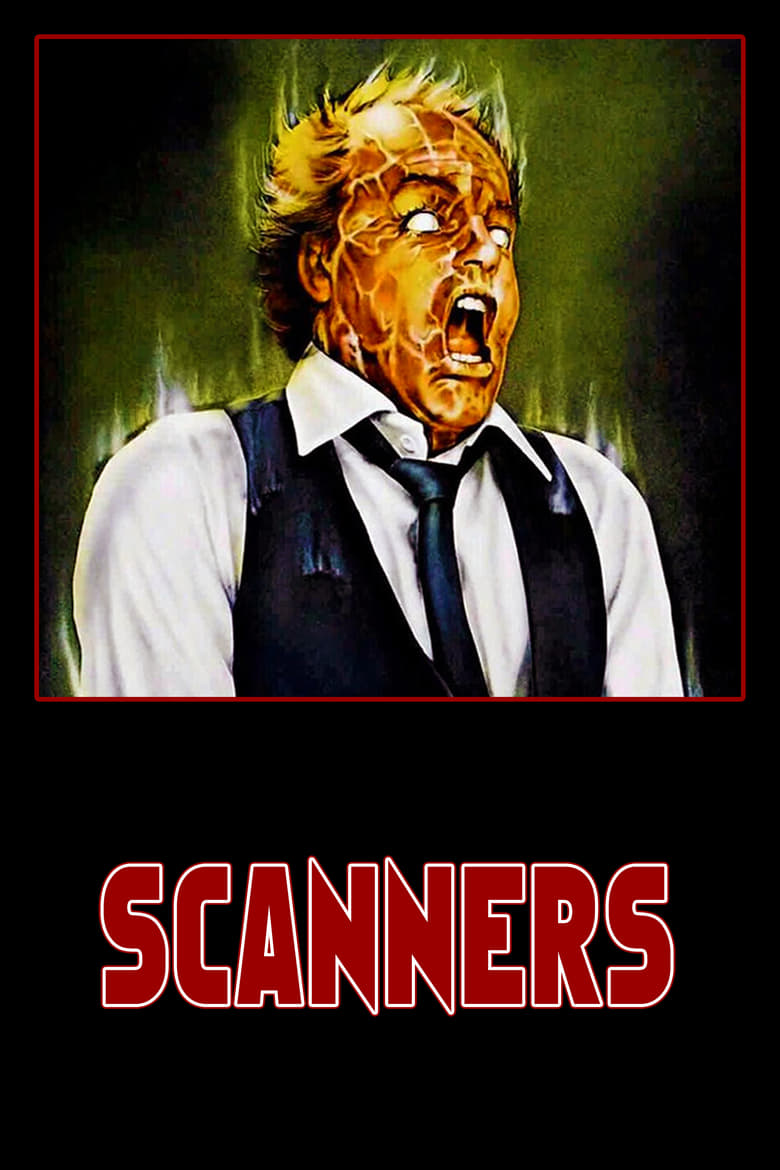
Scanners
“10 Seconds: The Pain Begins. 15 Seconds: You Can’t Breathe. 20 Seconds: You Explode.”
A scientist trains a man with an advanced telepathic ability called 'scanning' to stop a dangerous Scanner with extraordinary psychic powers from waging war against non-Scanners.
About Scanners
What makes Scanners worth revisiting
The film throws you straight into the bizarre: Cameron Vale, a down-and-out who thinks he’s going mad, sets off a violent seizure in a mall simply by being near someone. It’s a clean, shocking way of establishing what Scanners is about — unusual psychic power that can do real harm.
David Cronenberg directs, and he keeps the story tight. Vale is picked up by agents of a private military outfit called ConSec and taken to Dr Paul Ruth, who explains that Vale is one of a small number of people with telepathic and telekinetic ability. That setup — a handful of people suddenly possessing dangerous mental powers — is the engine that drives the film’s conflicts.
Around Vale orbit figures who matter: Kim Obrist, the woman who leads a network of scanners opposed to the violent Darryl Revok, and a corporate world that wants to understand and exploit what these scanners can do. That mix — personal stakes, family echoes and organised power — is why Scanners still feels like a film worth revisiting.
Why Kim Obrist matters
Kim Obrist isn’t a decorative side character. She leads a group of scanners who oppose Revok’s campaign, which immediately places her at the moral and organisational heart of the film’s resistance to domination.
Her presence turns Vale’s journey from a private struggle with frightening abilities into something collective. Vale doesn’t just learn to control his power; he finds there are other people with the same problem, people already organised around a cause.
That connection also lets the movie touch on family in a less literal way: the scanners’ bonds and loyalties become a counterpoint to the toxic, paternal figure who looms over their story. The family theme gives Obrist a weight the film needs — she represents an alternative to the kind of control Revok embodies.
Finally, Obrist is central at the film’s violent turning points. The narrative stakes are personal as well as political, and her role keeps the story from being only an abstract battle of powers.
Scanners has more on its mind than the plot suggests
On the surface it’s a thriller about telepathy: a handful of people can read minds and, sometimes, blow them apart. But the film layers that onto questions about corporate control and technological ambition. ConSec and later Biocarbon Amalgamate are organisations that don’t simply want to study scanners; they want to contain, market and weaponise what they are.
That corporate thread sits beside a quieter argument about freedom. Vale hears people constantly — unwanted, invasive contact — and learning to manage that noise becomes a metaphor for reclaiming autonomy. Dr Ruth doesn’t only diagnose; he trains Vale to filter other people’s mental clutter, which read as a lesson in finding personal sovereignty against overwhelming influence.
There’s also an evolutionary claim threaded through the movie: Ruth at one point frames scanners as a possible next step for humanity. That idea complicates the usual good-versus-evil framing. If scanners are potentially the future, then who gets to decide how they are used? Corporate interests or the people themselves?
Finally, family creeps into the argument. The story’s revelations about origins and parentage turn ideological conflict into an intimate one: power isn’t merely political, it’s personal. That linkage — between the public project of control and private ties of blood — is what keeps Scanners more interesting than a straightforward genre exercise.
Scanners could not belong to any other decade
Scanners arrived in 1981, right at the start of the decade. That timing matters: it sits before a certain smoothing-out of genre cinema and keeps some of the rougher, riskier edges of late-70s and early-80s filmmaking.
The film’s interest in corporate experiments, emerging technologies and a small group of people reshaping the future places it inside conversations that became very loud across 1980s movies — concerns about institutions and how they touch private lives.
Put simply: releasing in 1981 gives Scanners the licence to feel urgent and a little unruly, rather than polished into a safer modern thriller.
Viewed that way, it’s an early-'80s picture because it pinches anxieties of the moment and makes them nervous company for its characters.
What has aged — and what hasn't
One thing that still holds up is the film’s use of family as a thematic knife. When parentage and inheritance are revealed, the stakes snap from abstract to immediately human. That personal angle helps the story feel less like a thought experiment and more like a lived crisis.
The finale’s escalation — a telepathic duel that has unquestionably extreme physical consequences — still lands as a shocking end to the film’s ideological arguments. It’s narratively ruthless: family ties, power struggles and the cost of control all culminate in a decisive, violent moment.
At the same time, the film’s willingness to mix body-level danger with cerebral menace means it can feel uncompromising to modern eyes. It doesn’t apologise for where it takes its ideas.
So if you come back to Scanners now you’ll find certain narrative choices remain potent: the private violence of reading other minds, and the way the story turns institutional ambitions into personal catastrophe.
Why Scanners still matters
People who remember Scanners often recall its leap-of-idea premise: a vagrant whose unwanted contact with other minds produces real, dangerous effects. That opening shock — followed by his capture by ConSec and explanation that he is one of a small number of scanners — gives the film a recognisable spine.
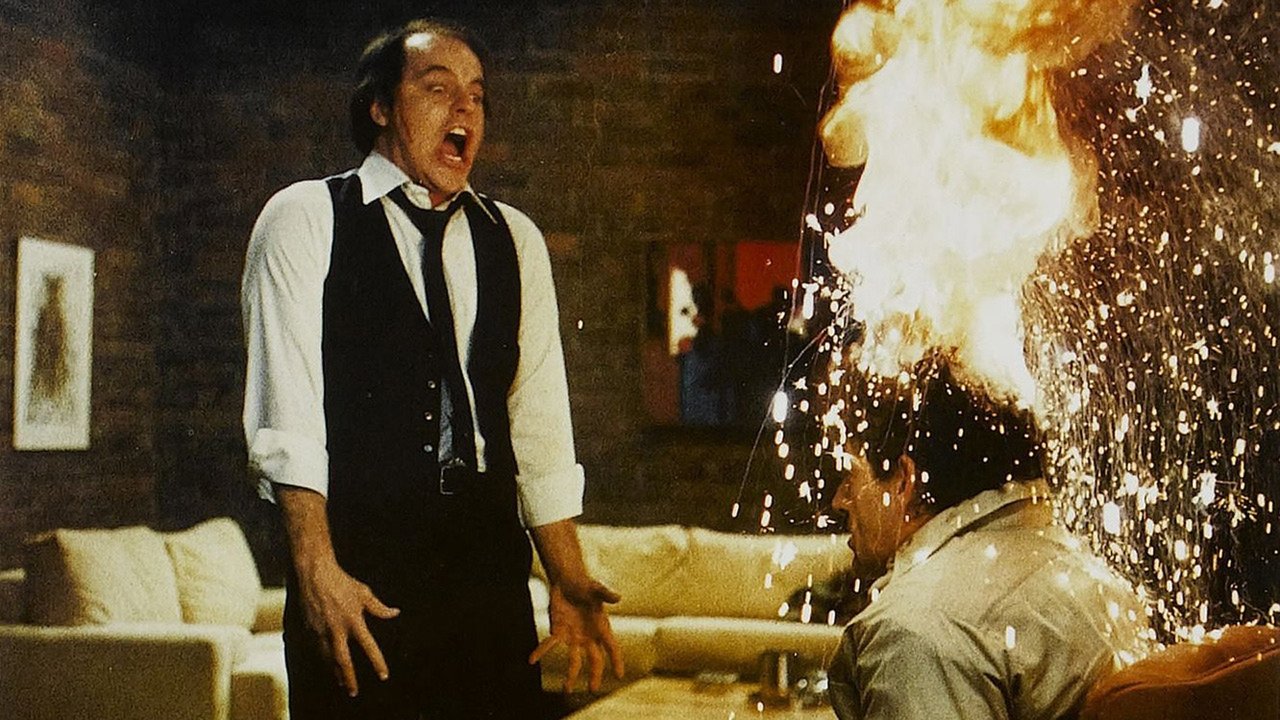
Beyond the premise are a handful of genuinely memorable plot beats that stick in the mind: ConSec’s public demonstration that goes disastrously wrong; the moment a man’s head is destroyed by psychic force; the discovery of a pharmaceutical, ephemerol, and a corporate link that suggests scanners could be manufactured or multiplied.
There are also smaller, stranger details that linger: Vale remotely accessing a corporation’s systems using his ability; the unsettling idea of a fetus scanning a mother; the personal revelation that ties the protagonists and antagonist back to a single scientist. Those elements turn a direct thriller into a film that feels tangled and a little uncanny.
All of this keeps the film present in memory because it’s not just a story of powers and fights. It’s a story of institutions trying to control people, family secrets, and the ways personal agency can be compromised or reclaimed — ideas that still resonate with viewers who grew up with it.
Does Scanners still hold up?
Yes — if you want a compact, unnerving science-fiction thriller that connects psychic spectacle to institutional ambition, Scanners still works. It opens with a clear, startling premise and quickly shows that those powers have political as well as personal consequences.
Cronenberg keeps the runtime tight (103 minutes) and focuses on a small cast around Vale and Kim Obrist as they uncover a pharmaceutical and corporate scheme that aims to shape the next generation. That blend of individual struggle and corporate plotting keeps the story engrossing.
If you dislike stories that tie bodily violence to abstract ideas, the film can feel blunt. But if you appreciate a film that makes power literal — voices in your head, the ability to invade or control someone else — then the themes of power, freedom and the uneasy family links at the centre still pay off.
Bottom line: watch it for the idea and the way the story refuses to separate the political from the personal. Scanners isn’t subtle for the sake of subtlety; it wants to make you uncomfortable about where power can live — and that’s as persuasive now as it was in 1981.