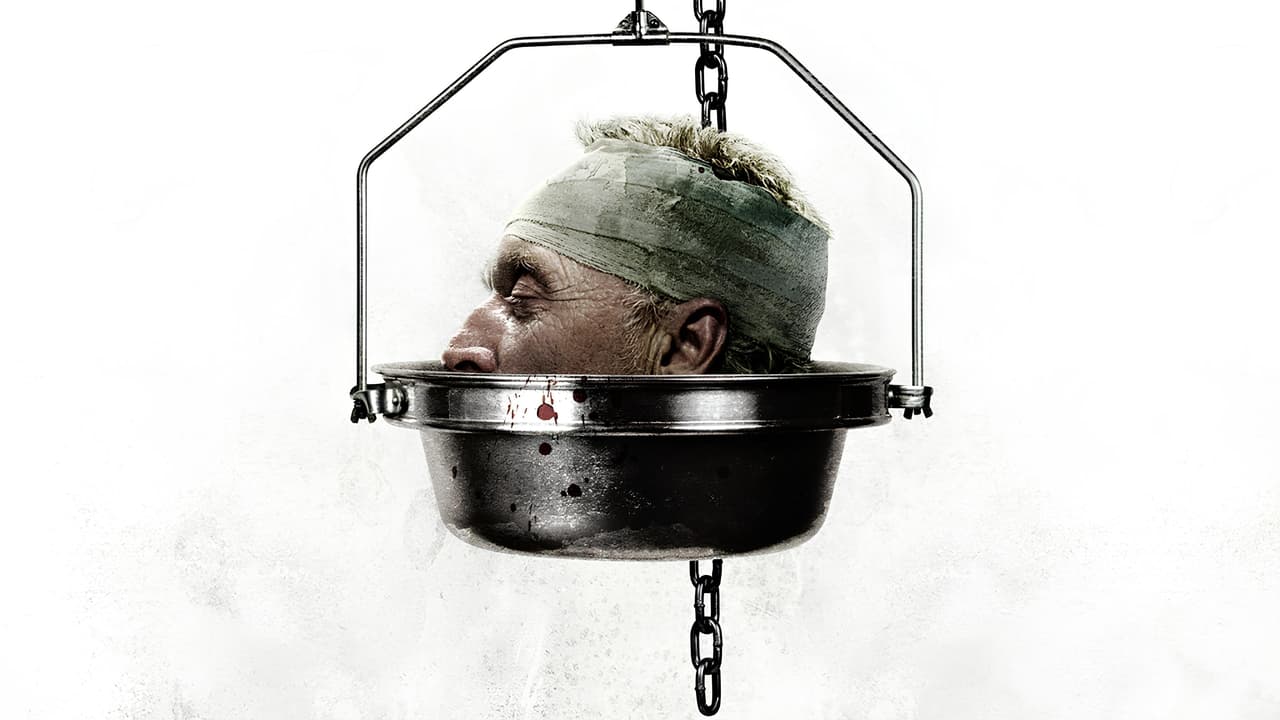
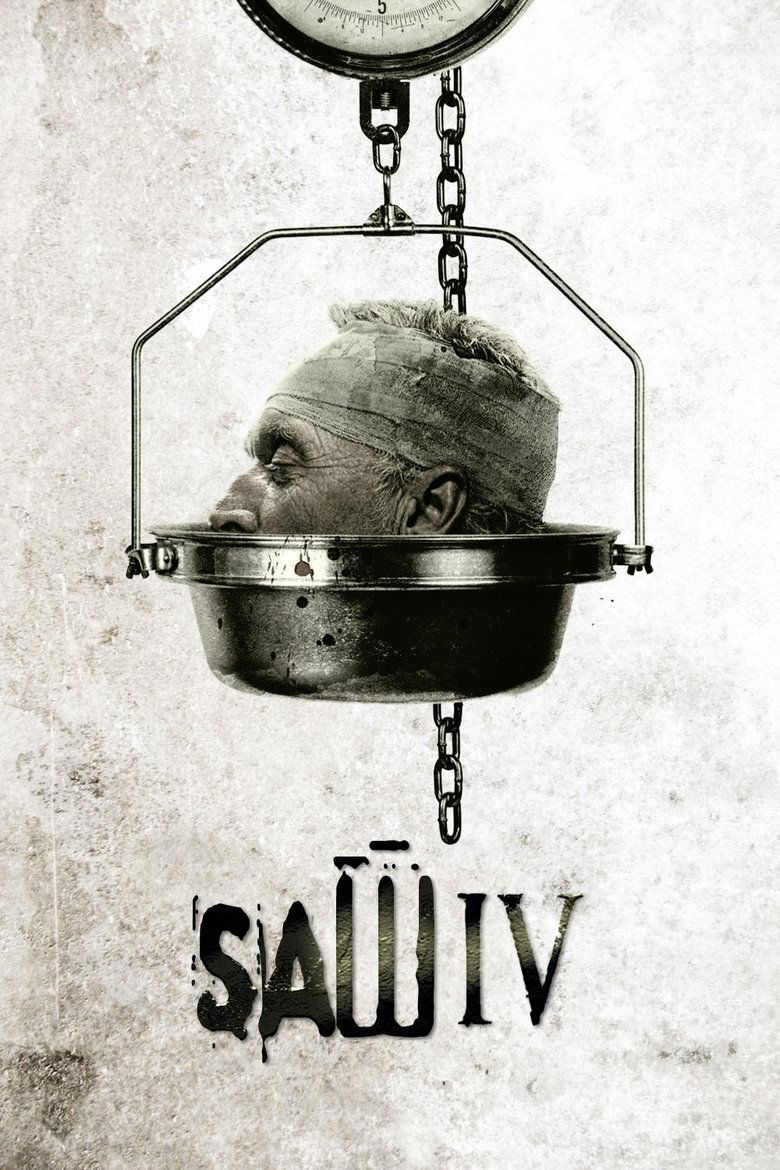
Saw IV
“You thought it was over...but the games have just begun.”
Despite Jigsaw's death, and in order to save the lives of two of his colleagues, Lieutenant Rigg is forced to take part in a new game, which promises to test him to the limit.
About Saw IV
Why Saw IV is still worth talking about
There are two images that set the tone for the whole film: a forensic table and a tiny object found inside a body. That discovery — a small, protected recording buried where no one would look — immediately turns a medical procedure into the start of another story.
Darren Lynn Bousman keeps the pace tight. In under a hundred minutes the movie reintroduces John Kramer’s world, throws the police into fresh confusion and drops several of the franchise’s more barbed contraptions into play. It’s unapologetically grim, and unafraid to get its hands dirty. More than blood and traps, the opening sequence frames the film as a puzzle: a recorded message, a warning for the detective who listens, and the suggestion that more people will be pulled into Kramer’s games. It’s a tidy hook — small detail, big consequences.
The idea that sets Saw IV in motion
The film spins out from forensic breadcrumbs and Jill Tuck’s recollections. Those fragments let the investigators — and the audience — start fitting crimes together without dragging us through every flashback.
A hospital tale from Kramer’s past resurfaces: his first trap and the man who died trying to kill him. That origin detail keeps returning, reminding us why Kramer built his logic of punishment in the first place and why certain people attract his attention.
Meanwhile the police trail leads to the Gideon Meat Factory, the place where a string of tests is arranged. Sightlines cross: what looks like a random sequence of victims and devices slowly forms a pattern, and Strahm’s deductions are the wireframe that shows it.
Interspersed with that puzzle are set-piece tests — from a scene with a puppet left in an office to violent contraptions that force impossible choices. The setup works because it offers both a cold forensic mystery and a series of immediate, almost gladiatorial dilemmas.
Why John Kramer matters
Kramer remains the gravity well around which everything spins. Even when he’s not physically present, the mechanics of the traps and the echoes of his past choices give the film a direction.
He's not just an idea of punishment — family threads run through his motives. That domestic knot is why scenes about abused victims, miscarriages and ruined lives sit beside the gore: Kramer’s story is entangled with other people’s losses.
Those links are why detectives like Hoffman and Rigg are dragged into morally messy choices; Kramer’s fingerprints are everywhere even when his body isn’t. The film treats him as the architect of a philosophy, which keeps him memorably central.
In short: Kramer matters because the movie measures other characters against the standards he imposed, and those standards are what make the traps feel personal rather than merely mechanical.
Saw IV has more on its mind than the plot suggests
On the surface it’s a splatter picture with timed devices. Underneath, it’s often quietly about protection — who protects whom, and what that protection costs. Parenthood, both lost and failed, threads through Jill’s backstory and the motivations behind many of the tests.
Technology shows up too, not as sleek gadgets but as cold, engineered punishment: devices that measure time, restrict speech and force bodily choices. The film treats machinery as a neutral tool that people turn into moral instruments.
Fear is the obvious currency; loss is the quieter one. The movie mines grief and the way it warps decision-making, from personal tragedies to institutional failures that let predators stay free. Finally, the story’s recurring domesticity — the school test that ties back to past violence, the miscarried child — reminds us the horror is rarely abstract. It’s lodged in families, careers and small moments where someone failed to keep someone else safe.
Saw IV could not belong to any other decade
Released in 2007, Saw IV sits firmly in the mid‑00s appetite for concept horror: films that take a single high‑concept idea and wring it for fizzing, uncomfortable set pieces.
That period favoured smaller, idea-driven franchises that could keep expanding a central conceit without needing to reinvent everything. This movie knows its box and keeps the story tight and circuitous.
The era liked its scares clinical and schematic rather than gothic — a set of rules, a clock and a handful of moral questions. Saw IV is a good example of that approach: efficient, determined and unromantic about its nastiness.
Seen through that lens, it’s a product of its moment: a 2000s horror instalment that values puzzle mechanics and escalation over grand reinvention.
What has aged — and what hasn't
The basic levers of fear still work. Personal stakes, countdowns and moral dilemmas are timeless hooks; the film gets you into a test and makes the choices feel urgent, which continues to provoke that hollow, queasy tension.
Themes about family and failed protection also hold up. The movie’s focus on parents, miscarriages and the consequences of neglect gives an emotional ballast that isn’t shaved off by time.
Where it feels dated is less in idea than in tone: the film commits to being relentlessly grim, which modern audiences may find more punishing than stylish. It’s the difference between disturbing art and punishment for its own sake.
But when the film ties a test back to a character’s past — the school incident that recalls previous misdeeds and saved careers — that connective tissue still reads, and it’s why some moments remain genuinely affecting.
Why Saw IV still matters
A small object found during an autopsy — and the message it contains — is the movie’s neat trick for expanding the saga without reinventing it. That forensic hook turns a corpse into a plot device and reminds us how the Jigsaw story is built like a clockwork: one small piece affecting many gears.
The mausoleum test with Trevor and Art is one of those moments that sticks in the memory: the cruelty of preventing communication between victims, and the desperate choices that follow, make it a compact moral experiment. It’s the sort of image the franchise loves to return to.
On a narrative level, this instalment is important because it widens the conspiracy: detectives, FBI agents and the suggestion of an extra apprentice complicate the earlier, simpler picture. That ripple — the idea that someone was assisting Amanda — changes who you can trust in the story. Finally, the film closes loops in the franchise’s timeline: tests that feel like later revelations are shown to have happened earlier, and the reveal that an apparently helpful detective was part of the game reframes everything. For fans who followed the series, that recalibration still lands as a sharp, if ruthless, storytelling move.
Does Saw IV still hold up?
Short answer: yes, if you know what you’re signing up for. Saw IV delivers the mechanical cruelty and moral puzzles the series promises, and it does so efficiently in a 96‑minute runtime.
It’s not subtle. The film trades in shocks, tight schematics and a certain moral grimness — themes of parental protection, mortality and loss are front and centre — so expect unpleasant choices framed as tests rather than gentle psychological horror.
Two practical points matter: the forensic hook that starts the story keeps the mystery moving, and the expansion of Kramer’s web — the calls made to Hoffman and the hint of another apprentice — gives the movie narrative weight beyond isolated set pieces.
If you like your horror tidy, ruthless and idea‑driven, Saw IV still does its job. If you prefer nuance over nastiness, it will feel thin. Either way, it’s an effective example of what the franchise aimed to be: a clockwork of cruelty with family at its fulcrum.