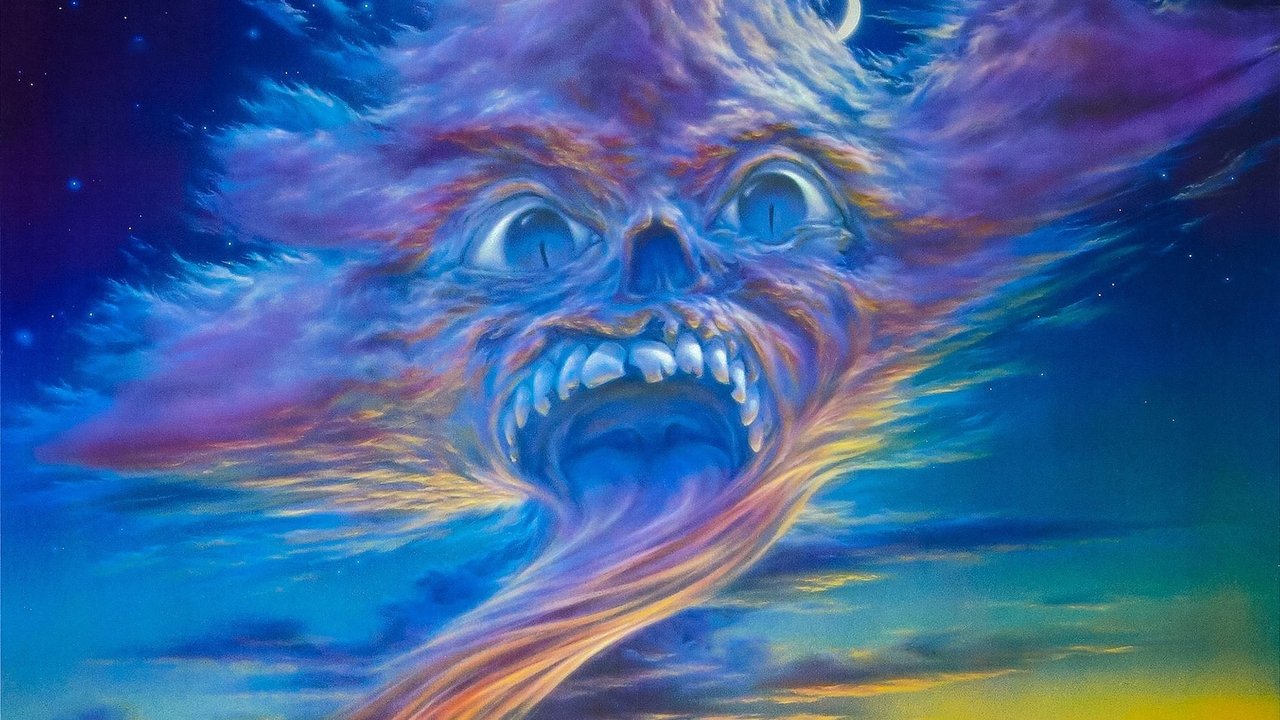

Return of the Living Dead Part II
“Just when you thought it was safe to be dead.”
A group of kids discover one of the drums containing a rotting corpse and release the 2-4-5 Trioxin gas into the air, causing the dead to once again rise from the grave and seek out brains.
About Return of the Living Dead Part II
Why Return of the Living Dead Part II still stands out
This is the kind of sequel that announces itself with a pratfall. Set after the UNEEDA Warehouse business, Return of the Living Dead Part II drops you into trouble in the way only late‑80s horror comedies can: a single loose item in the logistics chain and everything unravels. It’s short — 85 minutes — and it moves like it knows every minute counts.
Ken Wiederhorn directs the whole tumble and keeps an eye on a sizeable ensemble. James Karen turns up as Ed Mathews, Thom Mathews is Joey Hazel, Marsha Dietlein plays Lucy Wilson, Dana Ashbrook arrives as Tom Essex and Michael Kenworthy is the kid, Jesse — a compact cast who steer the movie between grim set pieces and genuinely daft choices.
Genre labels — science fiction, comedy horror, zombie comedy — are obvious, but what gives the film personality are its recurring concerns: freedom and fear, family and home, and a whiff of power (corporate or otherwise) that starts the trouble and then refuses to leave the party politely.
The idea that sets Return of the Living Dead Part II in motion
At its simplest the movie is a continuation: it picks up after the UNEEDA Warehouse events and treats that offstage history as the cause of everything that follows. That single connective tissue is enough to justify the fast escalation.
Once the town is in chaos the story funnels the survivors towards one final, strangely specific destination: a meat packing plant. The plan they cook up there — using the site to turn a terrible situation into a way to end it — is blunt, literal and exactly the sort of late‑movie solution this film favours.
Why Ed Mathews matters
Ed Mathews is one of the movie’s early movers — a grave robber who, with his mate Joey, stumbles into the very thing that turns the town upside down. James Karen’s casting as Ed gives the role a reliable anchor: he’s present at the moment the dead start moving, and that simple fact keeps him central to the film’s rolling disaster.
Ed is useful narratively because he represents the kind of adult who treats the cemetery as opportunity rather than sacred ground. That attitude contrasts sharply with the family units we keep returning to — the helplessness of parents, the pile‑up of responsibility on older siblings — and helps the film examine how ordinary people respond when the rules collapse.
Put another way: Ed’s practical decisions — he’s looting tombs when the trouble begins — are the flip side of the family scenes. The grave robber and the household are both trying to survive, but they come at survival with different equipment and priorities. That keeps the movie moving between small domestic panic and full‑scale mayhem.
Return of the Living Dead Part II has more on its mind than the plot suggests
On the surface it’s a tidy zombie premise; beneath is a film fussing with what safety and freedom actually mean. The spill that starts everything removes choice from people’s hands and forces the characters into crude, urgent decision‑making — keep your doors closed, trust strangers, or take control by any means necessary.
Family is never far from the centre. The movie keeps returning to siblings, parents and frightened kids to remind you that the stakes are domestic as well as apocalyptic. Home — the place we expect to be safe — is repeatedly compromised, which turns ordinary houses into precarious islands.
Mortality and fear are handled with the blunt instrument of physical danger. The film’s answer to loss and terror isn’t philosophical; it’s pragmatic and occasionally savage: lure the problem and flip the switch. That literal plan — driving zombies to a power plant and electrocution as a closing move — ties the movie’s themes of power and survival together in a grimly neat package.
There’s also a thread about responsibility: freedom without consequences morphs into chaos, and the moments where characters try to impose order (however brutal) speak to the film’s odd moral centre — messy, expedient and human.
The effects work that gives Return of the Living Dead Part II its physical personality
The film doesn’t just tell you people are poisoned — it lets you see the consequences of exposure. Billy’s illness and the way it plays out (he warns Jesse not to tell anyone) give scenes a tactile urgency: the danger feels bodily and immediate rather than abstract.
That focus on physical consequence — illness, deterioration, visible symptoms — does a lot of heavy lifting for the film. It turns what might have been a cartoonish romp into something that occasionally bites back.
Because the threat registers in flesh, the audience keeps a toe in real stakes even when the movie leans into comedy. The balance is fragile, and the film mostly keeps it.
Return of the Living Dead Part II could not belong to any other decade
This is late‑80s filmmaking in tempo and temperament. Released in 1988, the movie has that era’s appetite for genre‑mixing — the willingness to put laughs next to body horror and let both crash into each other.
There’s a certain economy to the storytelling that feels of its moment: tight running time, ensemble turns, and an eagerness to keep moving rather than linger. That restless, slightly reckless pacing is very much an 80s thing here.
Above all, it wears its decade on its sleeve in how it treats youth and small‑town panic: the film trusts the idea that ordinary people and kids can drive the plot into absurd places, and it rewards that with set pieces that are unmistakably of the period.
What has aged — and what hasn't
Some elements hold up better than you’d expect. The family dynamics — an older sister ordering a kid to do homework, a child desperate to be taken seriously — still read as recognisable, human moments. They give you a reason to care when the house stops being refuge and starts being trap.
The film’s treatment of fear also survives: the pleading kid who says something important and gets ignored (Jesse telling Lucy) is an old, effective trick. It makes the audience complicit in the panic, because we’re always waiting for adults to take the right call and they don’t.
Bullying sequences — the initiation at the mausoleum — are uncomfortable in a way that hasn’t grown quaint. The film doesn’t glamourise the kids’ cruelty; it shows how a small mean act can trigger catastrophe, which is a theme that doesn’t date.
Where the movie feels a little more of its time is in the way it packages chaos into neat solutions. The electrocution plan is satisfyingly cinematic, but that kind of tidy heroism can come across as slightly schematic to modern viewers who prefer moral ambiguity. Still, the emotional bones — family under threat, home betrayed — remain intact.
Why Return of the Living Dead Part II still matters
There are a handful of images and choices that keep turning up in conversations about this film: a rogue military barrel that starts everything, the kids who find it, the grave robbers who pry open the mausoleum and the townsfolk who discover their everyday lives collapsing. Those moments are memorably daft and bleak in equal measure.
The mixture of small, domestic beats — a boy locked in his room, a sister who won’t listen — with larger‑scale escalation (acid rain reanimating corpses, the town being evacuated) makes the film feel like a compressed disaster story. It’s both intimate and chaotic; that tension is where people tend to return.
There are also undeniably splashy moments: a zombified figure attacking soldiers, desperate escapes, and the final gambit at a power plant. The film’s willingness to push characters into downright awful choices — Brenda abandoning people, survivors turning to theft and seduction of expedience — leaves an impression.
Put simply: the movie keeps showing up in memory because it combines tiny, everyday human failures with full‑on set‑piece nonsense. That contrast is oddly tenacious.
Does Return of the Living Dead Part II still hold up?
Yes — if you come for a brisk, ugly‑fun late‑80s zombie comedy and not for subtlety. Ken Wiederhorn’s 85‑minute film doesn’t waste time. It’s economical, sometimes vicious, and often funny in a way that leans into the discomfort of family members failing one another.
The movie’s strengths are its pace and its willingness to make ordinary people the engine of disaster: kids who find trouble, grave robbers who pry open tombs, and a handful of desperate survivors who end up at a meat packing plant with an even more desperate plan. That combination keeps the stakes both intimate and cinematic.
If you’re interested in themes — freedom stripped away, the fragility of home, the costs of trying to control a catastrophe — the film delivers concrete, memorable moments: a child ignored when he tries to warn adults, illness that visibly changes people, and a final, literal use of power to end the threat.
So watch it for the weird mixture of domestic panic and set‑piece horror. It’s not polished, but it’s energetic, specific and, in its own loud way, honest about what panic does to people.