Resident Evil: Apocalypse
“The evil continues...”
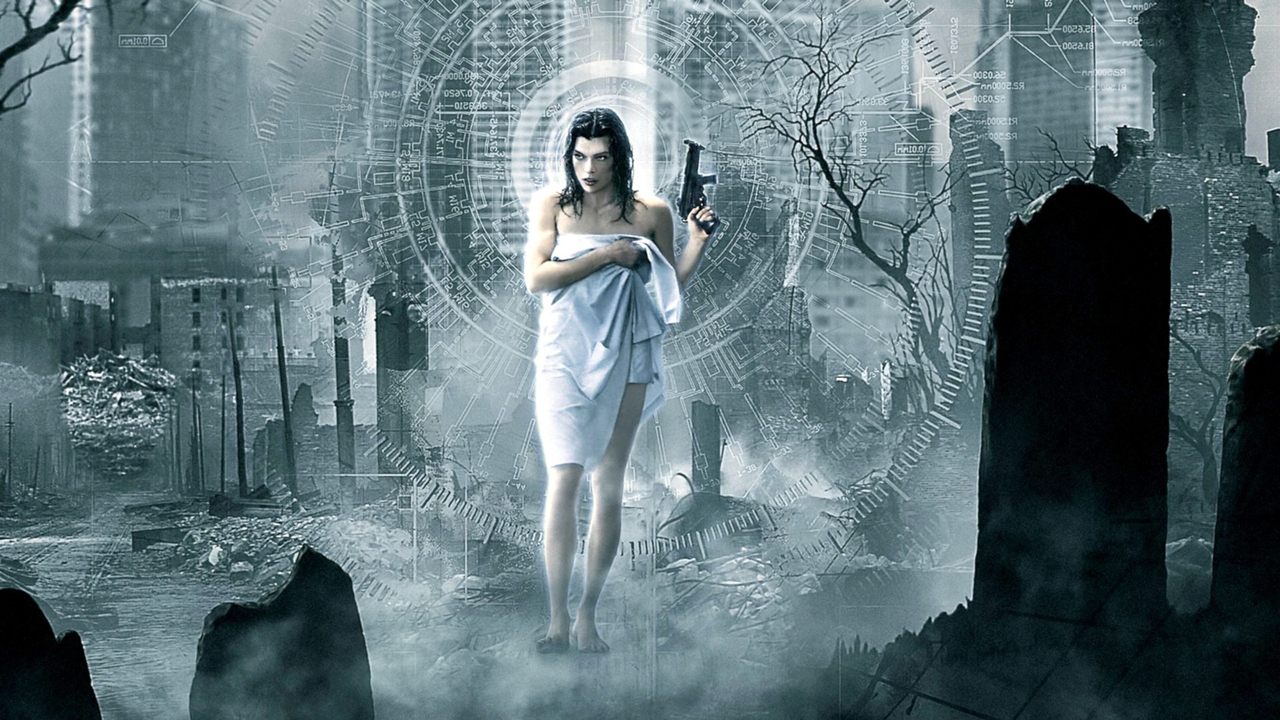
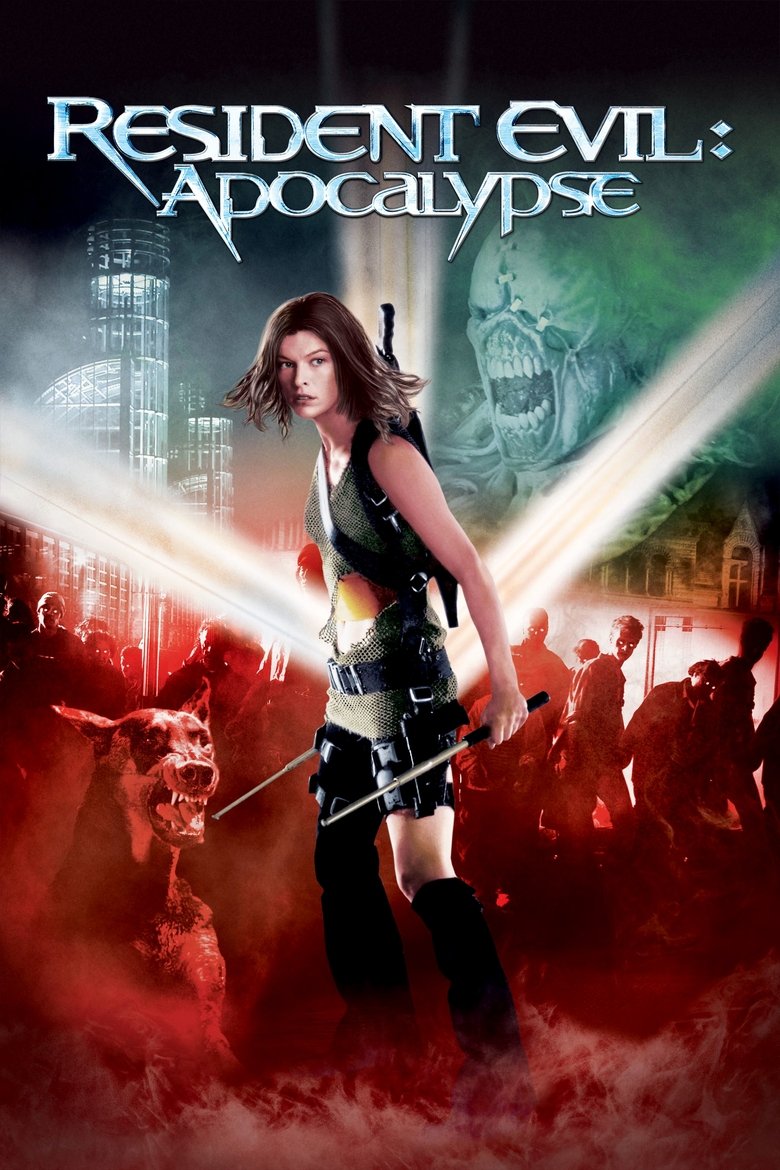
As the city is locked down under quarantine, Alice finds out that the people that died from the previous incident at the Umbrella Corporation have turned into zombies. She then joins a small band of elite soldiers, who are enlisted to rescue the missing daughter of the creator of the mutating T-virus. Once lack of luck and resources happen, they begin to wage an exhilarating battle to survive and escape before the Umbrella Corporation erases its experiment from the face of the earth.
About Resident Evil: Apocalypse
Why Resident Evil: Apocalypse still stands out
Put bluntly: Resident Evil: Apocalypse is built around a simple, efficient promise — a breakout from a lab turns a whole city into a battleground. Alice Abernathy wakes up in the middle of that chaos and the movie doesn’t waste time getting her into trouble and into the thick of it.
At 94 minutes and steered by Alexander Witt, it’s not interested in lingering. It’s a punchy mix of horror, action and biopunk ideas that spends more time trying to get you over the wall than explaining how the wall got there. That speed is why people still talk about it. There’s a handful of characters you quickly care about — a missing researcher’s child, a disgraced cop, a mutated supersoldier — and the film ties them to themes that keep the stakes personal, even when the city is collapsing.
The idea that sets Resident Evil: Apocalypse in motion
The engine is straightforward: an experiment goes wrong and the men in suits try to control the damage. Alice and an activist escape from the underground Hive, but the leak becomes a city problem when Umbrella’s response spreads the infection into Raccoon City.
That containment decision — quarantining the city and evacuating select personnel — flips the map into a pressure cooker. People who should be saved are left behind. People who should keep order are exposed. The result is immediate, brutal and cramped: the city becomes a series of survival decisions.
Into that pressure cooker walk smaller, sharper stories. Angela Ashford is missing, and her father’s panic gives the survivors a human objective beyond merely running and shooting. Meanwhile, former soldiers abandoned by Umbrella pair up with police units and the dynamic becomes less corporate thriller and more ragged group trying not to die.
And then there’s the film’s unmistakable oddness: the protagonist develops powers later in the story, a moment that changes how you read earlier scenes. The set-up gives you zombies, a sealed city, an extraction point and a short list of people whose choices matter — which is exactly what the film needs to move fast without losing emotional grip.
Why Alice Abernathy matters
Alice is the film’s fulcrum. She’s introduced as an escapee from the Hive and almost immediately becomes the person the others look to when things go sideways. That centrality matters because the movie is short; it needs someone to carry momentum and to bend the story’s emotional arcs toward the smaller human stakes.
What keeps Alice memorable isn’t a neat backstory so much as what she does in the middle of chaos — she saves people, she makes hard choices and she moves toward those who are vulnerable. The presence of a small child with a life-or-death condition gives Alice a reason to push through pain that feels recognisably human.
Family is a recurring beat around Alice. The film repeatedly pulls her toward caregivers and dependants — people whose survival matters beyond headline spectacle — and that gives the action a directed purpose. She isn’t just fighting monsters; she’s trying to keep a found family alive.
Finally, there’s a turning point late in the story where Alice’s situation changes in a way that complicates everything the audience thought they knew about her. That shift reframes her role and reminds you that, beneath the gunfire and set pieces, the film is also running a quiet experiment about what one person will do when the rules have been thrown away.
Resident Evil: Apocalypse has more on its mind than the plot suggests
On one level the movie is about survival and spectacle. On another it keeps coming back to protection — most clearly in the panic around Angela Ashford, whose condition and possible cure give the plot a root purpose. That parental-protection beat turns an action movie into something that cares about small relationships.
Freedom is threaded through the film too. The city’s quarantine and Umbrella’s decision-making create a constant tension between authority and the individual. People are refused exit, abandoned by employers, and forced into choices that test their courage. The film stages bravery as decisions made with little information and even less equipment.
Courage and heroism are messy here. They’re not always noble; sometimes they’re necessary and ugly. Characters protect strangers, sacrifice themselves and are forced into mercy killings. Those moments keep the film from being only noise — they make the horror feel consequential. Finally, corporate power and fear sit beside those domestic themes. Umbrella’s control of information and evacuation plans makes the catastrophe feel engineered, which sharpens the stakes: this is a disaster with finger prints on it, and people pay in human terms for that bureaucratic cruelty.
Resident Evil: Apocalypse could not belong to any other decade
Released in 2004, the film wears its decade like a badge: early-00s cinema loved fast, high-concept ideas that moved quickly from premise to action. This film is a textbook example — compact, blunt and keen to trade exposition for movement.
The era’s appetite for genre-mixing — action folded into horror and science fiction — is all over the movie. It doesn’t settle into a single tone; it wants scares, gunplay and a biopunk weirdness in equal measure, which is very much of that period’s mainstream appetite.
There’s also a 00s entertainment economy at work: keep it short, keep it loud, and give audiences something recognisably extreme. In that sense, the film sits comfortably in its moment; it’s a product of its decade’s taste for adrenalised spectacle with a faintly comic-book logic.
Put simply: you could only have made this movie then, in that production climate, where brisk pacing and genre-blending were the order of the day.
What has aged — and what hasn't
The film’s emotional core — the small-family element and the fear that drives people to desperate choices — still reads clearly. When a child’s life is at stake or a parent is clawing for information, those moments land in any decade.
Where it feels more dated is in its insistence on spectacle over nuance. The movie moves so quickly that character beats are sometimes compressed into shorthand. If you want depth, you’ll find hints rather than fully explored arcs.
But that briskness is also part of its modern appeal. For a contemporary viewer after a sharp, no-frills genre ride, the film’s economy can be refreshing. It knows what it is and spends more time doing it than explaining it.
So the emotional pieces — family and fear — age well. The things the film deprioritises — slower development, prolonged explanation — are where modern viewers might be less patient.
Why Resident Evil: Apocalypse still matters
People remember this film because it gives them compact, memorable beats: a breakout from the Hive, a sealed city, and the arrival of a hulking supersoldier hunting a particular woman. Those set pieces stick in the head.
It also matters for keeping a small, human through-line in an otherwise collapsing world. The missing child and her father’s frantic attempts to help give the chaos a human measuring stick you can follow when everything else is an explosion.
The film’s plot choices — from Umbrella’s quarantine to the deployment of Nemesis and the moral compromises that follow — give it a bleakness that feels weighty. Moments of sacrifice and last-minute rescues lend it an emotional rhythm that audiences remember. Finally, the twisty ending — where Alice wakes again in Umbrella’s care and the suggestion of larger manipulations — leaves a door open. That lingering uncertainty is a neat reason people talk about the film after the credits roll.
Does Resident Evil: Apocalypse still hold up?
If you want a tight, 94-minute genre ride — short on exposition, long on action — this still delivers. Alice’s escape from the Hive and subsequent wander through a quarantined city gives the film a clear through-line and keeps the momentum honest.
The central themes — parental protection, freedom and courage — give the chaos a human reason to matter. They stop it being merely spectacle by giving characters things to risk and lose, and that’s what makes the action feel deserved rather than gratuitous.
It isn’t subtle and it isn’t trying to be. It’s a 2004 action-horror with biopunk teeth: Nemesis is sent, Umbrella’s plan widens, and the survivors make terrible, necessary choices. If you love a film that moves at speed and trusts you to keep up, you’ll enjoy it.
So yes: watch it. Not because it’s flawless, but because it’s purposeful. It remembers to ask who we’re saving in the middle of the apocalypse, and that question still lands.