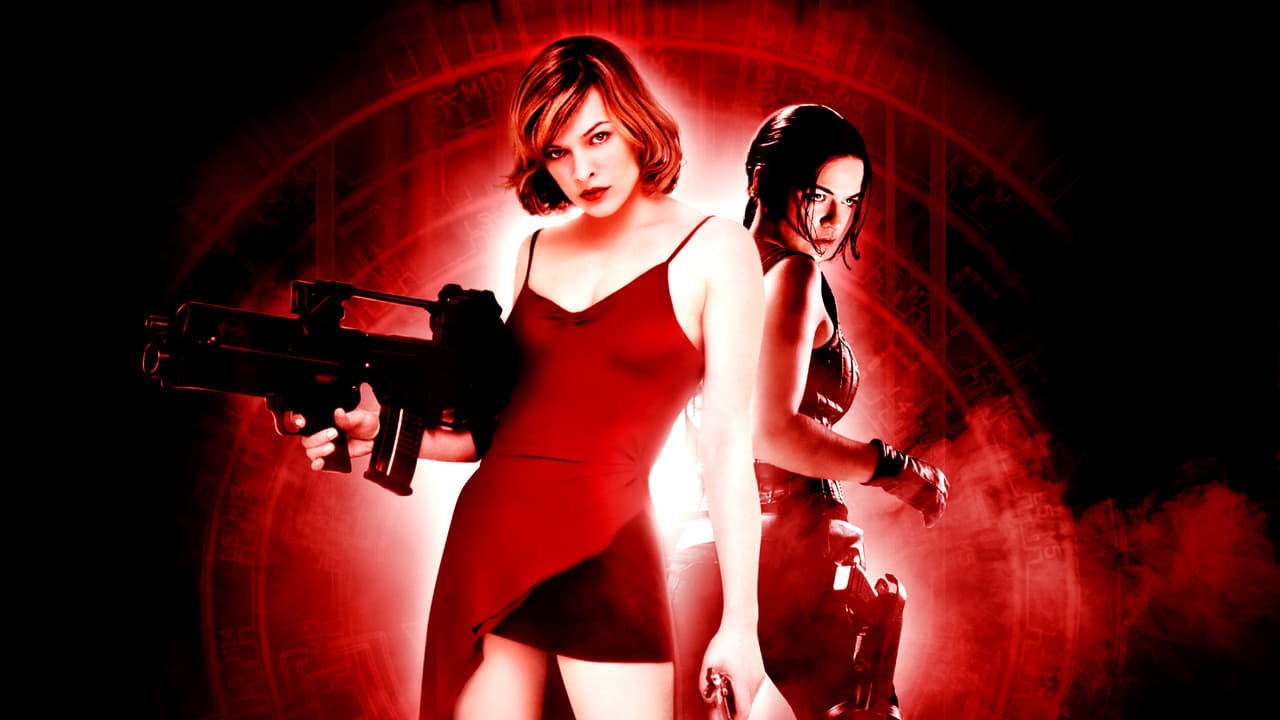
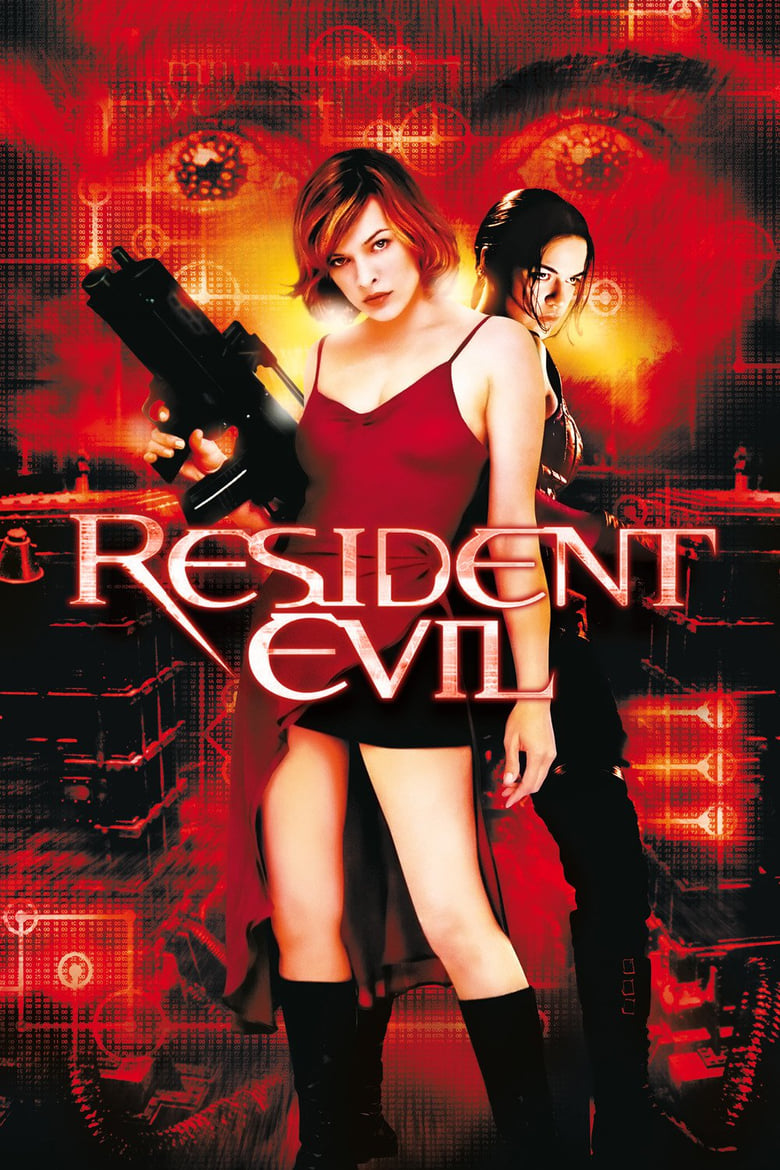
Resident Evil
“A secret experiment. A deadly virus. A fatal mistake.”
When a virus leaks from a top-secret facility, turning all resident researchers into ravenous zombies and their lab animals into mutated hounds from hell, the government sends in an elite military task force to contain the outbreak.
About Resident Evil
Why Resident Evil is still worth talking about
If you remember one single image from Paul W. S. Anderson’s film, make it the waking-up moment: Alice comes to in a bathroom with her head as blank as the room. That little shock is the movie’s invitation — we’ll discover the world the same way she does, piece by piece.
Beneath Raccoon City sits the Hive, a corporate research complex whose containment failures provide the movie’s literal and moral pressure. Anderson keeps the story moving — it’s compact, runs under two hours, and prefers hurtling forward over lingered explanation. And while the film wears its genre labels — action, horror, science fiction, even ‘girls with guns’ — it’s the human throughline that holds it together: Alice, Rain Ocampo and the rest of the ragged group make the stakes feel personal amid the technological menace.
Why Rain Ocampo matters
Michelle Rodriguez’s Rain Ocampo is more than a name on the cast list; she’s part of the film’s working group, the human presence inside a failing machine. That placement matters because the movie asks us to care about real people even while the plot dials up spectacle.
Resident Evil doesn’t give us long personal backstories, so characters like Rain do most of their work by being present in the scramble — the person you notice when things go wrong and choices have to be made.
Those choices are what make the film feel rooted: as Alice’s memory returns and the group confronts loss and betrayal, Rain occupies the same perilous space as everyone else — neither background nor cartoonish sidekick, but one of the people whose fate makes the audience care.
Put simply: Rain matters because she’s a recognisable, watchable part of the human pileup the film keeps throwing at you — and that pileup is how Resident Evil turns a game premise into emotional friction.
Resident Evil has more on its mind than the plot suggests
On the surface it’s a closed‑space thriller about escape. Underneath, the film keeps circling a handful of ideas: memory, artificial life, freedom and the reach of corporate power. Those elements are folded into the scares so the movie still feels like it’s trying to say something while it’s running and shooting.
Memory operates as a kind of map. Alice’s gaps aren’t just a gimmick; they let the movie drip out information at the same time the characters learn it, which keeps tension tight and humanly traumatic. When memories return they change allegiances and reveal motives — sometimes disastrously.
Artificial life is the blunt moral instrument here. The Hive has an intelligence that makes life‑and‑death decisions, and the presence of that system reframes every corridor into a question: who is allowed to live, and who decides?
And then there’s freedom and corporate power. The film makes the corporation a force whose containment logic can be lethal; at the same time characters respond with acts of courage and protective impulse, which keeps the story from turning entirely into a cold techno‑fable.
Resident Evil could not belong to any other decade
Released in 2002, Resident Evil sits squarely in the early‑00s moment when genre cinema liked to mash action, horror and glossy sci‑fi together and move fast.
That decade had room for loud, hybrid entertainments — movies that felt engineered to give audiences a compact, adrenaline‑heavy experience, which this film does in its 100‑minute run.
Paul W. S. Anderson’s adaptation choices reflect that shorthand: keep the pace brisk, focus on memorable set pieces, and let the characters carry the emotional freight between them. Seen as a product of its time, Resident Evil reads like a clear example of what 00s audience appetite looked for: high concept, quick thrills and a willingness to mix tones without over‑explaining.
Why Resident Evil still matters
There are neat, literal images that stick: an underground facility owned by a corporation, a virus taken and spread, an on‑site intelligence that decides containment is worth killing for. Those plot beats give the film a simple, unpleasant logic that stays with you.
Then there are the human moments that sharpen the unpleasantness. Alice’s amnesia is a compact device, but it turns the search for answers into an emotional journey — and when other characters’ pasts return (the thief who released the virus, for example) the story suddenly becomes messy and morally compromised.
The film also stages small, brutal choices that linger: infected colleagues, failed cures and the Red Queen offering calculus‑style bargains to spare some at the cost of others. It’s the collision of those big systems and small faces that gives people a reason to remember the movie.
Finally, there’s the coda — Alice waking strapped in a hospital and stepping out into a ruined Raccoon City with a weapon. It’s a grim little image that converts the subterranean panic into a wider, bleaker world and leaves the door open for more story — and for the memory of the first film to keep showing up in conversations.
Does Resident Evil still hold up?
Yes — if you go back for what the film set out to do. It’s a 100‑minute genre sprint from Paul W. S. Anderson that trades subtlety for momentum, and it succeeds at delivering tension, claustrophobia and a bleak corporate logic that feels unpleasantly sensible.
The plot mechanics — a stolen virus, a facility AI that chooses containment over life, a scramble through opened doors and reanimated colleagues — still create clear, immediate stakes. Add to that the way memory returns and changes allegiances, and you have a movie that keeps surprising its own characters.
It isn’t interested in being delicate. It’s interested in choices: who survives, who gets sacrificed, who remembers what. That hard edge, and characters like Rain Ocampo sitting at the heart of the mess, give the film enough humanity to matter beneath the monsters.
So should you watch it now? If you want a compact, effective blast of 00s action–horror that cares about people as well as set pieces, yes. It’s not the last word on the videogame adaptation, but it’s a lean, slightly nasty little machine that still knows how to make the blood quicken.