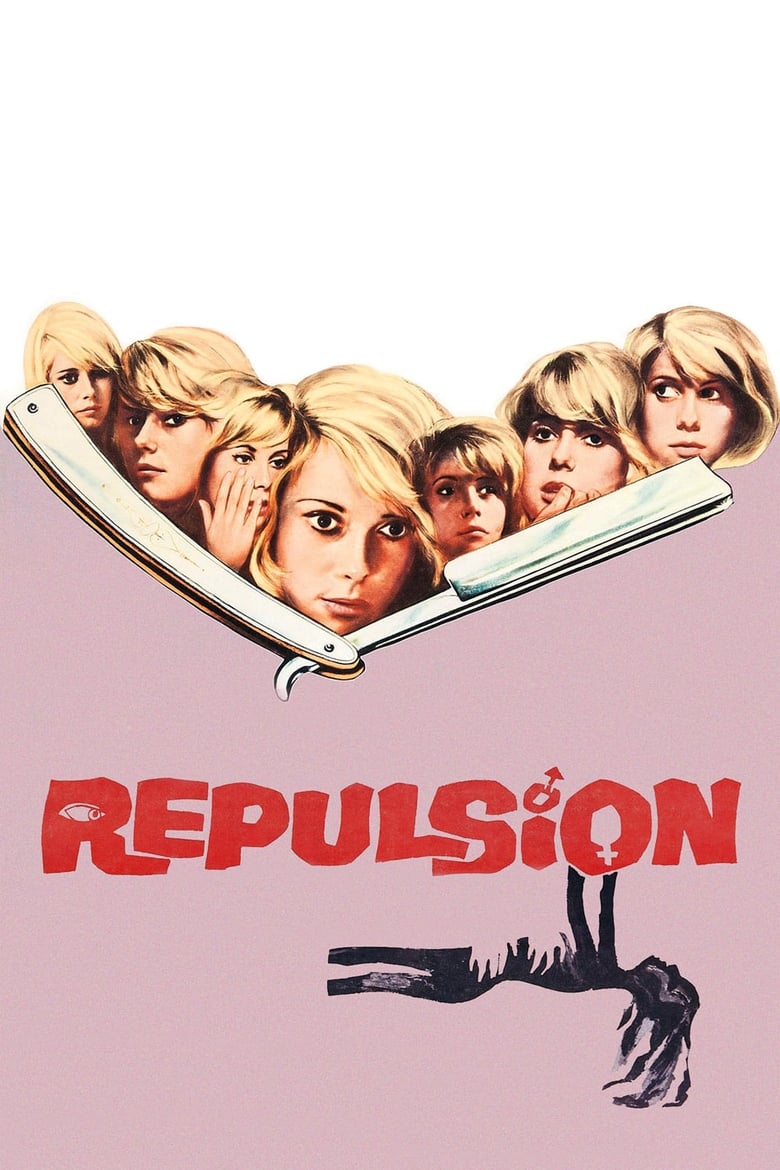
Repulsion
“The nightmare world of a virgin's dreams becomes the screen's shocking reality!”
Beautiful young manicurist Carole suffers from androphobia (the pathological fear of interaction with men). When her sister and roommate, Helen, leaves their London flat to go on an Italian holiday with her married boyfriend, Carole withdraws into her apartment. She begins to experience frightful hallucinations, her fear gradually mutating into madness.
About Repulsion
What Repulsion gets right
Repulsion is, at heart, a portrait of being small and unseen. Catherine Deneuve’s Carol Ledoux is a shy Belgian manicurist who shares a London flat with her older sister — a set-up that sounds domestic enough until it stops being ordinary.
Roman Polanski directs with a steady curiosity about the edge where everyday routine gives way to something stranger. The film runs for a taut 104 minutes and lives in that narrow time — long enough to watch a life fray, short enough not to wear patience thin. What keeps people talking about Repulsion isn’t a single shock or scene so much as that steady, claustrophobic confidence: an apparently normal woman, in a normal flat, becoming steadily less available to the world around her.
The idea that sets Repulsion in motion
The film opens in the small, repetitive rhythms of Carol’s working life: she’s more in retreat than present at the salon, so withdrawn that her boss sends her home. That push — the moment when the world says ‘take a break’ — is where everything starts slipping.
At home Carol’s life is lived around other people’s things: a toothbrush and a razor left in her glass, the sounds of her sister with a man named Michael, possessions that feel invasive rather than intimate. Those details turn the flat from refuge into arena.
One small, eerie image — Carol trying on her sister’s dress and seeing a dark figure in the mirror — signals how the ordinary will begin to double and topple. Mirrors, reflections and the sense of being watched become the film’s currency.
When she’s sent away from the salon after hurting a client, the film stops pretending there will be a simple recovery. Barricades follow. Close calls with a suitor who won’t take no for an answer end in violence. The setup is minimal but precise: isolation plus pressure equals collapse.
Why Carol Ledoux matters
Carol matters because the film refuses to flatten her into a trope. She’s a working woman — a manicurist — and she’s remarkably detached, the kind of person who seems to be present but isn’t. That detachment is the engine: it makes every ordinary interaction risky.
She’s not simply shy. The movie gives us small, specific irritations — Michael’s toothbrush and razor in her glass, the sex she cannot drown out — and lets them accumulate until they become intolerable. These are domestic trespasses, not grand calamities, and that’s why they feel so corrosive.
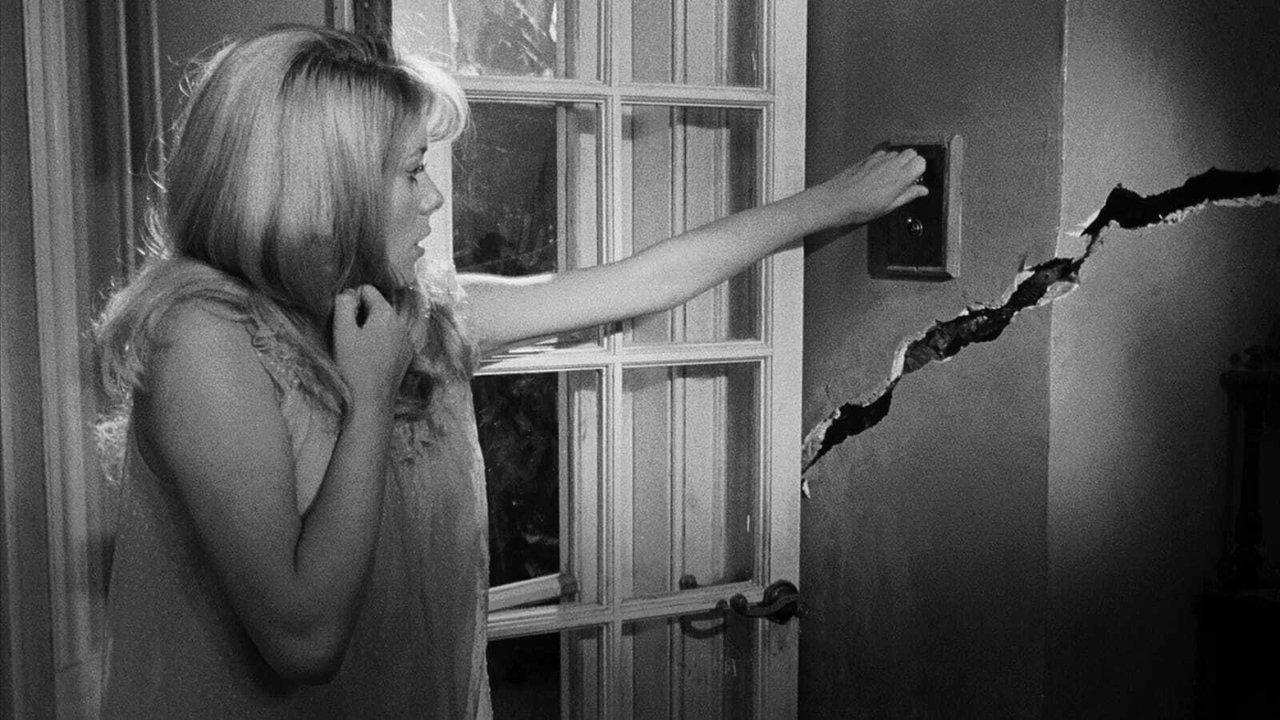
There are moments when the interior life breaks into the exterior: she tries on a dress and sees a dark figure in the mirror; she stares at a family photograph until the wall behind it fractures. Those images tell us more about who Carol is than a line of backstory could.
Because the film keeps returning to family — to the sister she shares the flat with and to that old photograph — Carol’s collapse reads as something rooted in history, not an isolated breakdown. That’s why she stays memorable: she’s intimate, complicated and quietly exacting.
Repulsion has more on its mind than the plot suggests
If you watch Repulsion as simply a series of shocks you’ll miss its steady concerns: family, home and the thin line between them. The flat where Carol lives is supposed to be safe; the film spends its time showing how safety can be an illusion.
Isolation is central. Carol’s withdrawal from work — missing days and being sent home — is not just a symptom, it’s a form of slow motion social death. The film stages loneliness as a pressure cooker, not a tragic backdrop.
Mortality and loss are quieter notes underneath the terror. The presence of male possessions in her rooms, and later the violent confrontations they provoke, work as reminders that threats often come from the nearest people, not strangers. Love, or the idea of it, is corrosive here: Colin’s fervent attempts to court Carol, and her clear inability to accept them, flip romantic pursuit into intrusion. When those intrusions turn violent the film treats the violence as an extension of years of unease rather than a sudden fluke.
Repulsion could not belong to any other decade
Repulsion arrived in 1965, and that timing matters because the film sits neatly between old studio certainties and a newer appetite for psychological unease. It feels of its moment without relying on nostalgia for the decade’s outward trappings.
There’s a mid‑60s sensibility to the way the story privileges inner disturbance over overt explanation. The film trusts the audience to sit with discomfort rather than hand them tidy moral chapters.
Being released in 1965 also meant it could lean into ambiguity: characters are sketched in close-up and left to be interrogated by the viewer. The decade allowed a kind of cinema that preferred implication to flourish.
So while Repulsion is not a period piece about the 1960s, its timing helped it land: it belongs to an era when filmmakers were more willing to let a domestic setting do the heavy lifting of horror.
What has aged — and what hasn't
The parts that hold up are the ones that avoid spectacle. Carol’s small gestures — pulling away from a kiss, obsessively brushing her teeth, being repulsed by an unwashed shirt — still feel specific and credible. Those domestic irritations are timeless.
Her retreat from work, the salon telling her to go home, the small social failures that build into ruin — those beats remain persuasive. Isolation still reads the same way today; being cut off from routine is recognisably corrosive.
Some of the film’s more extreme moments — hallucinated assaults, the sudden violence against intruders — are calibrated to shock, but they follow logically from the pressure the story has been applying. They don’t come from nowhere; they’re amplified consequences of the same small cruelties we’ve seen before.
Finally, the film’s use of family imagery — the photograph that fractures the wall and the child’s hostile look in it — keeps the ending resonant. That moment ties the present collapse to a past the film refuses to let go of, and that connection still lands.
Why Repulsion still matters
People remember Repulsion because it shrinks horror down to the scale of a single flat and a single nervous system. That concentration — a shy Belgian manicurist and the life that surrounds her — makes the film feel intimate rather than broadcast.
The characters matter: Colin’s insistence, Michael’s domestic intrusion, the landlord’s crude proposition — each is a local pressure on Carol and each helps explain why the apartment stops being a safe place. Those human elements stick in the head.
Key scenes — an uncooked rabbit pulled from a fridge, a wall that seems to crack beneath an old photograph — are the sort of images that lodge themselves in memory because they’re both ordinary and grotesque. They make the private public. When Helen and Michael return to find the flat in ruins and Carol under the bed, the collapse reads as a social failure as much as a personal one. That lingering ambiguity — who is responsible, what could have been done — is part of the film’s long aftertaste.
Does Repulsion still hold up?
Yes. Repulsion still works because it keeps everything tight and local. You don’t need a catalogue of horrors to feel threatened; a toothbrush in a glass, a repeated kiss refused, a woman missing work — these things add up and that economy still packs a punch.
The film’s 104 minutes are deployed like a slow squeeze. Carol’s gradual withdrawal is persuasive: she’s a person who becomes progressively less available, and watching that process is the movie’s main engine.
Some moments are undeniably of their time — the social assumptions threaded through the characters — but those details don’t undercut the core: home and safety, and how fragile both can be. The film’s ending, with neighbours flooding in as the outside world carries Carol away, leaves the viewer unsettled rather than satisfied.
If you’re curious about mid‑60s psychological horror that prefers pressure to pyrotechnics, Repulsion is worth a watch. It reminds you that the most terrifying thing cinema can do is make an ordinary room feel menacing.