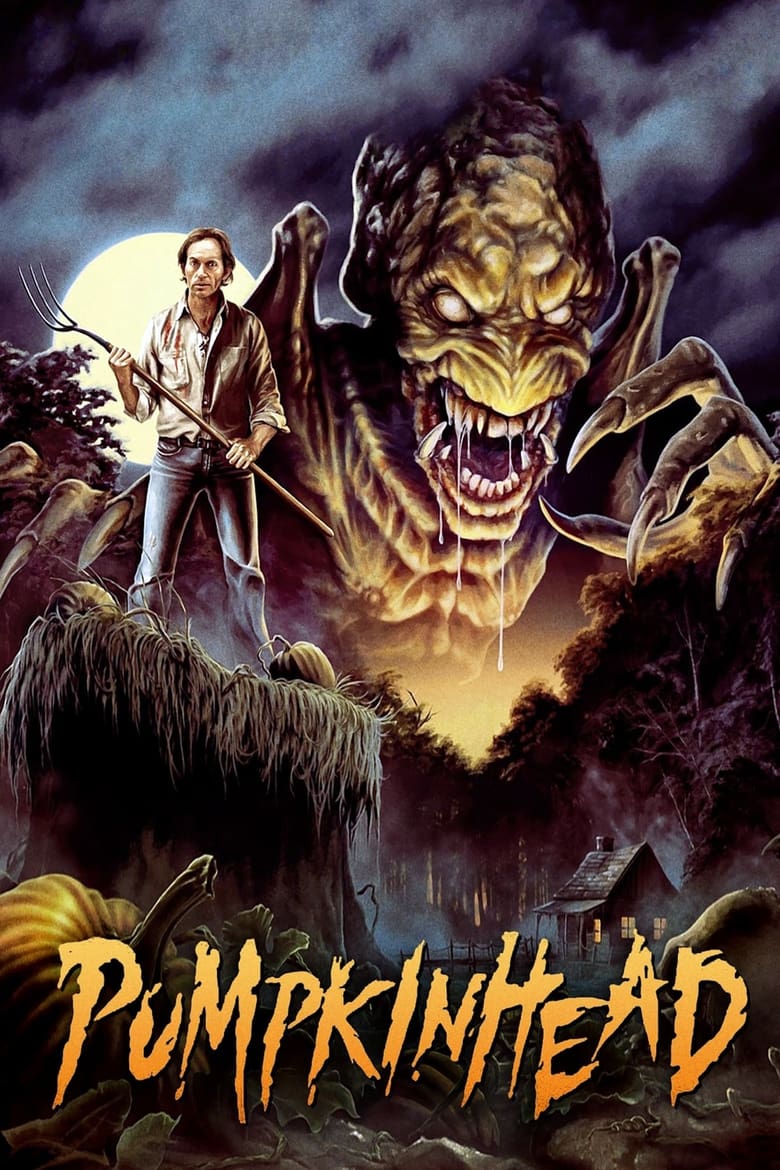
Pumpkinhead
“A grim fairy tale.”
When a group of teenagers inadvertently kill his only son, Ed Harley seeks the powers of a backwoods witch to bring the child back to life.
About Pumpkinhead
Why Pumpkinhead is still worth talking about
There’s a neat, slightly unnerving trick Pumpkinhead pulls: it takes a familiar grief story — a widowed father in a small town — and lets that private sorrow grow into something literal and terrifying. You meet Ed Harley as a man trying to keep life together (he runs a country shop), and very quickly the film makes us feel the stakes are personal.
This is Stan Winston’s movie, and he keeps it tight — 86 minutes from first hurt to last ember. It doesn’t linger on needless spectacle; instead it uses its time to thread the plot through family, loss and the kind of suburban fear that refuses to stay polite. The inciting scrape is painfully simple: a group of teenagers riding dirt bikes cause the single most catastrophic accident in Ed’s life. That accident is the kind of small, believable cruelty that turns revenge into an irresistible, if ruinous, answer. What follows — a deal with a witch and the rising of a monstrous avenger — gives the story a grim fairy-tale logic the film keeps to the end.
The idea that sets Pumpkinhead in motion
The film’s engine is straightforward: a terrible accident, a bereaved father desperate for reparation, and a local witch willing to help — for a price. That price turns personal grief into a very public threat.
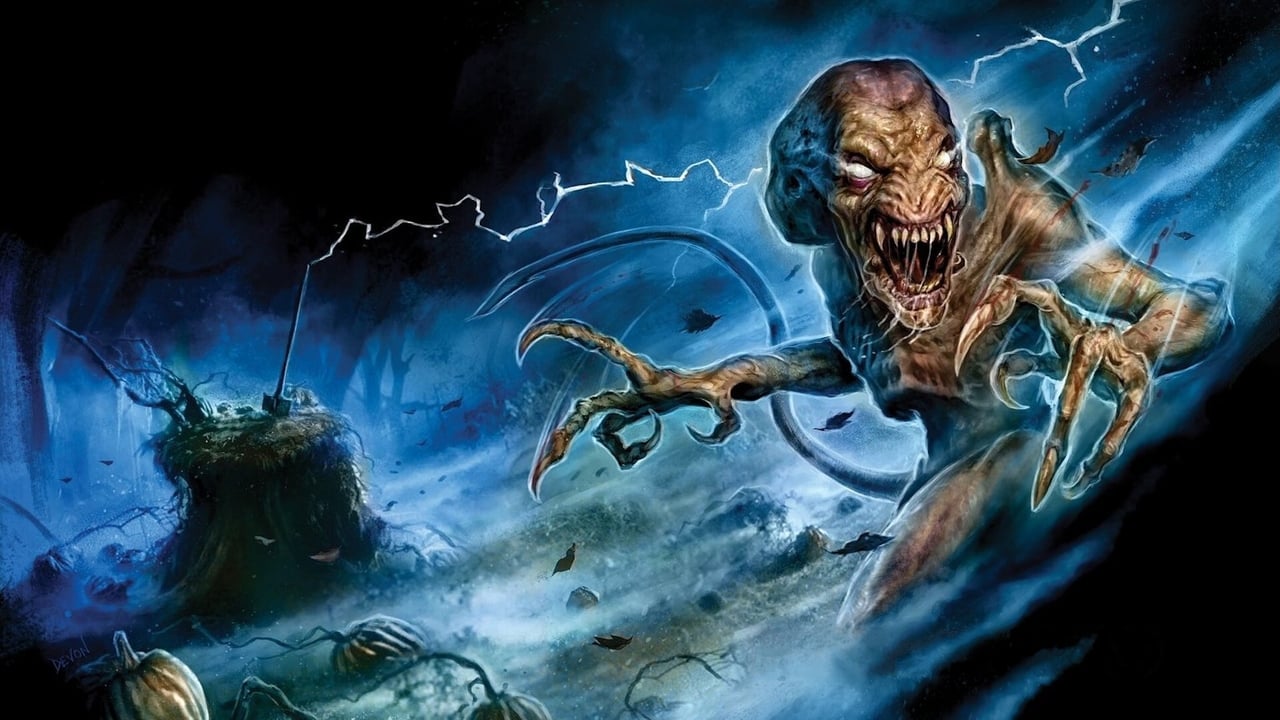
Pumpkinhead itself is less a random monster and more a summoned instrument of vengeance. Once it’s unleashed, it’s single-minded: it tracks down those connected to the wrongdoing, and anyone who tries to help the victims can find themselves marked as well.
That rule — try to stop the creature or rescue its prey and you risk being dragged into the nightmare — tightens every scene. It means ordinary acts of courage become dangerous gambles.
Small, specific details underline the threat: Pumpkinhead disables a boy’s dirt bike by removing the drive chain, then uses the mangled machine as a weapon. It’s the kind of grim, practical violence that makes the monster feel consequential rather than cartoonish.
Why Ed Harley, Billy Harley's father matters
Ed Harley is not your usual slasher-era victim or token town elder. He’s a widower who runs a small country store, a man whose life is built around keeping going. That’s what makes his descent into vengeance feel urgent rather than theatrical: he’s protecting what little he has left.
The setup makes the moral choices blunt. One of the teens stays with Billy until his father returns while the actual boy responsible bolts — and the film lets that cowardice hang in the air. Those choices put faces and names on the people who wreck Ed’s life, so his response feels directed rather than random.
Ed’s route to retribution is grimly procedural: he seeks out Haggis, the local witch, and follows her instructions to perform a rite that binds father and son into the creation of Pumpkinhead. The father’s blood and the son’s blood are used to awaken the thing — grief made ritual.
There’s an extra note of tragedy built into the bargain: the movie establishes that trying to interfere with Pumpkinhead’s revenge brings doom on anyone who steps in. Ed becomes not just the man who summoned a monster but the man who must watch the rules he set in motion tear through the people around him.
Pumpkinhead has more on its mind than the plot suggests
On the surface it’s a monster movie; under the skin it’s about family and what a parent will do when the ordinary rules of law and decency feel irrelevant. The film keeps returning to the idea that protection can become obsession.
Mortality is never far away. The danger isn’t abstract — a child is killed — and the story measures the cost of trying to answer death with more death. That gives the horror a mournful edge.
Home and safety are important too, because the violence starts in a place that ought to be safe: Ed’s own yard, a small shop, a rural life. The invasion of that domestic space makes the terror feel intimate rather than epic. There’s also a question of authority and courage woven through the film: which rules do you follow when the law seems powerless, and who will stand up when standing up is the most dangerous thing you can do?
Pumpkinhead could not belong to any other decade
Released in 1988, Pumpkinhead sits at the very late edge of the 1980s horror wave. It shows the decade’s appetite for high-concept monster ideas told on modest canvases: a single, dreadful premise executed cleanly and without excess.
The film doesn’t trade in empty spectacle; instead it favours a lean efficiency that’s very much of its time. That late-80s horror habit of mixing folklore and small-town realism gives Pumpkinhead a texture that feels of its era without being defined by gimmicks.
It’s a period piece in the sense of filmmaking approach rather than fashion: the instincts are to tell a compact genre story that folds family drama into supernatural payoff, which is a familiar 1980s playbook.
What has aged — and what hasn't
The movie’s central grievance still lands: the accidental, preventable death of a child and a father’s desperation are timelessly upsetting. That emotional clarity helps the film survive decades of changing trends in horror.
Its choice to keep the action close to home also helps. When the carnage is anchored to Ed’s shop and the small group of teenagers, the stakes stay human-scale and painfully immediate.
Some plot mechanics — a witch’s bargain, an old grave dug up on a mountain — feel like folklore, and folklore tends to be resilient. The ritual elements still carry the right amount of creepiness without needing modern explanation.
Where the film shows its age is in some of the familiar teenage-subplot beats and the shorthand for guilt and cowardice: they can feel scripted. But those beats exist to illuminate Ed’s choices, so even when they’re obvious they perform a service.
Why Pumpkinhead still matters
People remember Pumpkinhead because it marries a small, human tragedy to a very specific kind of supernatural punishment. Ed Harley isn’t avenging abstract wrongs — he’s avenging Billy — and that makes everything that follows feel inevitable and awful.
The pact with Haggis is the moral hinge. Ed asks for what any parent in such a story would ask for — justice — and the witch is clear: vengeance has a terrible cost. That warning frames the rest of the picture and gives the monster its logic.
There’s also the double-take moment when the film makes you realize that Ed and the creature are entangled: Pumpkinhead’s actions are not simply external retribution; they’re bound to the father who summoned it. That twist lifts the movie from simple revenge fantasy into a darker family fable. And the ending — the collapse of both man and monster, and the witch burying Ed where Pumpkinhead rose — leaves a final, bleak echo. It’s the sort of gloomy coda that sticks with viewers who grew up on late-night horror: not triumph, but a hard, memorable lesson about how vengeance consumes.
Does Pumpkinhead still hold up?
Yes — with a clear rider. If you want tidy answers and cheerleading, this isn’t the film for you. If you’re after a compact, slightly miserable little horror that treats grief as the engine of dread, Pumpkinhead still does interesting work.
The film benefits from being economical: it runs 86 minutes and rarely wastes a scene. That economy keeps the focus where it should be — on Ed Harley, a widowed father whose life is ripped apart when a group of teenagers accidentally kills his son — and on the consequences of his choice to seek supernatural vengeance.
Its core idea is simple and stubborn: a father bargains for justice and ends up bound to the very thing he unleashed. Once Pumpkinhead is loose, the rules the film sets — that rescuers become targets, that the creature will track down the guilty — make the story feel coherent and inexorable.
So should you watch it? If you care about character-driven horror, about stories where family and mortality push a plot forward, give it an evening. Pumpkinhead isn’t polished consolation; it’s a dark little fable that still stings.