
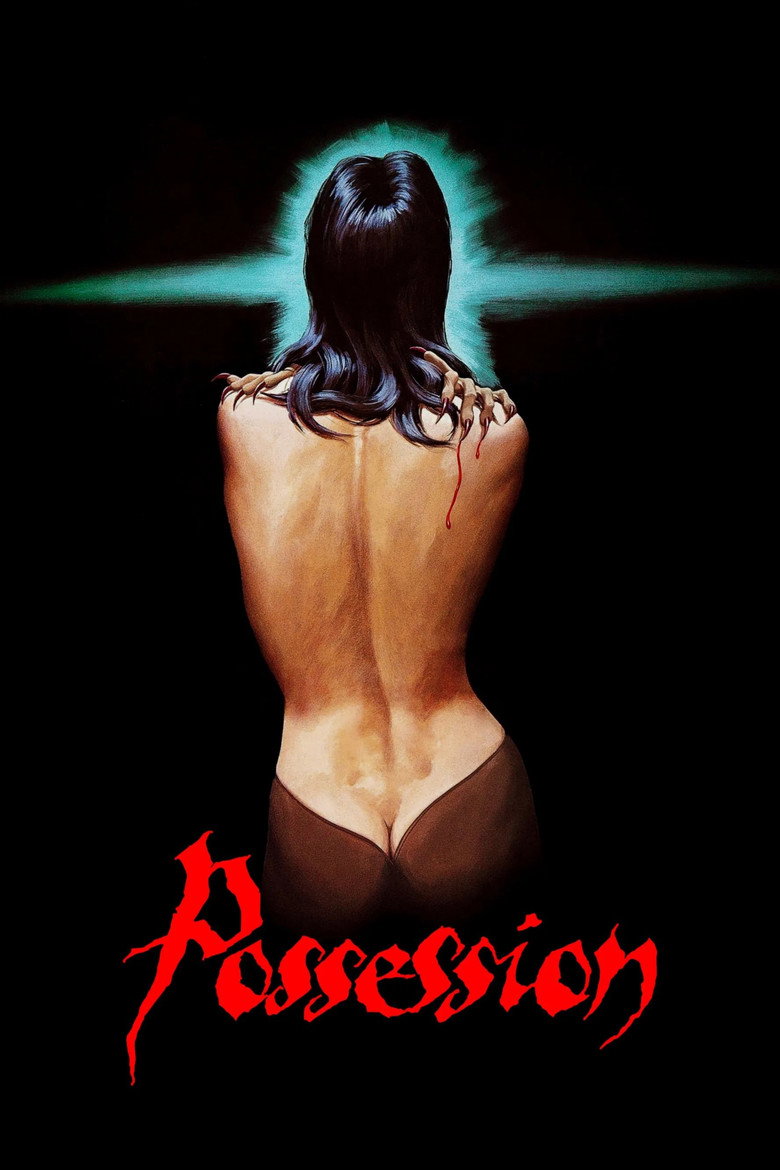
Possession
“Inhuman ecstasy fulfilled.”
A young woman left her family for an unspecified reason. The husband determines to find out the truth and starts following his wife. At first, he suspects that a man is involved. But gradually, he finds out more and more strange behaviors and bizarre incidents that indicate something more than a possessed love affair.
About Possession
Why Possession still works
Possession opens like an ordinary tragedy: Mark comes home from a spying mission and discovers his marriage is over. It's a recognisable, human hurt — the betrayal, the bewilderment — but Żuławski doesn't stop there.
What follows is a film that refuses tidy genre labels. Over its 123 minutes it behaves as both horror and domestic drama, asking what happens when the places meant to be safe — the apartment, the child’s life, the lines between lovers — suddenly aren't. At the centre is a figure who isn't quite one person: Anna and her lookalike, Helen. Isabelle Adjani plays those parts; Sam Neill plays Mark and, later, something that looks like him. That doubling is the film’s dare: familiar faces doing unfamiliar things, and the ordinary becoming alarming in the blink of an eye.
The idea that sets Possession in motion
The simplest engine of the film is domestic and immediate: a spy, Mark, returns to West Berlin to find his wife has been unfaithful and wants a separation. That ordinary marital rupture is the hinge on which everything wild and disturbing swings.
Mark hands the apartment and the child, Bob, over to Anna. He staggers through the aftermath — a long drinking spree, the shock of finding his son neglected — and decides to fight for being the child’s primary carer. It's a very human sort of stubbornness that slides fast into obsession.
The movie layers in doubling and mystery. Mark meets Helen, Bob’s teacher, and she looks startlingly like Anna — same face, different hair and eye colour — which makes every interaction feel like a question about identity and who is permitted into the family home.
At the edges of that domestic quarrel are scenes that refuse easy interpretation: a detective trailing Anna to a derelict flat, the detective finding a strange creature and being killed, and a string of violent confrontations that push Mark from grief to something very dangerous. The setup clears the space for the film to mutate its marriage story into something uncanny.
Why Anna / Helen matters
Anna — and the woman Mark meets as Helen — are the axis of the film. They complicate every straightforward emotion on screen: desire, abandonment, responsibility. That doubling makes her a living puzzle the story keeps trying to solve.
Her choices are what pull the rest of the characters apart. She leaves during the night; Mark responds by trying to reclaim his role as Bob's primary caregiver and by pressuring her to end the affair. Those choices turn a private marital collapse into a public, destructive fight.
She also performs acts that shock the people around her and escalate the stakes: when questioned she cuts her neck with an electric knife, a violent refusal to be boxed into a neat explanation. Scenes like that make Anna less a character you can pin down and more a force that other people must react to.
Her behaviour doesn't just hurt Mark. It ripples outward: Heinrich keeps footage showing Anna testing a pupil’s will, and the ripple becomes a cascade — a mother’s suicide, violent confrontations, and the slow unpicking of what 'home' is supposed to mean for the child at the centre of it all.
Possession has more on its mind than the plot suggests
Beneath the dread and the grotesque creature beats a surprisingly domestic heart. Family and the question of who gets to belong inside a home are constant, repeated pressures. The film keeps asking who protects the child, Bob, and what 'safety' means when the adults in the house are at war.
Love here is not tidy or romantic. It’s combative, jealous, and sometimes cruel. That tension between attachment and damage is what makes the horror feel like an extension of ordinary hurt: it's love gone to war with itself.
Authority and freedom tangle together. Mark’s background as a spy and the pressure from his former associates bring an outside, regimented force into the domestic collapse. Between institutional power and the private need for autonomy, the characters are squeezed — and under pressure, people break in unpredictable ways. Fear and loss sit under everything. Whether it’s the fear of losing a partner or the loss of a secure home for a child, those anxieties explode into the movie’s more violent imagery. The result is a movie that uses horror to dramatise real-world emotional ruin.
Possession could not belong to any other decade
Possession arrived in 1981, at a moment when genre lines were being retested. The film comfortably sits between horror and drama, a move that felt daring in that period and which still feels refreshingly uncompromising.
The early 80s gave filmmakers license to mix domestic drama with genre extremity. Žuławski takes that permission and runs with it, turning a marital breakdown into something that spills beyond the private sphere into public violence and surreal imagery.
Because it was released at the start of the decade, the film reads as part of an immediate post-70s appetite for psychological intensity. It’s not nostalgia so much as a direct line to a moment when cinema was willing to be messy and unglued.
What has aged — and what hasn't
What still hits is the film's insistence that domestic life can become the site of real terror. The basic story — a man returning from a mission to a home in pieces, trying to take care of his child and failing — is simple and, crucially, still relatable.
The emotional beats around caregiving and custody age well. Mark’s vow to be Bob’s primary caregiver after finding him neglected is a human kernel that keeps the movie grounded, even as more extreme events unfold.
Less comfortable for modern viewers are scenes of domestic violence. Mark’s physical assault on Anna is a brutal turning point in the story, and it reads differently now: as both plot catalyst and a moral wound the film never lets go of.
Finally, some of the film’s choices that blend the intimate and the grotesque — the detective trailing Anna, the discovery of the creature, the burning of the apartment and the motorbike escape — still shock. They preserve the sense that Żuławski was less interested in decorum than in pushing the narrative to its most dangerous extremes.
Why Possession still matters
Possession lingers because it refuses a single explanation. It opens with a familiar marital hurt — Mark coming home to a separation and a child left in difficult circumstances — and lets that grief mutate into something strange and violent. That refusal to stay 'domestic' is what makes people still talk about it.
The film is full of jolting, unforgettable images: a detective finding a bizarre creature in an apartment and being killed; Anna showing Heinrich the creature and dismembered corpses; and a final stairwell confrontation where a doppelgänger of Mark appears. Those moments lodge themselves in the mind because they are unexpected eruptions in an otherwise recognisable family drama.
Part of its persistence comes from the human stakes threaded through the horror. Mark's efforts to care for Bob, and the child's sleep terrors and later fate, keep the film emotionally anchored even when the plot becomes wilder. The domestic losses — custody, safety, the breakdown of intimacies — give the movie a weight beyond mere shock. Lastly, the film’s ending choices — lovers falling, the double of Mark escaping, Bob’s tragic death — are brutal but memorable. They don't tidy up the story; they suggest consequences that keep the movie alive in conversation because it refuses to provide consolation.
Does Possession still hold up?
Yes — but with a warning. Possession still works because it anchors its surreal shocks in recognisable domestic pain: a husband returning from duty to find his life upended, a child left unkempt, the desperate attempt to keep a home together. Those human pressures give the film its emotional engine.
It isn't comfortable to watch. The film includes scenes of physical assault, extreme violence around the home, and decisions that result in tragic loss. Those moments are part of its power, but they also make it a demanding watch for a modern audience.
If you want a horror that treats family, love and the idea of home as battlegrounds — and that will not offer neat resolutions — this is the film to see. Żuławski gives you both the intimate injuries and the monstrous consequences in the same breath.
In short: watch Possession if you can handle a story that starts at the kitchen table and refuses to stay there. It’s a demolition of domestic life, intentionally uncomfortable and still strangely compelling.