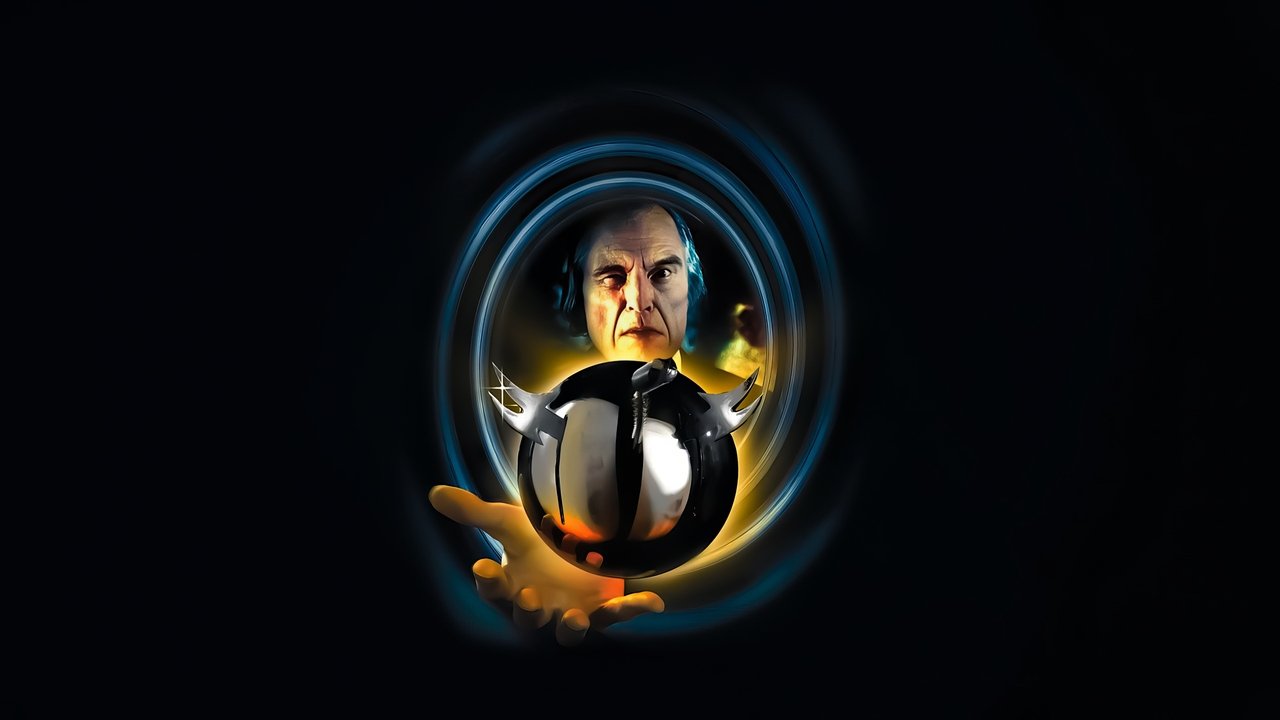
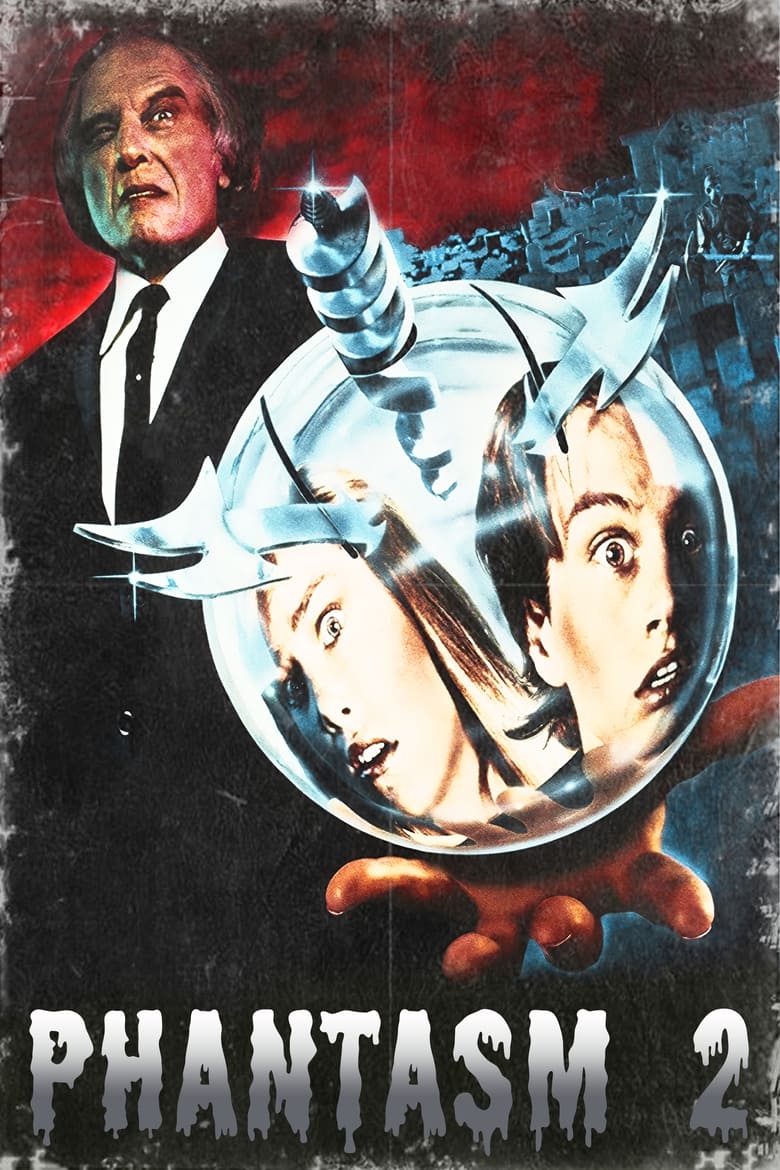
Phantasm II
“The ball is back!”
Mike, after his release from a psychiatric hospital, teams up with his old pal Reggie to hunt down the Tall Man, who is at it again. A mysterious, beautiful girl has also become part of Mike's dreams, and they must find her before the Tall Man does.
About Phantasm II
Why Phantasm II still works
Phantasm II doesn’t open with exposition; it opens with a link. Liz’s nightmares tie her to two very different men — Mike Pearson and the Tall Man — and those dreams pull everyone into the same violent orbit. That psychic thread gives the film a strange intimacy: it’s a horror movie that treats prophecy like a family debt.
Don Coscarelli made this one. It’s his return to the peculiar world the first film left hanging, and he trims the runtime down to a brisk 97 minutes, which keeps the momentum moving even when the story detours into weird, macabre set-pieces.
You’ll meet familiar faces quickly — Angus Scrimm as the Tall Man, James LeGros as Mike, Reggie Bannister as Reggie and Paula Irvine as Liz — and the movie wastes no time turning their connections into engine-room tension. It’s loud, it’s dark, and it’s oddly devoted to its small emotional knot: family, loss and who gets to survive.
The idea that sets Phantasm II in motion
At its core the film is a simple hunt. Mike, scarred by previous events, is determined to track the Tall Man; Reggie, sceptical at first, eventually signs on. That reluctant partnership carries the story forward.
Liz’s nightmares are the other motor: they lead her to Mike in a cemetery and force the three of them into the same desperate space. Those meetings feel earned because the connection isn’t just plot convenience — it’s portrayed like a plea.
From there the film becomes a pursuit: assembling weapons, following clues and confronting the Tall Man’s footprint on towns and graveyards. It’s a road movie with grave markers instead of petrol stations.
The set-pieces are structured so action answers questions rather than the other way round: the trio burn a building to escape, and what comes next is the fallout of that choice rather than an explanation of why they went in.
Why Tall Man matters
The Tall Man is not just a villain who eats souls; he’s the story’s constant. Angus Scrimm’s presence is the film’s gravitational centre — everyone’s actions bend around the threat he represents.
He’s personal. Liz’s psychic bond makes him intimate in a way most movie monsters never achieve: she begs Mike to find her because she’s convinced the Tall Man will take her grandfather. That makes his menace familial, not abstract.
He reshapes communities as he passes. The evidence piles up — empty coffins, pillaged graveyards and those surreal traps like the apparition that leads the heroes into Périgord — so his evil feels methodical, a system rather than a single scare.
And because he can reach into people’s lives — abducting Liz in a hearse, converting the living into Lurkers, even surviving attempts to destroy him — he’s less a creature you can outrun and more a force you must reckon with. The film’s finale, where they force acid into him and he melts, reads like a temporary, hard-won reprieve rather than a clean victory.
Phantasm II has more on its mind than the plot suggests
On the surface it’s a monster hunt; under the surface it’s wrestling with freedom. Who gets to choose their fate? The Tall Man’s control over the dead makes that question literal: he takes bodies and turns them into his labour.
Mortality is everywhere. The film treats death not as an ending but as contested territory — graves exhumed, reanimated relatives and a community in terror. That gives the scares a philosophical edge: the battle is as much about what remains of people as it is about surviving an attack.
It’s also about family. Liz’s nightmares aren’t private hysterics; they’re pleas to stop someone from stealing a grandfather. That parental and familial protection drives the protagonists’ courage — they keep moving because someone else is at risk.
Courage in Phantasm II rarely looks noble on its own terms. It’s stubbornness, stubbornness born of loss and the refusal to accept the Tall Man’s bookkeeping of lives. That keeps the story emotionally anchored amid the more delirious horror moments.
Phantasm II could not belong to any other decade
Released in 1988, Phantasm II sits at the tail end of a decade that liked its genre movies loud and unapologetic. The film wears that confidence; it mixes horror, sci-fi and action without apologising for the mash-up.
It also functions as an 80s bridge. The story jumps seven years forward to 1986 for Mike’s institutionalised, then newly released, arc — a small temporal shift that lets the sequel reconnect past trauma to a worn present.
That late-80s energy explains why the film leans into road-horror and set-piece escalation: the decade favoured movies that moved quickly from one idea to the next, and Phantasm II follows that instinct.
So while the Tall Man is older than the decade, the film’s tempo, its willingness to splice genres and its show-don’t-explain attitude feel unmistakably of that period.
What has aged — and what hasn't
The movie’s insistence on family stakes still lands. Liz pleading with Mike because she’s terrified for her grandfather gives the horror a human reason to care; that emotional through-line survives time better than showy gimmicks.
Certain sequences still shock because they centre on ordinary people reacting badly to the impossible — the priest who, driven mad with fear, kills a reanimated Alex before the corpse takes Liz’s grandmother is a grim, effective beat that feels bleakly believable.
On the other hand, the film’s jump-cut structure and non-stop idea-thrust can feel exhausting to modern viewers searching for a cleaner logic. The premonition that kills Reggie’s family seconds after Mike sees it is a neat piece of plotting, but it also reminds you how the film favours bold jolts over slow revelation.
All told, the parts that hinge on relationships — jealousy, protection, loss — age better than the moments that exist purely to shock. The emotional core gives the wildness something to land on.
Why Phantasm II still matters
People remember Phantasm II because it amplifies a handful of unforgettable images and ties them to a small, stubborn story. Liz’s psychic link to Mike and the Tall Man gives the film a private logic, so its most surreal shocks still feel narratively earned.
It also doubles as a sequel that picks up mid-life: the Tall Man’s attempt to snatch Mike from the start, and Reggie’s dramatic rescue by blowing up the house, make the film read as a continuation rather than a retread.
Then there’s the pilgrimage aspect — Mike and Reggie hit the road, finding ruined towns and pillaged graveyards, which turns the movie into a travelogue of horror. Those set-pieces — an eerie apparition, a mortuary that hides a dimensional portal, the fight with Lurkers in a basement — are the kind of scenes that lodge in the memory.
Finally, the film ends in a way that refuses to be neat: they force the Tall Man to melt, escape the burning building and flee in a hearse that reveals something otherworldly as it carries them off. It’s the kind of finish that keeps conversations going because it’s both literal and suggestive — an ending that doesn’t stop asking questions.
Does Phantasm II still hold up?
Yes — if you come for mood, momentum and weirdness. Don Coscarelli’s 1988 sequel is 97 minutes that refuse to be polite: it reconnects the old trauma (the Tall Man nearly abducted Mike until Reggie blew the house up) and sends the heroes into escalating, oddball encounters that reward patience.
It works best when it remembers why the fight matters. Liz’s psychic pleading — she begs Mike because she fears for her grandfather — keeps the action rooted in family stakes, and those stakes make the violence feel urgent rather than gratuitous.
There are things that will jar modern viewers: the film can pile on jolts and surreal turns when a quieter choice might have served the emotion. But when it does land — the mortuary confrontation, the attempt to force the Tall Man to melt and the final, unnerving hearse reveal — it rewards you with images you won’t shrug off.
So watch it. Not as a flawless classic but as a confident, eccentric horror-sequel that knows what it wants to throw at you: grief, stubborn courage and one very patient funeral director who never seems to stop collecting.