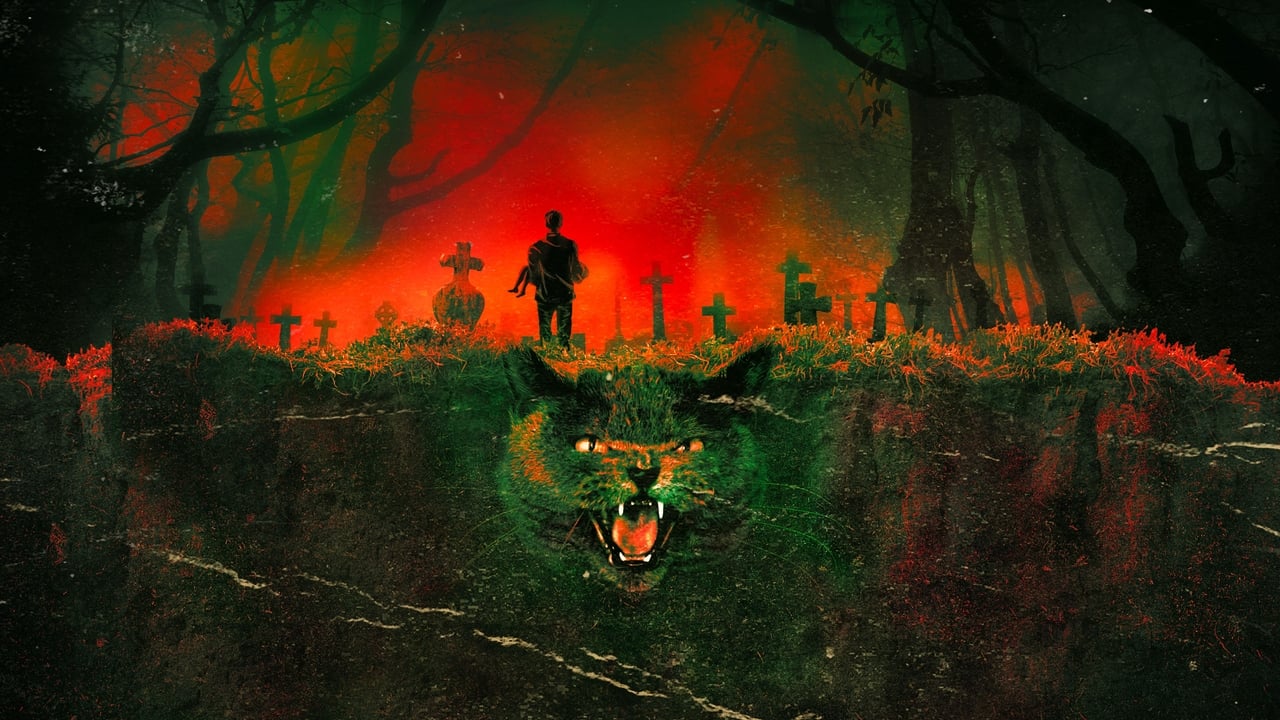
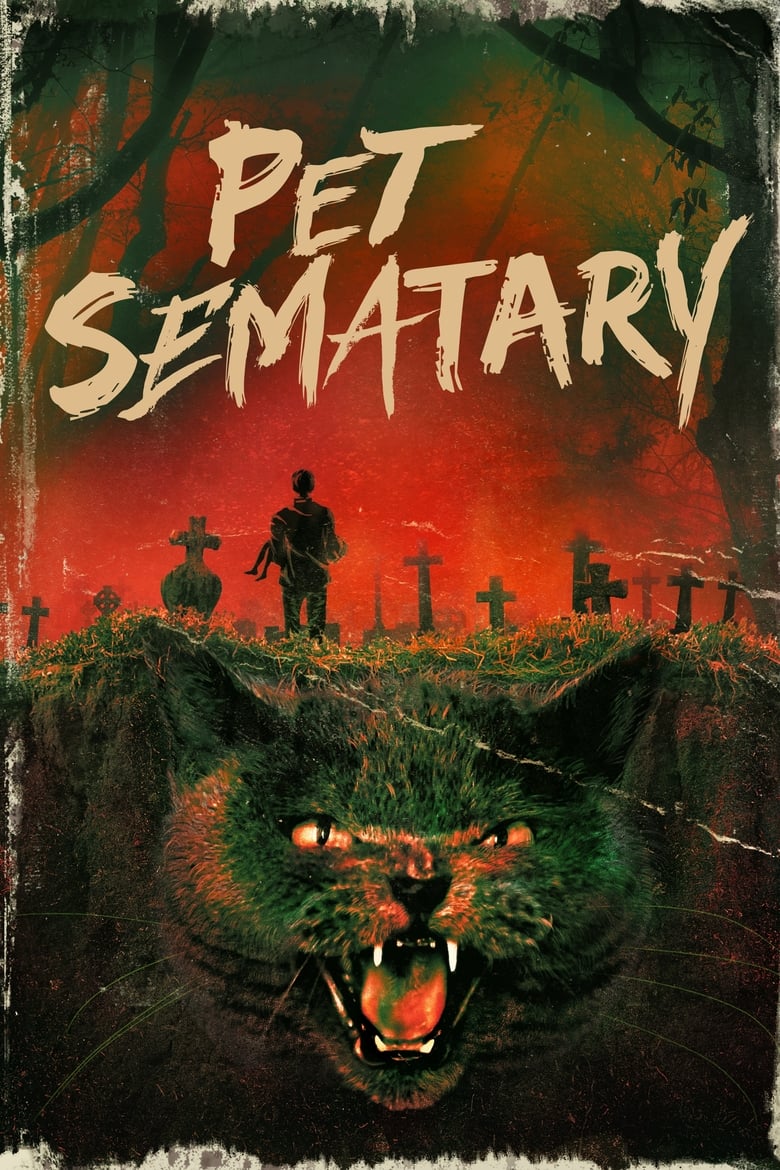
Pet Sematary
“Sometimes dead is better.”
After the Creed family's cat is accidentally killed, a friendly neighbor advises its burial in a mysterious nearby cemetery.
About Pet Sematary
Why Pet Sematary is still worth talking about
There are horror films that try to scare you with spectacle, and then there are a handful that quietly move the ground beneath your feet. Pet Sematary belongs to the second camp. It begins with a recognisably ordinary upheaval: Louis Creed takes his family from Chicago to rural Ludlow, Maine after accepting work as a local physician, and that domestic relocation is the movie’s first stealthy threat.
Mary Lambert directs with the kind of economy that keeps the story tight — 103 minutes, no fat — and she surrounds that nuclear family with people and places that feel lived-in and unnerving. Neighbour Jud Crandall becomes the conduit to the film’s central puzzle: a pet cemetery hidden in the wood behind the Creeds’ house, and an older, stranger site beyond it that promises terrible returns. At the centre is the family itself — Louis, Rachel, their daughter Ellie and young Gage — and what happens to that small unit. The movie is explicitly about family and parental protection, about home and how easily it can be unsettled; it’s also a horror film that treats mortality and loss as its engine. That focus on ordinary people in an ordinary home is exactly why the film still jumps under the skin.
The idea that sets Pet Sematary in motion
The premise is simple and effective: a family moves into a rural house and, through friendship with a neighbour, learns that the nearby woods contain a pet cemetery with rules — and a darker burial ground beyond those rules. That tidy domestic premise lets the movie make its horror feel personal, not theatrical.
Early on, Louis encounters Victor Pascow, a jogger fatally injured on a road near town, who unnerves him with warnings about the grave sites. The film uses that encounter to introduce a sense of warning and fate: the world here has thresholds that ought not to be crossed.
When tragedy comes for the family — and the movie does not shy away from the sting of loss — the choice presented is a terrible one. Jud takes Louis deeper into the woods to an ancient Miꞌkmaq burial ground and shows him what can be done there. The rite is framed as a fix born from neighbourly kindness, which is why it feels so poisonous later.
What the setup does well is keep the stakes intimate. The threat isn’t some distant apocalypse; it’s the possibility of undoing death at home, and discovering that returns from that ground are not the same as what was buried.
Why Gage Creed matters
Gage Creed is the story’s smallest, most devastating hinge. He’s a child in the middle of a family adjustment — one of the reasons the household is so fragile — and that fragility is what the film exploits.
What makes the character memorable is less spectacle and more how he reshapes the parents’ world. The Creeds’ move and their attempts to settle in make Gage’s safety feel like the whole point of the film, so anything that imperils him lands harder than a generic monster attack ever could.
Gage’s fate is the narrative fulcrum: his presence is the emotional reason Louis faces the unthinkable choice of whether to use the burial ground. The later, darker echoes of Gage — when the family’s grief and the film’s supernatural logic collide — are precisely why the character lingers in the viewer’s head.
Practically, the pet cemetery itself and Jud’s quiet instruction set the conditions for what happens to Gage. The movie treats him as the intimate centre around which every moral and parental panic spins.
Pet Sematary has more on its mind than the plot suggests
On the surface the movie is about resurrecting the dead; underneath it’s about how families respond to unbearable loss. Everything the film asks is domestic — what can you do when the person you love is gone, and where does a parent draw the line?
Mortality is treated as a practical problem to be fixed, but the film refuses any neat solution. The decision to use the burial ground is framed by parental protection and, crucially, by the assumption that bringing someone back will restore the family to ordinary life. That assumption is the emotional bait.
Home and safety are continuously undermined. The woods and the cemetery are physically close to the house, and the film turns that proximity into a moral geography: the danger isn’t distant, it is on the family’s doorstep. Loss and a twisted form of heroism — the attempt to right a wrong at all costs — are threaded through the story. The narrative asks whether a desperate, loving act can become the very thing that destroys what it aimed to save.
Pet Sematary could not belong to any other decade
Released in 1989, Pet Sematary comes at the tail end of the 1980s — a moment when horror often turned its attention inward, bringing dread into suburban and rural homes rather than the wider world.
That inward turn suits this story perfectly: it’s less about mythic monsters and more about how ordinary people confront extraordinary grief. Placing the supernatural inside a family setting feels very much of that late-’80s tendency toward domestic horror.
The film’s timing also matters because it lands in a period when audiences were comfortable seeing genre pictures centre on recognisable domestic crises. In other words, the decade’s appetite made a story about a family’s darkest choices feel less like an outlier and more like a grown-up fable for scared viewers.
So while the movie wears its era lightly, its late-1980s release shapes how it balances melodrama with menace — straight to the home, not the headlines.
What has aged — and what hasn't
What still hits is the movie’s ability to make the domestic feel perilous. The Creeds’ move and their friendship with Jud — the neighbour who casually drags them into a darker tradition — create an intimacy that modern horror sometimes misses. The closeness of the threat, physically and emotionally, keeps the tension immediate.
The film’s small set of themes — family, home, parental protection — remain relatable. Losing a pet, for example, is treated here as a real family trauma; that kind of grounding keeps the supernatural beats feeling earned rather than arbitrary.
Some scenes that depend on dreams and warnings (Pascow’s appearance, Ellie’s dream in Chicago) still work as devices to unsettle: they make the audience feel aware of danger before the characters do, which is a durable storytelling trick.
The parts that may feel less comfortable now are the film’s willingness to press the bleak pedal all the way down. It’s not a flaw — it’s a deliberate choice — but modern viewers should expect a very unflinching payoff to the central moral choice.
Why Pet Sematary still matters
People remember Pet Sematary because it centres its horror on things that matter in ordinary life: the family that moves into a new home, the pet that comforts a child, the neighbour who knows too much. Those elements give the film a kind of lingering emotional weight.
Key moments — Victor Pascow’s eerie warning, the discovery that the pet cemetery hides something older and fouler, and the return of the family cat that is not quite itself — create a chain of escalating unease. The film consistently ties those supernatural beats back to the family’s attempts to keep life normal.
There are also memorable narrative moments that refuse easy forgiveness: Jud’s insistence that the burial ground is evil and his line that sometimes 'dead is better' crystallises the story’s moral stance, and Louis’s later choices push the film into territory that’s hard to shrug off. Ultimately, it’s the combination of domestic focus, blunt moral dilemmas and scenes that invert safety — children, bedrooms, a familiar house becoming hostile — that keeps the movie present in people’s memories long after the lights come up.
Does Pet Sematary still hold up?
Yes — but with a clear rider. If you want a horror film that makes family life the theatre of dread, Pet Sematary still delivers. The story of the Creed family, the neighbourly introduction to the pet cemetery and the moral pressure that follows remain effective elements that make the film worth seeing.
It’s a compact picture — 103 minutes — and Mary Lambert keeps the plot focused on Louis Creed’s terrible choices rather than broadening out into anything resembling a franchise-scape. The presence of Gage as the emotional fulcrum and the film’s willingness to explore the cost of trying to defy mortality give it a distinctive, bleak courage.
Be warned: this isn’t comforting nostalgia. The film’s core ideas — whether to protect one’s family at any cost, and how home can be corrupted by grief — lead to outcomes that are deliberately upsetting. That bleakness is the point; viewers looking for a safer scares-and-resolution horror will find this a hard watch.
If you’re curious about a late-’80s horror that keeps the drama in the living room and refuses tidy consolations, give Pet Sematary a watch. It’s a reminder that sometimes the most frightening place is where you thought you were safest.