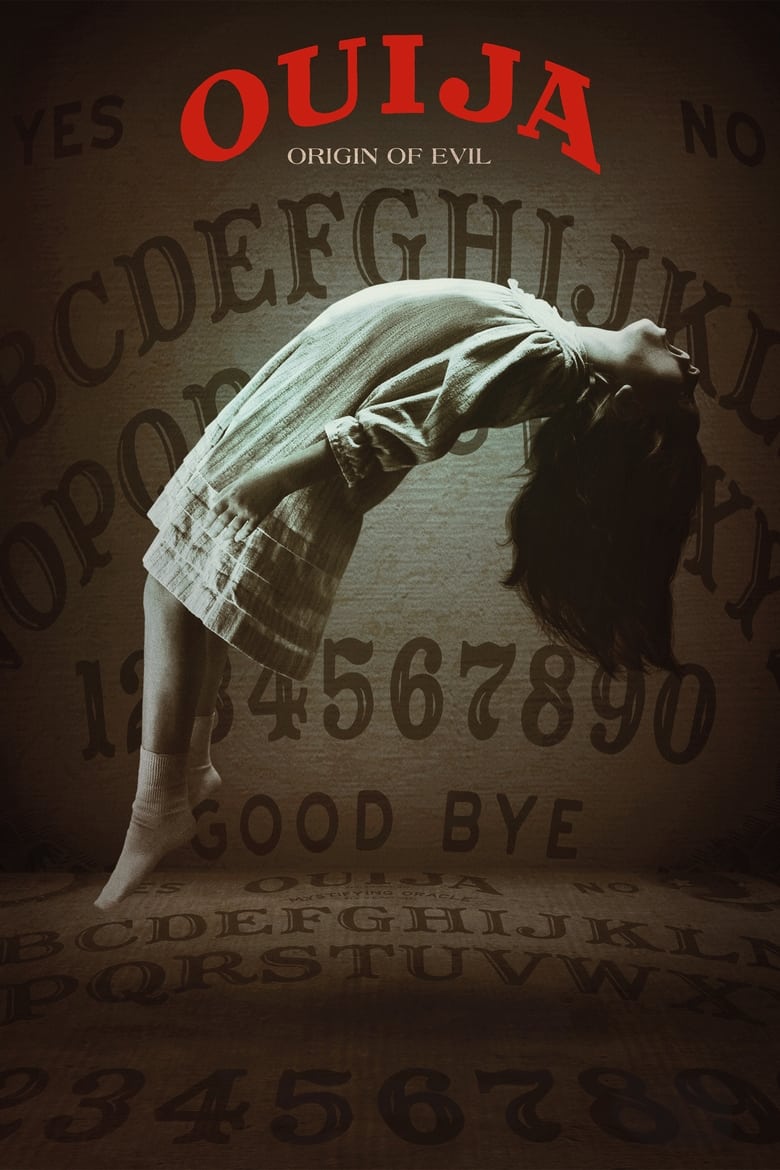
Ouija: Origin of Evil
“When you talk to the other side, you never know who will be listening.”
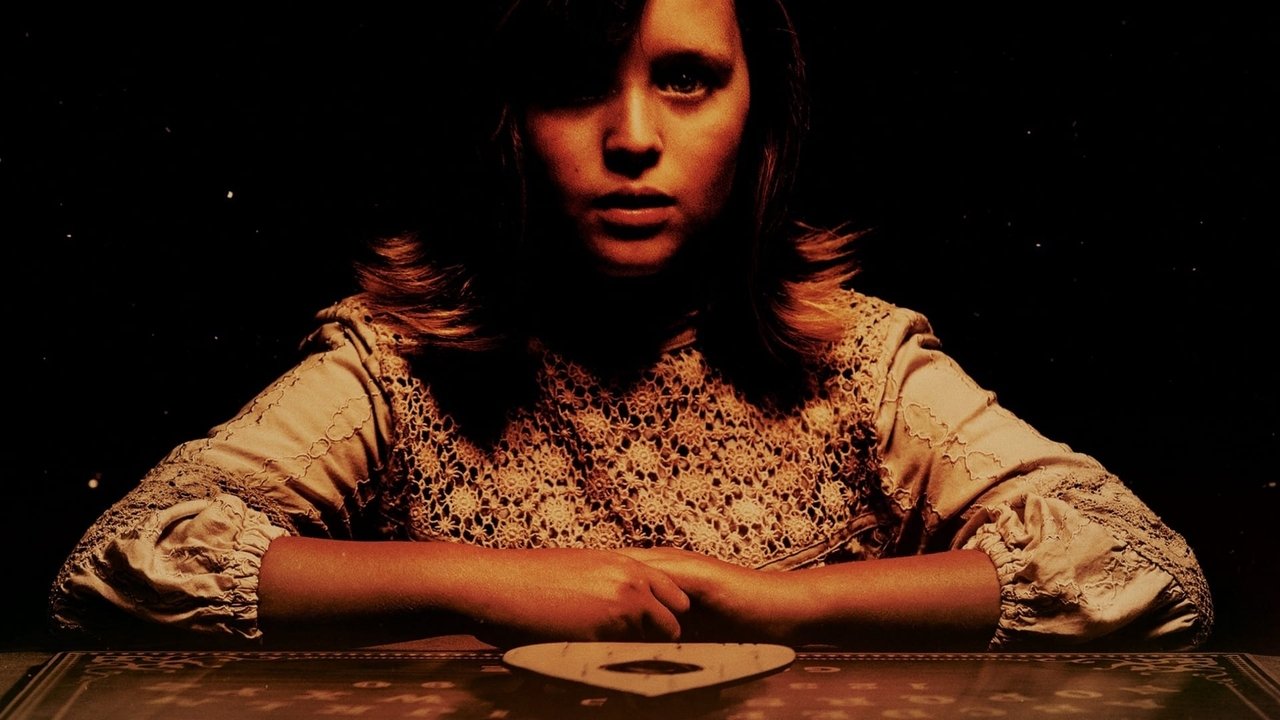
In 1967 Los Angeles, a widowed mother and her two daughters add a new stunt to bolster their séance scam business and unwittingly invite authentic evil into their home. When the youngest daughter is overtaken by the merciless spirit, this small family confronts unthinkable fears to save her and send her possessor back to the other side.
About Ouija: Origin of Evil
Why Ouija: Origin of Evil is still worth talking about
Stick a Ouija board on a suburban kitchen table, set the clock to 1967 and watch a family try to pay the mortgage with spiritual consolation. That, in a sentence, is Ouija: Origin of Evil — Elizabeth Reaser's Alice Zander running a turf of small-time seances from her home while her daughters look on.
It's a tidy thriller: compact at 99 minutes and directed by Mike Flanagan, it doesn't wander. The setup is simple — a household coping with a recent death, financial strain and an experiment that goes horrifically wrong — but the film keeps returning to that one neat, nasty idea: belief can be a business, and sometimes belief opens doors that should have stayed shut. You remember it because it makes the domestic feel unsafe. When a child brings a toy-board into the family routine, the consequences are quietly devastating — and unusually focused for a mainstream horror that wants to be more than cheap shocks.
The idea that sets Ouija: Origin of Evil in motion
The story starts in very practical trouble: Alice's household is losing its home. Desperate, the family leans on the only thing they have left — the act of contacting the dead — and the Ouija board becomes a cheerfully dangerous substitute for a bank loan.
A young child, convinced she is speaking to her dead father, uses the board to help her mother. That trust, the film suggests, is what gets the house into trouble. It's not some abstract curse; it's a small, well-meaning act that grows teeth.
From there the mood shifts. The child slips away from childish wants and into possession, and the family discovers that these spirits have a history with the house — they've been watching since the day the family moved in.
They even try the obvious fix: burn the board. But the movie refuses a tidy solution. The ritual appears to solve something, and then the house — and whatever is in it — quietly keeps its hold.
Why Alice Zander matters
Alice Zander is the glue and the solvent. She holds the household together by running small-time séances from home, and she also dissolves what little certainty her family has left by turning grief into a hustle. The lines between comfort, commerce and self-deception blur around her.
She's explicitly stuck: widowed, with two daughters, and under the pressure of foreclosure. That combination makes her choices believable — she reaches for anything that might keep the family afloat, even if it means courting the supernatural.
The film uses Alice to show how vulnerability can invite disaster. When a child brings unexpected money to the table, Alice allows a Ouija session that feels like salvation. It isn’t — and that moral ambiguity is what makes her interesting on the screen.
More than a plot device, Alice represents the particular brand of American grief that performs: consolation as a performance for an audience, and the risky faith that the performance might actually work.
Ouija: Origin of Evil has more on its mind than the plot suggests
On the surface it’s a possession movie. Underneath it’s about family — how people cling to one another, what they will risk to keep a home, and what stories they tell themselves to survive loss.
Belief is central. The Ouija board is less a tool of the occult and more a mirror: the answers a family wants to hear come from how much they want them. That interplay between faith and fraud gives the scares a human edge.
Mortality sits beside domestic panic. The family are living with a recent death, and the film keeps circling how that absence shapes everything they do. Grief, here, is both motive and vulnerability. And then there’s the house: a place that should be safety but becomes a witness. Once you accept that spirits can watch you from the walls, home stops feeling like refuge — and the movie delights in that small, corrosive betrayal.
Ouija: Origin of Evil could not belong to any other decade
It arrived in 2016, squarely in the middle of the 2010s. That matters because the decade liked its horror to feel purposeful: short, focused and often a little clever about its premise.
At 99 minutes, Ouija: Origin of Evil does the same thing — it gets in, tightens the screws, and gets out before the engine runs out of steam. That compactness was a hallmark of many 2010s genre films, which favoured narrative economy over sprawling epics.
Mike Flanagan’s involvement — he wrote and directed the picture — also fits the decade’s pattern of directors putting clear signatures on mid-budget horror. People in the 2010s wanted films that felt like someone’s particular weird idea, not generically safe studio product.
So while the story is set in the 1960s, the film’s approach — efficient, personal and willing to treat an origin idea seriously — is very much of its own time.
What has aged — and what hasn't
The parts that hold up are the human ones: a family grieving a father, a mother trying to keep things together, and a teenager trying to protect a little sister. Those beats are timeless — they’re why the film still gets under the skin.
The premise — a child reaching for comfort, accidentally inviting something in — continues to feel unsettling. The movie makes possession an intrusion on ordinary life: tantrums about school, a kid wanting to stay home with the board. That small-scale discomfort ages well.
The foreclosure setup and the secret cash in the basement (the board leads the child to a stash) anchor the supernatural in something mundanely desperate. That mix of practical trouble and ghostly threat still reads easily to contemporary viewers.
What might jar is the film's willingness to let the house keep its secrets. For some modern tastes, the bleaker consequences — and the film's refusal to neatify them — can feel unsatisfying. But that's a choice, not a flaw, and for many it’s what gives the movie its teeth.
Why Ouija: Origin of Evil still matters
Talk of the film tends to come back to the way it treats the Ouija board: not as a novelty but as a domestic catalyst. That little pivot — treating a toy as the linchpin of family drama — gives the movie a tidy, memorable identity.
It also lingers because of the film’s darker decisions. The board gives the family a lead: money hidden in a secret compartment — an ordinary, almost embarrassing discovery that becomes the moment everyone relaxes, and which then unravels everything.
Then there are the moral costs. The story doesn't let the family off the hook: horrific acts happen in the name of keeping each other safe, and those consequences follow the characters long after the immediate horror ends. That downbeat afterlife for the family is what many viewers remember. Finally, the film closes its loop in a way that refuses comfort. Years later, the story leaves an older survivor in place with a chilling final exchange. It's the kind of ending that hangs around in your head — not because it shocks, but because it refuses neat consolation.
Does Ouija: Origin of Evil still hold up?
Yes — if you want a concise, character-centred horror that cares about family and the price of belief. It's a 99-minute film from 2016, written and directed by Mike Flanagan, and it uses its runtime to tell a tight, often grim origin story about a household trying to survive loss.
The picture’s strengths are simple: it makes grief and home-life feel vulnerable to the supernatural, and it keeps the focus on what people will do when hope runs out. The Ouija board is the engine, but the movie is really concerned with the family that turns to it.
If you prefer horror that neatly ties up the moral tabulations at the end, this one might frustrate you — its consequences are bleak and lasting. But if you like your scares to arrive from believable desperation rather than spectacle, it's still a neat little gut-punch.
Bottom line: watch it if you're after a compact, thoughtful origin-of-evil story where the true horror is what grief and money worries do to ordinary people. It's not comfortable. That's the point.