Onibaba
“The most daring film import ever...From Japan!”
While her son, Kichi, is away at war, a woman and her daughter-in-law survive by killing samurai who stray into their swamp, then selling whatever valuables they find. Both are devastated when they learn that Kichi has died, but his wife soon begins an affair with a neighbor who survived the war, Hachi. The mother disapproves and, when she can't steal Hachi for herself, tries to scare her daughter-in-law with a mysterious mask from a dead samurai.
About Onibaba
What makes Onibaba worth revisiting
Open any conversation about Onibaba with that field of reeds. The film begins with two fleeing soldiers cut down and dumped into a hidden pit; it’s a brutal, practical act that immediately refuses sentimentality and makes the world of the story feel dangerously close. From that violent, everyday beginning the movie asks you to look at what small, urgent choices do to people.
Kaneto Shindō made a picture that keeps swapping registers: it’s a drama about two women scraping a living in wartime, and it’s also horror that leans on a single, stubborn object — a samurai’s Hannya mask — to turn private grief into a public terror. The director doesn’t give you a tidy supernatural explanation; instead he lets the mask, and the women’s moves around it, do the talking. Nobuko Otowa’s Older Woman sits at the centre of that shift. She’s the one who makes the reed-field a workplace and a stage: committing murder, bargaining for food, and later using the mask to frighten and control. Put simply, she’s the reason the film feels personal even when it’s being grotesque.
The idea that sets Onibaba in motion
At its simplest, Onibaba starts with survival: a woman and her daughter-in-law ambush passing soldiers in a vast reed-field, strip them of armour and stash the bodies in a concealed pit. It’s a grim, practical economy — kill, scavenge, trade — and that economy is the movie’s engine.
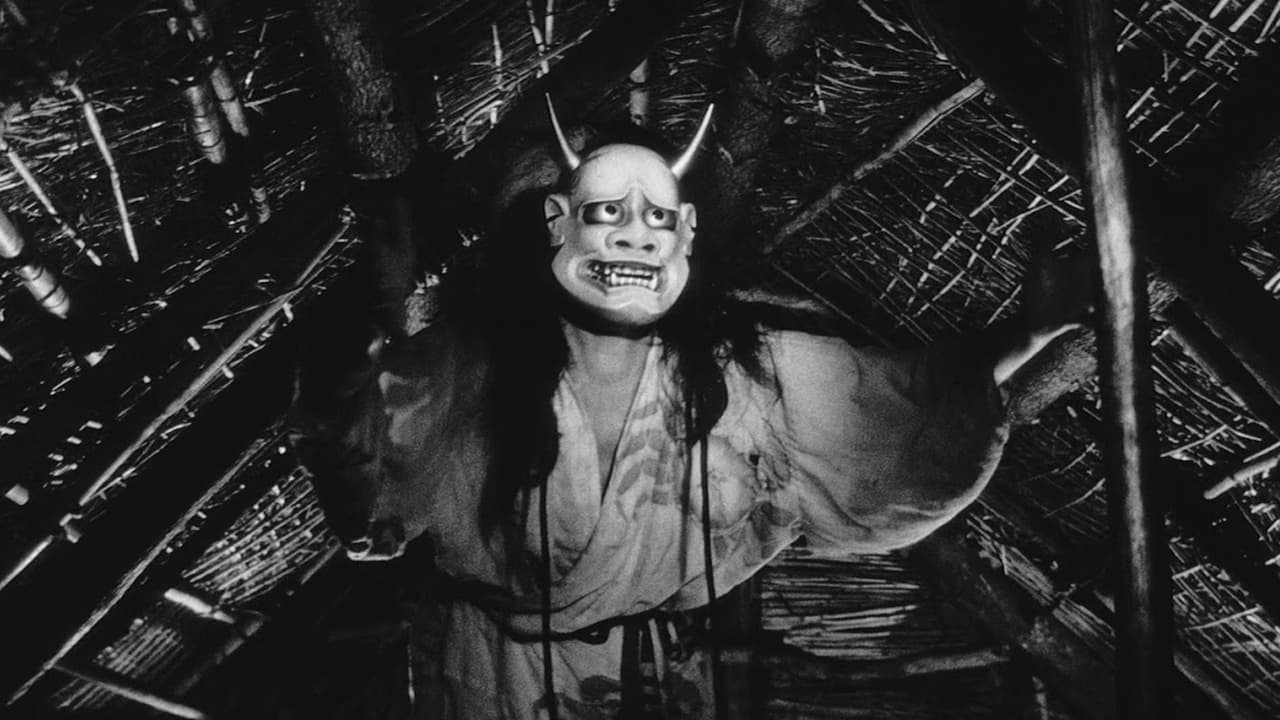
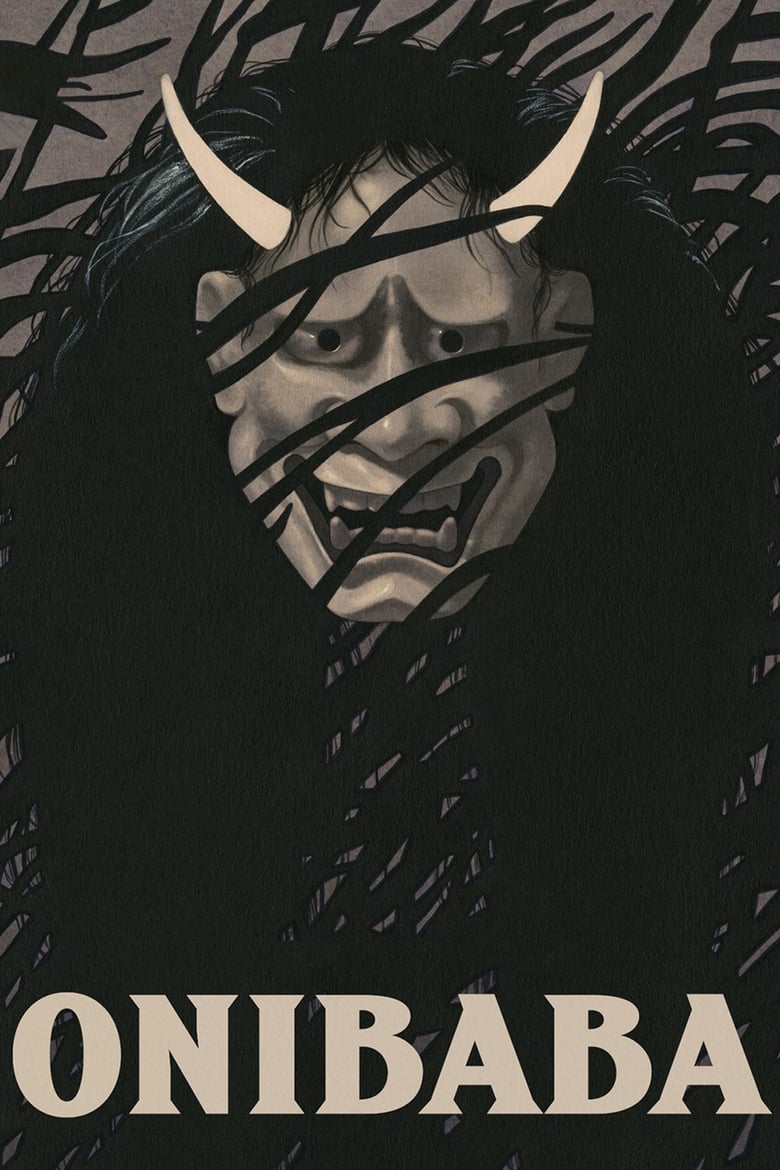
Into this arrangement walks a samurai wearing a Hannya mask. The mask becomes a lever. It can be used to terrify; it can be stolen; and crucially, when the older woman discovers that rain has somehow welded the mask to her face, an ordinary scheme explodes into something irreversible.
What the setup buys Shindō is a slow tightening: private bargains and petty jealousies suddenly matter because they collide with a single physical fact — the mask will not come off — that forces choices into the open.
The film isolates this idea cleanly and then tests it. The younger woman is coaxed into helping remove the mask after a promise; attempts fail, desperation escalates, and the story ends with a leap — literal and moral — that leaves the mask’s origin deliberately unsettled.
Why Older Woman matters
The Older Woman is the film’s pivot. She and her daughter-in-law make their living from killing and selling armour; that practical cruelty sits next to a very human need to keep the household intact. She warns the younger woman away from Hachi — not just out of virtue but because her livelihood depends on the pair staying where they are.
Her jealousy is not a neat villain’s motive. It’s tangled with grief: her son Kishi is dead, a casualty of desertion and theft, and the Older Woman sees Hachi as the one who pulled them all into ruin. That history makes her warnings sharp and sometimes petty, but believable.
When the samurai arrives she is the one who tricks him into the pit, then takes his mask. The mask becomes theatre for her power: she wears it to frighten the younger woman, to stage punishment, to keep control when other things — desire, hunger, a returning soldier — threaten to undo her arrangements.
And then rain changes the rules. The discovery that the mask will not come off and the later unmasking — which reveals a disfigurement under the Hannya — turns her from playwright to trapped actor. Her final cry that she is a human being, not a demon, is the film forcing you to look at what she did and why she did it.
Onibaba has more on its mind than the plot suggests
Onibaba’s surface is tidy: theft, seduction, a stuck mask. Underneath, though, the film is stubbornly domestic. At its heart are family ties — the obligation and frustration of kin who must rely on each other when the rest of the world has fallen apart.
Parental protection sits at the centre of many choices. The Older Woman’s actions read differently when you place them beside the fact that she is protecting, in the only way she knows, a household left vulnerable by war and loss.
Mortality and loss are woven into the economy of the story. Men go off to war, some return, some don’t; the women are left to reuse the detritus of conflict. That practical scavenging is also a repeated reminder of lives shortened and rearranged by violence. Love — or something close to it — complicates everything. The younger woman sneaks out to be with Hachi. Desire makes the household brittle. The film turns these intimate needs into the tinder that sparks tragedy.
Onibaba could not belong to any other decade
Onibaba arrived in 1964, which matters because the film wears its decade without leaning on nostalgic costume or convenience. Being a 1960s picture here means the film sits at a moment when filmmakers were willing to mix moods — blunt drama with horror motifs — without having to tidy the result into a single, marketable genre.
That slightly restless personality — a drama that lets an object become a kind of on-screen superstition — feels of the 60s in the best sense: it trusts audiences enough to tolerate unease and ambiguity.
So while it’s tempting to talk about style or fashion, the real 60s connection is in attitude. This is a film that wants you to keep thinking after it finishes, not one that offers a neat moral certificate.
Seen as a 1964 film, Onibaba stands as a movie willing to be unsettled and unsettling at once — a choice that helps explain why its tone still surprises viewers today.
What has aged — and what hasn't
Onibaba’s core — a household’s collapse under strain — is stubbornly timeless. The film’s insistence on family as the engine of drama still reads clearly; jealousy and the Older Woman’s fury at the younger woman’s affair are human decisions that don’t need modern updating.
The mask scenes, too, still land. Using an object to stage fear and control is simple storytelling, and the moment the Older Woman blocks the younger woman’s path in mask and robes remains viscerally effective: it’s theatrical without being theatricalised.
What might feel less immediate to modern viewers is the way some moral lines are presented as givens — the Older Woman’s justification for killing and robbing soldiers is woven into her domestic logic and not argued with at length. For some, that domestic logic remains compelling; for others it can feel like a story that expects you to supply part of the moral reasoning yourself.
But the bargain that brings the mask into the plot — the promise the Older Woman extracts and the younger woman’s attempt to remove it — keeps the film sharp. Those human transactions age far better than any trendier surface flourishes would have.
Why Onibaba still matters
There’s a practical, almost shockingly plain cruelty in the film’s early business: two women ambush passing soldiers in a reed-field, strip them and hide the corpses in a pit. It’s the kind of action that grounds the movie in desperation rather than myth, and it explains why every later act — bargaining armour for food, a merchant’s crude proposition, a neighbour returning from war — is soaked in consequence.
The samurai with the Hannya mask shifts the picture from crime drama into a kind of moral theatre: he’s lured into the pit, his possessions taken, and the mask becomes an object that’s both stolen loot and a burden the women use against each other.
The mask’s later refusal to come off after being wet turns a trick into a trap. That physical impossibility — the discovery that the mask will not be removed — is the film’s cruel device: it forces choices and forces disclosures, revealing a face under the mask that mirrors the samurai’s disfigurement. What keeps people remembering Onibaba isn’t spectacle so much as how it stages consequence: theft leads to revenge leads to deception leads to a stuck mask and, finally, to an unravelled household. The film leaves the origin of the mask’s curse ambiguous but doesn’t need to explain it; the chain of human motives is enough to make the ending land hard.
Does Onibaba still hold up?
Yes. Onibaba is worth watching today because it keeps its focus small and sharp. The film is about family and parental protection in a time of collapse; every grim choice — from ambushing soldiers to bargaining armour for food — is tied to those human needs, which still register.
It’s also an effective hybrid of drama and horror: the stuck mask is a neat device that forces a moral situation into physical terms, and the reveal beneath the mask (the disfigured face) flips the film from cunning trick to a horror that is painfully intimate.
If you want tidy answers you won’t get them: the film lets the possibility of a supernatural cause for the mask sit beside very human motives, and that ambiguity is part of its strength. The final image — the younger woman leaping and the Older Woman leaping after her — leaves you with a simple, terrible question about what survival costs.
So watch it for the way a domestic quarrel becomes a small tragedy and for the way the film refuses to moralise. Onibaba still works because it keeps reminding you that horrors don’t always arrive from outside; sometimes they are fashioned inside a household, out of fear and the grim arithmetic of staying alive.