Once Bitten
“Mark Kendall just found out his one-night stand has been around for centuries.”
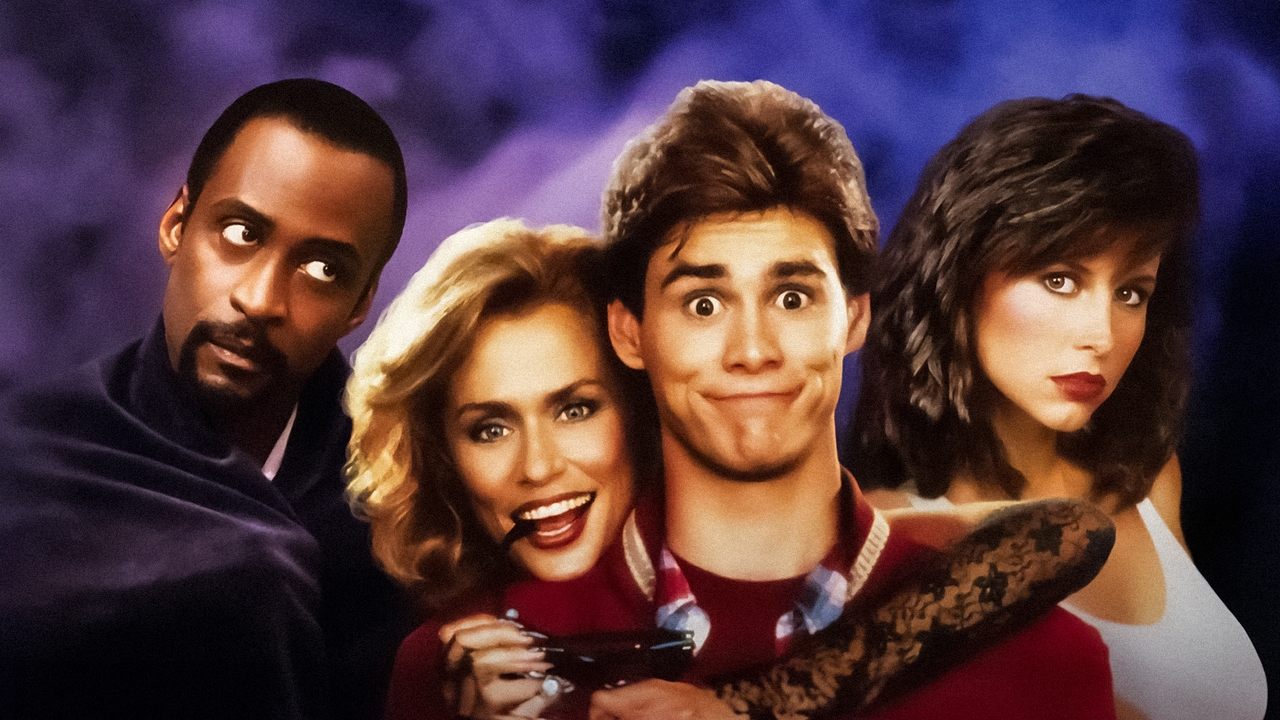
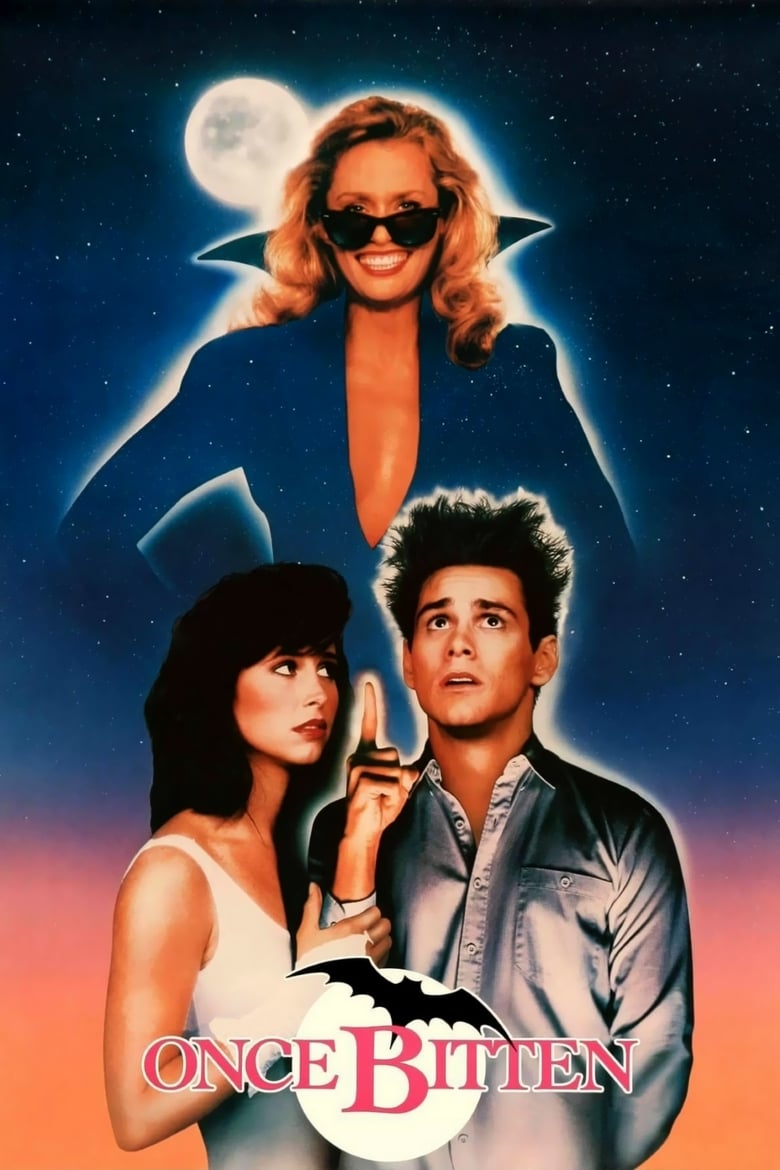
Mark wants to lose his virginity, but his girlfriend wants to wait. Unfortunately for both of them, a 400-year-old vampire Countess needs to turn a virgin into a vampire before Halloween in order to preserve her own youthful appearance, and when she finds Mark, she turns his life upside-down.
About Once Bitten
Why Once Bitten still stands out
There’s a pleasingly daft hook at the heart of Once Bitten: the Countess isn’t a gothic mystery so much as a very old woman on a very modern recruitment drive. For four hundred years she’s travelled with an army of young vampires; now she’s one week away from Halloween and suddenly the supply chain runs dry.
That problem — an immortal who needs to drink the blood of a male virgin three times a year to keep her youth — is the engine of Howard Storm’s 1985 comedy-horror. It’s short, sharp and tidy: ninety minutes of seduction attempts, a mistaken memory or two, and the odd chase through a mansion.
What keeps it watchable is how neatly the gag maps onto ordinary anxieties: youth and desire, the panic of growing up and the embarrassment that comes with both. And yes, you’ll meet a cast of cartoonish minions, a nervous high‑school boy called Mark, and a Countess who takes recruitment very seriously.
The idea that sets Once Bitten in motion
Once Bitten keeps its premise tight. A 400‑year‑old Countess needs male virgins to stay young; her minions scout Los Angeles when the supply looks thin. That simple motive turns a vampire tale into a fish-out-of-time hunt for something that, in the film’s world, has all but vanished.
Enter Mark Kendall: a painfully ordinary virgin who’s trying to convince his girlfriend Robin that he’s ready. A trip to a singles bar, a seduction and a bite to the inner thigh leave him with no memory — and the Countess with a keen interest in seeing him again.
From there the movie moves between comic complications (Mark behaving oddly, an interrupted romance) and a more straightforward caper: Mark and his friends track down the Countess, rescue Robin and try not to get turned into the very thing the Countess needs.
It’s not a film that hides its cards. The setup works because the joke is clear and the stakes are both silly and familiar: adolescence, temptation and the fear of changing in ways you can’t control.
Why the Countess matters
The Countess isn’t Dracula with a waistcoat. She’s older than that — four centuries old — and she’s built herself a travelling troupe of young vampires so she can keep living like someone who never has to learn consequences.
Her urgency is the movie’s comic engine: despite immortality, she’s bound by a very mortal-sounding rule — drink the blood of a male virgin three times a year — and the trouble is, virgins are the one commodity the modern city seems to have stopped producing.
That mismatch — ancient ritual meeting 1980s Los Angeles — makes her less a sympathetic antagonist and more a force of absurd desperation. She lures Mark, seduces him and convinces him that they have had sex; that lie is the blackly comic pivot that propels Mark’s panic and the younger characters’ attempts to fix things.
And when her plan finally collapses, it’s theatrical: a dance-off, a chase through a mansion and, at the end, the Countess’s quick undoing when the one thing she cannot stomach happens in front of her. She matters because she turns an old-night horror staple into a comic problem about youth, appetite and timing.
Once Bitten has more on its mind than the plot suggests
At first glance it’s a vampire farce; underneath it’s a film about growing up. The Countess’s hunt for virgins becomes a very literal obstacle to Mark’s attempts to become an adult — or at least to do adult things without catastrophic embarrassment.
So the comedy lands as a series of rites of passage: promising to be ready, being found out, and eventually choosing intimacy on your own terms. The vampire plot is just a stage on which those awkward, universal moments play out with extra fangs.
That framing keeps the film from being only a string of gags. It subtly puts teenage fear and desire in the foreground: the horror isn’t simply supernatural, it’s the adolescent terror that your private life might be snatched and judged by forces outside your control.
Once Bitten could not belong to any other decade
Released in 1985, Once Bitten wears its decade in its premise rather than its trims. The joke — that male virgins are suddenly almost impossible to find — assumes a particular cultural backdrop and uses that shift to make the Countess’s mission feel urgent and slightly ridiculous.
There’s a neat, specific energy to playing that gap: an ancient ritual (three bites by Halloween) colliding with a modern, hedonistic city that has moved on. The film’s humour depends on that collision; take the 1980s context away and the Countess’s desperation loses some of its comic bite.
That said, it’s not nostalgia-marinated. Once Bitten simply uses its era as a setup for situational comedy: the characters, the stakes and the premise are very much pitched at 1985, and the film leans into that with full comic commitment.
What has aged — and what hasn't
The central joke — a supernatural being hamstrung by modern sexual mores — still reads as amusingly literal. The rule that the Countess needs male virgin blood three times a year and so sends her minions into Los Angeles to find one remains a tidy, transportable premise.
Some of the minor characters and their outfits feel of their time; the film assembles a motley troupe (a World War I ace vampire, a ‘Confederate Vampire’, a flowerchild, cabin‑boy and twin vampires among them) that now reads as a catalogue of comic types rather than rounded figures.
Other elements are pure plot mechanics that still work: Mark’s visible symptoms (no reflection), the bookseller explaining the thigh‑bite detail, and the scene where Mark is strapped down as the Countess prepares to bite him a third time. Those beats are straightforward and still deliver the required tension.
Where it falters for modern viewers is in how casually some of those stock character labels are used; they were written as quick, jokey shorthand, and today that shorthand can feel blunt. But if you’re watching for the central conceit — youth versus immortality — it holds up well enough.
Why Once Bitten still matters
Once Bitten endures because it’s the sort of small, silly film you remember for a handful of vivid set‑pieces and a concept that sticks. The Countess — a 400‑year‑old vampire with a posse of youthful followers — is one of those high‑concept centrepieces that gives the movie a recognisable spine.
People who grew up with it often recall the scenes that pitch teenage panic next to supernatural appetite: Mark’s bar trip, the confusion about whether he’s been intimate, and the school dance that turns into a confrontation between two very different kinds of desire.
There’s also a riotous streak of invention in the minions and the mansion sequences — the dance‑off, the casket gag — which give the film its most quotable and replayable moments. Those are the bits that turn it into a dependable late‑night watch rather than merely an oddball footnote.
Finally, it matters because it mixes fears about adult life with a monster movie’s rules. The Countess’s annual requirement and her dwindling supply of virgins is a neat, silly way of externalising the panic of adolescence, and that is what keeps people coming back.
Does Once Bitten still hold up?
Yes — with a generous asterisk. Once Bitten is not sophisticated, and it never pretends to be. What it offers is a compact, mischievous premise (a Countess who must drink the blood of a male virgin three times a year) played out over a brisk ninety minutes.
If you’re after tidy plotting and a concept that turns adolescent panic into comedy, it delivers: Mark’s attempts to win Robin, his odd post‑bite behaviour, the singles‑bar setup and the dance‑off all land as intended. The film’s pleasures are specific rather than sweeping.
There are elements that age more awkwardly — some supporting characters are sketched with broad, era‑bound shorthand — but the central idea still has teeth. And if you’re curious to see a vampire story that solves its immortality crisis with teenage anxieties, it’s a neat one‑off.
So watch it for the gag and the momentum rather than the nuance. Once Bitten won’t rewrite your idea of the vampire film, but it will remind you that sometimes the strangest way to talk about growing up is to make the enemy immortal.