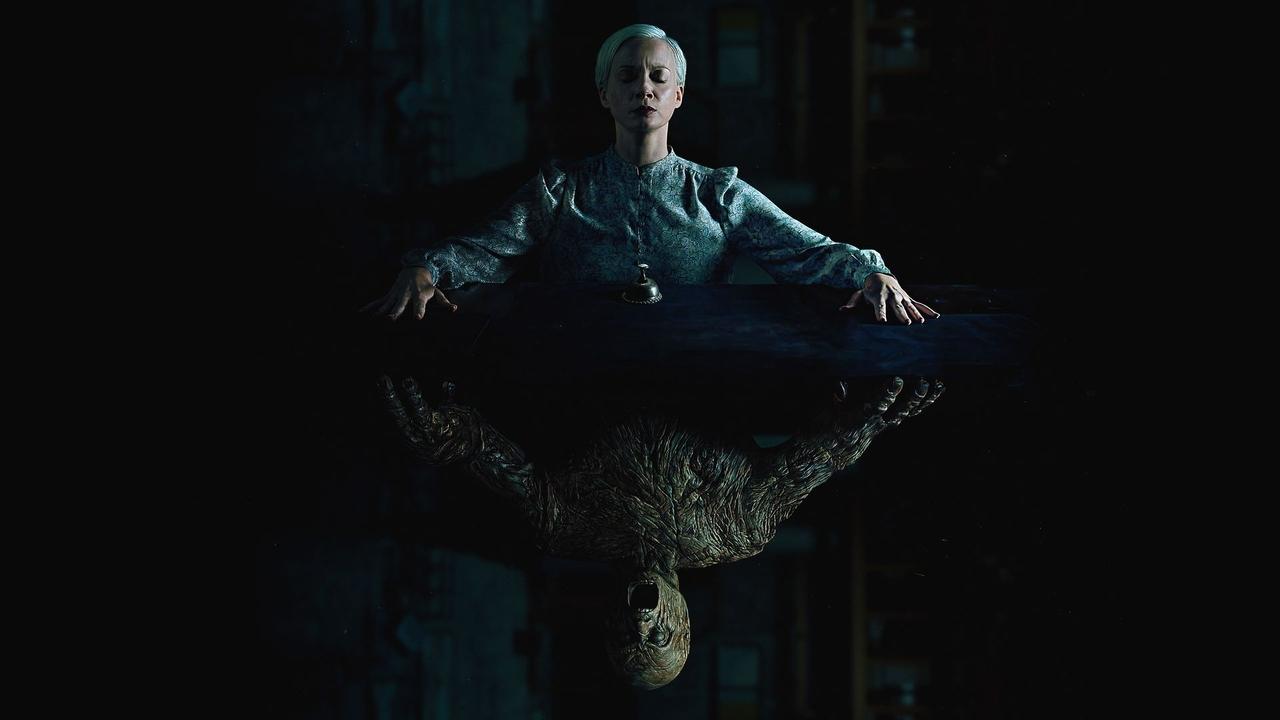
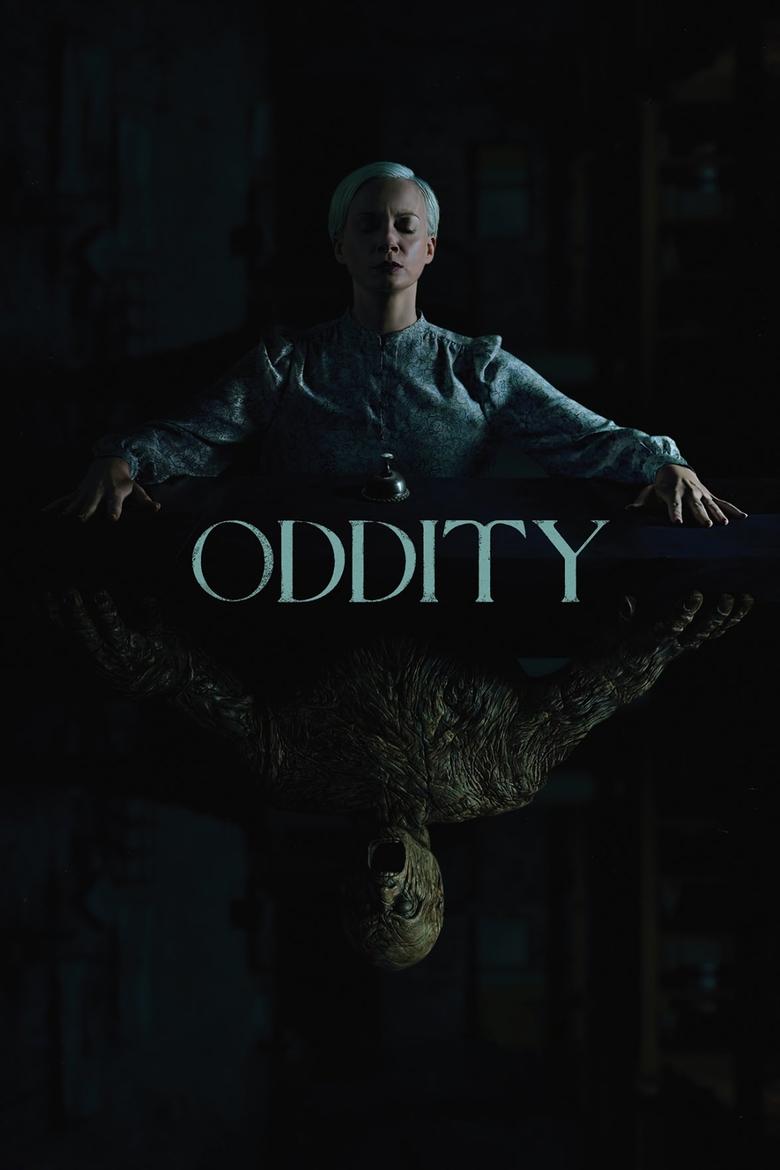
Oddity
“Every murder lives on.”
After the brutal murder of her twin sister, Darcy goes after those responsible by using haunted items as her tools for revenge.
About Oddity
What Oddity gets right
There’s an immediately recognisable domestic chill to Oddity: a newly acquired country house, a woman left alone in it and the awkward knock of an unwelcome visitor. That opening situation — Dani alone while trouble rounds the corner — is the film’s neat hook, and McCarthy uses it to quicken every small, uncomfortable turn that follows.
Oddity is compact: it runs under a hundred minutes and wastes almost none of that time. The cast is arranged around Ted Timmis, played by Gwilym Lee, but the story keeps returning to smaller, stranger objects — a chest, a glass eye, a life‑sized wooden golem — as if the house’s personality is stitched together from curiosity-shop pieces. You leave the cinema remembering a handful of set-pieces rather than a long plot. That’s deliberate. McCarthy’s film is happiest when it lets a single domestic wrongness breathe: a warning ignored, a gift that isn’t a gift, a bell someone really ought not to ring.
The idea that sets Oddity in motion
Oddity’s engine is straightforward: a house that should be safe, and a string of intrusions that make safety feel provisional. The most obvious of those intrusions arrives as an object — a golem in a crate — and as the night wears on it behaves in the unhelpful way haunted things do: it moves when you aren’t looking.
That single uncanny object keeps the film honest. Yana, Ted’s girlfriend, tries to leave the house but can’t find her keys, and the golem’s shifting posture is the constant, small reminder that the couple’s private life is being viewed from the outside.
The setup widens when the supernatural and the practical collide. An apparition sends Yana scrambling; a trapdoor removed earlier becomes a catastrophic hazard when Darcy, the sister who came to help, falls through it and is badly hurt.
It’s tidy storytelling: the film gives you a few simple complications — missing keys, a moving golem, a hidden trapdoor — then lets their consequences ripple. You’re not overloaded with mechanics; you’re shown a sequence of things that keep getting worse because nobody quite believes the first oddity.
Why Ted Timmis matters
Ted Timmis is the film’s human axis. We circle him because his choices bind the household together — and because those choices leave space for suspicion. Gwilym Lee plays the part of the husband who, for reasons the story steadily reveals, ends up staying in a house that has seen two deaths.
He visits Darcy a year after the first tragedy and hands over a small, telling object: Olin’s glass eye. That gesture is ordinary on its face, but odd in context; it’s one of the movie’s quiet ways of showing how connectedness in this family looks like a chain of small, private transactions.
Ted’s personal life is where the film’s family theme sits. He returns to the country house after everything has happened and lives there alone; Yana leaves him because she cannot accept the idea of staying under a roof where people died. That choice — to remain — is less about stubbornness and more about the way grief, guilt and denial can make safety a fragile, personal thing.
Because the film keeps its gaze narrow, Ted’s decisions feel consequential. He’s not merely the man around whom bad things happen; he’s the man who, by staying or by the decisions he makes between people, lets the house keep telling its story.
Oddity has more on its mind than the plot suggests
At first glance Oddity is a house horror — someone warns, someone dies, weird objects arrive. But under that surface it’s a film about what ‘home’ actually promises and what it fails to deliver. The house is meant to be a shelter; in the movie it becomes an archive of claims and resentments.
Fear here is not only the jump-scare kind. It’s the slow anxiety of living where memory gathers like dust: the fear that something at your house will outlast you, the fear that other people’s secrets will rearrange your life.
There’s also a dispute about belief. The film gives us characters who read objects for meaning — a blind clairvoyant who can use a glass eye to see final moments — and others who prefer tidy, rational explanations. That friction between scepticism and the uncanny is where the drama gets interesting. And finally, love — and family — are the film’s messy ballast. Relationships are the reason people stay, the reason they lie, and the reason they make decisions that look wrong from the outside. Oddity treats those motives without sentimentality; it simply shows how love can push people into staying in rooms they should have left.
Oddity could not belong to any other decade
Oddity is a 2024 film, and that placement matters. There’s a clear appetite in the 2020s for tight, psychologically angled horror that prefers character and atmosphere to parade-stopping effects.
It slots into the decade’s taste for compact, intense stories: three genres — horror, thriller and supernatural — are all doing the same thing at the moment, which is to shrink the playing field and make every small choice count.
Because Oddity keeps its focus narrow, it reads like a 2020s picture in the way it trusts the audience to feel unease from suggestion rather than explanation. That’s become a hallmark of recent horror storytelling.
So while it’s not shouting about being of the era, the film’s economy of idea and pace — and its willingness to make domestic life the source of dread — feel very much of the 20s.
What has aged — and what hasn't
Oddity’s basic fears hold up. The premise of someone warning a woman in her own home — Olin’s visit to Dani — is a timing-and-tension problem that still lands. That immediate, human alarm remains effective for contemporary viewers.
Themes around home, safety and family are stubbornly timeless; the idea that a house can feel less like refuge and more like an accusation translates across decades. The film’s choices about who stays and who leaves still read as believable responses to grief and dread.
The film’s supernatural thread — especially Darcy’s use of a glass eye to glimpse Dani’s last moments — also plays cleanly for a modern audience. It presents clairvoyance as a practical, if unsettling, investigatory tool rather than as spectacle, which helps it avoid feeling gimmicky.
What feels less comfortable now is the moral arithmetic. The decision of characters to remain in a known dangerous place, and the ease with which relationships fray afterward, can feel darker to an audience used to immediate accountability. Oddity doesn’t tidy those consequences, and that bluntness will either satisfy or frustrate you depending on how much moral neatness you expect.
Why Oddity still matters
Oddity stays in the memory because it pairs familiar beats with a handful of odd, specific images: Darcy’s cabinet of curiosities, a rabbit doll that clangs its cymbals once, and a golem that hides personal items in its head. Those are the kind of details people mention to each other over drinks.
The story’s quieter choices — a blind clairvoyant who can read a glass eye, a man who comes to warn and is found later with his head smashed — give the film a catalogue of moments that feel like they belong to a particular, strange logic rather than to a sequence of shocks.
There are also moral knots that reward repeat viewings. Accusations fly, loyalties break and the house becomes a ledger of decisions: who defended whom, who lied, who stayed. Those interpersonal strings are what people tend to talk about after the film because they leave room for argument. Finally, the movie’s catalogue-of-objects approach offers a kind of lingering curiosity. Whether it’s the golem’s trophies or a small haunted bell, those artifacts become shorthand for the film’s tone: intimate, uncanny and a touch misanthropic. That’s why Oddity keeps a little grubby corner in the memory.
Does Oddity still hold up?
Yes — but with a qualifier. If you want a tight, object-rich supernatural thriller that trusts a handful of ideas to do the heavy lifting, Oddity is precisely that. It’s a 2024 picture with old-fashioned appetite for domestic dread: a woman alone in a house, a former patient who comes to warn, and a murder that haunts the next year’s quiet choices.
Where it could divide viewers is moral tone. The film gives us a husband who returns to live alone in the house where people died, a sister who can read a glass eye to reveal final moments, and a chain of decisions that aren’t neatly punished. If you prefer tidy justice, this one will leave you unsatisfied; if you like discomfort that lingers, it will do its work.
The particulars stay with you: the golem with hidden keepsakes, the clairvoyant’s odd cabinet, the small haunted bell someone deliberately rings. Those are the moments that make Oddity worth recommending to someone looking for a compact, thoughtful horror with teeth.
So watch it for the way it makes home feel uncertain, for the handful of objects that narrate the film’s mood, and for the appetite it has for moral unease. It’s not comfortable viewing — and that’s precisely why you should see it.