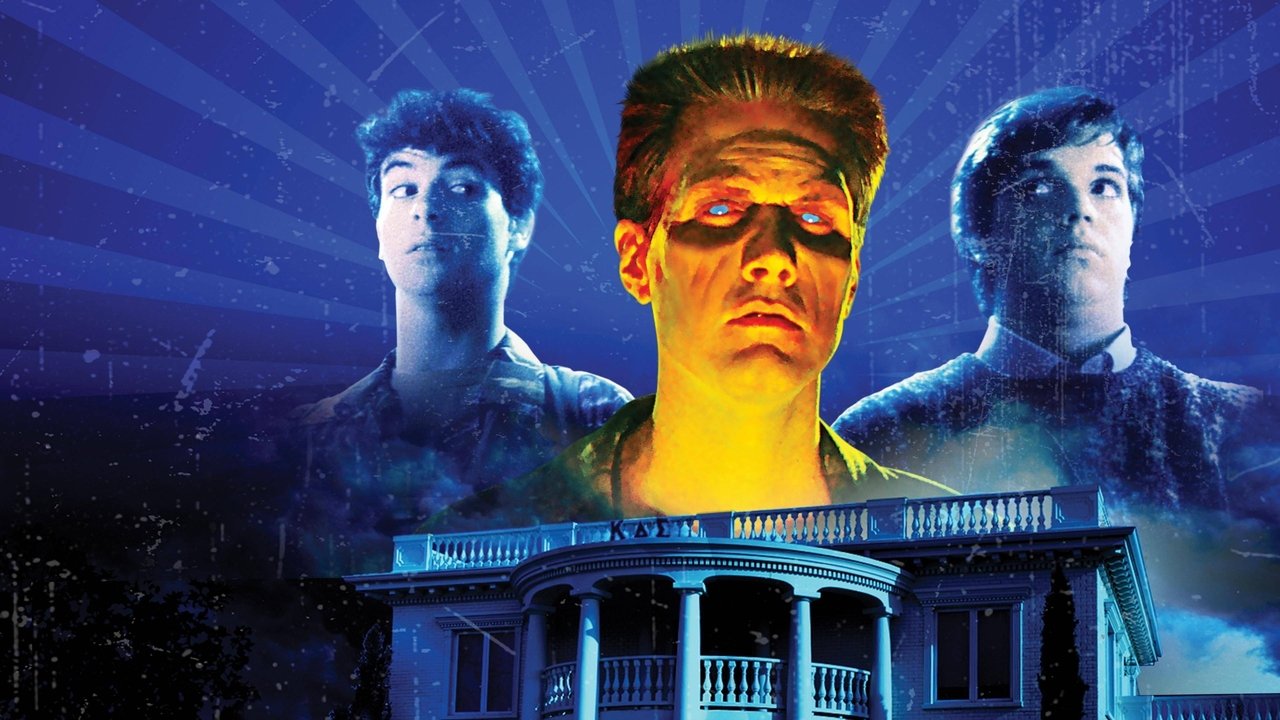
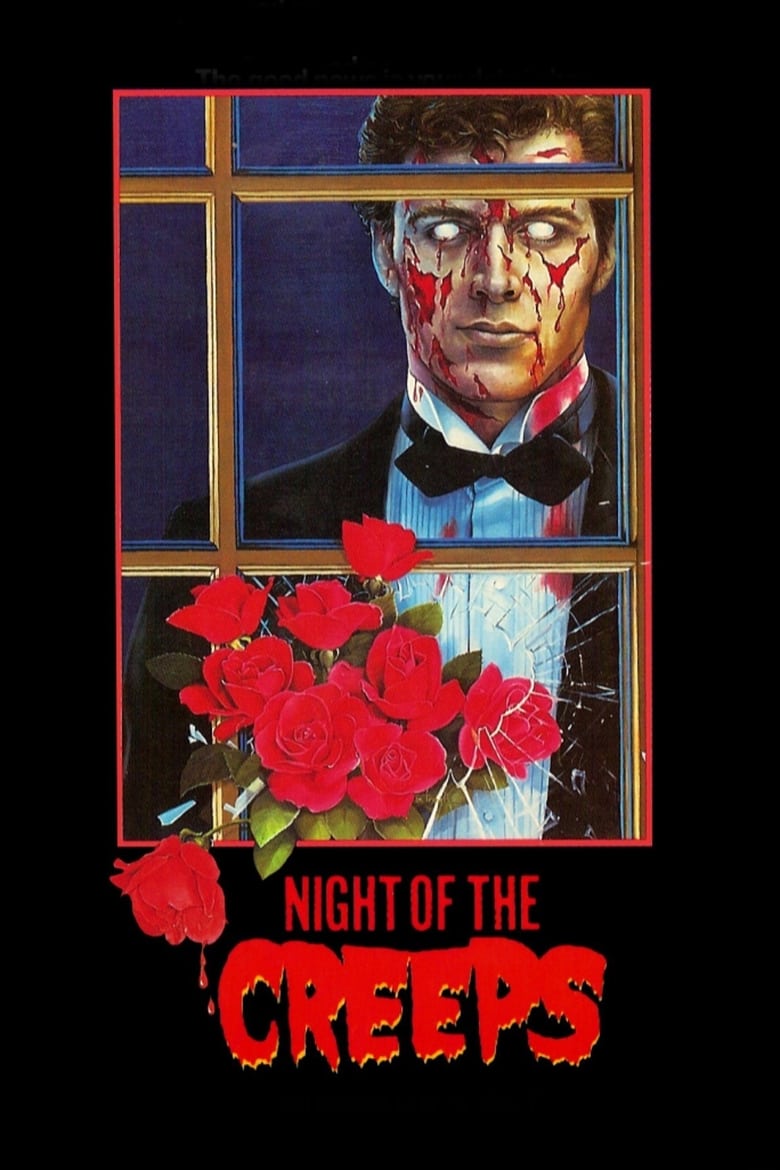
Night of the Creeps
“The good news is your date is here. The bad news is...He's dead.”
In 1959, an alien experiment crashes to earth and infects a fraternity member. They freeze the body, but in the modern day, two geeks pledging a fraternity accidentally thaw the corpse, which proceeds to infect the campus with parasites that transform their hosts into killer zombies.
About Night of the Creeps
Why Night of the Creeps is still worth talking about
Start with the obvious: Night of the Creeps kicks off with a tiny sci‑fi menace rocketing down from space and burrowing into normal life. That opening — aliens desperately trying to stop an experiment being released, then the canister falling to Earth — gives the film a wonderfully ridiculous origin story it never apologises for.
Fred Dekker keeps the thing moving. Clocking in at 87 minutes, it doesn’t dilly‑dally: the film launches its central weirdness and heads straight into college mayhem, a haunted cop’s personal history and, eventually, a house that needs to go up in flames to stop the mess. What keeps people talking is the blend of ingredients — Jason Lively as Chris Romero pining after Cynthia, Steve Marshall’s J.C. at his side, and Tom Atkins as the cop who’s seen worse — all of it played as a zombie comedy that doesn’t forget it’s also a science‑fiction joke with teeth.
The idea that sets Night of the Creeps in motion
The film’s engine is simple and effective: something alien arrives in 1959, is buried by circumstances, and is accidentally freed decades later. That chain — strange object, unlucky discovery, small creature finding a human host — gives the story a tidy spine to hang the rest of the mayhem on.
From there the movie pulls familiar college tropes into the mix. What begins as a stunt — stealing a cadaver at the behest of a frat brother — quickly becomes the thing that lets the corpse walk again and spread the infestation.
Fred Dekker stages the escalation economically. A break‑in at the medical centre, a thawed body that shouldn’t be moving, and then the dead making their way back where they once belonged: the sorority house that started the whole parking‑spot flirtation in the first place.
The payoff lands as a messy set piece rather than an academic puzzle: the basement reveals a grotesque explanation (brains on hand, slugs on the loose) and the stakes flip from prankish embarrassment to ‘we must burn it before it spreads’.
Why Chris Romero matters
Chris Romero is the movie’s point of view — the ordinary bloke who walks into something extraordinary. Jason Lively plays him as the guy who’s still nursing a past hurt but can’t help being pulled into the centre of events when the weirdness starts.
His motive is refreshingly prosaic: he spots Cynthia and decides the easiest path to her attention is to join a fraternity. That choice — petty, human, understandable — is what drags him into the cadaver caper that releases the original infection.
Being the protagonist here doesn’t turn Chris into a superhero. He and his friend J.C. simply get blamed by their peers the next day, confronted by fraternity brothers who think they’ve been up to no good, and find themselves having to reckon with consequences far bigger than a prank.
Chris matters because he’s the audience’s anchor: a relatable reason to be in the middle of the mess, someone whose lost‑love instincts push him forward rather than stall the plot. When the detective explains the older backstory to him, that personal connection makes the danger feel less abstract and more immediate.
Night of the Creeps has more on its mind than the plot suggests
On the surface it’s a college horror‑comedy, but underneath it keeps circling a few surprisingly clear ideas. The sorority house is treated as a home — a place that ought to be safe — and having that domestic space violated by the dead is where a lot of the film’s tension comes from.
Mortality isn’t sentimental here; it’s grotesque. Corpses rise and heads split open to disgorge the tiny slugs, so death becomes both a bodily horror and a fuel for the story’s escalating fear.
Authority threads through the film in a useful way. Detective Ray Cameron’s involvement brings an adult history into the college bubble; his confession that the original victim was someone he loved makes the police presence personal rather than procedural. And at its heart the movie still treats small‑scale human stuff — Chris pining for a lost love; J.C.’s last message of affection — as worth fighting for. The bigger the weirdness gets, the more the film insists people are worth saving, and that gives the mayhem a moral pull.
Night of the Creeps could not belong to any other decade
Released in 1986, Night of the Creeps wears its era in its choices: it’s a youth‑centred story about college life and the rituals around it. That specific focus on pledge week and frat‑house shenanigans places it firmly in a certain strand of 1980s cinema that liked to pair young people with outsized peril.
The film’s flavour — equal parts jokey and gory — is exactly the sort of tonal cocktail the decade favoured. It doesn’t try to be solemn; instead it treats the strange sci‑fi setup as a premise for a movie about people getting into trouble and then having to fix it.
There’s something economical about its storytelling that feels of its time: the plot jumps from prank to panic without fuss, which keeps the pace propulsive and the running time tight.
Put simply, it’s a film from 1986 that uses the period’s appetite for teen‑oriented horror comedy to make a small, clever amalgam of genre bits into a single, restless picture.
What has aged — and what hasn't
The film’s central threat — strangers in your home, the breach of safety — still lands. A sorority house full of young people suddenly not being safe is a plain, effective piece of cinema: the emotional shorthand still works.
Some of the movie’s set pieces lean into a kind of broad, gleeful silliness; the moment the fraternity brothers reappear despite having died in a bus crash is knowingly daft. That willingness to be gleefully absurd helps the film survive years of changing tastes — it never pretends to be anything other than a romp.
At the same time, the way the plot ties social rituals (stealing a cadaver as part of fraternity contests, getting blamed the next day) to real danger still feels clever: the cheapness of the prank makes the consequences feel earned rather than tacked on.
And the film’s appetite for gross‑out invention — slugs, incubating brains and sudden bodily betrayals — remains the kind of practical‑effects conceit that either delights or disgusts viewers now, depending on how much midnight‑movie patience you have.
Why Night of the Creeps still matters
There’s a particular pleasure to the movie’s premise — an alien experiment accidentally released and a small creature that very quickly makes life miserable — that gives it a recognisable shape. That origin moment is the film’s elevator pitch and it’s wonderfully—decidedly—odd.
Beyond the hook, the cast of characters matter: Chris and his friend J.C., the haunted Detective Ray Cameron who discovers a personal link to the original crime, and the college setting all combine into a package that people remember because it keeps surprising you with new complications.
The film’s solutions are unapologetically theatrical: they recruit a flamethrower, set a house alight and count down as gasoline is poured. Those are the sorts of image sequences that stick in the memory — you don’t forget the moment everyone decides the only solution is fire. Finally, the movie even offers two different exits. The theatrical ending gives one last cheeky scare with a returning dog, while the original ending points to a much larger, stranger retrieval of the experiment from the sky — both endings underline that this is a film that likes to finish with a twist rather than a neat bow.
Does Night of the Creeps still hold up?
Yes — but with some small caveats. Night of the Creeps is exactly what it promises: a tight 87‑minute blast of zombie comedy with a science‑fiction twist, directed by Fred Dekker and centred on Jason Lively’s Chris Romero and his mate J.C. (Steve Marshall).
It still works because it keeps the stakes personal. The film asks characters to defend a place they call home, and it gives them clear, human reasons to fight. Tom Atkins’ Detective Cameron brings the past forward in a way that makes the threat feel like more than a series of gags.
If you’re looking for breadth or slow, deliberate scares, this isn’t your film. But if you want a movie that trusts its premise, moves briskly — helped by that 87‑minute runtime — and builds to a proper, pyrotechnic finale (yes, there’s a flamethrower and yes, the house goes up), it still delivers.
So watch it for the invention, the gleeful nastiness and the oddball idea that ties a spaceship to a sorority house. It’s silly, a little gross, and stubbornly fun — the kind of film that reminds you why midnight movies were never meant to behave.