
Night of the Comet
“They came. They Shopped. They saved the world!”
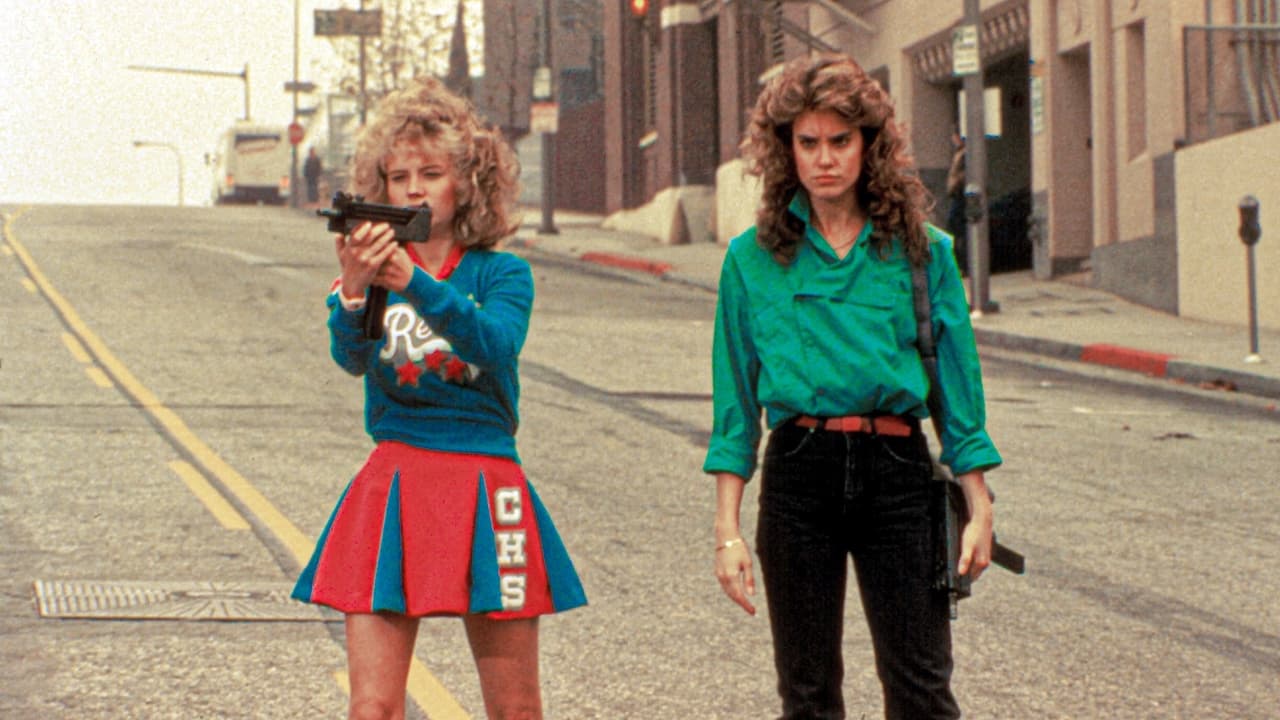
After a comet wipes out most of life on Earth, two Valley Girls find themselves fighting against cannibal zombies and a sinister group of scientists.
About Night of the Comet
What Night of the Comet gets right
It starts with a clean premise: the Earth slips through the tail of a comet — the same sort of cosmic passage you read about in textbooks, the sort that, in this film, hasn’t happened since whatever killed the dinosaurs. That single idea is all the movie needs to tilt ordinary nights into absolute chaos.
Thom Eberhardt keeps the whole thing compact — 95 minutes of straight storytelling — and gives us a pair of sisters at the heart of it. Regina “Reggie” Belmont works at a south‑California cinema; she’s practical, impatient and the sort of young woman who notices who holds the top video‑game scores at her theatre.
From there the film moves fast: a red haze, empty streets, the discovery that spending the night in steel containers matters, and suddenly the quiet world of jobs, arguments and video‑game rivalries is a battleground. That mixture of everyday detail and big‑scale threat is exactly why people still bring Night of the Comet up when they’re talking about smart little 80s genre movies.
The idea that sets Night of the Comet in motion
Reggie’s night begins like any late shift at a local cinema: she’s hanging around after hours while her boyfriend, the projectionist, organises film reels. A small, specific habit — helping him sneak a reel out — anchors the character in a believable routine.
Meanwhile Sam, her sixteen‑year‑old sister, storms out after a fight with their stepmother and sleeps in a steel shed in the back yard. It’s the kind of argument that feels personal and ordinary until the next morning, when ordinary stops being an option.
The sisters discover a world emptied out under a strange, reddened sky, and they quickly puzzle out the only bit of science that matters to them: the steel they slept inside appears to have protected them. From that point the film becomes a series of decisions based on that single survival rule.
Those decisions push them out into the world — to a radio station, to a mall — and into skirmishes with other survivors and with groups who’ve been changed by the comet. The setup works because it keeps the stakes local: two sisters, a hard rule about steel, and a handful of other people whose needs collide with theirs.
Why Regina "Reggie" Belmont matters
Catherine Mary Stewart’s Reggie is not a blank‑slate final‑girl. She’s an eighteen‑year‑old who works at a movie theatre, who cares about small, tangible things — arcade high scores, film reels — and who is used to looking after the smaller emergencies of everyday life.
That practical wiring makes her an excellent point of contact for the film. When catastrophe arrives she doesn’t need a speech; she needs solutions. Finding Sam at home, checking facts, making choices — those actions let Reggie carry the story without ever needing to be heroic on paper.
Reggie’s relationship with Sam and with their stepmother gives her grit. There’s sibling friction, a messy domestic world, and that ordinary friction makes her later decisions feel grounded. The family theme sits on top of the scares rather than beneath them.
Put simply: Reggie matters because she keeps the film honest. The apocalypse is loud and weird; she is the person who remembers to lock the door and figure out what comes next.
Night of the Comet has more on its mind than the plot suggests
At first glance it’s a high‑concept horror comedy: celestial event, zombies, shopping‑mall skirmishes. Look closer and the film is quietly obsessed with family — not as a cosy theme but as the practical reason to get up and do the right thing.
Parental protection is a running idea. Reggie and Sam’s choices are driven by a domestic duty: keep each other safe, then keep the children they meet safe. That sense of responsibility gives ordinary bravery a sharper edge.
Courage here is not dramatic speeches; it’s the small, repeatable things: entering dangerous spaces, refusing to accept easy answers, promising to look for family and actually doing it. Hector’s decision to go check on his relatives and to promise his return is an example of that duty in motion.
Heroism in Night of the Comet is therefore compact and human. It’s less about grand sacrifice and more about being the person who keeps everyone else moving forward.
The effects work that gives Night of the Comet its physical personality
Night of the Comet leans on very physical ideas to make its world feel coherent. The key rule — that the two sisters survived because they spent the night inside steel containers — is a tangible, easily understood mechanic that the rest of the film respects.
Likewise, the story’s darker turn hinges on a mechanical mistake: researchers who thought they had prepared for the comet accidentally left ventilation running, which allowed the deadly dust to reach areas they believed safe. That sort of practical, cause‑and‑effect plotting keeps the film anchored.
These are not abstract concepts. They’re objects and actions — steel booths, a backyard shed, a ventilation system left on — and that material logic helps the film sell its stranger moments.
Because the rules are physical and consistent, the movie asks audiences to accept the unreal by first accepting the real.
Night of the Comet could not belong to any other decade
This is very much an ’80s movie — it was released in 1984 — and it wears that decade’s appetite for mixing genres and teenage protagonists on its sleeve.
The film’s tempo and refusal to linger reflect a certain 1980s thriftiness: tell the story quickly, deliver the set‑pieces, and move on. It’s a compact piece of 1980s filmcraft rather than a sprawling epic.
That placement in 1984 also matters because the period favoured films that put ordinary young people against larger forces. Night of the Comet slots neatly into that tradition without ever pretending to be anything other than a clever, economical genre picture.
If you like movies that blend teenage energy with speculative ideas, this one is proudly of its era.
What has aged — and what hasn't
The elements that still click are the human ones. Reggie as an eighteen‑year‑old working at a cinema, the sisterly bond, and the simple promise of the man who leaves to find his family — these are quiet, human notes that don’t date in the same way a fashion choice does.
The focus on family and protection still lands because those are universal drivers. When characters act to shield kids, or to look for kin, the choices remain understandable and affecting to a modern viewer.
The film’s compact running time helps too: at 95 minutes it rarely overstays its welcome, so the parts that don’t age as well never get time to sour the whole.
So while some trappings might feel of their time, the core — two sisters trying to keep each other alive — feels immediate enough to survive the years.
Why Night of the Comet still matters
Part of the film’s afterlife comes from its clear, memorable set pieces: the comet premise itself, the discovery that steel offers protection, and the odd little details like the annoyance over a video‑game high score that grounds the opening. Small moments like those stick.
Audiences also remember the darker turns — scientists who, in panic, cross a moral line and harvest blood to survive — because they complicate what might otherwise have been a straight comedy. The movie is comfortable standing on both comic and grim ground.
There’s also the pleasure of its plot mechanics: shopping for guns at a mall, getting taken prisoner by zombie stockboys, a daring rescue and, ultimately, rain washing the dust away. Those narrative beats combine to make something that’s fun to rewatch and to talk about.
Finally, the film closes on a strangely domestic note — Reggie pairing up with Hector and taking on parental roles for the kids they rescue — which ties the whole experience back to its insistence that family, however patched together, is what keeps people going.
Does Night of the Comet still hold up?
Yes — with a clear rider. Night of the Comet is best enjoyed on the film’s own terms: a 95‑minute, 1984 genre hybrid that uses a single brilliant premise (the Earth passing through a comet’s tail) to launch a series of small, human stories.
If you care about characters who behave like real people under pressure — an eighteen‑year‑old who works at a cinema, a sister driven by loyalty, a man who goes off to check on his family and promises to return — the movie still delivers. The themes of family and parental protection give the film emotional ballast beneath its jokes and set pieces.
It isn’t trying to be a sprawling epic or a philosophical treatise; it’s a compact, tidy genre picture directed by Thom Eberhardt that knows when to move on to the next beat. That economy is part of its charm.
So should you watch it? If you like your apocalypse served with sibling politics, a clear survival rule, and a willingness to mix light and dark, Night of the Comet is still worth the runtime. It’s a film that ends up feeling less about the comet and more about the people left to pick up the pieces — and that, oddly, makes the whole thing stick.