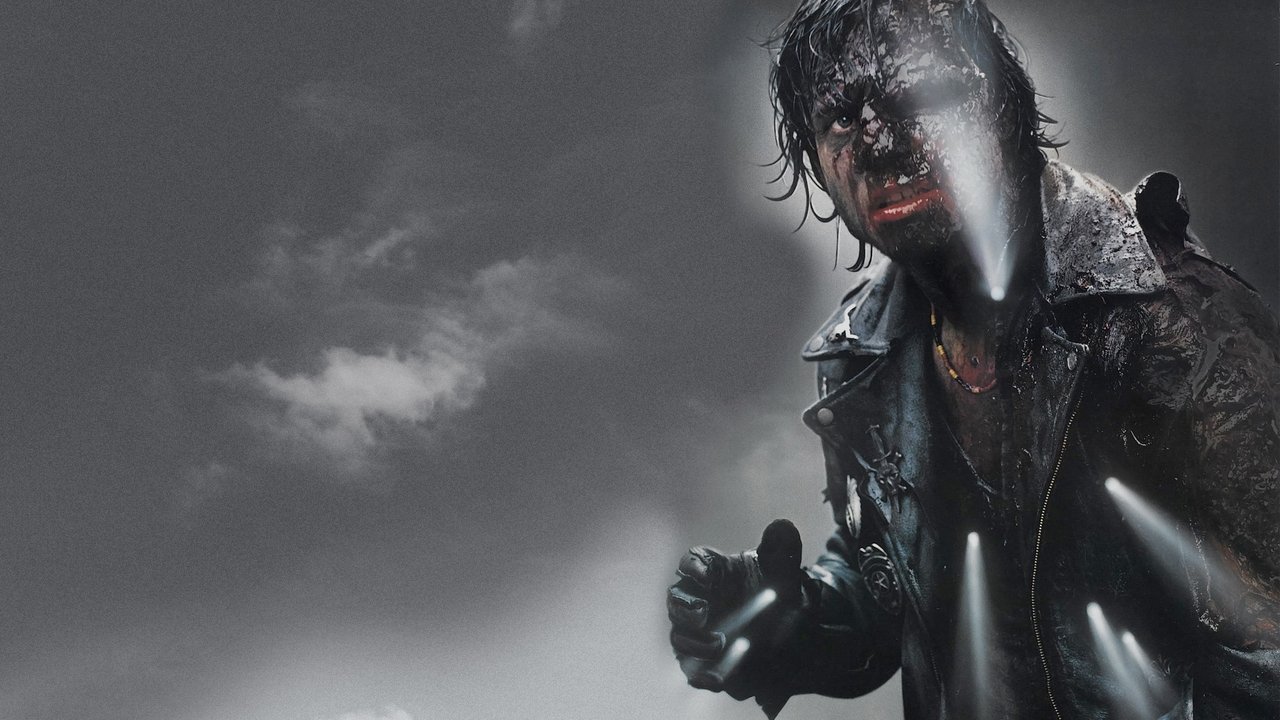
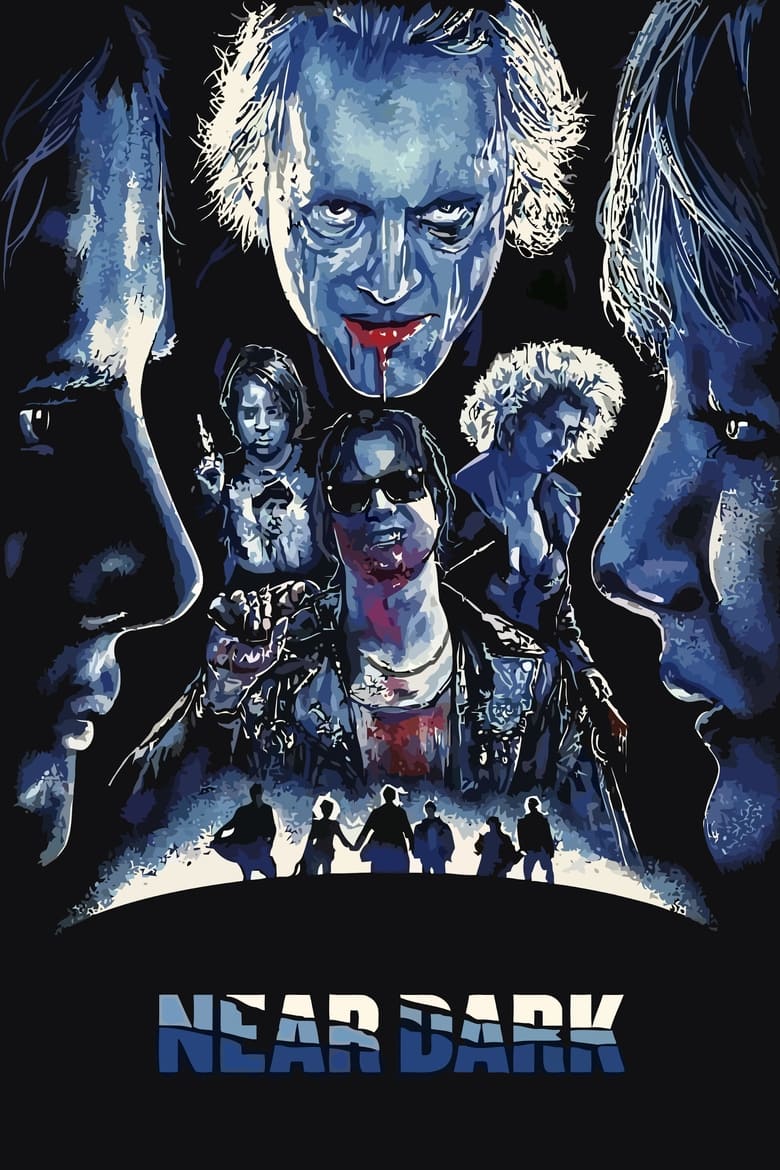
Near Dark
“...pray for daylight.”
A farm boy reluctantly becomes a member of the undead when a girl he meets turns out to be part of a band of vampires who roam the highways in stolen cars.
About Near Dark
Why Near Dark still works
Near Dark throws you straight into a compact, dangerous little world: a young man from a quiet town meets a drifting stranger one night and, before sunrise, his life is upended. That quick spark — a private moment that spills into the open road — is the engine of the whole film.
Kathryn Bigelow keeps things tight. At 94 minutes it doesn’t linger on backstory; instead it sets up a moral squeeze and watches the characters squirm. The compact running time is part of why the film still grabs you: everything has to matter. There’s also the roster of sharp, memorable players who make the squeeze risky — not least the volatile presence of Severen. Bill Paxton’s character is the kind of unpredictable threat that makes every scene feel like it could tip into violence, which keeps the tension electric from start to finish.
The idea that sets Near Dark in motion
The film’s premise is elegantly simple: Caleb Colton meets Mae one night, and that one impulsive encounter becomes the crossroads. It’s not a slow-burn transformation so much as an abrupt induction into someone else’s life.
Mae doesn’t just flit away; she returns with a roaming group and takes him along. That immediate change of scene — from a small Oklahoma town to life on the move with people who have their own rules — gives the story forward momentum.
The tension comes from incompatible loyalties. Caleb hasn’t become them overnight, and when a kid in the group sets his sights on Caleb’s sister the moral problem becomes painfully concrete. It forces Caleb to choose between the violent, freer life he’s been pulled into and the family he left behind.
Bigelow and Eric Red set up the stakes without long exposition. The film trusts the premise — and the characters’ reactions to it — to carry the viewer through the tight runtime.
Why Severen matters
Severen isn’t just another antagonist; he’s the chaotic knot in the group. Played by Bill Paxton, he represents the part of the vampire troupe that relishes violence and wants to cut ties rather than bind them.
That danger matters because the plot hinges on whether Caleb will be absorbed or rejected. Severen’s desire to kill Caleb at the outset makes the newcomer’s survival feel precarious rather than inevitable — which ramps up every choice Caleb makes.
Severen also functions as a foil to the group’s uneasy loyalty. When the gang’s leader, Jesse, allows Caleb to stay a week, it’s a fragile truce; Severen’s unpredictability is the reminder that the truce could snap at any moment.
And the film gives this threat pay‑off in a physical, unambiguous way: a climactic sequence sees Caleb confront that very menace and, in the process, resolve the immediate danger to his family. The collision is brutal and final, which is exactly the point.
Near Dark has more on its mind than the plot suggests
On the surface it’s horror and a vampire tale; underneath it’s a film about freedom and what that freedom costs. The travelling vampires have the grim liberty to move, hunt and disappear — but it’s not a golden life. There are consequences and limits.
Family runs counter to that nomadic freedom. Caleb’s ties — especially the protective thread around his sister and his father’s search — keep dragging the story back toward human obligations. That tug creates the movie’s central emotional friction.
Parental protection is explicit in the film’s conflicts: family members risk themselves, argue, and take desperate steps to pull one person back out of danger. It turns a supernatural plot into a recognisable, ordinary battle about looking after the people you love. And there’s a final, quieter theme about lifespan and mortality. When a group member casually traces centuries of odd history, the film asks whether an extended life without belonging is worth having — and whether someone pulled between two worlds can ever truly belong in either.
Near Dark could not belong to any other decade
Released in 1987, Near Dark wears its decade’s appetite for genre-mixing on its sleeve. Horror, vampire mythology and a Western streak are braided together in a way that the era’s cinema often embraced — not as pastiche but as a shorthand for mood and motion.
That late‑80s sensibility helps explain the film’s briskness. It isn’t interested in languid gothic meditation; it moves. The decade’s taste for brisk, hybrid genre pieces gives the movie a confidence to tell a compact, restless story.
So while the film doesn’t belong to the 80s because of any flashy surface tropes, it does share an era’s willingness to blend tones and push genre boundaries into something kinetic and, at times, surprisingly intimate.
What has aged — and what hasn't
The film’s central group — Mae and the roaming vampires who arrive in an RV — still reads clearly: they’re outsiders with their own code, and that sense of dangerous otherness still lands. The premise of an ordinary kid swept up into a moving subculture is simple and effective in any decade.
Some set pieces remain impressively direct. The moment when vampires are forced back by sunlight or when an injured attacker scrambles onto a vehicle’s hood and wreaks havoc are concrete threats that still make the pulse quicken. They’re physical problems with immediate stakes, and that helps the film retain bite.
Characters like the child vampire who pursues Caleb’s sister add a note of dark unpredictability that modern viewers will recognise as morally unsettling rather than merely camp. The family rescue beats — the father showing up, the confusion that lets sunlight back in — also read as plain human choices, which helps the film feel less like an effects exercise and more like a small‑scale drama.
Where the film is less of a fit for every contemporary taste is in its blunt, all-or-nothing moral choices. Near Dark rarely sits for long with nuance; it prefers momentum. That can feel exhilarating, but it can also feel spare to viewers who expect longer, more reflective reckonings.
Why Near Dark still matters
People return to Near Dark because it packages big ideas into a tight, memorable story. The inciting moment — Caleb meeting Mae and waking to a life that burns in sunlight — is the sort of simple, sinister image that sticks. It’s easy to explain, and hard to forget.
The film also lives in its moral collisions. Mae bringing Caleb into a roaming clan, the group’s bar massacre and the way loyalties shift — these are dramatic, high‑stakes choices that lodge in the memory. Moments like Jesse admitting he fought for the South, threading in centuries of backstory with one throwaway line, give the world size without padding the running time.
Family scenes anchor the horror. Caleb’s father searching for the gang, the tense stand‑off where a bulleted leader regurgitates iron, and the small domestic rescue that lets daylight back in — these beats make the supernatural personal. They’re the reason the film resonates as more than a string of genre sequences. Finally, the ending — the transfusion that reverses Caleb’s fate and Mae’s later recovery — gives the story an emotional close that feels earned rather than tacked on. The film asks whether belonging and redemption are possible after violence, and it leaves the viewer with a fragile, human answer.
Does Near Dark still hold up?
Yes — but with a small rider. Near Dark remains a focused, energetic 94‑minute ride from the moment Caleb meets Mae to the final reckoning. If you like a horror that moves briskly and trusts its premise, it still delivers.
Part of its continuing strength is the way personal stakes keep surfacing: a newcomer unwilling to kill, a child vampire fixated on Caleb’s sister, a father who will go looking. Those are human problems, not abstract genre puzzles, and that keeps the film grounded even when violence turns cinematic.
Severen’s presence matters in the verdict. His volatility makes the film feel genuinely dangerous, and the physical showdown where Caleb runs the threat down gives the story a clear, cathartic moment of resolution. That sense of immediate danger is the film’s engine.
So watch it. Kathryn Bigelow’s compact 1987 vampire-western still cuts through: it’s hungry, spare and interested in the cost of freedom. And when it wants to say something tender — like Mae waking healed and admitting she’s afraid while Caleb holds her — it lands. Small moments, big stakes. That’s Near Dark’s deal, and it still works.