Motel Hell
“It takes all kinds of critters to make Farmer Vincent fritters!”
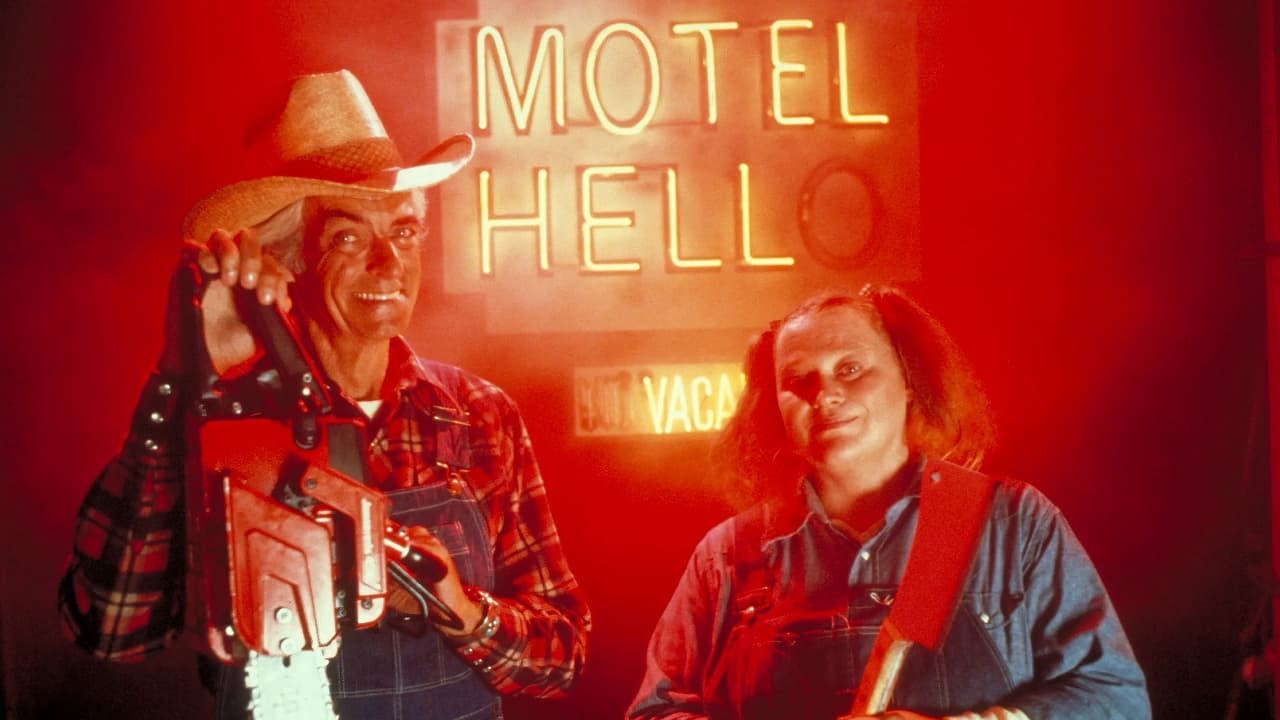
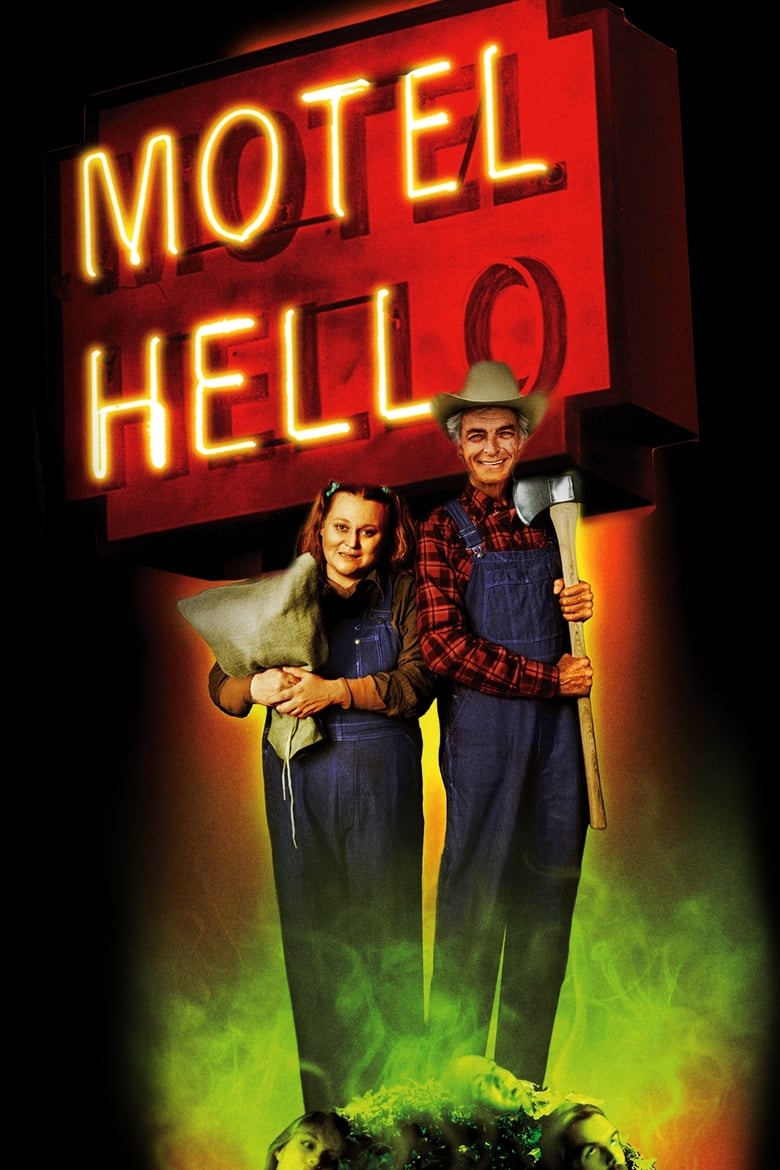
Farmer Vincent Smith and his sister Ida run a motel attached to a farm where they capture unsuspecting travelers, bury them alive, fatten them up and then harvest their bodies as ingredients for his famous brand of "smoked meats."
About Motel Hell
What makes Motel Hell worth revisiting
The film’s centre is delightfully odd: a brother-and-sister farming team who run a roadside motel as a cover for something far nastier. That domestic setup — Vincent and Ida living with a motel on their land — gives even the gags a slightly queasy charge.
Motel Hell is breathing the twin airs of comedy and horror. It’s not quite one or the other, which is part of its personality: it wants you to laugh, then glance away and feel faintly guilty for laughing. Rory Calhoun plays the quietly unsettling Vincent, and Kevin Connor directs with a steady hand that keeps the movie moving through its 106 minutes while letting the stranger moments linger just long enough to be effective.
The idea that sets Motel Hell in motion
At its simplest the movie hooks a stranger-than-usual premise to painfully ordinary relationships: a young woman, stranded and with nowhere to go, ends up staying at the Smiths’ motel and is gradually drawn into their orbit.
That orbit looks friendly on the surface — Vincent’s manner and small-town charms win her over — but there’s a rotten logic under it. The sister, Ida, doesn’t see people the same way, and that jealousy flips into violence when she tries to eliminate a rival.
Parallel to that is a local lawman sniffing at the edges. Bruce, Vincent’s younger brother, grows suspicious as disappearances mount and starts putting the pieces together.
The setup works because it lets this odd household be both oddly warm and quietly monstrous. When one of the captive victims begins to get loose, the complication proves how fragile the Smiths’ careful arrangements really are.
Why Vincent Smith matters
Vincent is the movie’s steady, unnerving centre. He’s a farmer who doubles as the face of a small roadside motel, and that ordinary role is what makes everything he does feel so wrong. The contrast between homely duties and grim secrets is the film’s engine.
He’s the sort of character who can tell a guest that their partner has died and been buried, and somehow keep the conversation domesticated — which is exactly what the story uses to be both funny and chilling.
His relationship with his sister Ida complicates him. When Ida lashes out at Terry, trying to remove her as a threat, Vincent arrives to intervene. It’s a protective gesture — but in this household protection and cruelty are knotted together.
The presence of his younger brother Bruce further frames Vincent. When Vincent drives Bruce off with a shotgun and later confronts him in a brutal showdown, those family tensions lay bare how cherished routines can mask something much darker.
Motel Hell has more on its mind than the plot suggests
On the surface it’s a gory joke about hospitality — beneath that lie recognisable ideas: courage, love and even freedom get tangled into the story’s nastier choices.
Heroism turns up in strange places. Bruce’s investigation and eventual attempts to rescue Terry are framed as a kind of ordinary courage: not heroic bursts but the slow work of a man trying to do the right thing against family loyalty.
Parental protection and mortality thread through the film too. The Smiths treat their captives as livestock to be preserved and put out of mind until they’re needed, and that weird logic forces the viewer to confront how we justify harm when we stop seeing others as people. And then there’s love — Terry’s attraction to Vincent complicates things. Her feelings make the moral landscape messy; love softens the monstrous edges, and the movie deliberately plays with that discomfort.
Motel Hell could not belong to any other decade
This is a film of 1980: not merely because of its release year, but because it sits on the border between the 1970s transgressive horror that pushed boundaries and the 1980s appetite for mixing genre tones.
That period meant filmmakers felt freer to marry broad comedy with genuinely uncomfortable gore, and Motel Hell wears that freedom on its sleeve: it’s willing to be silly and sick in the same breath.
The net effect is a movie that feels like a product of its moment — playful about genre rules, experimental with tone, and not overly precious about what it’s willing to show or mock.
What has aged — and what hasn't
The film’s shaggy, lived-in family dynamics still land. The way a brother distrusts another, the small-town assumptions and the slow dawning of suspicion — those beats are straightforward and still readable.
Some of the movie’s showier flourishes age differently. The pig-head-and-chainsaw image is exactly the kind of grotesque spectacle the story leans on; it’s loud, a little absurd, and for modern viewers it reads as deliberately over-the-top rather than truly terrifying.
The central conflict — Bruce trying to put right what his brother has hidden — keeps the pace moving. Moments where Bruce has to contend with discoveries and weapons feel direct and effective: the investigation still pulls you along.
By the end, small lines like Bruce saying he’s glad he left home when he was eleven help the movie close on a human note. That bit of plain-speaking prevents the finale from becoming only a cartoonish set-piece.
Why Motel Hell still matters
People remember Motel Hell because it has a premise you don’t forget: a roadside smoked-meat business that turns out to rely on people, not pigs. That grotesque reveal gives the film a hook that stays in the head.
The movie’s appetite for practical nastiness — traps on the road, buried victims kept alive for later — supplies memorable, unsettling imagery rather than abstract menace. The ‘secret garden’ idea is odd and specific, which is why it registers.
Ida’s complicity is another reason the film lingers. The siblings treat their captives like animals, and that casual dehumanising is what makes the moral shock feel personal, not merely sensational. Finally, the combination of small-town charmer (Vincent), the naive sheriff and a young woman who stays and becomes attached gives the whole thing an emotional tug. Those human choices keep the movie from being just a string of shocks.
Does Motel Hell still hold up?
If you’re after something that tilts between dark comedy and blunt horror, it’s still worth a look. The basic set-up — a family running a motel on their land where the smoked special is made from people — is audacious enough to keep the film interesting for modern viewers.
The movie’s strengths are its oddball premise and the way ordinary human relationships complicate the nastiness. Terry’s growing attraction to Vincent, and Ida’s belief that the victims are animals, make the choices feel personal rather than purely sensational.
It’s not aiming for subtlety, and it doesn’t sweat being elegant. Kevin Connor’s film is 106 minutes of committed macabre whimsy: sometimes blunt, sometimes uncomfortable, often funny in a way that makes you squirm.
So yes — watch it for the premise, for the strange family dynamics and for the period’s willingness to mix tones. Motel Hell still bites, and it’s the kind of bite that leaves a bruise you’ll remember.