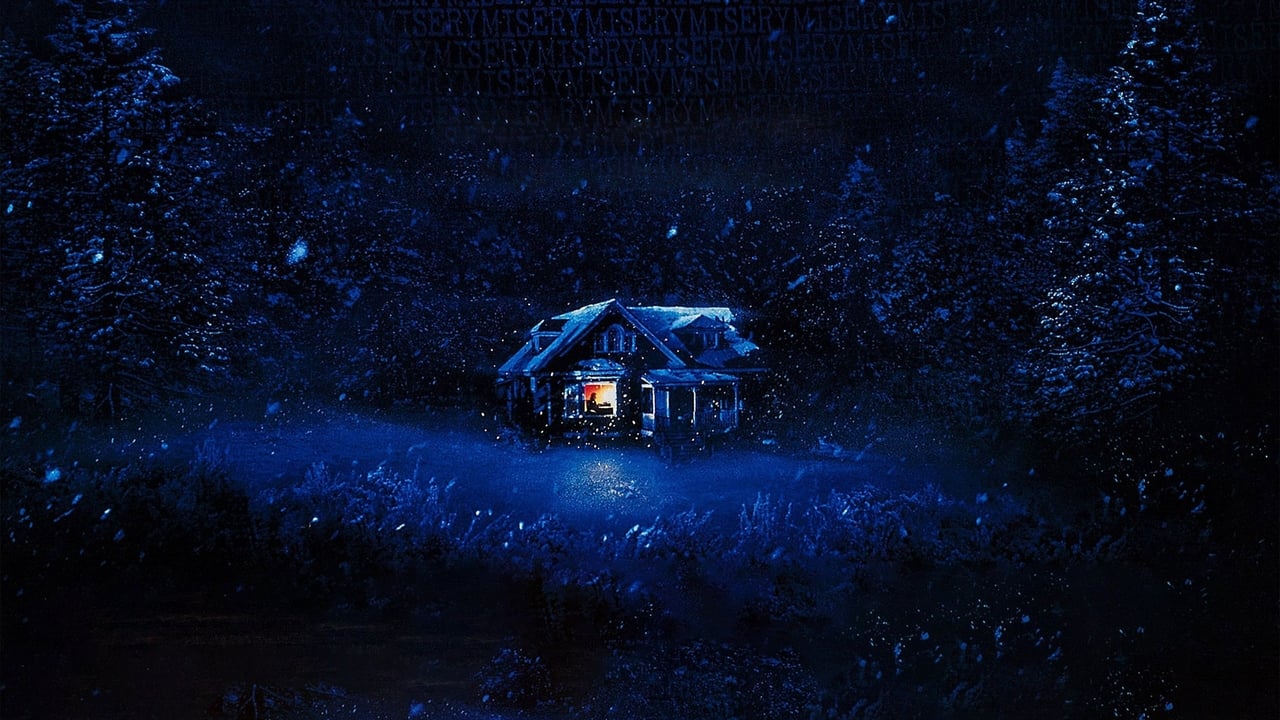

Misery
“Paul Sheldon used to write for a living. Now, he’s writing to stay alive.”
After an accident, acclaimed novelist Paul Sheldon is rescued by a nurse who claims to be his biggest fan. Her obsession takes a dark turn when she holds him captive in her remote Colorado home and forces him to write back to life the popular literary character he killed off.
About Misery
Why Misery still works
At its centre is a grubby, combustible idea: a novelist tired of his own profitable formula finds himself at the mercy of a woman who worships the very books he loathes. Paul Sheldon has spent his career writing Victorian romances built around a heroine called Misery Chastain, and he’s just tried to walk away from them.
Rob Reiner directs, the film runs a neat 103 minutes, and the principal facts line up so cleanly that the set-up feels inevitable: an author, a wreck, a remote house and a fan who insists she will care for him. That domestic clockwork is the engine of the thriller.
From the moment Paul wakes up broken and dependent, the film turns ordinary gestures — feeding, fetching, reading — into the repertoire of control. Annie Wilkes presents herself as a nurse and a "number one fan", but the comfort she offers curdles into something far more dangerous.
The idea that sets Misery in motion
The narrative starts from a disappearance — Paul is missing and a local sheriff follows threads that eventually lead to a house nobody suspected.
Inside that house the author’s career literally goes up in smoke: with the only copy gone, the stakes of his captivity become creative as well as physical.
What the three facts in play here imply is simple: this is a story about being cut off from help, stripped of agency, and forced into a fight over a single thing that still belongs to you.
And the movie carries on beyond the rescue — we do see a afterwards, a man who survives and goes back into the world altered by what happened.
Why Paul Sheldon matters
Paul Sheldon is not just a victim on a plot checklist. He’s an author who earned his living with a specific kind of story — the Misery Chastain novels — and who now wants to be someone else. That friction between the work he wrote and the work he wants to write gives him a readable, human edge.
The fact that Paul’s income comes from books he despises raises the stakes when those books become the battleground; he is forced to choose between survival and creative freedom.
His struggle becomes almost intimate: this isn’t a fight for a jewel or a ransom, it’s a fight over who gets to tell a story and who gets to own its ending.
Even once the violence escalates, the character remains tethered to the theme of family — the tangled obligation of being loved for the wrong reasons.
Misery has more on its mind than the plot suggests
On the surface Misery is a claustrophobic thriller. Under the surface it’s preoccupied with ideas of home and safety — and how those ideas can flip into traps.
The house that’s supposed to be a refuge becomes a place where the rules of care are weaponised. That inversion is the film’s dark pulse.
There’s also a family dynamic running through the proceedings: what looks like devotion turns into a possessive, almost parental claim over someone else’s life and work.
Those two themes — home as false refuge and love as possession — are what make the movie feel tense even when nothing explosive is happening.
Misery could not belong to any other decade
Misery arrived at the turn of a decade — in 1990 — and it wears that moment lightly. It doesn’t need pop-cultural signposting to say which era it sits in; the timing is enough.
Being a 1990 movie places it on the edge of two cinematic moods: still borrowing from 1980s containment thrillers, and about to enter the 1990s’ appetite for psychological, domestic horrors.
That quiet positioning helps it stand apart. It isn’t trying to shout with spectacle; it’s quietly surgical instead.
Put simply: this is a Misery marked by its year, not by loud fashions or fads — and that restraint is part of its personality.
What has aged — and what hasn't
The central idea — an author rescued and then held captive in a remote house by a fan — still lands. The premise doesn’t rely on period tech or passing trends; it’s a human situation that translates easily to the present.
Home and safety remain potent themes. The way ordinary domestic routines are weaponised still makes for uncomfortable viewing: a meal, a cup of tea, a reading session — all can carry menace.
The film’s secondary scaffolding also survives: the local sheriff following clues to the house gives the story a believable route to exposure, and the ‘after’ — a man who walks again with a cane and meets his agent — reminds us there’s a life beyond the nightmare.
Overall, what endures is the personal scale of the story. It’s about one man’s life being commandeered, and that smallness is its strength.
Why Misery still matters
There’s a simple, unnerving image at the heart of the story: a bestselling author, famous for a single character, watched over by a woman who will not let that character die. That clash — creator versus consumer — is a neat, memorable conflict.
The movie threads that conflict through concrete beats: the destruction of the only manuscript, the antique typewriter becoming an instrument of coercion, the demand that a fictional heroine be brought back to life.
On the other side of the tale there’s the procedural detail — a sheriff piecing together clues — which grounds the domestic madness in something recognisably real.
And finally there’s the afterimage: a survivor who has returned to the world and still sometimes sees the face of his captor. The idea that trauma leaves odd echoes — a waitress saying she’s a "number one fan" — lingers in the mind in a way that’s hard to shake.
Does Misery still hold up?
Yes. If you care for a tightly contained psychological thriller about ownership and obsession, Misery still delivers. The basic contractual elements — a writer whose bread-and-butter is a single heroine, a rescue that turns into imprisonment, and a captor who hides the fact of his disappearance — are all here and they’re effective.
Its themes matter: home and safety are twisted into control, family language is wielded as possession, and the fight is over a story as much as over survival. Those are not period-bound problems; they’re human ones.
It helps that the film is compact — 103 minutes — and unafraid to push the situation to physical consequences: a manuscript destroyed, a typewriter turned into a tool of desperation, a final violent struggle whose resolution finally breaks the hold.
So should you watch it now? If you want a tense, personal thriller about what happens when being loved becomes ownership, Misery remains a sharp and unsettling example. It’s a reminder that the most dangerous rooms are the ones that promise to keep you safe.