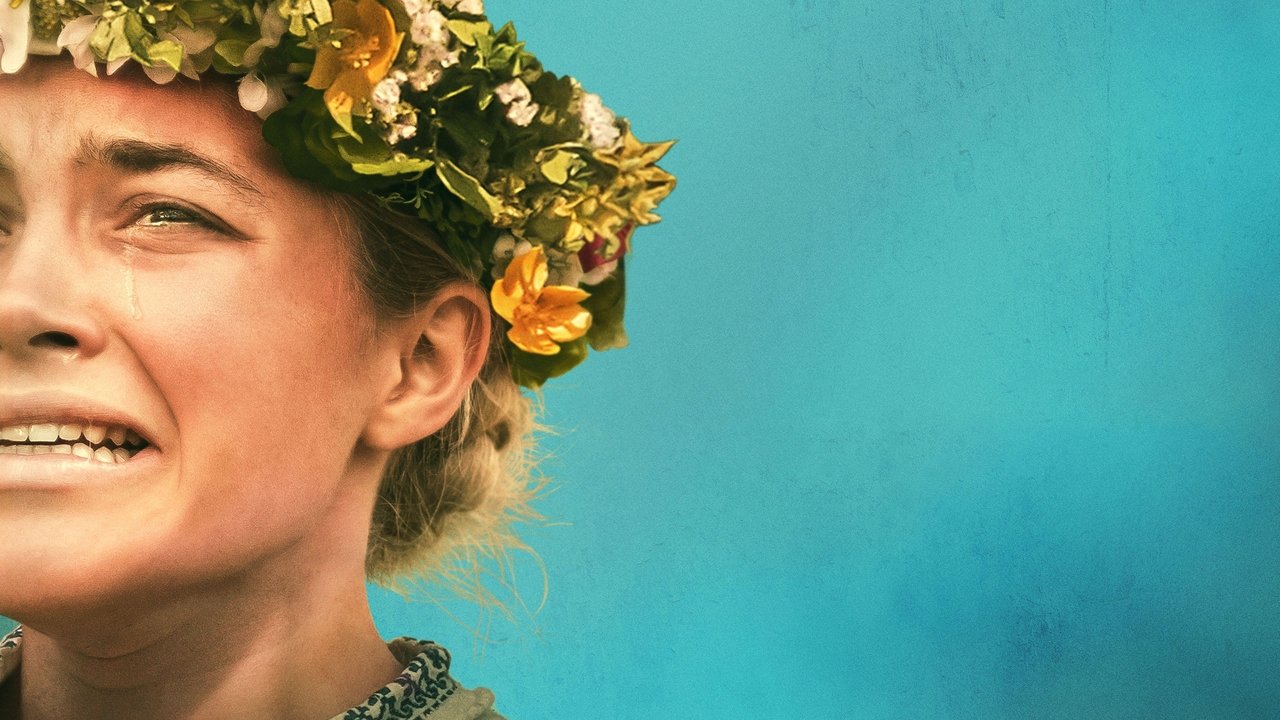
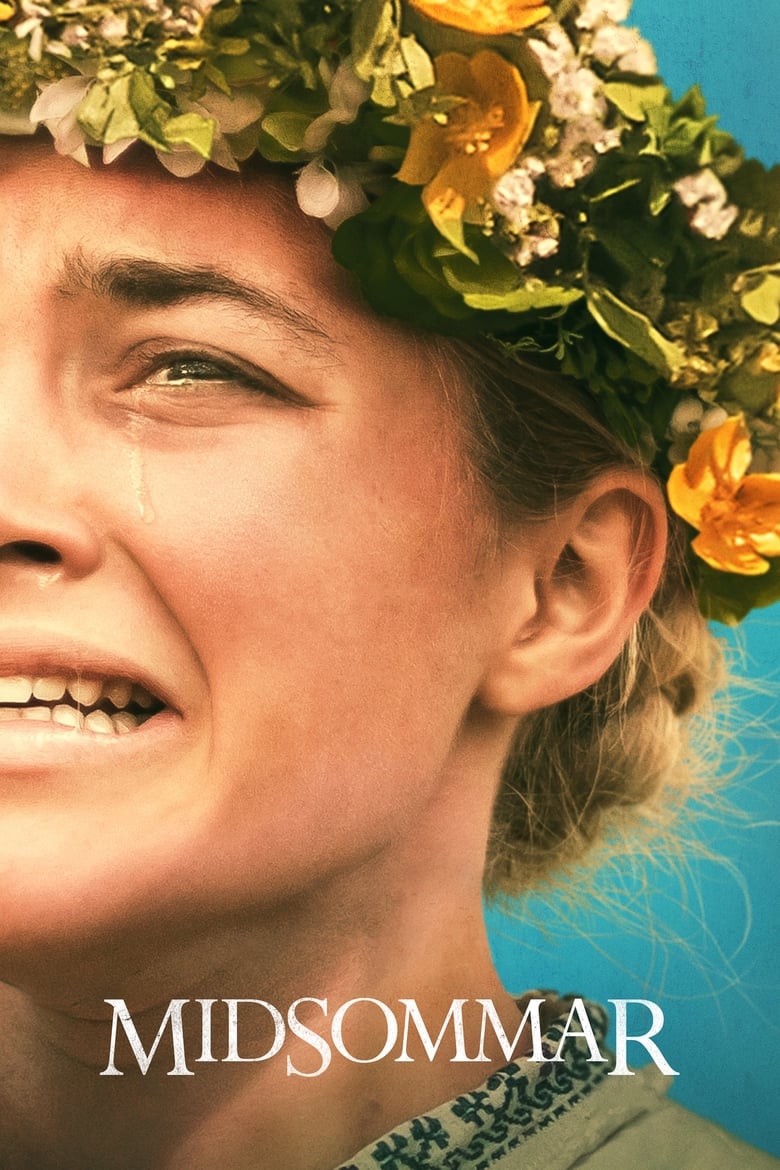
Midsommar
“Let the festivities begin.”
Several friends travel to Sweden to study as anthropologists a summer festival that is held every ninety years in the remote hometown of one of them. What begins as a dream vacation in a place where the sun never sets, gradually turns into a dark nightmare as the mysterious inhabitants invite them to participate in their disturbing festive activities.
About Midsommar
Why Midsommar is still worth talking about
Think of Midsommar and the image that probably comes to mind isn’t a shadowy corridor but sunlit ritual. That deliberate mismatch — horrific events staged in blinding daylight — is how Ari Aster sets the film apart. It makes the movie feel like an argument: what looks like warmth can also contain violence.
The story begins, brutally: in winter, Dani loses her entire immediate family in a murder–suicide, and the shock fractures her relationship with Christian. Months later, Christian and his friends accept an invitation from their Swedish friend Pelle to a nine‑day midsummer festival in rural Hälsingland that only happens once every ninety years — which, of course, turns out to be an invitation with consequences. At 147 minutes, Aster takes his time. He’s not interested in quick jumps; he wants you to sit through the small, human cruelties that add up. That’s why the film still sticks around in the head: it treats grief and love like slow-burning currency, then spends the runtime cashing them in.
The idea that sets Midsommar in motion
Midsommar begins with a private catastrophe: Dani loses her family in a single night. That grief doesn’t exist in a vacuum — it lands directly on her already unstable relationship with Christian, who had been planning to break up with her but ends up inviting her on the trip after an argument.
The invite itself is straightforward: Christian, his friends Mark and Josh, and Pelle travel to the Hårga commune for a rare nine‑day midsummer festival. Josh treats it as research for his thesis; for everyone else it’s supposed to be a strange but harmless adventure.
On arrival, however, the commune’s customs are not merely quaint curiosities. Early on the visitors witness an ättestupa ceremony, where elders leap from a cliff as part of a communal rite — and then events veer into far darker territory when ritual behaviour doesn’t go as planned.
From the first scenes of cultural dissonance, the film’s setup works because it keeps the group together: grief, academic curiosity and a boyfriend’s indecision are small, believable flaws that make the characters easy to manipulate once the commune starts to show its teeth.
Why Christian matters
Christian is the pivot around which much of the film’s friction turns. He arrives as a familiar figure: an increasingly distant boyfriend who has been considering ending the relationship and only reluctantly takes Dani on the trip after their argument.
That reluctance matters because it shows what Dani is up against. Christian treats the commune partly as material for his thesis, a kind of academic object to be studied — a choice that pushes Josh and Dani into competing priorities and leaves Dani feeling alone where she most needs support.
Christian’s choices also expose the film’s idea of belonging versus obligation. He’s drawn into the commune’s rituals in ways that are both personal and awkward: he’s told outsiders are sometimes invited for mating purposes, he takes hallucinogens and, at a late point, participates in a ritual that leads to catastrophic consequences.
When Christian finally tries to flee, the film makes his loss absolute: he is paralysed with a powdered powder and later becomes the May Queen’s final choice for sacrifice. His story matters because it turns a boyfriend’s casual selfishness into an irreversible cost — and because his fate forces Dani to choose what kind of family she wants to inhabit.
Midsommar has more on its mind than the plot suggests
Beneath the ritual killings and the daylight shocks, Midsommar is a movie about the human attempts to belong. Family — both the family we’re born into and the families we choose — is the thread that runs through it. Dani’s loss pushes her toward any group that offers unconditional acceptance.
Mortality is handled bluntly. The commune treats lifespan as something communal and scheduled; the deaths that open the film and the elder rituals later on remind us that the movie is constantly interrogating how societies ritualise endings.
Love and loss are braided together. Christian’s intention to leave Dani and her subsequent grief make the question of what comfort looks like very literal: Dani is searching for support, and the Hårga provide a substitute family with rules that reshape what support costs. Humanity, in this film, looks both tender and monstrous. That contradiction — compassion used to justify brutality — is what lifts Midsommar beyond a horror setup into something more corrosive and interesting.
Midsommar could not belong to any other decade
Released in 2019, Midsommar sits at the tail end of the 2010s, a decade that made a habit of blending genre instincts with intimate drama. In that context, Aster’s film reads like a decade‑style gamble: use horror apparatus to tell something private and uncomfortable.
Putting a long, slow‑burn relationship drama inside a horror frame feels very of its moment. The film wears its runtime like a confidence trick: the patient build lets the emotional logic land before the ritual shocks begin.
So while it’s a horror movie on paper, its appetite for personal disintegration and cultural specificity is very much a 2010s approach — the decade loved crossbreeds that didn’t fit neat labels.
What has aged — and what hasn't
A lot of Midsommar’s strength rests on how believable its emotional scaffolding still is. Dani’s grief and the strain it places on her relationship with Christian remain convincing reasons for her to grasp at belonging; that central human logic hasn’t dated.
The film’s depiction of family — both biological and chosen — also holds up. Pelle’s explanation that the commune became his family after his parents died links directly to Dani’s vulnerability, and that private echo still makes the commune’s offer feel plausible.
Some moments that play today as uncomfortable — like the pressure to join communal rituals or the way the visiting couple Simon and Connie react — are meant to be disturbing, not quaint. That intentional discomfort makes rewatching the film an active experience rather than a passive one.
In short, the emotional bones — grief, loneliness and the human hunger for acceptance — remain effective, which is why the film keeps its teeth when you come back to it.
Why Midsommar still matters
There are scenes from Midsommar that lodge in the memory because they compress social ritual and menace so tightly. Early on the visitors witness an ättestupa ceremony — elders committing themselves to death — and when that ritual fails, the commune’s response is ruthlessly communal, crushing any hint of outsider squeamishness.
The film’s catalogue of transgressions — a student photographing sacred texts, ritualised killings, and shocking displays like a planted limb and the blood eagle — all work together to make the Hårga feel like a culture with its own brutal logic rather than a one-note cult prop.
At the centre of that logic is Dani’s rise to May Queen. Winning the maypole dance is less prize than transformation: it foregrounds the film’s question of who gets to name someone as belonging. Her final choice — and Christian’s fate as the last sacrifice, placed into a bear’s body in a burning temple — is the film’s clean, terrible punctuation. That image of the temple burning while Dani’s grief turns into something like a smile is why the movie keeps being discussed: it’s an ending that forces you to reckon with whether belonging achieved through monstrous means is still belonging at all.
Does Midsommar still hold up?
Yes — if you want a horror film that treats its scares as consequences of human failings rather than as cheap jolts. The movie begins with a private calamity and spends its runtime asking what a shattered person will accept in the name of comfort, and that question remains compelling.
Ari Aster’s 2019 film asks us to sit with grief, and Florence Pugh’s Dani is the character who carries that history into a place that promises belonging. Jack Reynor’s Christian is the hesitant fault line whose earlier indecision becomes irreversible; that personal dysfunction gives the horror a credible origin.
At 147 minutes, Midsommar demands patience. If you’re prepared for a slow build that privileges atmosphere and emotional logic over constant action, the film rewards you: the festival’s rituals, the escalating brutality and the final choice all land because the film has spent time making us care about what’s being taken away.
So should you watch it today? Absolutely — but bring the patience for its method. It’s less a jump scare factory and more a daylight experiment in how grief, love and the human need for family can be weaponised. And that last image — a woman who has been broken, then crowned, then faced with a terrible decision, slowly smiling as the temple burns — sticks with you in a way that feels very specific to this film.