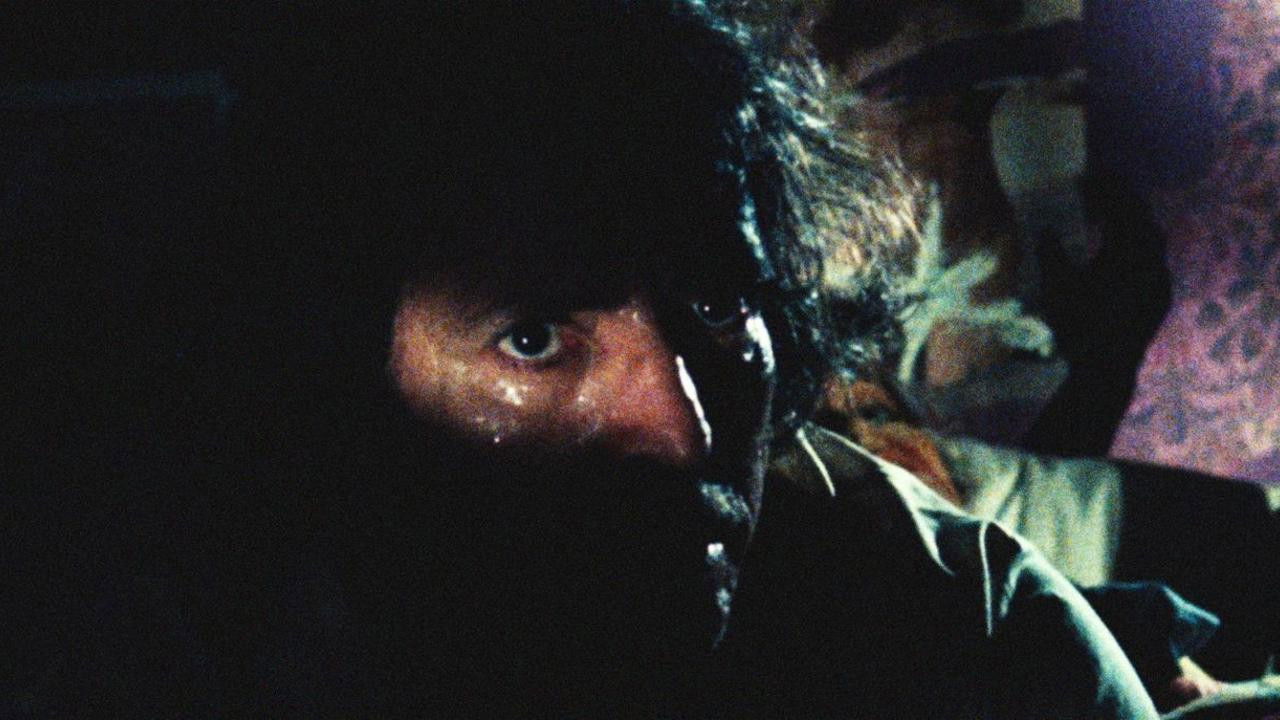

Maniac
“I warned you not to go out tonight!”
A psychotic man, troubled by his childhood abuse, kills and mutilates young women and local models on the streets of New York City.
About Maniac
Why Maniac still stands out
There’s a moment early on that tells you everything you need to know: a man hauls a freshly killed woman back to his flat, strips her, and nails her scalp to a mannequin. It’s the sort of detail that lodges in the memory because it’s grotesque and precise in equal measure — cruel, intimate, and oddly tidy.
That man is Frank Zito, played by Joe Spinell, and his life is the engine of Maniac. The film gives you little else to worry about beyond Frank’s obsessions; everything else is scenery that he passes through or destroys. William Lustig directs with a focus that keeps the movie moving; it’s compact and intense, all of which is helped by its tight 88-minute runtime. Call it horror, call it a slasher, call it a thriller — the labels fit, but they don’t tell the whole story. What makes Maniac worth revisiting is how a simple, shocking conceit gets stretched into a portrait of a man whose private cruelties are also where the film’s curiosities about family, love and mortality live.
The idea that sets Maniac in motion
At its core Maniac is brutally simple: Frank Zito is a man traumatised by childhood abuse who turns that trauma outward. The film links his history to the way he hunts, kills young women and then treats their bodies as trophies — scalp, hair and all — which he mounts on mannequins like a grotesque shrine.
The film opens with Frank reeling from nightmares and physical scars, then leaving his apartment and moving through the city; that movement — the scratch of a man out among the crowd — is how Lustig sets him up as both ordinary and dangerously off-kilter. It’s small storytelling choices that do the work: a stroll in Central Park, a stolen photograph, a fleeting connection with a woman called Anna.
Anna D’Antoni sees Frank in a harmless moment, recognises him from a photograph and invites him into her life. That invitation — the brief possibility of normal human contact — is the hinge. Frank’s attempts to be near Anna, and his violent reaction when faced with perceived betrayal, drive the film forward.
Along the way, small acts add up: he steals a necklace from a model named Rita, he follows people home, and his private rituals keep getting fouled by public moments. The setup works because Maniac trusts its single idea and lets an escalating series of private failures and violent impulses show how thin the line is between wanting affection and destroying it.
Why Frank Zito matters
Frank matters because he’s not a mysterious force — he’s a man with a past you can point to. The film gives us the blunt fact of childhood abuse by his mother, Carmen, and then lets the consequences play out in the smallest details: the way he keeps trophies, the photo of his dead mother he shows to Anna, the private rituals that replace ordinary human relationships.
Those details make him memorable. The movie doesn’t mythologise Frank; it makes him domestic. He’s a landlord, a figure who lives inside an apartment, and his violence has the particular flavour of someone trying to remake other people into substitutes for what he’s lost.
There’s a repeated pattern where Frank projects his mother onto the women he attacks — addressing one of his victims as if she were Carmen — and the connection between his family history and his crimes is direct and ugly. That link keeps the character single-minded; his violence is less about random cruelty and more about a ruined attempt to possess love.
Finally, Frank’s mind is unstable in ways the film doesn’t always explain but which it lets us feel: he hallucinates his dead mother, misreads affection as betrayal, and collapses into private scenes of mourning and breakdown. He’s not simply 'the killer' — he’s a damaged human being whose harm feels both personal and unnerving because the movie refuses to soften the truth about what his past did to him.
Maniac has more on its mind than the plot suggests
On the surface Maniac is body horror and revenge; under the skin it’s a film thinking about mortality. The dead aren’t just victims — they are reminders for Frank of time passing, of love that was twisted and lost, and of an absence he cannot stand.
Family sits at the movie’s centre, but not as a warm idea. Instead it’s trauma passed down: Frank’s relationship with his mother explains his behaviour without excusing it. The film keeps returning to familial images — graves, photographs, and memory — to underline how private histories can calcify into public violence.
Love in Maniac is corrosive. What passes for affection in Frank’s mind is possession; he confuses intimacy with control, turning people into objects he can alter and keep. That confusion is the engine of his crimes and the tragedy of the character. Put together, these themes make Maniac feel like a compact study of how a damaged person negotiates the world. It’s not preachy. It’s grim, focused and oddly dogged about showing the human wreckage behind the killings.
Maniac could not belong to any other decade
Released in 1980, Maniac arrived at a particular moment when American horror was sharpening itself into stranger, harsher shapes — the slasher and the psychological shock-film rubbing against each other. Lustig’s picture sits comfortably in that transition: it’s economical and confrontational in a way that felt new at the turn of the decade.
The film’s energy owes something to that moment. There’s a rawness to Maniac — an eagerness to push boundaries and make viewers uneasy — that aligns with early‑80s horror instincts. It doesn’t dawdle. It goes for the throat and moves on.
Being a product of 1980 means Maniac occupies a space between grindhouse bluntness and the more polished genre films that followed. It’s rough around the edges and impatient, which is part of its character and why it still reads as a film of its time rather than a period pastiche.
What has aged — and what hasn't
Certain images in Maniac still hit hard. The private shrine of mannequins — dressed in victims’ clothes, their scalps nailed in place — is arresting even now. It’s an image that lingers because it mixes domesticity and horror in a way that feels intimate and invasive.
That intimacy of menace is where the movie keeps its teeth. Maniac’s willingness to stay close to Frank — to let us see his mourning, his rituals and the way he talks to himself — preserves the film’s power for modern viewers who are less impressed by gore alone than by character-driven dread.
At the same time, the film asks you to sit with a harsh depiction of violence and a bleak view of masculinity and attachment. That can make the film uncomfortable to watch today in ways it probably intended; it doesn’t age into a gentler picture. It still provokes.
Finally, the family theme — the idea of trauma passed through generations — remains resonant. Maniac’s core argument about how damaged people try to substitute objects for real relationships is blunt, but it still reads as a savage, focused attempt to show why a person like Frank becomes what he is.
Why Maniac still matters
People who remember Maniac often recall specific, shocking images — the mannequins, the nailing of a scalp, the private, domestic horror — and for good reason. Those scenes compact the film’s approach: make the body personal and let the horror feel like somebody’s kept secret.
There’s also a tonal bluntness that sticks. Frank tells himself that beauty is a crime punishable by death; that line, and the film’s refusal to soften his logic, gives Maniac a kind of awful honesty. It never asks you to like the character; it only asks you to look.
The movie’s final, hallucinatory moments — where Frank’s mannequins appear to come alive and the boundary between his inner world and the outside collapses — leave the viewer with an image rather than a tidy moral. That lingering strangeness is part of why the film continues to be talked about. Even its ending keeps people arguing: the film gives us scenes suggesting Frank’s destruction, then offers a final beat that implies he might not be gone. It’s an ambiguous note that allows the image of Frank to outlive the film’s literal beats — and keeps the character in the head long after the credits roll.
Does Maniac still hold up?
Yes — but not for comfortable reasons. Maniac is compact (88 minutes) and unflinching; it gives you a portrait of Frank Zito and then refuses to look away. That focus is the film’s strength: it’s a study of a damaged man who turns possession into violence.
If you come expecting a comforting slasher with neat scares, this won’t satisfy. Maniac is darker and more intimate — Joe Spinell’s Frank is the kind of character the film keeps close, and Lustig doesn’t distract from him. The movie wants you to feel the bleak logic that drives Frank, even when that logic is monstrous.
At the same time, the film’s themes — mortality, family and warped versions of love — give it a core that still matters. It’s not merely a catalogue of shock; it’s a portrait of what happens when grief and fixation collapse into possession.
So should you watch it? If you’re prepared for something abrasive that leaves a few lasting images in your head, yes. Maniac remains a film that’s as interested in the anatomy of a ruined life as it is in one grisly set-piece — and that combination is what keeps it working today.