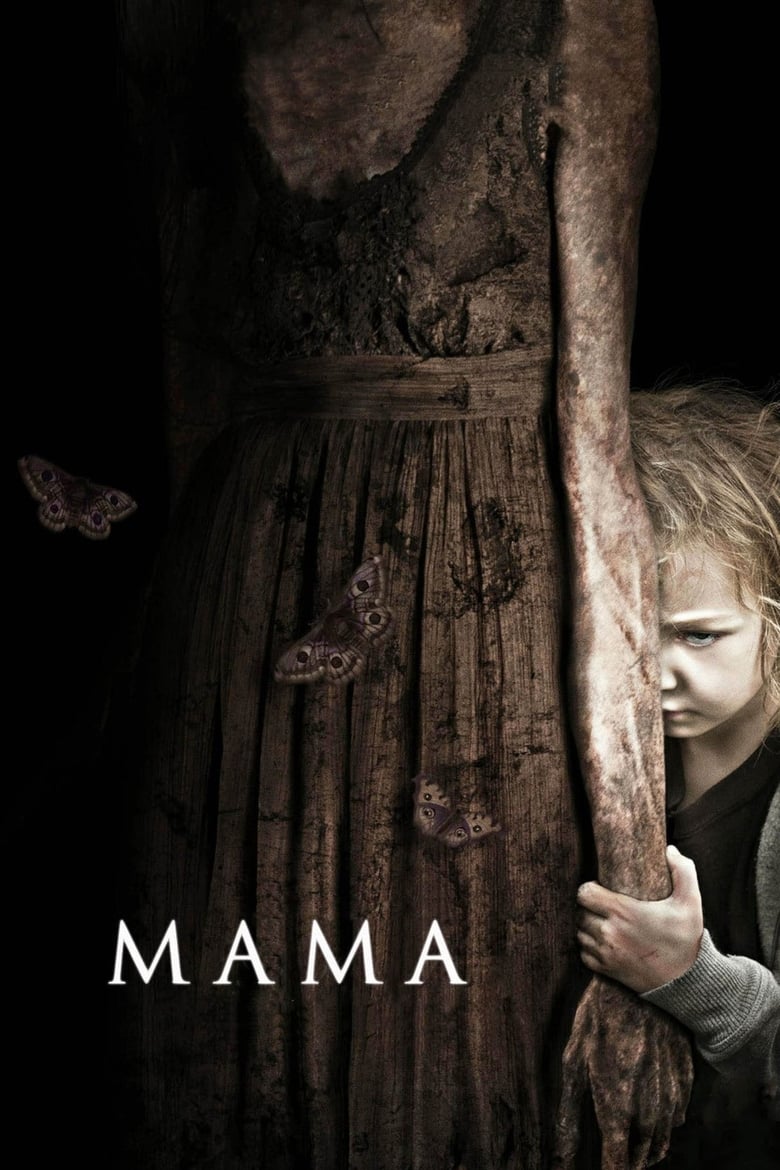
Mama
“A mother's love is forever.”
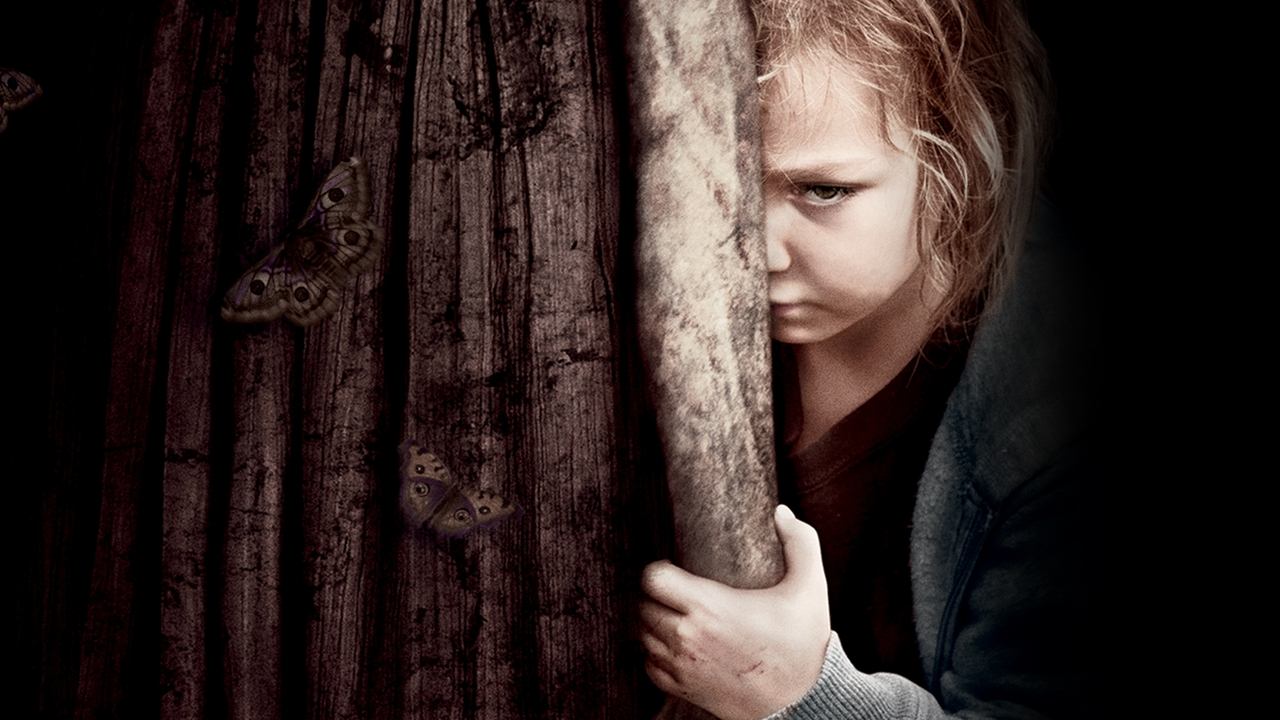
Guillermo del Toro presents Mama, a supernatural thriller that tells the haunting tale of two little girls who disappeared into the woods the day that their parents were killed. When they are rescued years later and begin a new life, they find that someone or something still wants to come tuck them in at night.
About Mama
Why Mama still stands out
It opens with a man so far gone he plans to end his children’s lives rather than let the world have them. That grim set-up — a father pushed to murder and abduction after financial ruin — is the brutal engine that drives the rest of the picture.
From that rotten beginning, Andy Muschietti steers Mama into something stranger: a horror-fantasy about two children who survive in the wild for years and the mysterious maternal figure who cares for them. The premise carries you quickly from domestic collapse to something uncanny and protective. Jessica Chastain turns up as Annabel — the grown-in-love outsider who finds herself folded into this fragile, makeshift family — and the film keeps its focus tight across a compact 100 minutes. Family, isolation and the uneasy idea of parental protection are the film’s concerns, not just excuses for scares.
The idea that sets Mama in motion
The story’s starting point is simple and savage: a father driven over the edge commits murders and kidnaps his two young daughters. That single act leaves the girls stranded in the wilderness for years, which is where the film finds its original, unnerving tone.
Five years later, a search party locates the cabin and discovers the children — older now, alive but feral after their isolation. That discovery is the neatest dramatic hook: how do you bring children back from wildness, and who gets to decide what counts as care?
Victoria’s story contains a practical touch that sells the reunion: once she can see properly again — after wearing glasses — she recognises the man who is, painfully, their family. It’s a small, human detail that helps bridge the world of the woods and the weird with ordinary life.
Meanwhile, the adults’ attempts to understand the girls slide into the uncanny: research and odd visions begin to suggest there is more behind the girls’ survival than survival alone. That mix of real-world rescue and something otherworldly keeps the setup from ever feeling like a conventional case file.
Why Annabel "Annie" matters
Annabel isn’t a wounded parent or a hard-bitten investigator. She’s the girlfriend who suddenly becomes a carer, and that displacement is what makes her interesting. She’s invited into a fragile, improvised household — a family rescued into being — and must fill in the parts no one else can.
That arrangement comes with conditions: a therapist grants Lucas, Annabel and the girls a home only in exchange for study access. It puts Annabel in a practical bind — she’s looking after children who have known only the wild and a story that adults around them are trying to catalogue.
Victoria adapts quickly to domestic life, which gives Annabel something to hold on to: a child who will meet her halfway. Lily, by contrast, remains hostile and rooted in the feral world; that resistance makes Annabel’s job harder and keeps the family from settling into a comfortable groove.
Put simply, Annabel matters because she’s the human hinge in a story of lost and found family. Her presence lets the film treat parenting as action — patient, stubborn, sometimes terrified action — rather than a plot device.
Mama has more on its mind than the plot suggests
On the surface it’s a ghost story. Under the surface it’s arguing about what family actually is. The film keeps returning to the idea that care can be savage as well as tender, and that protection doesn’t always come from who you expect.
Supernatural belief sits alongside very ordinary human worries: who looks after children when the adults fail, and how do you repair the damage? The girls’ years of isolation sharpen that question — they are proof that childhood can survive terrible things, but it also changes what childhood looks like.
That split — Victoria moving into the domestic, Lily staying wild — allows the movie to play its emotional stakes aloud. Parental protection becomes a tug-of-war between two kinds of guardianship: human parents trying to rehabilitate, and a spectral figure who provides a warped, possessive guardianship of her own. Mortality and loneliness colour the whole thing. The ghost story is, in a way, a grieving narrative: someone who could not save their child keeps searching, and that persistence has consequences for the living people who try to step in.
Mama could not belong to any other decade
Mama arrives in the early 2010s — it was released in 2013 — so it’s unavoidably a 2010s movie. That timestamp matters: it’s part of a moment when horror films were tidy, economical and often blended genre lines.
The film’s placement in 2013 helps explain its appetite for mixing family drama and supernatural ideas rather than piling on non-stop set pieces. It wants to be compact and emotionally pin-sharp as much as it wants to unsettle.
Seen that way, Mama feels of its moment: concise, deliberate and willing to make a ghost do the emotional heavy lifting.
What has aged — and what hasn't
The movie’s basic discovery still lands: a search party finds a cabin five years after the original crime and two children who’ve been living outside of society. That premise remains unnerving and immediate.
The family theme also keeps it grounded. Victoria settling into domestic life while Lily stays feral is a clear, stubborn conflict that doesn’t need flashy effects to communicate itself — and those kinds of human tensions age well.
What makes the film less timeless is anything that depends on external trimmings rather than the central relationship. But the core — rescued children, a woman thrown into motherhood, and the problem of a protective, supernatural presence — still reads cleanly to a modern audience.
In short: the emotional idea — can a new family be made from damaged pieces? — is still the thing that matters, and it’s the part that endures.
Why Mama still matters
People remember Mama because it delivers a tidy but unsettling trade: a plausible, horrifying origin (the father’s descent into violence and the children’s abandonment) and a strangely maternal supernatural who refuses to let go. That collision of real-world cruelty and ghostly clutching sticks in the mind.
The children calling out to a mysterious maternal figure during therapy, and the way the screenplay reveals that the ghost once lost a child of her own, gives the story an emotional logic. The ghost isn’t evil for the sake of it; she’s motivated by a desperate, damaged form of care.
The film’s ending — the lost child’s remains, the recognition, and the final moments where maternal longing briefly turns human before reverting — ties the supernatural back to grief and possession. It’s a neat emotional payoff that people talk about long after the jump scares. Finally, the image that lingers — of separation and a possible spiritual continuation (the moth as a sign) — leaves a room for sadness as well as fear. Horror that can be mournful and scary at once tends to stick around in memory.
Does Mama still hold up?
Yes — if what you want is a tight, emotionally keyed ghost story that leans on family tension as its engine. The film opens on a violent act that explains everything that follows, and it never loses sight of the human consequences.
It’s a short film in all the right ways: at roughly 100 minutes it doesn’t overstay its welcome, and Andy Muschietti keeps the focus on the human cost and the eerie mystery rather than sprawling off into noise. That compactness helps it feel spry even now.
If you’re curious about the central performance anchor, Jessica Chastain is the person who carries the day as Annabel — the partner who becomes parent and refuses to quit. The film also earns its supernatural beats by tying them to grief and loss rather than cheap spectacle.
So yes: still worth a watch. Mama works because it pairs a stark, unforgettable premise with a small, beating heart — and it closes on an image that is equal parts melancholy and haunt. That’s a rare trick in modern scares.