
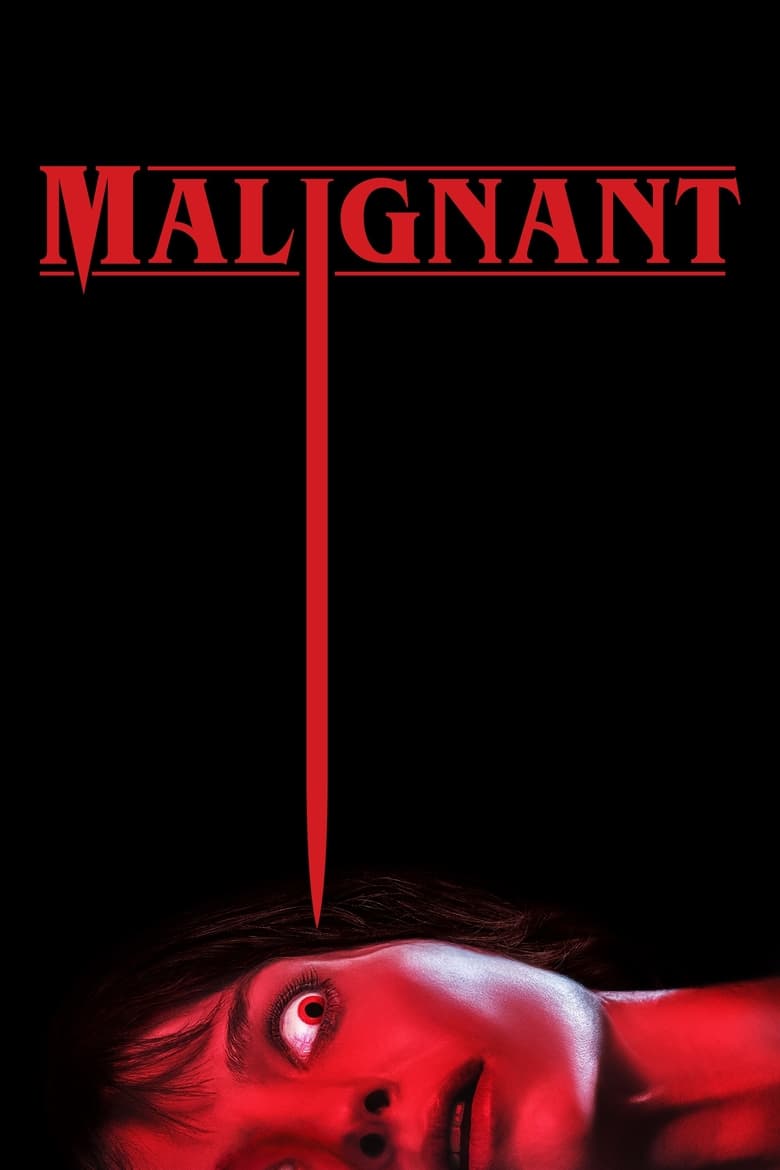
Malignant
“A new vision of terror.”
Madison is paralyzed by shocking visions of grisly murders, and her torment worsens as she discovers that these waking dreams are in fact terrifying realities with a mysterious tie to her past.
About Malignant
Why Malignant still works
James Wan made a career out of sharpening familiar scares until they cut something new; Malignant simply takes that to an extreme. At first it looks like a bruised, domestic horror: Annabelle Wallis plays Madison Mitchell, a woman whose life has been shattered and who returns to Seattle to pick up the pieces. Then the film pulls a lever and reveals a much stranger engine living under the bonnet.
The movie doesn’t spring fully formed from 2021 — there’s a violent prologue set in 1993, where doctors at Simion Research Hospital treat a patient named Gabriel. That early section does two jobs: it gives us an origin for the menace, and it underlines Wan’s willingness to mix grotesque invention with procedural set pieces. What keeps Malignant talking is that it marries a pulpy concept — a murderous, control-hungry presence who can even broadcast himself through speakers — to quieter things: family, memory and the question of who actually gets to rule a life. It’s a horror film that wants you unsettled and then, oddly, a little moved.
The idea that sets Malignant in motion
The story germinates in a medical nightmare: a dangerous patient, a team of doctors and a choice made in panic. Florence Weaver concludes that this case — the menace at Simion — cannot be allowed to continue; the solution they settle on is surgical and brutal in its logic.
That operation partially removes the physical aspect of the patient but leaves something far more stubborn behind. Years later, those past decisions start to surface through visions and a string of killings, pushing Madison and her sister to ask the police for help.
The setup works because it trades on a simple, escalating itch: if something was hidden and thought dealt with, what happens when it wakes up again? The film keeps the mechanics compact — an implanted horror, forgotten and then remembered — which lets the plot move briskly without getting bogged down in explanation.
By the end of the central sequence the stakes have changed from discovery to possession. An inmate attack, a losing battle for control, and a literal struggle inside the mind turn the premise from ‘mystery’ into ‘how do you stop what’s already inside you?’ — and that flip is what accelerates the whole film.
Why Madison Mitchell matters
Madison returns home after a long absence and she carries questions rather than answers. She was adopted at eight and has no memories from before that point; discovering a buried past is the motor of the story. That lack of memory isn’t just a mystery device — it’s the emotional lever that makes every revelation hit harder.
She’s not defined by an easy victimhood. The film places her at the centre of its family tensions — she learns the truth about who she was, she reconnects with the sister who raised her, and she has to navigate what it means to have once been called something else. Madison’s shifting identity — remembering that she was once Emily May, for example — turns the horror inward.
Crucially, Madison is the film’s field of battle. The antagonist isn’t stalking from the outside so much as contesting control of her body and her life. That makes the stakes intimate: this is about reclaiming agency as much as surviving attacks.
And the emotional payoff is small and human: after everything, Madison is able to physically free her sister and assert that, adopted or not, family ties can be the thing that endures. That line — the sisterhood over blood — is the film’s human note amid the bizarre premise.
Malignant has more on its mind than the plot suggests
Beneath the gore and the shocks, the film keeps returning to questions about freedom. Who is allowed to move, speak and act? Who is allowed to decide what happens in a body or a family? That tension — liberty versus control — quietly drives much of the film’s unease.
Family is the second chord. The movie ties identity to kinship: adoption, birth names, sisters who raised other sisters. Those relationships provide ballast to the spectacle; they’re the reason the story doesn’t feel like a cranky exercise in shock for shock’s sake.
Authority is another recurring note. Medical professionals once made a choice about a dangerous mind and, in doing so, imposed an illicit kind of control. The film frames that decision as a blunt exercise of power, and then shows how it ripples across decades. Finally, the idea of home and safety sits oddly with the plot. The very place that should offer protection becomes a site of invasion — and that contradiction gives the scares a sharper emotional bite.
Malignant could not belong to any other decade
This is a 2021 picture through and through. It was released in the early years of the 2020s, a period where filmmakers felt freer to mash up tones and push genre expectations.
That timing matters because Malignant uses its release moment to take risks — it refuses tidy categorisation and asks audiences to accept a strange premise without apology. In other words, it’s of its decade because it trusts viewers to come along for the ride.
If you want to slot it neatly, call it a 2020s horror that enjoys being odd. But the important bit is the confidence: it’s a film that treats its own weirdness as a feature, not a bug.
What has aged — and what hasn't
The movie’s core idea still lands. The revelation that the threat is not an external stalker but something physically embedded in Madison’s past keeps the tension intimate and, frankly, properly unsettling — the kind of thing that still makes you squirm when it’s revealed.
The more out-there elements haven’t dulled either. Gabriel is credited as both a voice and a physical performance, and the split presentation — an entity that can speak through devices and yet move in the world — keeps the menace unpredictable. That strangeness still feels fresh now.
Small set pieces also age well. The discovery that someone was secretly living in the attic of Madison’s home is a neat, old-fashioned gasp of horror that still works on a rewatch: it’s simple, effective and plays to a basic domestic paranoia.
What hasn’t aged into sentiment is the family material. The film’s insistence that Madison’s bond with her sister matters — that the domestic ties are what she fights for — gives the story an emotional centre that remains persuasive rather than tacked-on.
Why Malignant still matters
People remember Malignant because it combines a pulpy premise with domestic stakes. The film opens with a hospital case in 1993 — doctors treating a violent, disturbed patient — and that grim medical origin gives the rest of the film a weirdly plausible backbone.
Gabriel’s ability to manipulate electricity and broadcast his thoughts makes him a memorable antagonist, and the decision to surgically excise his body while leaving his brain intact is the kind of grim invention that sticks in the mind. It’s an image you don’t forget easily.
The story’s through-line — Madison returning to the life she left behind, only to discover that her past literally never left her — gives fans something to talk about: identity, secrets and how decisions made by experts can echo down the years. Finally, its closing notes are human. After all the violence, the film ends on a small act of sisterhood: Madison rescues Sydney and affirms that family, adopted or otherwise, can be the thing that saves you. That human remainder is why the film keeps getting mentioned.
Does Malignant still hold up?
Yes — if you’re willing to be taken somewhere odd. James Wan’s 2021 thriller runs a tight 111 minutes and wastes little time before asking you to accept a strange central conceit: that a violent mind from decades earlier was surgically contained and then reawakened inside a woman’s skull.
That premise requires a particular kind of viewer: someone who enjoys genre gymnastics and emotional anchors at once. The film delivers both. It mixes the grotesque — a presence who can hijack bodies and even speak through machines — with a quieter human through-line about a woman reclaiming her identity and protecting the sister who raised her.
If you prefer your horror neat and explained, Malignant will frustrate you. If you like being unsettled by imagination and then rewarded with a small, human moment — the final rescue and insistence on sisterhood — it still pays off. The physical and vocal duality of the central antagonist keeps the threat lively on rewatch.
So should you watch it now? Absolutely — as long as you come ready for a film that would rather do something strange than play it safe. It’s a little bonkers, sometimes grisly, and oddly warm at the heart: exactly the sort of gamble that made it worth seeing in 2021 and still worth revisiting today.