
Kwaidan
“In the tradition of "RASHOMON" and "GATE OF HELL."”
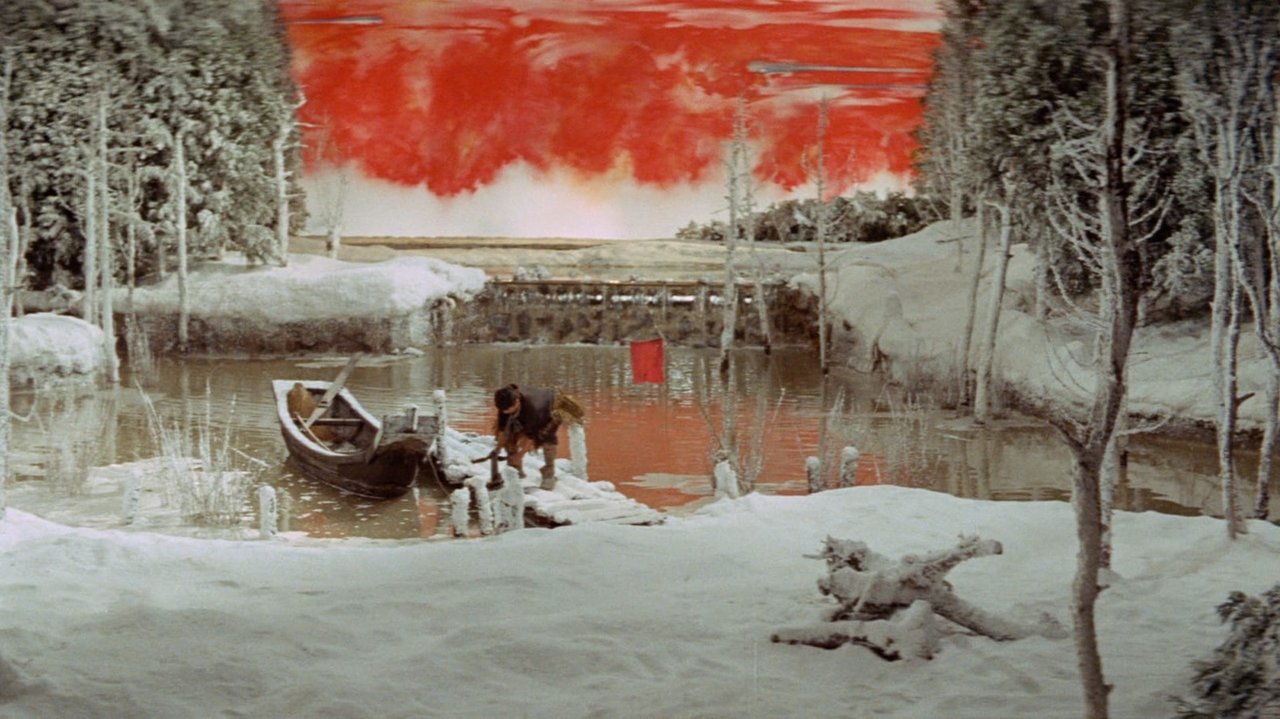
Taking its title from an archaic Japanese word meaning "ghost story," this anthology adapts four folk tales. A penniless samurai marries for money with tragic results. A man stranded in a blizzard is saved by Yuki the Snow Maiden, but his rescue comes at a cost. Blind musician Hoichi is forced to perform for an audience of ghosts. An author relates the story of a samurai who sees another warrior's reflection in his teacup.
About Kwaidan
Why Kwaidan still works
There’s a neat trick Kwaidan pulls: it dresses up as ghost stories but keeps tripping over the very human stuff that made those ghosts in the first place. One tale opens with a swordsman who abandons a poor weaver to chase rank and money — and the consequences that follow are less about the supernatural and more about the cost of his choice.
That human stubbornness runs through the film. It’s a long evening — 183 minutes — directed with care by Masaki Kobayashi, and populated by characters who feel like neighbours you ought to recognise: a samurai who turns up in the night, an unassuming mother, a young woodcutter called Minokichi, a woman whose youth won’t tell its secrets. Actors you may spot include Rentarō Mikuni as the samurai, Michiyo Aratama as the first wife and Misako Watanabe as the second wife. But what lingers isn’t star wattage; it’s how the stories point back to family, home and greed and ask whether any of us are safe from the fallout of our own small betrayals.
The idea that sets Kwaidan in motion
Kwaidan doesn't hinge on one plot. It sets several small, stubborn situations in motion and lets them run. One strand follows a swordsman who, after years away, returns to a home that hasn’t changed — and finds that his attempt to reclaim what he lost comes with a terrible price.
Another beginning is almost the opposite: Minokichi, a young woodcutter, offers shelter to a stranger and, by being kind, finds himself married and settled. That same kindness becomes the hinge of a mystery when hints — like the townswomen marvelling at how she keeps her youth — begin to tilt the ordinary toward the uncanny.
Then there’s Hoichi, the temple attendant. He’s looked after by his fellows, but he keeps slipping away at night; what looks like a harmless absence is actually him being drawn into a performance no one quite understands.
The setup works because each doorknob the film turns is a human one: greed, shelter, curiosity. Kwaidan trusts those small motives to carry it forward rather than explaining every twist; often the quiet refusal to explain is what makes the story feel like a real place.
Why the samurai matters
The samurai in Kwaidan is a simple piece of machinery — he arrives, he commands, things change. Rentarō Mikuni is credited as the samurai, and that figure functions as an unavoidable night-time presence in Hoichi’s story: the samurai appears and escorts Hoichi to a strange, ancient court.
What matters is not subtlety but insistence. The samurai returns. He returns the next night to take Hoichi again and keeps calling for him when Hoichi goes silent. It’s a relentless impulse: the dead demand their due and the living get pulled along.
That relentlessness has a very physical consequence in the tale: when the priests try to hide Hoichi from the spirits by writing protective text on his body, they miss his ears. The samurai notices and, to prove obedience, tears Hoichi’s ears off. It’s brutal and specific — a small, shocking detail that changes everything for the character and the people who care for him.
Read alongside the other stories, the samurai is less an individual and more the shape of the past refusing to be left alone. He’s the reminder that certain obligations — ancient, honour-bound or just plain cruel — don’t disappear because someone wants them to.
Kwaidan has more on its mind than the plot suggests
Under the ghosts and the rituals, Kwaidan is stubbornly domestic. Family keeps surfacing: people leave their homes, return to them, make choices about safety and provision. The swordsman who divorces the weaver and marries for money ends up haunted not by a lesson but by what he discarded.
Home and safety are constantly negotiated. Minokichi’s decision to give a stranger shelter leads to marriage and children; that household becomes a site of protection and, eventually, of revelation when the stranger is shown to be other than she seemed.
Greed is explicit in the swordsman's first story — he marries up for status — and the consequences are personal rather than merely moral. He discovers that changing your social station doesn’t reset your attachments or the damage you’ve done. Mortality and loss thread through these human transactions. Even when a character is spared — as Minokichi is, when the yuki-onna refrains from killing him because of love for their children — the film keeps showing that survival often arrives with conditions and costs. Kwaidan treats supernatural events like late accounting: debts, owed.
Kwaidan could not belong to any other decade
Kwaidan sits squarely in the mid-60s — it was released in 1965 — a moment when filmmakers were willing to take their time and let stories unfold slowly and deliberately.
That patience shows itself in the film’s scale and ambition: it doesn’t rush from point A to B. Instead it lingers on households, rituals and the small moral choices that set the supernatural machine running.
In other words, Kwaidan feels of a period when cinema trusted audiences to sit with unease rather than be constantly startled. The result is a film that reads like a long evening telling stories aloud.
Placed in 1965, it’s easier to see why the film lets old tales breathe: it treats storytelling itself as the point, rather than folding every moment into plot urgency.
What has aged — and what hasn't
A modern viewer will find a lot that still lands. The human beats — a man regretting the choice to marry for money, a mother asking someone to stay, a child’s sandals left in snow — feel plain and immediate. Those small, recognisable actions still carry punch.
The film’s treatment of promises and protection also remains clear. Minokichi is warned never to speak of the yuki-onna’s mercy; his silence and later revelation are believable choices that an audience today can follow without having the film explain every step.
Some of the stories demand patience. The Hoichi sequence hangs on the idea of a man slipping away night after night to perform, and his friends forcibly bringing him home. If you’re used to quicker scares, it asks you to slow down and accept accumulation rather than sudden shocks.
What hasn’t dated is the emotional logic: choices about safety, family and standing lead to consequences. Whether or not you share the period’s rhythms, the core relationships — who protects whom, who abandons whom — still feel honest and recognisable.
Why Kwaidan still matters
People who return to Kwaidan often remember particular moments — the dull horror of a rotted wife revealed to a husband who thought he'd simply come home, or the strange mercy of a woman who cannot bring herself to kill the man she loves. Those scenes anchor the film in human feeling rather than in gimmickry.
Hoichi’s tale is another touchstone: a blind musician drawn into an ancient court, performing a chant about a historical battle, then saved only at a cost when the priests try to hide him. He loses his ears and gains a future where nobles come to hear him play; it’s one of those stories that stays with you because of how literal and strange the trade feels.
There’s also quiet, teasing material — the Kannai story ends half-told, the author’s fate left to the reader’s imagination until the film supplies a final, unexpected image. Those structural choices — sometimes finishing a tale, sometimes cutting it — keep the film unpredictable. All of that adds up to a film that people remember because its scares are personal and its endings often turn ordinary decisions into irrevocable outcomes. It’s not merely “a good ghost film”; it’s a set of stories that keep nudging you back toward the human reasons the hauntings exist.
Does Kwaidan still hold up?
Yes — if you come for stories about people rather than just a parade of shocks. Kwaidan’s loudest success is turning small, domestic decisions into supernatural reckonings: a swordsman who left for status, a mother who takes in a stranger, a priest trying to protect a friend. Those choices still read clearly.
It helps that the film isn’t shy about consequences. The swordsman’s regret, the second wife’s fury, the horror of a rotted corpse and a house in ruin all tie back to human mistakes rather than metaphysical vagueness. The samurai’s appearances in Hoichi’s tale — leading him away, returning insistently — are similarly direct and disturbing.
The film’s length and tone ask patience, but they reward it. Masaki Kobayashi’s 1965 film gives space to these moral flips and pays attention to small exchanges: a pair of sandals, a warning never to speak, the ritual of a chant. Those are the things that stick.
So should you watch it now? If you want a ghost film that is less about gasps and more about what people are willing to risk for family, safety or status, Kwaidan still hits home. It’s a reminder that the creepiest thing often isn’t the ghost — it’s the person who invited it in.