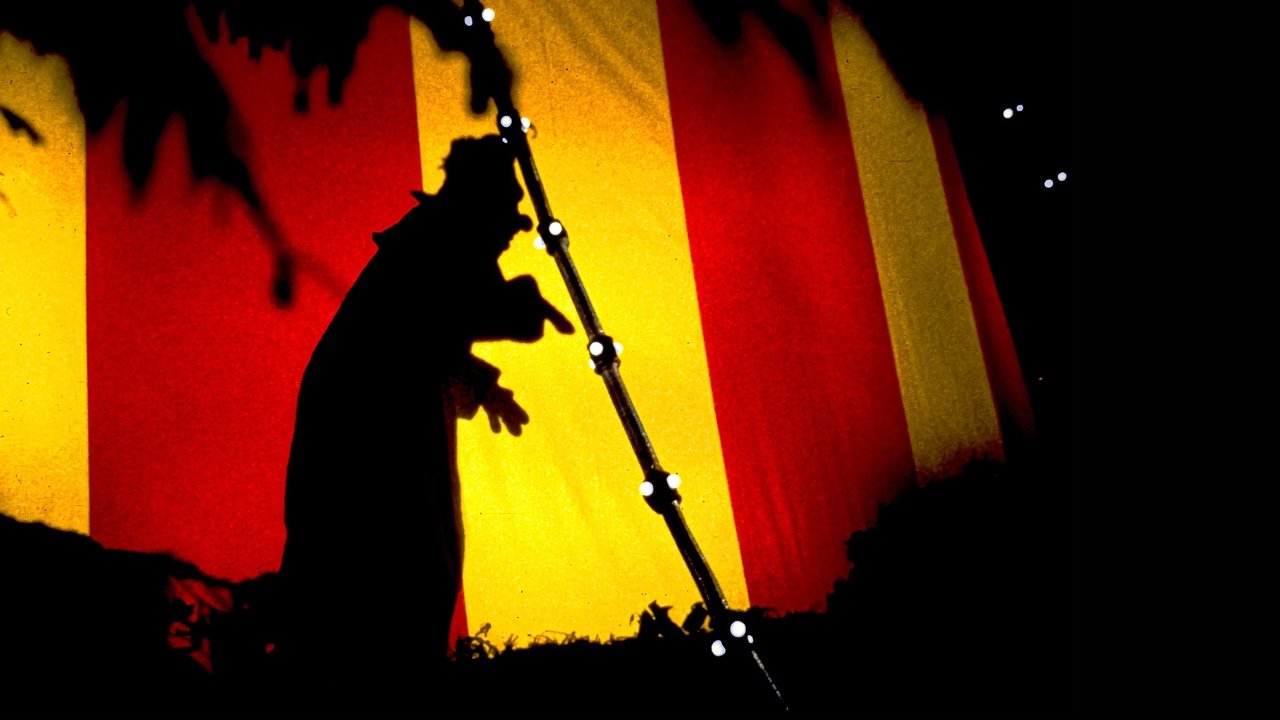

Killer Klowns from Outer Space
“It’s craazzy!”
Aliens disguised as clowns crash land on Earth in a rural town to capture unsuspecting victims in cotton candy cocoons for later consumption.
About Killer Klowns from Outer Space
Why Killer Klowns from Outer Space still stands out
That first image — a parked couple at lovers' lane spotting a strange glowing object — says everything you need to know. The film wastes no time turning everyday suburban boredom into an excuse for nonsense that’s equal parts grotesque and daft.
Stephen Chiodo made a film that fits into a handful of boxes at once: science fiction, alien invasion, horror and comedy. It runs briskly — 88 minutes — and keeps its pace like someone determined to entertain before the credits roll. At the centre of the mess is Mike Tobacco, played by Grant Cramer, who, with Debbie Stone, stumbles into a circus‑like spaceship and, from that point on, the town of Crescent Cove is never quite the same. It’s a simple hook, handled with gleeful disregard for restraint.
The idea that sets Killer Klowns from Outer Space in motion
The film’s premise is gloriously straightforward: two people investigate a strange arrival and discover it’s not a crashed meteor but a bizarre, tented interior that is actually a spaceship. That discovery turns an ordinary late‑night outing into the start of an escalating townwide problem.
From there, the story stays compact. Rather than scatter into multiple subplots, it channels events through a small group of characters who try to warn their neighbours and stop the menace.
One of the movie’s recurring images — an ice‑cream truck used as a makeshift broadcast vehicle — captures the film’s tone. It’s resourceful, a little absurd and perfectly in keeping with the film’s blend of domestic details and alien oddity.
That clarity is why the setup works: the film gives you a distinct, memorable idea and then commits to pushing it into ever more outrageous permutations.
Why Mike Tobacco matters
Mike Tobacco is the movie’s most reliable anchor. Grant Cramer’s Mike is the ordinary guy who goes looking for trouble and, crucially, keeps going when everyone else thinks he’s lost the plot.
His curiosity is the kind that propels the story: he and Debbie spot the object at lovers' lane and decide to investigate rather than drive away. That decision flips the film’s tone from sleepy suburb to full‑on cartoon menace.
Mike also functions as the instigator of action. He drags the town into motion — from reporting the event at the police station to rallying his friends and using the Terenzis’ ice‑cream truck to warn people — which keeps the film moving at its break‑neck pace.
When things go south at the amusement park and the Klowns turn things nastier, Mike is the one still in the thick of it. He’s not a superhero; he’s a persistent protagonist, and in a film this silly and this loud, persistence is everything.
Killer Klowns from Outer Space has more on its mind than the plot suggests
Beneath the custard pies and popcorn bazookas the movie sets up a contrast between authority and everyday freedom. The invaders arrive under the cover of spectacle, and the town’s usual structures — police, neighbourhood routines — are tested by something absurd and outside the rules.
That tension gives the gags a little bite. The film isn’t just happy‑go‑lucky chaos; it’s teasing what happens when ordinary people try to make sense of an incomprehensible threat without being told what to do.
Freedom shows up as a kind of improvised resistance: the townspeople, and Mike in particular, respond with instinct and resourcefulness rather than waiting for instructions. Put simply, the film’s humour comes from watching ordinary civic order collapse into improvised, sometimes ridiculous attempts to survive — and from the movie’s willingness to laugh while it watches that collapse.
Killer Klowns from Outer Space could not belong to any other decade
Released in 1988, the film arrives at the tail end of a decade that loved high‑concept premises you could describe in a single sentence and then let loose.
That appetite — for simple, punchy ideas that mix genres — fits Killer Klowns perfectly. It is content to be a mash‑up: part alien invasion, part horror slapstick and part carnival detour.
Being of the 1980s also helps explain the film’s confidence in small‑town settings and practical, do‑it‑yourself solutions. It’s not trying to be subtle; it’s trying to be memorable, and that is very much an '80s instinct.
Put another way: the movie feels like a product of its year because it shares the decade’s taste for bold, easily sold weirdness.
What has aged — and what hasn't
Some sequences keep their bite. The chase to the amusement park and the sudden turn toward genuinely alarmist sights still land: the escalation feels earned because the film never forgets its premise.
The moment the Klowns’ gargantuan leader smashes the ice‑cream truck — and the apparent loss that implies — still shocks in context. It’s a surprise that plays in the service of bigger payoffs later.
That said, the film asks you to accept its rules and style without much negotiation. If you’re willing to follow its logic — candy floss cocoons, popcorn weaponry and all — it holds together as a coherent, if bonkers, piece of fun.
If you’re coming for modern horror realism, this isn’t the place; come for the committed absurdity and the weird set pieces that still have teeth.
Why Killer Klowns from Outer Space still matters
People remember this film because its images are the sort that lodge in the brain: a farmer stumbling into a tented, circus‑like structure and being taken; townspeople encased in cotton‑candy cocoons; and a Klown firing popcorn from a bazooka. Those are the kinds of absurd details you don’t easily forget.
It also strings together a series of set pieces — miniature horrors given cartoon logic — from the shrinking‑and‑bagging of victims to the Klown at the police station who explodes into confetti. Each beat is designed to be a memorable flourish rather than background texture.
The movie’s use of everyday objects as tools for both humour and horror helps, too: an ice‑cream truck becomes a megaphone for warning the town; pies literally fall from the sky. That mixture of domesticity and spectacle is the film’s signature. Above all, it matters because it commits to its strange idea and keeps pushing. There’s a kind of fearless silliness here, the sort that turns a single gimmick into an entire film’s worth of inventions.
Does Killer Klowns from Outer Space still hold up?
Yes — if you’re in the market for a film that privileges invention and commitment over subtlety. Killer Klowns from Outer Space is exactly what it promises: a short, punchy alien‑invasion comedy‑horror that leans into its silliness and never apologises for it.
Grant Cramer’s Mike Tobacco and Suzanne Snyder’s Debbie Stone are the ordinary cores who lead the town from curiosity to chaos, and John Allen Nelson’s Officer Dave Hanson provides the kind of straight‑faced anchor the film needs when the Klowns get ridiculous. All that keeps the story coherent even as the set pieces escalate.
The themes are simple but effective: the movie stages a tussle between authority and improvisation, and it frames its wins and losses in domestic terms — an ice‑cream truck becomes a warning system; everyday people have to respond without waiting for permission.
So should you watch it now? If you like films that are proudly daft, inventive and short on patience, yes. If you prefer horror that aims for realism and subtlety, less so. Either way, Killer Klowns rewards viewers who let themselves be dragged along by its relentless, candy‑floss madness.