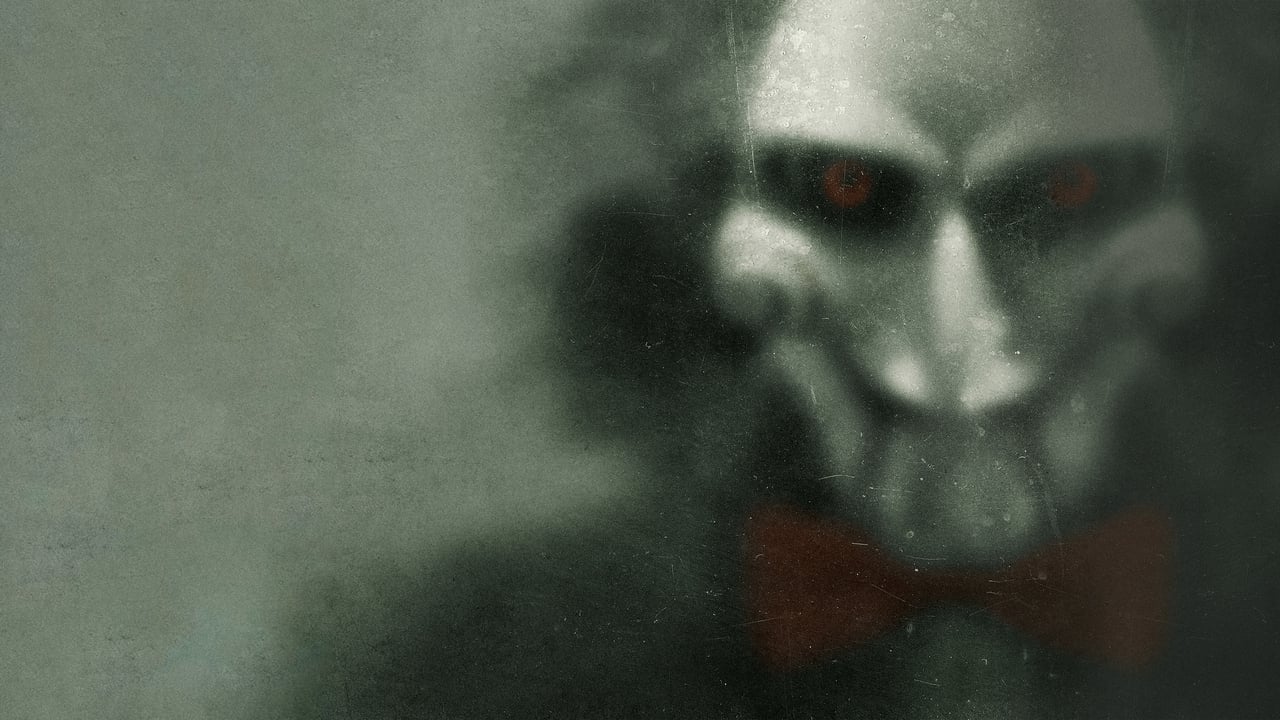

Jigsaw
“The game continues.”
Law enforcement finds itself chasing the ghost of a man dead for over a decade, embroiled in a diabolical new game that's only just begun.
About Jigsaw
Why Jigsaw still works
There’s a simple mechanical pleasure to watching a movie that trusts its own rules. In Jigsaw that trust arrives as a confession: a man named Edgar insists he must begin a "game" to survive, and that claim kicks everything else into motion. That setup is the movie’s engine—compact, bloody and unashamedly procedural.
From that first claim the film splits its attention between two things you care about: the police trying to make sense of the violence, and the trapped people having to negotiate survival. Five strangers wake in a barn with chains and a taped message insisting they bleed to live; the tests that follow force grim trade-offs rather than clever escapes. It’s all done in one tight ninety-something minute package under Michael Spierig’s direction, with Tobin Bell’s Jigsaw as the mythic hinge that the plot keeps turning around. The result is a small, focused puzzle movie that wears its splatter and its moral questions on the sleeve.
The idea that sets Jigsaw in motion
The film balances two investigations: the literal crime scene work and the mystery of who’s running the experiments. That balance matters because the police procedural thread keeps the traps from feeling like isolated stunts.
Detective Halloran becomes suspicious of the two pathologists connected to the case, which shifts the centre of suspicion inward toward people who are supposed to record death rather than cause it.
But suspicion is slippery. Logan Nelson manages to turn Halloran’s own mistakes into a reason to release them from custody — insisting the bullet that hit Edgar came from Halloran — and that sleight of hand changes how everyone reads motive and culpability.
So the setup works by making the investigators part of the puzzle: the cops are not only trying to save victims, they are being framed and tested themselves, which keeps the story moving from crime hunt to accusation and back again.
Why Jigsaw matters
Tobin Bell’s Jigsaw is less a face in the finale and more the moral engine that underpins the whole movie. The traps and their rules behave like a sermon—you either read the rules and act, or you die for ignoring them.
That mythology seeps into the characters: Eleanor admits she’s been a Jigsaw fan, which says as much about how the idea circulates as it does about the specific crimes. The killer’s influence isn’t only physical; it’s cultural, shaping how people interpret violence and responsibility.
There are physical traces of that influence scattered through the investigation too — evidence that points back to the Jigsaw idea, even when the case seems to have moved on. Little proofs, like grisly tokens found by detectives, keep the spectre of Jigsaw present in the day-to-day police work.
And the film plays with scale: Jigsaw is both the man who set the rules and the story people tell themselves about punishment and redemption. It matters because the character turns grievance into doctrine and hands ordinary people half-choices that feel like judgements.
Jigsaw has more on its mind than the plot suggests
On the surface it’s a sequence of brutal tests. Underneath the tests the film keeps folding back to a couple of blunt concerns: how long someone gets to live, and who decides that length.
Mortality is handled as a mechanic—lifespan becomes something negotiable if you agree to a certain kind of choice. That makes every trap a little philosophical: not just a way to shock, but a question about how much you’re willing to pay to keep breathing.
Freedom is the film’s other recurring worry. The movie literalises freedom as an object: a single shell in a shotgun presented as emancipation. That narrow option forces characters to reckon with whether freedom is worth the cost demanded of them. Around those two ideas spin related notes—loss, courage, a warped sense of protection—which keep the movie from being a one-note gore exercise and give the violence a stubborn, if uncomfortable, point of view.
Jigsaw could not belong to any other decade
Released in 2017, Jigsaw sits squarely in the 2010s: a decade when genre films favoured tight, idea-led thrills that could be explained in a single sentence at the bar.
That timing matters because the film is built to be consumed quickly—a compact horror-crime hybrid that trusts premise over padding.
Being part of the 2010s simply means it shares the era’s appetite for clever hooks and brisk pacing; Jigsaw’s choices—short runtime, direct setup, and insistence on moral dilemmas—feel characteristic of the period.
Why Jigsaw still matters
What keeps conversation alive around this film isn’t a single show-stopping set-piece but the way its traps double as quick moral thought experiments. Five people wake in a barn and are told their survival depends on painful, deliberate choices—those test setups lodge in the memory because they turn gore into a question.
The film also makes room for courtroom-style intrigue: detectives pursue leads and find evidence that keeps pointing back to the Jigsaw idea, and that investigative thread gives viewers a way to follow the carnage without just gawping at it.
There are moments of ugly logic — a purse snatcher presented with an impossible needle choice, a man crushed by a blade-powered funnel — that are brutal precisely because they’re framed as punishments for specific failings. Those moral rationales make the cruelty feel like an argument someone has written down.
Finally, the story’s turn about who’s really orchestrating things — a revelation that recasts earlier events and leaves one character claiming to speak for those who died — gives the film a dark aftertaste. It’s the kind of twist that makes you want to re-check timelines and clues, and for many people that replay value is the movie’s lasting pull.
Does Jigsaw still hold up?
If you want a film that turns grisly traps into moral multiple-choice questions, Jigsaw still delivers. The core conceit—people waking in a barn and being forced into sacrificial choices—remains blunt and effective, and the movie clocks its ideas into a short, watchable runtime.
What helps it survive a second viewing is the way the investigation and the games reflect each other: the detectives’ hunt and the barn’s punishments are two halves of the same machine, and the reveal about who rebuilt the games retrofits earlier clues in a way that rewards attention.
It’s not for everyone. The pleasures are specific: procedural momentum, nasty set-pieces and a willingness to treat freedom as a cost. But for viewers who like their horror tidy, idea-driven and unafraid of moral nastiness, Jigsaw still earns a look. So yes—watch it if you fancy a sharp, nasty puzzle about mortality and choice. It doesn’t soften the blows, but it does make you think about why anyone would build an argument out of torture.