Jaws 3-D
“The third dimension is terror.”
A giant thirty-five-foot shark becomes trapped in a SeaWorld theme park and it's up to the sons of police chief Brody to rescue everyone.
About Jaws 3-D
What Jaws 3-D gets right
Jaws 3-D’s most persuasive move is its setting. Instead of another fishing boat, the threat arrives inside SeaWorld Orlando, where Michael Brody is the chief engineer and Kay Morgan is the park’s senior biologist — which immediately makes the danger domestic rather than distant.
That change of location turns familiar shark panic into something stranger: people trapped behind transparent tunnels, tourists on a day out, dolphins that don’t want to leave their pen. It gives director Joe Alves a different playground to stage scares and makes the story about how a public attraction manages an impossible emergency.
It also wears its genres openly — horror, thriller, action, drama — and isn’t shy about pairing family stakes with spectacle. You can spot the themes from the first scenes: freedom, fear and authority all rubbing up against one another as the park’s attractions become the battleground.
The idea that sets Jaws 3-D in motion
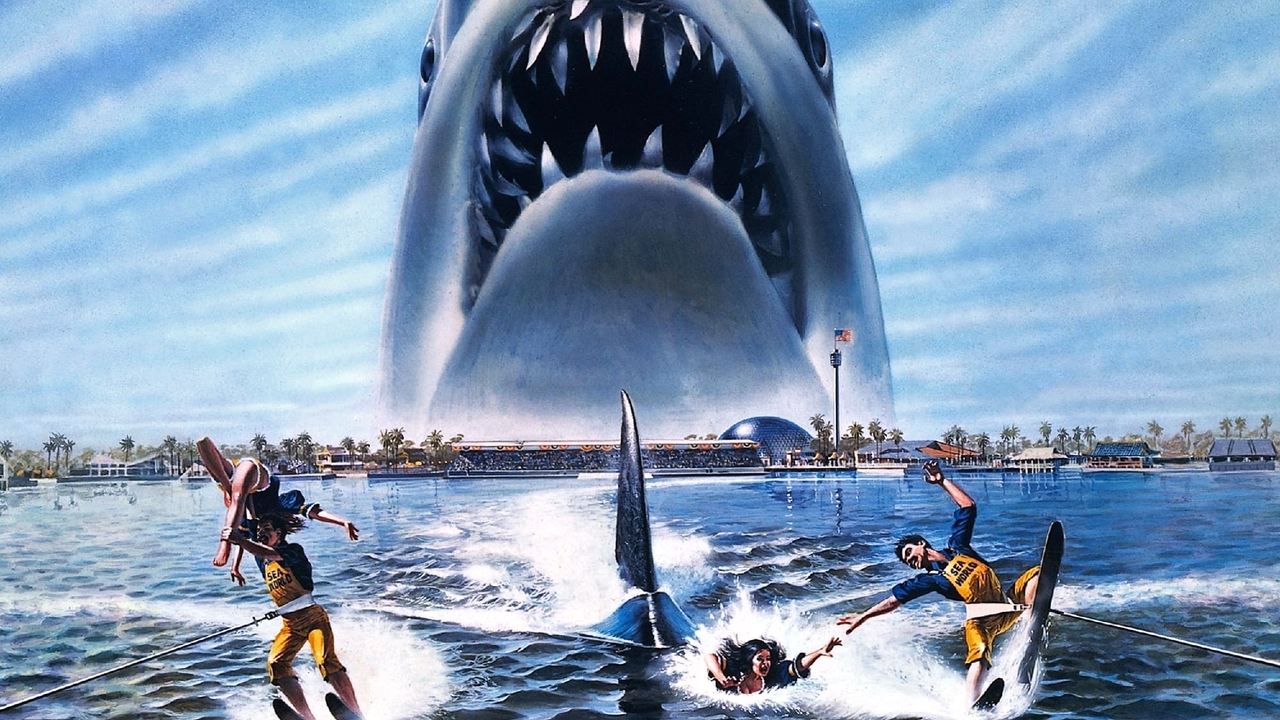
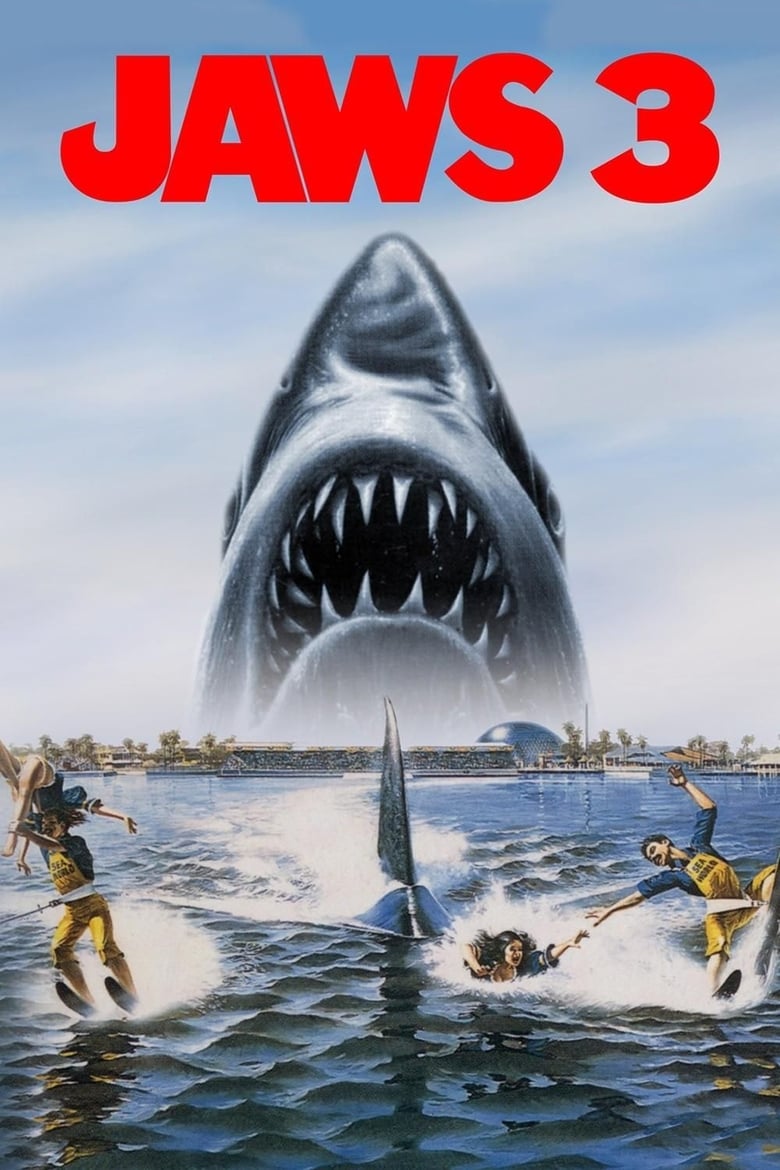
The engine of the film is simple and perfectly televised: the park’s lagoon gates aren’t closed, and a great white follows a team of water skiers straight into the attraction.
That one mechanical failure turns a place that should feel safe into a hunting ground. From there the film pivots between trying to capture the shark, exploiting it for publicity and keeping visitors alive.
Personal threads are woven through the spectacle — nights out that lead to new romances, family visits and the park staff attempting to do the right thing under pressure — so the basic setup never drifts into pure show-offy set pieces.
And after the crisis resolves, there’s a small, almost sentimental beat: Mike and Kay celebrating with the dolphins who helped them through it, which neatly closes the loop from threat back to care.
Why Michael Brody matters
Michael Brody exists to anchor the movie where the original Brody anchored its town: he is the bloke who has to make the impossible choices for other people. Dennis Quaid plays him, but more importantly the story positions Mike as someone who belongs inside the attraction — chief engineer, partner to the park’s senior biologist — not outside it.
That insider status matters because Jaws 3-D’s disasters are technical and managerial as much as they are primal. Mike’s relationship to Kay and his younger brother Sean gives the film a family angle, so the stakes are personal whenever a gate sticks or a filtration pipe becomes a trap.
He’s not just an administrator; he’s the connective tissue between the park’s authority figures, the visiting public and the family dramas that make the danger hit home. The movie needs a character who can move between all those worlds, and Michael is written to do exactly that.
And when bodies are examined and a pattern emerges — when Kay realises the first shark’s mother is also in the park — it’s Mike who’s part of the team that has to act. His agency keeps the plot moving and gives the film somewhere to stand amid the chaos.
Jaws 3-D has more on its mind than the plot suggests
On the surface it’s a shark movie; under the surface it’s about contests of control. Freedom appears as both literal — animals trying to move between pens and open water — and metaphorical, in the way authority figures jockey for decisions during a crisis.
Fear functions in two registers: the animal fear of being hunted, and the civic fear of a place designed to entertain suddenly endangering the public. That double register keeps the tension interesting because the film is as worried about human systems as it is about jaws.
Family and parental protection are threaded through the action — Mike’s relationships and the presence of Sean as a visiting younger brother give emotional weight when the danger hits home. Those domestic notes stop the movie collapsing into pure spectacle.
And then there’s greed and heroism toggling against one another: the temptation to turn a captured shark into publicity sits beside people risking themselves to fix a leaking tunnel. Those opposing impulses give the film its moral noise.
Jaws 3-D could not belong to any other decade
Released in 1983, the film wears its decade plainly: it’s a sequel-era picture that tries to escalate what came before by changing the playing field rather than pretending everything starts over.
Calling it an '80s movie isn’t nostalgia — it’s a recognition that the film chose a particular kind of escalation, one that belongs to that early-80s moment in mainstream cinema.
The result feels like a film trying to do something bigger and brasher with a familiar monster, which is exactly what a lot of 1983 cinema was experimenting with.
What has aged — and what hasn't
The central feelings survive the years: fear and family still translate. A shark punching through an aquarium window and the idea of people trapped inside a flooded viewing tunnel still land as visceral threats.
Some of the film’s group dynamics also read clearly today — the park manager trying to push an agenda while others warn of risk is a human truth that hasn’t gone out of style.
And the personal threads — a brother visiting for the summer, the romance between Mike and Kay — keep the stakes readable for modern viewers. They make the chaos mean something, which helps the film hold up better than if it were only spectacle.
Why Jaws 3-D still matters
People remember this film because it put the menace somewhere unexpected: an attraction with underwater tunnels and captive animals. That setting is striking enough on its own to stick in the mind.
The movie layers colourful beats on top of that premise — dolphins that won’t leave their pen, a shark barging through a café window, a plan to televise the killing for ratings — so the narrative keeps flipping between spectacle and small human moments.
Its memorable, if grisly, turns — a mechanic attacked while securing the gates, two would‑be coral thieves killed on a lark, and a hunter who gets trapped and ultimately ingested in the filtration pipe — make for a series of punchy moments that survive conversation even if the film’s overall reputation is mixed.
And the finale, where a grenade lodged in the shark’s throat becomes the closing beat, is the sort of extreme set-piece that people recall: it ties the film’s themes together by forcing its lead characters to choose action under pressure.
Does Jaws 3-D still hold up?
If you’re after a faithful repeat of the original Jaws experience, this isn’t it. What Jaws 3-D offers instead is a compact, 98‑minute piece of early‑80s spectacle that turns a family relationship and a public attraction into the site of terror.
That collision — freedom versus authority, family safety versus commercial temptation — still gives the film emotional teeth. When the park’s lagoon gates let a great white in, the consequences feel immediate because the dangers are both physical and bureaucratic.
Watch it for the set pieces: dolphin rescues, a trapped hunter in a filtration pipe and a finale that resolves on a single decisive action. Watch it also for the structural choices: Michael Brody as engineer and Kay as the biologist mean the protagonists are inside the problem, not watching from the shore.
So yes, it’s worth watching today if you enjoy a movie that wears its 1983ness on its sleeve, stages big moments in tight spaces, and mixes family drama with creature panic. It’s not flawless, but it’s unmistakably itself — a shark movie that decided glass, pipes and corporate decisions should be as terrifying as the sea.