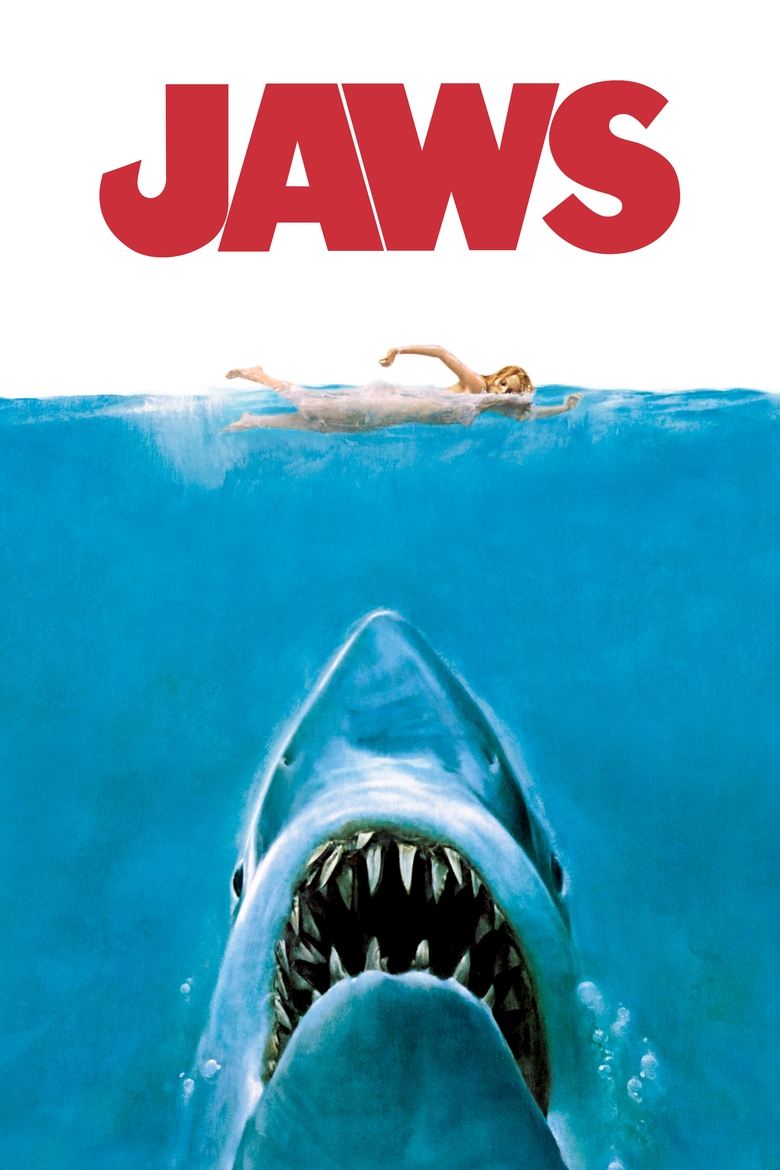
Jaws
“The terrifying motion picture from the terrifying No. 1 best seller.”
When the seaside community of Amity finds itself under attack by a dangerous great white shark, the town's chief of police, a young marine biologist, and a grizzled shark hunter embark on a desperate quest to kill the beast before it strikes again.
About Jaws
Why Jaws still stands out
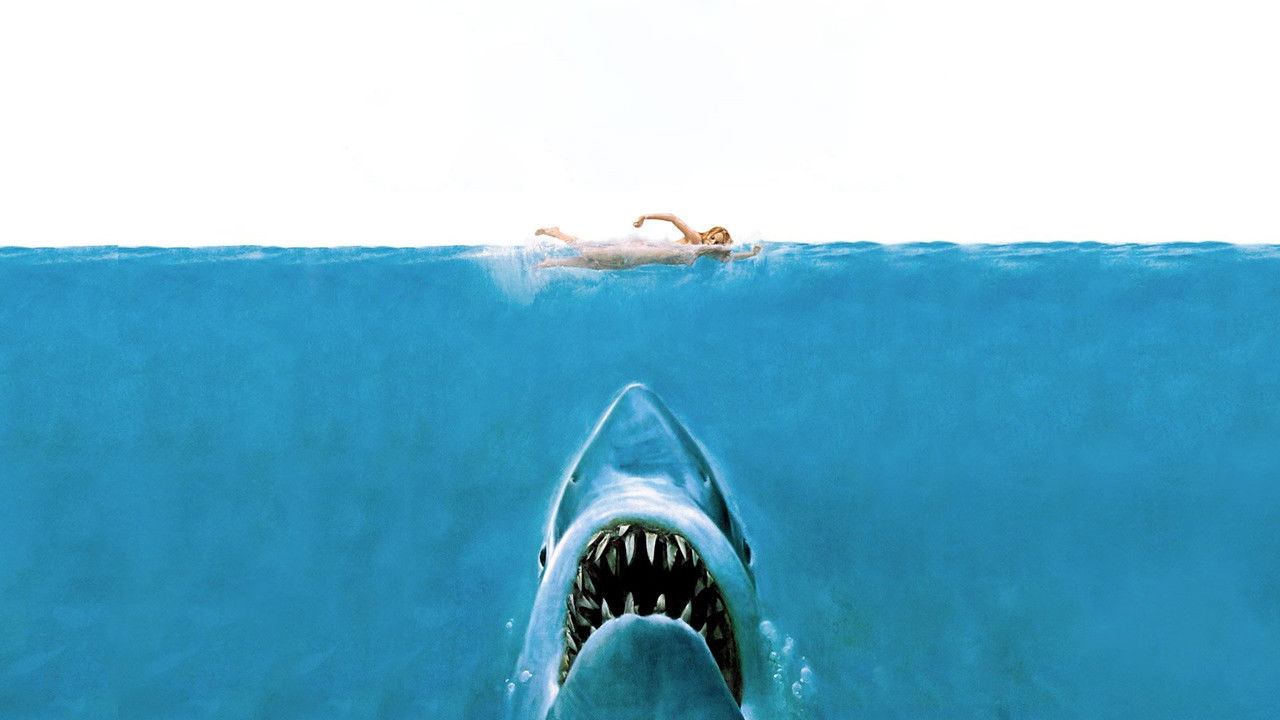
You remember the moment without needing the score: somebody goes for a late-night swim and never comes back. That opening — a private night in the ocean turned fatal — sets everything in motion.
What follows is almost painfully simple. Martin Brody, the town’s police chief, wants the beaches closed. The town’s leaders, worried for the summer trade, push back. That tug-of-war between caution and commerce becomes the engine of the film’s dread. Directed by Steven Spielberg and running just over two hours, Jaws keeps its attention tight. It’s built less from spectacle and more from the way ordinary choices — to open the beaches or not, to believe the witnesses or ignore them — escalate into something you can’t walk away from.
The idea that sets Jaws in motion
At first the film gives you a mystery more than a monster: a swimming accident, a body washed ashore, a coroner’s report. Brody, charged with public safety, argues the beaches should be closed. That simple decision — safety first — meets civic resistance and the plot tightens.
The town’s leaders, worried about summer money, push back. The coroner’s conclusion shifts under pressure, and what should be a straightforward precaution becomes a dispute about economics and risk. It’s the sort of civic indecision that makes the audience itch, because you can see how quickly small compromises grow into real danger.
The story then moves from shore to sea. A local shark hunter called Quint arrives and offers to catch the animal for a price. He’s not just another hand for hire; a darker backstory hints that this is personal for him.
And when the men finally take to Quint’s boat, the chase rules the plot: they bait, harpoon and pursue, only to find the situation far more stubborn and dangerous than anyone guessed.
Why Martin Brody matters
Martin Brody is the moral and narrative fulcrum. Roy Scheider plays him, and the picture revolves around his decisions — mainly whether to protect the town or keep its economy afloat.
Brody’s insistence on closing the beaches is straightforward and stubborn. It’s the sort of choice that rings true: a local cop whose first instinct is to prevent more bodies being pulled from the sea.
That readiness to take an unpopular stand gives the movie a human nerve. The shark is the visible threat, but Brody’s fight with the town’s leaders makes the danger feel immediate and civic — not abstract.
In short: Brody matters because his dilemma turns a creature story into a story about responsibility. He forces the film to ask who the community is built to protect.
Jaws has more on its mind than the plot suggests
On the surface it’s about a predator in the water. Underneath it’s about fear — how a community experiences it, tolerates it and sometimes buries it for convenience.
There’s also a strong current of parental protection and home safety. The film asks who will stand between danger and the people who depend on the shore for their sense of normality.
That tug between safety and commerce is where Jaws keeps getting interesting. The mayor’s insistence on keeping the beaches open because of the summer economy turns a public-health question into a moral compromise. And when Brody, Hooper and Quint finally go after the shark despite their differences — Brody’s unease, Quint and Hooper’s tension — the pursuit becomes an argument in motion about courage, duty and who will take responsibility.
Jaws could not belong to any other decade
Jaws arrived in 1975, which matters because the film’s appetite for tidy moral answers and plain-speaking heroes feels very much of that moment.
It’s built like a 1970s thriller: economical, focused and willing to trade spectacle for tension. The result is a movie that feels direct rather than ornamental.
That no-nonsense personality helps the story land. When a town official downplays danger for money, the plot doesn’t need elaborate backstory to make the stakes feel real.
What has aged — and what hasn't
The core anxieties — fear of the unknown, the urge to protect your family and the idea that a town might choose profit over safety — still land hard. Those are human problems that don’t go out of fashion.
The political pushback in the film, where the mayor talks the police chief down because of the summer economy, reads plainly today. It still makes the audience furious in the exact way it’s supposed to.
The dynamic between Brody, Hooper and Quint — uneasy, combustible and ultimately cooperative — keeps the second half rolling. Sending those three out on the Orca turns the film into a microcosm of the larger town’s arguments.
So while some surface trimmings might feel dated to certain viewers, the film’s fundamental questions about safety, duty and fear continue to work.
Why Jaws still matters
There are a few unforgettable moments that keep people coming back: the late-night swimmer taken from the water, the remains found on the beach, the coroner’s report that flips when the town pressures him. Those beats anchor the whole drama.
The town’s response — denying the danger until a child is killed and a $3,000 bounty sparks amateur hunters — gives the story a civic horror angle. It’s not just the shark; it’s how people behave in the face of risk.
Quint’s arrival with a $10,000 offer, Hooper’s scientific confirmation that this was the work of an unusually large predator, and the grim discovery at Ben Gardner’s boat all tighten the sense that this is not an ordinary sea creature. Finally, the hunt at sea turns personal and fatal: the trio head out on the Orca, the pursuit gets savage, Quint is consumed, and Brody’s desperate final manoeuvre kills the animal. The payoff is brutal and tidy in equal measure, which is part of why the film still sticks in the memory.
Does Jaws still hold up?
Yes. The film’s problems are simple and immediate: somebody vanishes at night, a coroner finds remains, and a policeman tries to shut down the beaches. That setup gives Spielberg a clean moral line to follow, and it still makes for gripping cinema.
The tension between Brody’s warnings and the mayor’s economic concerns keeps the story from being just a monster movie. It’s a picture about who a town will protect and who it won’t — and those questions are as watchable now as they were in 1975.
The final act, with Brody, Hooper and Quint at sea, carries the film’s themes to the logical end. The pursuit becomes a test of courage and responsibility, and the violent conclusion resolves both the hunt and the community’s dilemma.
So if you’ve never seen Jaws, or if it’s been a long time, it’s worth the trip back. It’s a thriller that treats basic human choices — to care, to act, to protect — as the real reason to be afraid.