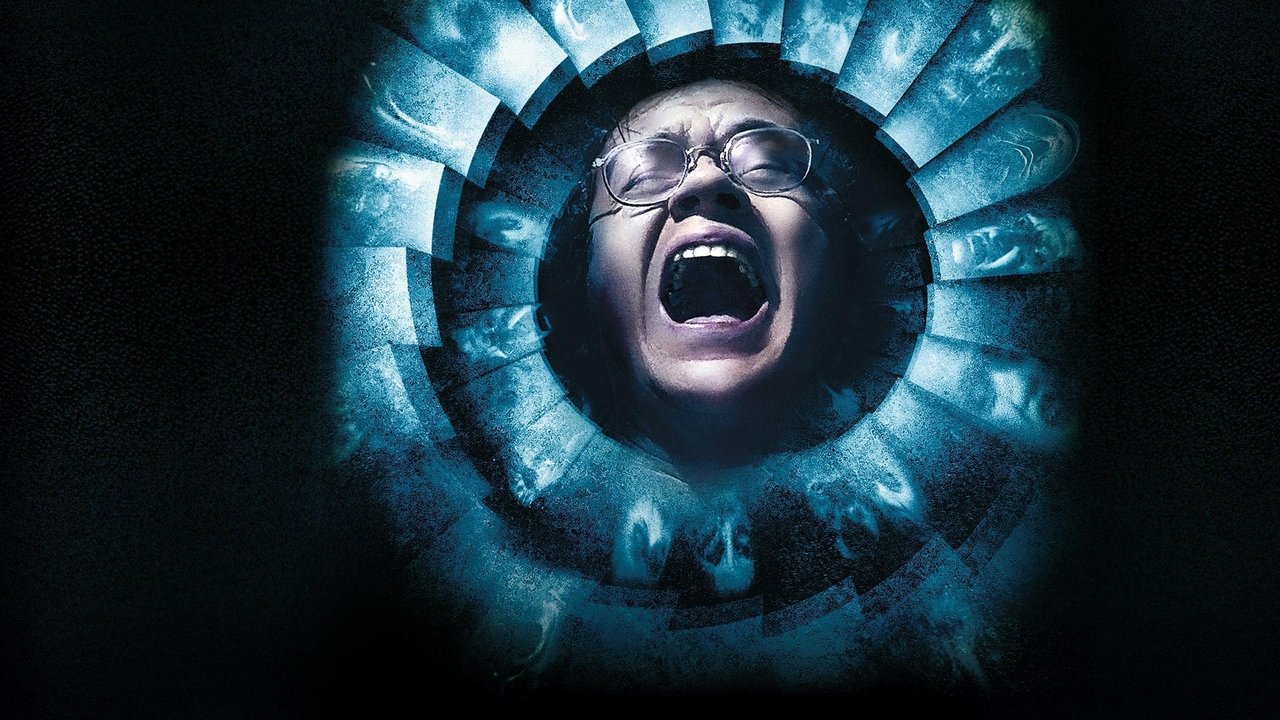

Jacob's Ladder
“The most frightening thing about Jacob Singer's nightmare is that he isn't dreaming.”
After returning home from the Vietnam War, veteran Jacob Singer struggles to maintain his sanity. Plagued by hallucinations and flashbacks, Singer rapidly falls apart as the world and people around him morph and twist into disturbing images. His girlfriend, Jezzie, and ex-wife, Sarah, try to help, but to little avail. Even Singer's chiropractor friend, Louis, fails to reach him as he descends into madness.
About Jacob's Ladder
What makes Jacob's Ladder worth revisiting
Two short moments tell you everything you need before the credits have really settled: a subway platform where something grotesque pokes out of the ordinary, and much later a stairwell where a boy waits at the top, a strange kind of peace in his hand. They don’t promise neat answers; they promise a journey where the haunted interior life of one man is the horror.
That man is Jacob "Professor" Singer — Tim Robbins plays him — and Adrian Lyne directs the whole thing like a slow squeeze. Lyne keeps the runtime tight (108 minutes) and refuses easy comfort: the movie wants you unsettled, and it wants the reason for that unsettlement to be personal, not merely sensational. Underneath the shocks the film is quietly obsessed with family, mortality and the idea of liberation. Those themes are what stop Jacob's Ladder from being just another thriller; they’re the reason people still bring it up when they want a horror film that feels like a private ache.
The idea that sets Jacob's Ladder in motion
At its simplest the film tracks a man being pulled between different realities: scenes that feel like the life he has now and flashes that suggest something else is going on beneath it. Those flashes are often violent and disorienting — Jezebel’s fate after a startling hallucination is one example — and they begin to pile up until Jacob can’t treat them as quirks anymore.
What turns the private horror into something that smells of conspiracy is the company Jacob keeps. Former platoon mates start confessing the same sort of nightmarish experiences, and the group tries to get answers. The idea of shared hallucination raises a practical question: are these men suffering the same biological or military cause?
They hire a lawyer to look into it, but the legal trail goes cold; files suggest a very different record of events than the men remember, and the investigator walks away after reading them. That collapse of official help leaves Jacob lonelier and more suspicious — he’s the sort of protagonist who won’t drop the question even when others do.
Into that vacuum steps a man who claims inside knowledge: a former Army chemist who talks about a drug called the Ladder. His story reframes what Jacob has been through, and triggers a vision that pushes Jacob’s memory of the Vietnam battle into sharper, more accusatory focus — the attacker in that moment is not an unknown monster but another American soldier.
Why Jacob "Professor" Singer matters
Jacob is not a mystery you solve; he’s a man you live with for a little while. Tim Robbins plays him at the centre of a story that keeps pulling his past into the present. He’s somebody who misses what he lost — specifically his little boy, Gabe — and that absence haunts the film more insistently than any monster.
The movie gives Jacob ordinary lines: a postal-worker life in 1975, a relationship with Jezebel, friends around him who throw parties. Those domestic details keep bringing the audience back to what he might be trying to get back to — a family, a home that felt safe — rather than letting the weirdness float off into abstraction.
When the narrative allows a comforting image — Jacob returning to his family’s house, Gabe waiting at the top of a stairway — it reads like the emotional destination the whole film is steering towards. That desire for reunion is what makes his visions and terrors feel rooted, not just clever scares.
Even his friendships matter: someone like Louis Denardo turns up as a practical anchor in the chaos, a person who can patch Jacob together when the world around him seems intent on unpicking him. Those relationships stop Jacob being merely a vessel for hallucination and make him recognisably human.
Jacob's Ladder has more on its mind than the plot suggests
The film dresses up as psychological horror, but its real constant is family. Jacob’s visions of his son and the repeated return to family spaces keep suggesting that whatever the external mystery is, the story is fundamentally about reconnection and the pull of the people you love.
Mortality is never background noise here. The sense that life might have already ended — reinforced by moments where others tell Jacob he’s dead — forces the film to treat death as a state to be understood rather than merely a shock to be exploited.
Freedom shows up in a surprisingly tender register: there are suggestions that the strange forces at work are either trying to free Jacob from earthly pain or, conversely, to hold him here. That ambiguity feeds the film’s moral weight; the question isn’t only what’s happening, but whether release might be mercy. At the bottom of all this, courage and friendship matter because they make Jacob recognisably human. The scares are effective because the audience has a stake in Jacob’s connections — when he fights, it feels like he’s fighting for people rather than for a plot point.
The effects work that gives Jacob's Ladder its physical personality
A curious constraint of the film is how it balances the fantastical with the painfully ordinary. One way the movie does this is by anchoring some of its more out-there sequences in procedural, everyday beats — the men hiring a lawyer to investigate their shared experiences is a small, physical action that gives the story a real-world anchor.
That investigative thread — getting files, reading records, approaching a lawyer — makes the surreal moments feel like intrusions into a world where people still make phone calls and sign papers. It supplies a texture that keeps the horror from floating away into pure abstraction.
Because the film keeps returning to these tangible steps, the hallucinations gain a kind of weight: they are not only night terrors but events that affect Jacob’s relationships and his options. The practical responses of the characters give the movie its physical personality.
So even when the visual idiom is uncanny, the story’s reliance on ordinary investigative action keeps the stakes grounded and the audience engaged in the question of what to do next.
Jacob's Ladder could not belong to any other decade
Coming out in 1990, Jacob's Ladder arrives at the very start of a decade that liked to cross genre boundaries: horror married to psychological drama, the political mixed with the domestic. The film sits neatly in that moment, where audiences were open to horror that felt like a meditation rather than just a thrill.
The timing also matters because the movie treats its wartime material as an ingredient in a character study, not a headline. That approach — folding trauma into ordinary life and letting the domestic consequences take centre stage — is very much in keeping with films of the early 1990s.
Its placement at the decade’s outset gives Jacob's Ladder a particular personality: part paranoia, part quiet grief, and unwilling to offer easy closure. That blend feels distinct from the genre films that came before or after it.
So while the movie’s story is timeless in theme, its temperament — the way it mixes intimate domestic scenes with unnerving intrusions — is recognisably of its moment: 1990, right when the decade was finding new ways to be uneasy.
What has aged — and what hasn't
Parts of Jacob's Ladder still land in the chest. The scenes about Jacob’s missing family — especially his visions of Gabe and the moments where the film steers him back to family spaces — remain emotionally blunt and effective. Those beats are simple and human, and simple human things don’t go out of fashion.
Some images keep their shock value. The early subway moment with an unexpected grotesque detail still breaks the calm and makes you look twice. It’s a sequence that still does the work of jolting the audience back into alertness.
There are sequences that feel uncomfortable in a contemporary viewing because they foreground physical vulnerability — the fever scene where Jezebel tries to bring Jacob down with a painful ice bath, for instance, reads now as an intimate, unsettling moment rather than genre spectacle. That persistence of intimacy is part of what keeps the film from feeling dated. Finally, the film’s nightmarish encounters with medical spaces — Jacob being taken to a hospital and told a version of his life that doesn’t match his memories — still provoke. The idea of being told your reality is wrong is not a trend that dates; it’s a psychological sting that still works.
Why Jacob's Ladder still matters
The film’s opening battlefield scene — a chaotic Vietnam moment that leaves men broken, bewildered and, in some cases, convulsing — gives the whole story moral heft. That origin grounds the film’s later strangeness in something that feels consequential rather than arbitrary.
Jacob’s repeated visions of his dead son and the way other veterans start confessing similar hallucinations create a communal pulse behind the personal plot. The pattern of a friend dying in an explosion and others showing the same symptoms turns the movie from a private nightmare into something that feels like a shared wound.
There’s also the subplot about a chemist who claims the Army tested a drug nicknamed the Ladder — that thread reframes the horrors as possibly man-made, which adds a political edge and raises the stakes beyond one man's grief. Whether you read it as conspiracy or metaphor, it makes the film persistently interesting.
And the film keeps coming back to a striking philosophical line about making peace with death: an idea that the devils tearing you away might actually be angels freeing you. That note — the suggestion that release can look terrifying and merciful at once — helps explain why viewers who grew up with the film still carry certain images and lines in their heads.
Does Jacob's Ladder still hold up?
Yes — but not for everyone. If you want tidy answers and a clean sense of cause and effect, this isn’t the film for you. If you want a horror movie that uses its shocks to talk about family, mortality and what it means to be let go, Jacob's Ladder still hits.
Tim Robbins’s Jacob is the film’s centre: a man who remembers a child he lost and keeps being pulled back toward that memory, even when the world insists something else is true. The movie’s mixture of ordinary domestic detail (a postal-worker life in 1975, a girlfriend who tries to cool a fever with an ice bath) and surreal intrusions (the subway moment that refuses to be natural) gives it a stubborn, strange personality.
Adrian Lyne’s direction and the film’s compact runtime (108 minutes) mean it doesn’t waste beats: it moves from battlefield origin to legal suspicion to intimate family images with a clarity that keeps the emotional throughline intact. When it chooses to be tender, it’s straightforward; when it chooses to be terrifying, it keeps the terror in service of the human question.
So should you watch it now? If you’re prepared to be unsettled and to let the film’s ideas — freedom, home, mortality — sit with you rather than be neatly explained, it remains worth your time. It’s a horror film that wants you to feel something complicated, and that stubborn insistence is what keeps it alive.