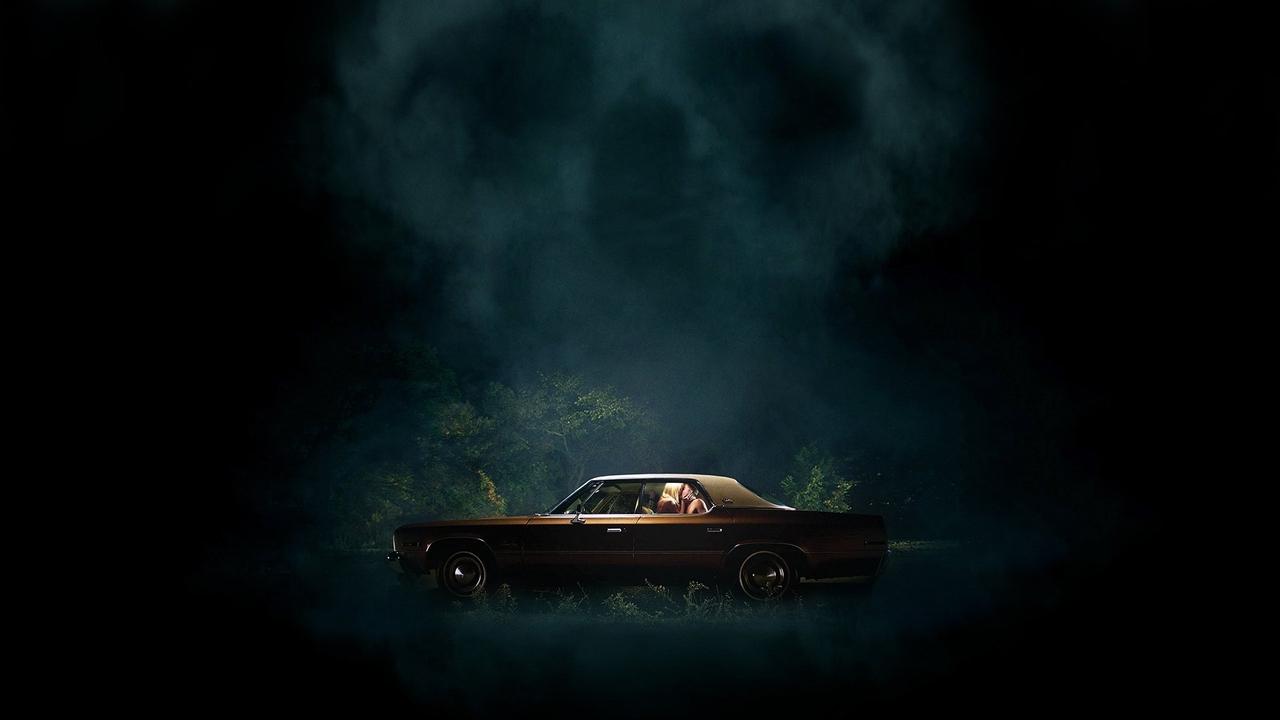
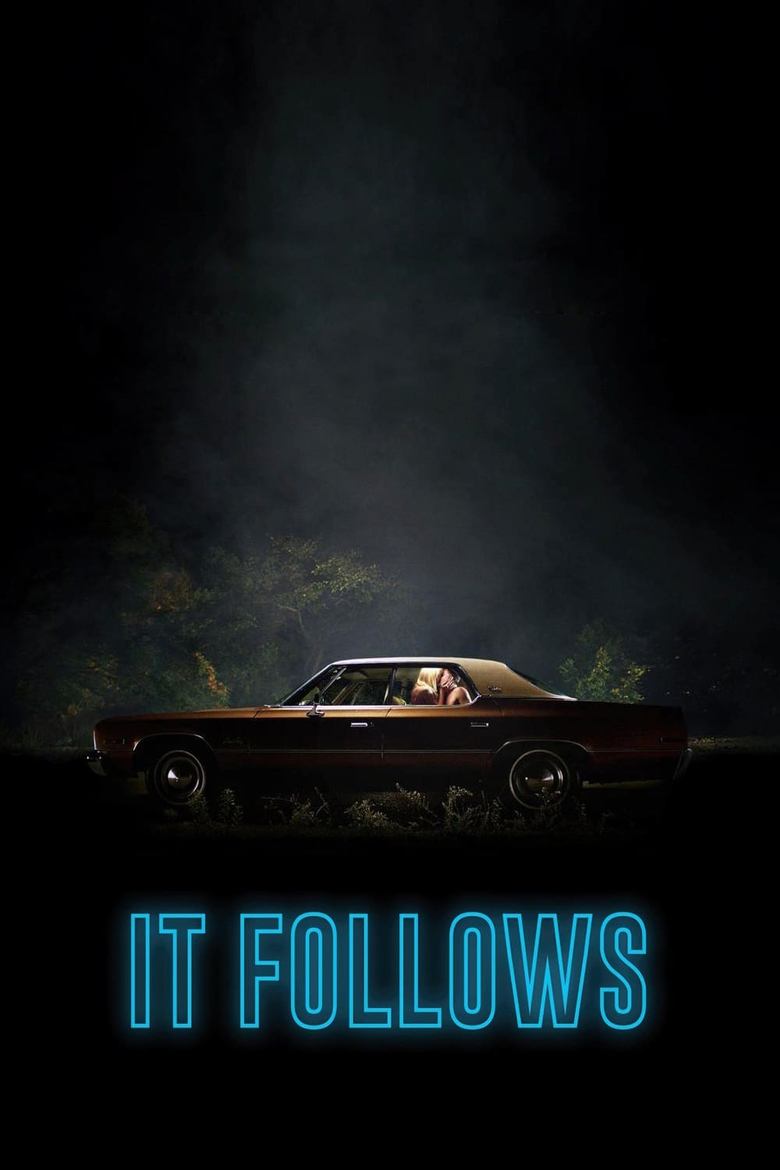
It Follows
“It doesn't think. It doesn't feel. It doesn't give up.”
A young woman is followed by an unknown supernatural force after a sexual encounter.
About It Follows
Why It Follows still works
It opens with someone who looks okay but is not: Annie Marshall bolts from her house, insists she doesn’t need help, even gets in her car and drives away. That’s not just a chilling image — it’s the film planting its central unease early. You watch people behave normally while something quietly unravels beneath the surface.
David Robert Mitchell built a 100-minute film that wears its genre plainly — supernatural and psychological horror — and then tightens around a small group of people. The cast list reads like a neighbourhood: Jay Height, her sister, friends, a neighbour and a boyfriend who brings more than heartbreak to the car.
Because the movie trusts its premise and its people, it keeps you close. Maika Monroe’s Jay is the person the story follows; the film’s world is compact enough that when safety breaks — at home, at a lake house, in hospital corridors — it matters. That economy is why it still lingers.
The idea that sets It Follows in motion
The engine of the film is deceptively simple: after sex in his car, Jay wakes up bound and told she has been given something that will be pursuing her. The method of transfer is intimate; the consequence is public and inescapable.
What she's told is the awful rule: an entity will follow her at a walking pace, always knowing where she is, and only those who have been touched by it can see it. It’s not fast. It is patient.
Jeff — the man who explains this — makes the awful practical point: the only practical way to stop it from killing you is to pass it on through sex. He even recommends that Jay put distance between herself and the immediate danger to buy thinking time.
That tidy premise works because it converts a private act into a durable, external peril. The mechanics are simple; the moral and emotional complications are where the story lives.
Why Jay Height matters
Maika Monroe plays Jay Height, and the film is arranged so that you stay with her choices — small, panicked, stubborn decisions that feel human. She begins as a carefree college student who goes to a movie with her boyfriend; by necessity she becomes the person everyone else orbits around.
Jay’s life is rooted in domestic overlaps: her sister Kelly, friends who crash at her place, even a neighbour called Greg who becomes both helper and liability. The danger to Jay is not only supernatural; it invades the ordinary spaces where family and friends gather.
That ordinary circle is tested repeatedly. Greg drives Jay, Kelly, Yara and Paul to a lake house to get some distance; plans break down, loyalties fray, and the threat takes on the faces of people in Jay’s life. At a crucial moment she even runs into a house to find the entity posing as a familiar domestic figure, with fatal consequences.
Importantly, the story keeps asking Jay to make intimate choices under pressure — including decisions at a hospital, in a car and in a swimming pool — so the character matters not because of one heroic beat but because the movie consistently asks her what she will do next.
It Follows has more on its mind than the plot suggests
On the surface you have a stalking supernatural menace. Underneath, the film keeps returning to family: sisters, mothers, neighbours — the familiar people whose presence usually promises safety.
Home and safety are fragile here. The group hides out at Jay’s house, things break in, and even a lakeside getaway — driven to by Greg — becomes a place where normal rules collapse. The film makes domestic spaces feel unexpectedly vulnerable.
Freedom is another quietly repeated idea. The mechanism for survival forces choices about liberty and responsibility: passing the thing on is an act that trades your freedom for someone else’s safety. That tension is why the premise is not only scary but ethically sticky.
And friendship is central: it’s Jay’s friends who stay with her, who drive, who plan and who sometimes fail. The closeness between them is what makes the horror personal rather than abstract.
It Follows could not belong to any other decade
It Follows arrived in 2015, squarely inside the 2010s. That matters because the decade was a place where small, idea-driven horrors found room to breathe inside studios and festivals alike.
The movie wears its decade without being a nostalgia exercise: it’s a compact, contemporary parable about relationships and consequences, and the timing of its release helped it sit alongside other 2010s films that favoured concept and atmosphere over spectacle.
In short, it’s very much a 2010s movie — born of that moment’s appetite for lean, modern horror that keeps its focus on a handful of characters and a single, unsettling idea.
What has aged — and what hasn't
The film’s concerns about family, home and friendship remain legible. The way the story forces a group of ordinary people into extraordinary moral tests — driving to find a man’s real identity, sheltering at a lake house, arguing over whether to accept the risk — still rings true.
Certain plot choices feel stubbornly modern: the fact that they locate Hugh’s real name and home, for example, and try practical countermeasures, shows the story relying on interpersonal resourcefulness rather than tech clichés. Those beats age well because they keep the conflict human-sized.
The moments where loyalty and refusal collide also retain force. Paul asking Jay to pass it to him and her refusal is still a sharp moral moment; it’s small, awkward and devastating in a way that fashion and effects couldn’t change.
Overall, the film’s interest in everyday relationships — not spectacle — is what keeps it working for a modern audience.
Why It Follows still matters
There are images from the film that lodge in your head: a girl in a yellow dress glimpsed at a cinema; a woman who swears she’s fine before walking out into the night; a corpse found on a beach. These moments aren’t showy — they’re quietly uncanny, and they stick.
The premise itself — a transmissible, slow-moving menace that only some can see — rewires ordinary courtesy into paranoia. Early scenes make this explicit: a naked woman used as proof, police who can’t find the perpetrators, an old woman walking across campus that only Jay notices. It’s the sort of idea that keeps conversations going long after the film ends.
People remember the bleak moral knots: Jeff explaining the rules after tying Jay to a wheelchair, the improvised plans at a lake house that go wrong, and the attempt to kill the thing in a swimming pool that ends in blood and uncertainty. Those sequences pack vivid beats without needing explanation.
And the final, small tableau — two people walking hand in hand while a distant figure follows — is the kind of image that makes the film linger in the mind. It Follows matters because it turned a single, eerie idea into a dozen scenes that feel like missed chances for safety.
Does It Follows still hold up?
Yes. It Follows is short, clear and stubbornly specific: a 100-minute film from 2015 that trusts a single creepy idea and builds human consequences around it. From Annie’s mysterious departure to the moment Jay learns what she’s been given, the pieces connect without padding.
The scenes that matter — a first sexual encounter that results in a chloroform blackout, the mechanic of an entity that moves at a steady walking pace, a group driven to a lakeside plan by a neighbour — still play as tense and affecting. The film doesn’t need to shout to make you uneasy.
What keeps it watchable today is its focus on people and choices: Jay’s refusal when Paul asks her to pass the burden on, the improvised, wildly human attempts to fight back in a pool, the small moments of domestic ruin — smashed windows, a murdered neighbour — that make the threat feel real.
If you’re deciding whether to watch it now, think of it as a compact, modern horror that quietly turns ordinary lives into a slow, stalking dread. It still follows, and that’s exactly the point.