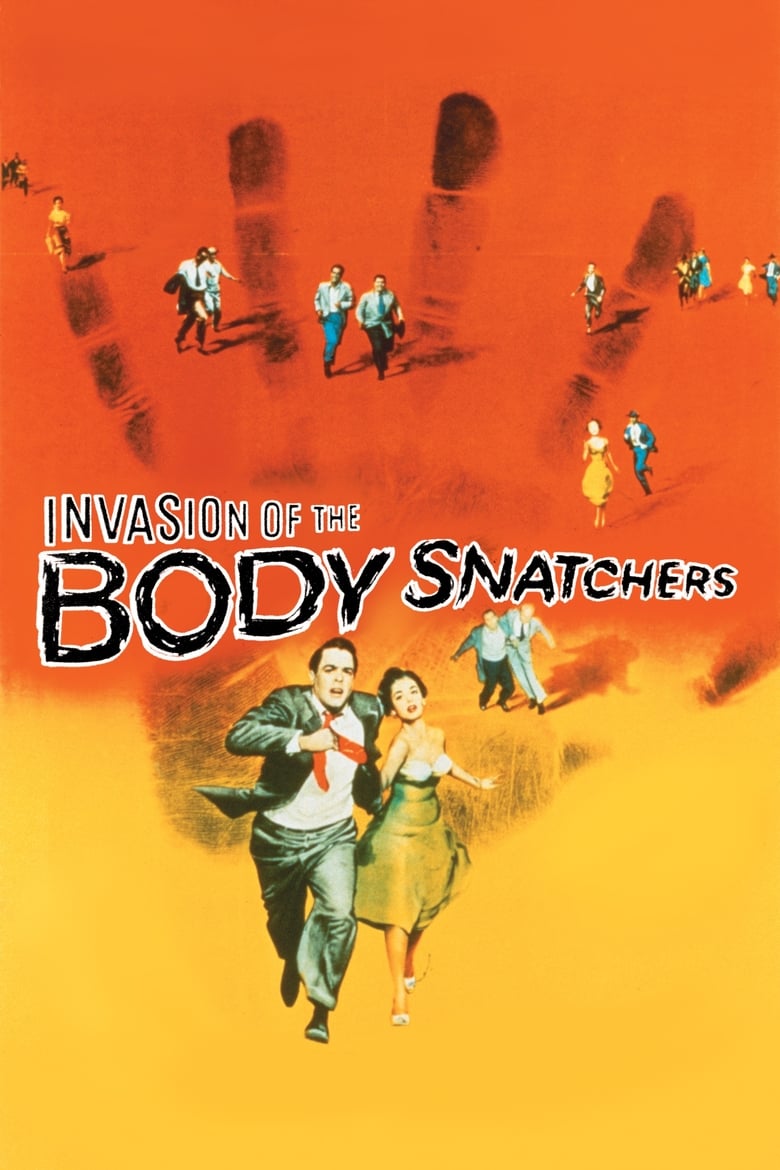
Invasion of the Body Snatchers
“There was nothing to hold onto - except each other.”
A small-town doctor learns that the population of his community is being replaced by emotionless alien duplicates.
About Invasion of the Body Snatchers
What makes Invasion of the Body Snatchers worth revisiting
There’s no slow-burn prologue in Invasion of the Body Snatchers — the film opens with consequence. A psychiatrist, Dr. Hill, is summoned to a Los Angeles hospital where Dr. Miles Bennell is being held in custody, and Miles proceeds to tell the story that follows. That framing gives the whole film a breathless, bedside urgency: this is an account being handed over because something very ordinary has gone wrong.
Don Siegel directs, and he keeps the running time brisk — the movie gets through its ideas in around eighty minutes. That compactness is part of its personality: it doesn’t linger on atmosphere for the sake of atmosphere, it moves from one unnerving discovery to the next.
What still lingers after the credits is not a single scene but the basic proposition: a town’s inhabitants are replaced by exact-looking doubles, and when the dust settles the replacements promise a world stripped of feeling and individuality. That combination of small-town intimacy and large-scale erasure is why people keep coming back to it.
The idea that sets Invasion of the Body Snatchers in motion
At its core the movie rests on a perfectly tidy what-if: what if the people you love were quietly swapped for replicas who look right but don’t feel anything? That loss of emotion and individuality is stated plainly as the consequence of the invasion, so the audience isn’t left guessing the stakes.
The story keeps everything grounded through relationships. Miles’s ex‑girlfriend Becky has returned to town after a divorce and they rekindle their connection, which makes the threat personal rather than abstract. When a friend discovers a featureless body that later takes on his face, the film slides from oddity into a proper emergency.
Those small, domestic ruptures — a basement discovered to contain something impossible, a familiar face that isn’t itself — are what push the narrative. The movie then ratchets tension by making the spread procedural and civic: truckloads of seeds, phone lines cut, towns to be planted. The set-up works because intimacy and invasion march together.
Why Dr. Miles Bennell matters
Dr. Miles Bennell is the film’s point of contact with the madness. We first meet him after things have gone badly enough that a psychiatrist has to interrogate his truthfulness, which frames Miles as someone who saw the unthinkable and tried to stop it.
His ties to the town make the threat feel immediate. Becky, who has come back after a divorce, and his friend Jack are part of his life; those familiar relationships mean the danger is not an abstract headline but a deterioration of home life and family.
Miles’s work as a doctor also gives him the pragmatic approach the story needs: he investigates basements, calls colleagues, and keeps searching when others would shrug at hysteria. That persistence — the man following evidence even when everyone else doubts him — is why the plot stays on course.
Finally, the couple’s personal bond with Becky raises the emotional stakes. When Miles discovers a duplicate of someone he cares about, the invasion stops being a town problem and becomes a personal loss to be resisted.
Invasion of the Body Snatchers has more on its mind than the plot suggests
On the surface it’s a neat science-fiction hook: alien seeds, pods, doubles. Underneath that the film is quietly built around love, family and what makes us human. The tragedy isn’t merely that people are replaced — it’s that feeling itself is being edited out.
That’s why scenes that show intimate relationships matter more than wide shots of trucks. When characters like Becky and Jack are put at risk, the audience understands the invasion as an assault on domestic life. Love becomes the proof of personhood: a scream, a kiss, a flinch that says, ‘I am here.’
There’s a clear moral register to the threat. If the invaders succeed, the world is left with replicas who have none of the messy, inconvenient feelings that knit families together. The film makes you care about those messy moments, which is why a single human reaction — Becky’s scream at a near accident — carries outsized weight.
Invasion of the Body Snatchers could not belong to any other decade
Released in 1956, Invasion of the Body Snatchers sits squarely in the mid‑fifties imagination. That year matters because the film trades on anxieties about sameness and community — fears that map neatly onto the decade’s preoccupations.
The movie reads like a fable of the time: small-town life under a subtle, social pressure, and the suggestion that conformity can feel like a slow-moving takeover. Those are concerns that resonate with the 1950s as an era of social conformity and civic suspicion, and the film wears that connection plainly.
Because it’s so tied to its moment, the picture also gains a kind of clarity. It doesn’t try to be coy about what it’s describing; instead it uses the decade’s anxieties as fuel, turning them into a crisply staged neighbourhood emergency.
What has aged — and what hasn't
Some elements feel timeless: the compact plotting, the way the story keeps returning to family connections, and the central fear that the people you love might become strangers. Those are still effective because they’re simple human beats rather than era-bound spectacle.
Specific plot devices — basements, duplicates being found, a doctor chasing an explanation — also survive because they’re literal and consequential. When Miles finds a duplicate of Becky, that remains a gutting moment; it’s the personal loss that anchors the film.
What can feel dated is the vocabulary the movie uses to get to these fears. But even if a few social assumptions are of their time, the narrative’s insistence on human reactions — the small noises and mistakes that prove someone is alive — still lands.
Overall, the film’s emphasis on family and intimate relationships is the clearest reason it still plays: the invasion matters because it steals people rather than taking territory.
Why Invasion of the Body Snatchers still matters
People remember the film because it slots an almost parable-like premise into domestic life and keeps the focus on ordinary relationships. The movie starts with Miles in custody telling the story, which helps it read like a cautionary tale handed between generations.
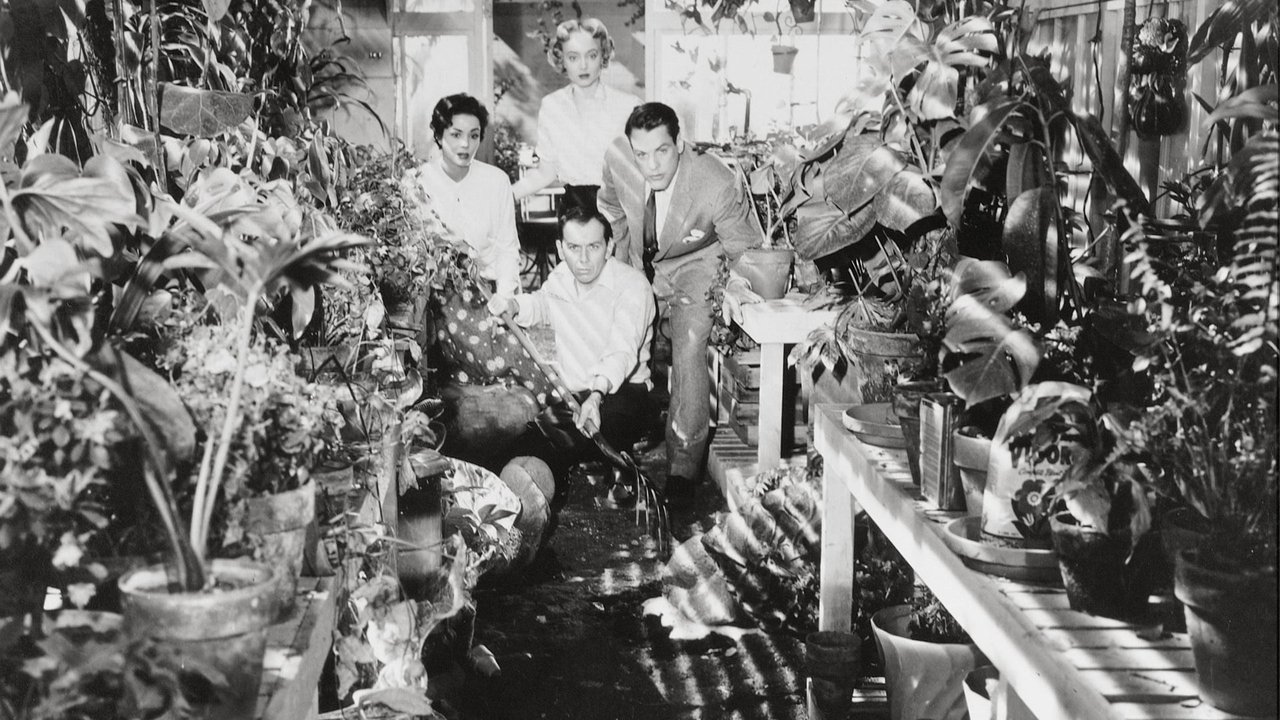
Those domestic beats recur throughout: neighbours who insist their relatives are fine, a friend who finds a featureless body, duplicates emerging from pods in a greenhouse. These are memorable set-pieces because they attach the uncanny to familiar places and people.
The escalation — truckloads of pods arriving, a civic response that includes police and the eventual involvement of higher authorities — gives the film a sense of scale without abandoning the personal. The fact that Dr. Hill only believes Miles after a confirming detail ties the paranoid to the factual, which keeps the tension honest.
In short: the film’s staying power comes from its refusal to make the invasion only about spectacle. It keeps returning to the human consequences — a decision that makes it stick in the imagination long after a viewing.
Does Invasion of the Body Snatchers still hold up?
Yes — but with a small rider. The movie’s economy, its focus on family and love as what the invaders erase, and the relentless plotting that takes Miles from alarm to desperate action still make it compelling. Starting with a man in custody and a doctor wanting answers gives the film an urgent spine that hasn’t gone stale.
It helps that the threat is clear: these replacements promise a world without emotion or individuality, which is a blunt and effective way to dramatise what’s being lost. Scenes where duplicates are discovered, where truckloads of pods roll into town, and where Becky’s humanity slips through — those beats still land because they’re about people, not just an abstract menace.
If you’re short on time, the film’s eighty-minute running time is an advantage: it doesn’t overstay its welcome. And while some period assumptions show their age, they don’t hollow out the central argument — that love and family are worth defending against any force that would smooth them away.
So yes: watch it. It’s a tight little nightmare about losing what makes someone a someone, told without fuss. And it leaves you with an image that’s simple and stubborn: a town where the most dangerous thing isn’t the invader, but the silence that follows when feeling disappears.