Insidious
“It's not the house that's haunted.”
A family discovers that dark spirits have invaded their home after their son inexplicably falls into an endless sleep. When they reach out to a professional for help, they learn things are a lot more personal than they thought.
About Insidious
What Insidious gets right
There’s something neat about a horror film that opens by installing a family in a house and then sets about making that arrangement look foolish. Insidious begins with Josh and Renai Lambert moving in with their children; that ordinary domestic fact is the first lie the movie pulls off — because nothing ordinary survives long.
James Wan directs with a tight economy: 102 minutes, steady forward motion, and a simple set of threats. The story’s central quiver — a small boy whose sleep becomes a portal — lets the film shift from creaks in the night to a much stranger geometry of danger without ever losing its grip on the family at the centre. Renai (played by Rose Byrne) is the film’s emotional barometer and Ty Simpkins’s Dalton is the reason the family starts to unravel. The movie also introduces an older tradition of ghost-hunting through Lin Shaye’s psychic Elise, and that collision — everyday parenting meeting old-fashioned supernatural belief — is where Insidious finds most of its personality.
The idea that sets Insidious in motion
At its simplest: a young boy, Dalton, sneaks into the attic, takes a fall and then — a day later — slips inexplicably into a coma. That single beat gives the film its push. The ordinary parental panic (doctor visits, questions that have no answers) is what makes the supernatural intrusion feel plausible.
Three months pass with no improvement, and the family bring Dalton home from hospital. Getting him back into the domestic sphere seems like a hopeful reset — and the movie uses that hope to cruel effect, turning the familiar routines of a household into opportunities for unease.
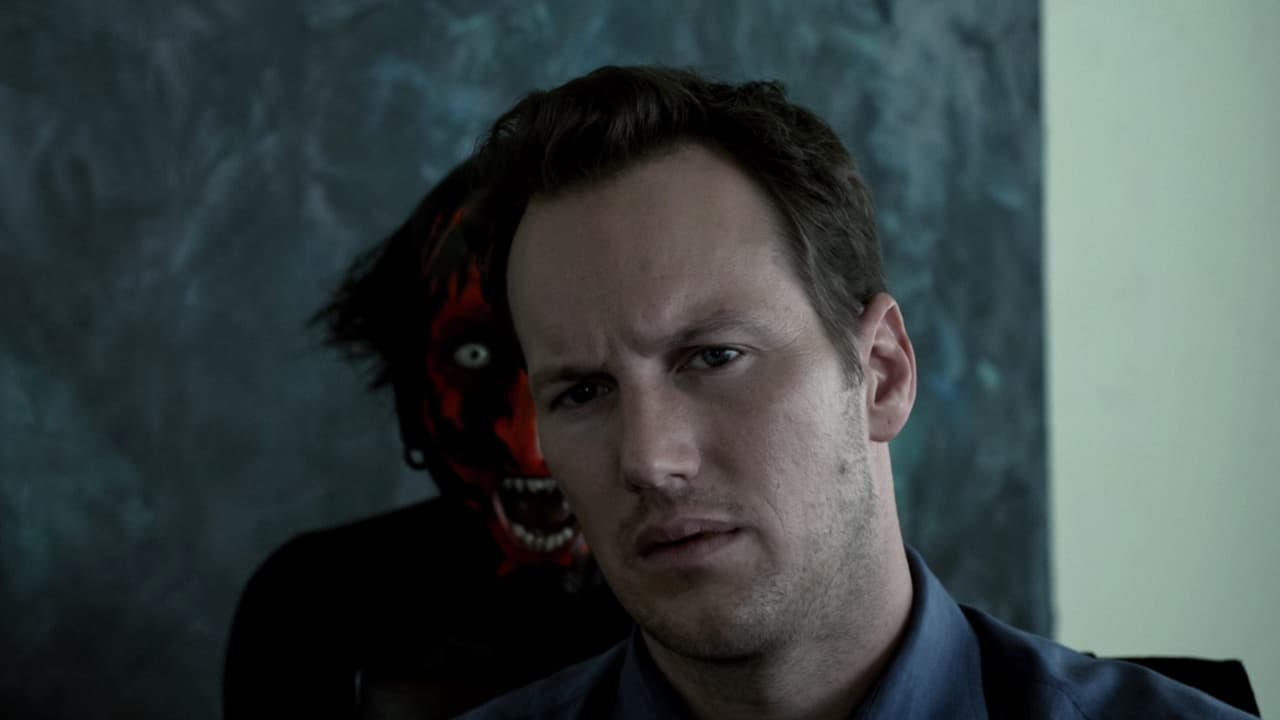
Renai starts to encounter things that don’t make sense: noises, alarms tripping on their own, and later, a fiendish apparition. The couple try the sensible option — moving house — and the sensible option doesn’t help. That refusal to let ordinary fixes stick is what keeps the tension honest.
The twist that reframes the problem is Elise’s explanation: Dalton isn’t medically comatose so much as he has been travelling with his consciousness. Josh, it turns out, has the same ability. That idea — sleep as a door, not a refuge — provides a clean, spooky engine for the rest of the story.
Why Renai Lambert matters
Renai is the family member who carries doubt for all of them. She arrives as the ordinary parent — moved house, juggling children — and the film lets her reactions define what the audience should be allowed to feel. When the house stops behaving like a home, it’s through Renai’s eyes we measure how far things have gone wrong.
Her life is tethered to the domestic facts: a husband, two sons and an infant daughter. That ordinary list matters because it raises the stakes without shouting. The threat isn’t some abstract cosmic horror; it’s aimed at mealtimes, bedrooms and the little rituals that keep a family together.
The early domestic scares — alarms tripping, noises at night — are the sorts of details that convert Renai’s reasonable fear into the movie’s forward motion. Her decisions — to move, to involve others — drive the plot and keep the narrative rooted in parental responsibility rather than abstract heroics.
In the final balance the film allows itself a brief, fragile victory the family can celebrate. That emotional arc — from ordinary life to disbelief to desperate action and, briefly, relief — is why Renai functions as the character the movie trusts to carry its moral weight.
Insidious has more on its mind than the plot suggests
At face value this is a supernatural story — but beneath the jump scares it’s a movie about family and the brittle feeling of safety. The household is the unit the film believes in, and every spectral event is measured by how it threatens that unit.
The film trades on two related anxieties: that belief (or scepticism) about the supernatural matters to how you respond, and that parental protection can feel helpless against certain kinds of danger. The family’s decisions are framed by love and a limited toolkit; it’s a persuasive way to keep the audience invested.
Mortality and fear are threaded through the narrative quietly. The idea that sleep can carry you away reframes something we all take for granted as perilous — and the film uses that to make ordinary life feel unexpectedly fragile. Finally, the movie leans into the old versus new of supernatural belief. A séance goes wrong, and veteran psychics step in, reminding us that this isn’t a problem best solved with logic alone. Insidious treats belief — in ghosts, in help, in one another — as a practical resource, not mere superstition.
Insidious could not belong to any other decade
Released in 2011, Insidious arrived at a moment when horror was quietly shifting gears: audiences wanted scares that respected classic ghost-story ingredients but also felt modernly intimate. Wan’s film wears that blend plainly — it’s both a family drama and a supernatural puzzle.
That intersection is visible in the film’s use of older psychic tropes. A séance goes catastrophically wrong, and then a veteran psychic appears with a practical history connecting to the family. That mix — modern domesticity encountering older, folkloric methods — is very much of the 2010s appetite for hybrid horror.
The decade liked its scares economical and psychologically neat. Insidious keeps its runtime tight and its ideas direct, which is part of why it reads like a 2011 movie more than a costume piece or period shocker.
In short: Insidious belongs to the 2010s because it marries contemporary family stakes to longstanding supernatural machinery, using each to amplify the other.
What has aged — and what hasn't
The central domestic stakes — a family caring for a child returned from hospital after three months — remain effective. Those facts keep the story emotionally legible today: the choices parents make when an inexplicable harm arrives still feel urgent and real.
Small touches continue to land: home alarms tripping by themselves, a bloody handprint on a child’s bed, a sibling swearing he’s seen the comatose boy walking the house. Those beats convert the ordinary into the alarming and have aged without needing fresh context.
The film’s commitment to belief — to calling in psychics, to treating astral projection as a workable plot device — still feels sturdy rather than gimmicky. The sequence where the family briefly believes they’ve beaten the nightmare also preserves a certain emotional payoff that modern viewers can still buy into.
What hasn’t aged poorly is the movie’s insistence on keeping terror personal. It’s not trying to impress with scale; it’s trying to unsettle you in the places you sleep. That simplicity is a strength when you rewatch it now.
Why Insidious still matters
People remember Insidious because it binds a handful of striking images to a very human worry. Dalton’s attic encounter and the subsequent coma are simple, replicable hooks: they’re the kind of moment that lodges in the memory and keeps conversation alive.
The film also clarifies its own rules — the idea that Dalton can astral project, and that spirits can use an empty body — which gives even its weirdest moments a logic you can follow. That clarity helps viewers invest in the rescue as something more than a string of jump scares.
There’s a recognisable cast of roles that the story leans on: Lorraine calling for help, Elise’s practical explanation, and a small team of investigators who treat the situation like a job. Those pieces combine to make the film feel like a complete, self-contained odd little world. Finally, the late revelation that danger has slipped back into the family after a presumed victory gives the ending teeth. It’s the sort of final note that turns relief into dread — and that kind of emotional about-face is the sort of thing people keep talking about.
Does Insidious still hold up?
Yes — if what you want from a haunted-house film is a tight, focused story where family matters more than spectacle. Insidious is economical (102 minutes) and keeps the problem specific: a boy who fell into the attic, who then slips into a coma. That specificity is an asset rather than a limitation.
It still works because the scares are tied to relationships. Renai’s fear, the sight of a long-haired apparition, a bloody handprint and Foster insisting he’s seen Dalton walking the house all make the threat feel domestic and immediate. Those are the sorts of things that make a viewer check their own bedroom.
The film also benefits from leaving some mysteries framed rather than exhaustively explained: the idea that sleep can be a doorway, and that Josh has a buried history with these spirits, gives the story a psychological knot to chew on. It’s a neat blend of parenting drama and supernatural puzzle.
So if you’re choosing a rewatch, Insidious still does what it set out to do: it turns the ordinary home into a place that can’t be trusted, and it gets you to care about the family while it does. That’s not a small trick for a modern horror.