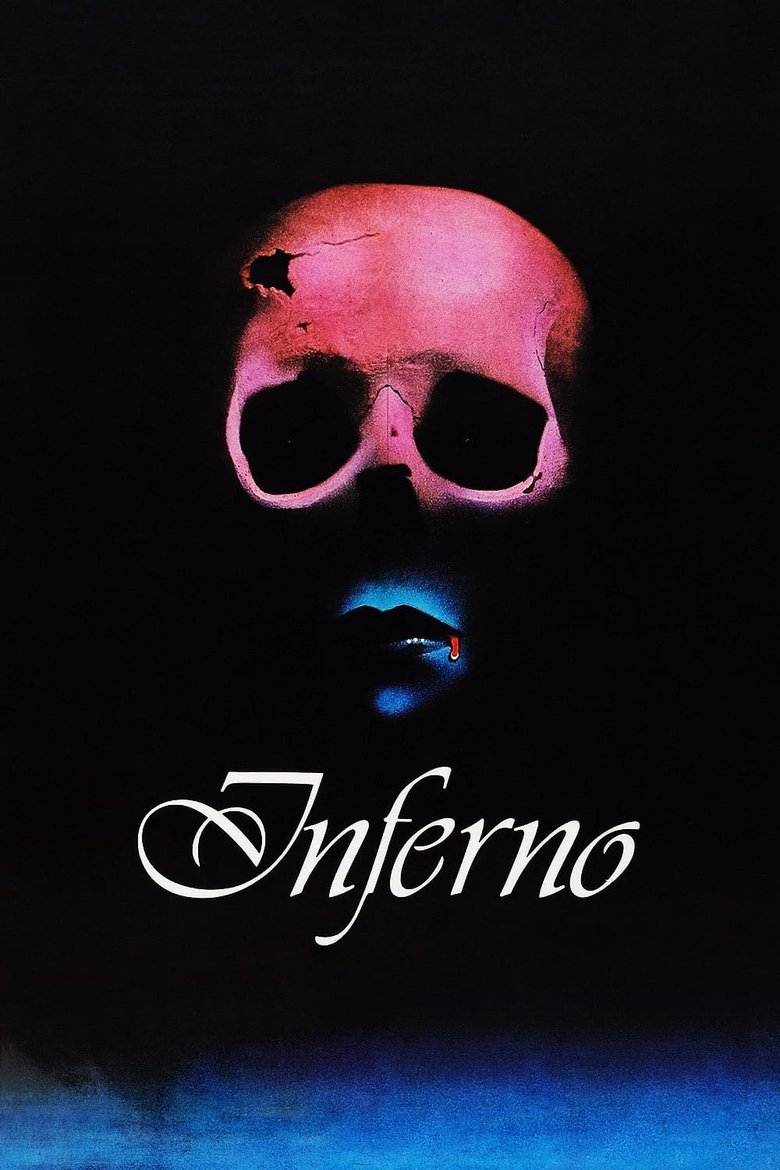
Inferno
“Come face to face with Hell.”
A young man returns from Rome to his sister's satanic New York apartment house.
About Inferno
What Inferno gets right
Inferno is the kind of film that prefers dread to exposition: a poet finds a strange book about three terrible sisters, and the rest of the film is essentially what happens when curiosity collides with ancient malice. That initial discovery sets up a simple—yet stubbornly gripping—engine that propels the story forward.
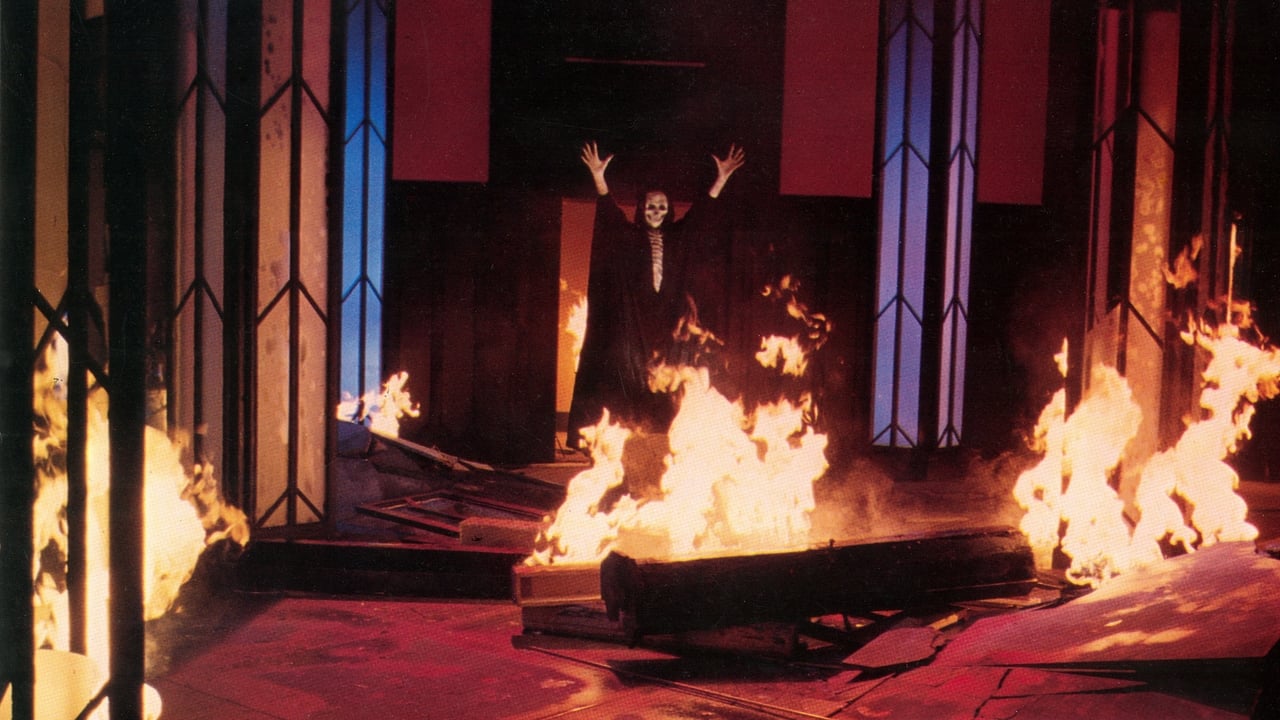
Dario Argento directed the film and keeps it compact: 107 minutes that rarely sit still. At its centre is Mark Elliott, the brother who travels from Rome to New York to follow a clue; the family link is small but it gives the film something human to hang its scares on. There are supernatural rules hiding beneath the splatter and shocks—three mothers who rule by sorrow, tears and darkness, each imagined as a residence—and Argento’s choice to make the threat domestic (a building, a letter, a sibling) is what makes Inferno feel personal rather than simply grotesque.
The idea that sets Inferno in motion
At heart, Inferno runs on a tidy hook: a book that names three malign sisters and the idea that one of their houses might be the very building where someone you know lives. That suspicion—Rose writing to her brother, Mark—turns an abstract myth into a practical problem: who do you tell, and who will come?
From that small human action the film broadens into a chain of unnerving encounters. A routine domestic mishap—keys dropped into a flooded cellar—becomes a full-on moment of panic when something rises from the water. It’s a neat trick: everyday life is interrupted and the interruption refuses to explain itself.
Back in Rome, Mark is played into the story as the natural investigator: distracted in class, pulled away and then dragged into the mystery by the fragmentary evidence left behind. Others pick up those fragments—Sara reads the letter, borrows the book—and the narrative becomes an almost archaeological search through a building’s hidden spaces.
The set-up works because the stakes are both mythic and immediate. Mark’s arrival in New York drops him into a building of strangers—concierge, a mute elderly professor, neighbours—and those domestic presences make the gradual accumulation of strange deaths feel particularly unsettling.
Why Mark Elliott matters
Mark matters because he’s the film’s practical hinge. Played by Leigh McCloskey, he’s the sibling who moves from curiosity to action—Rome to New York—because a family member asked him to. That family connection stops the story being a gallery of effects and makes it about someone trying to rescue what’s left of a home life.
He isn’t a detective by trade; he’s a music student who gets dragged into a situation beyond him. That mismatch—ordinary person, extraordinary circumstances—keeps the tension honest. He follows trails of blood, fragments of letter and rumours, and the picture of him falling ill and losing his footing reminds you that he’s fragile in precisely the ways the horror exploits.
Mark’s searches are also how we learn the rules. He visits the dealer who sold Rose the book, pushes into secret crawl spaces beneath the building, and eventually confronts the professor who turns out to be more than he seems. The character’s curiosity and loyalty to his sister are the emotional glue the film needs.
Put simply: he’s not a heroic architect who can outthink ancient evil; he’s a brother, which matters because Inferno’s threats are aimed at family, at home and at the everyday places you assume are safe.
Inferno has more on its mind than the plot suggests
Beneath the gore and the monstrous reveals, Inferno keeps returning to questions about endings. Mortality and lifespan are threaded through the story: the threat isn’t merely physical injury but the sense that life can be carved away, room by room.
Loss is personal here. The book’s prophecy and the sisters’ reach turn ordinary attachments—siblings, neighbours, a building—into precarious things. The result is a horror that feels like bereavement in slow motion: small, terrible removals one after another.
There’s also an argument about freedom. Characters believe their homes are refuge; the film systematically breaks that assumption, teasing the idea that safety may be structural rather than emotional, and that architecture can harbour histories you didn’t ask for. And because family is the motive that sends Mark across an ocean, Inferno frames all its supernatural business through human ties. The sisters might be cosmic, but they act on a map of relationships: someone’s missing, someone’s erased, someone’s trying to hold on.
Inferno could not belong to any other decade
Inferno arrived at the start of 1980, which matters because it sits on the seam between late-1970s gothic impulses and the 1980s’ appetite for visceral horror. Its release year places it where those two impulses were still talking to each other.
There’s something about the film’s appetite for a contained, building-centred terror that feels of its moment—horror that wants to move from private spaces into public nightmares. Being released in 1980 means it’s part of that early-decade conversation rather than a later trend-chasing piece.
So while you can certainly watch it as a standalone oddity, its timing helps explain why it blends the eerie with the explicit: it’s from the moment when genre cinema was happy to be both strange and bloody.
What has aged — and what hasn't
The part of Inferno that still lands is its domestic terror. A poet finds a dangerous book, writes to a brother, and that small, believable act—two family members trying to help each other—still feels immediate. The human circuitry beneath the horror hasn’t dated.
Similarly, the film’s interest in home and safety remains straightforward and effective: an apartment building, neighbours, a concierge and a silent professor create a believable ecosystem for dread, and that kind of neighbourhood-focused fear translates well to modern housesitting anxieties.
On the other hand, some of the film’s more elaborate shocks are of their time in the way they stage escalation rather than in the emotional logic behind them. Moments that once read as sudden now sometimes look like mechanics intended to surprise rather than deepen character.
Still, the central thread—family pulled into danger, a sister’s letter that starts everything—keeps the film watchable. That core relationship is what stops Inferno becoming just a parade of set pieces.
Why Inferno still matters
People remember Inferno because it keeps one foot in myth and the other in the banal. The Three Mothers book is a simple prop, but it gives the film a stubborn idea: that ancient, named evils can have postal addresses. That mix of grand myth and domestic specificity is oddly memorable.
There are images and set-pieces that lodge themselves in the mind—Rose dropping keys into a flooded cellar and something rising from the water; a string of violent deaths inside a single building—because they take ordinary actions and make them dangerous. Those escalations give viewers something to talk about long after the lights come up.
Characters like Sara, who reads the letter and goes looking for answers, and the antique dealer who sold the book, are the kinds of small moves that add texture. And then there are the reveals—Varelli’s identity and the nurse who turns out to be the Mother of Darkness—that fold the plot back on itself and reward patience. Finally, Inferno endures because it chooses to make horror about places you trust. When a building becomes a locus for grief, tears and darkness, the fright is easier to carry home with you.
Does Inferno still hold up?
Yes — if you’re after a piece of supernatural horror that treats domestic life as the real battleground. It’s not flawless, but the egg at the centre is clean: a poet finds a cursed book, her brother follows the trail and the film spends its 107 minutes turning the ordinary into the uncanny.
Dario Argento’s film asks a compact set of questions about mortality and loss — who survives, who disappears, what we are prepared to lose to keep a roof over our heads — and it mostly pays off by keeping the stakes personal. Leigh McCloskey’s Mark is the reasonable human reaction the story needs, a family link that keeps you invested.
If you watch it for tightly plotted domestic dread, and for the mythic idea that three mothers could be as geolocated as any neighbour, Inferno still has bite. If you expect modern pacing or emotional subtlety everywhere, you might find it of its moment.
But ultimately the film’s final impression is movie-specific: it makes the idea of home feel dangerous again. That’s a simple alarm, and it still rings.