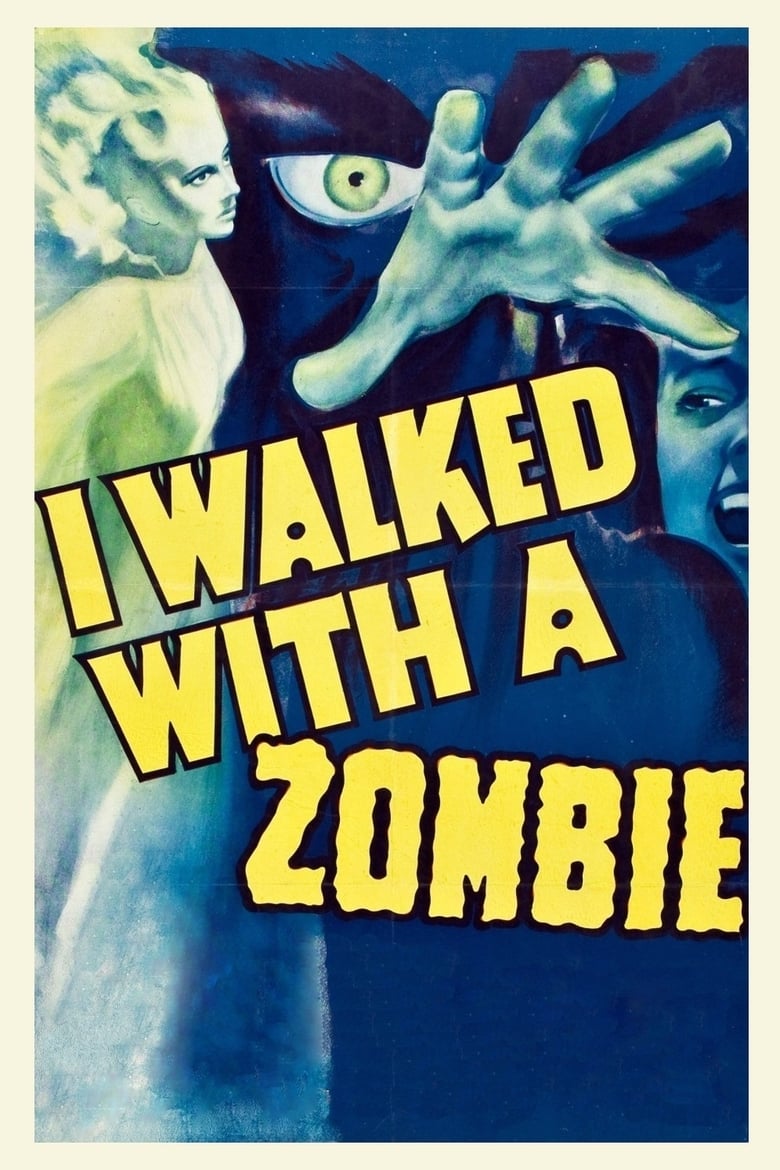
I Walked with a Zombie
“She's alive…yet dead! She's dead…yet alive!”
A nurse in the Caribbean turns to voodoo in hopes of curing her patient, a mindless woman whose husband she's fallen in love with.
About I Walked with a Zombie
Why I Walked with a Zombie is still worth talking about
I Walked with a Zombie opens like a practical crossword clue: a young nurse, Betsy Connell, is interviewed on a snowy Ottawa day to travel south and care for the wife of a sugar-planter. That tidy setup — a sensible outsider parachuted into a household with a secret — is the movie’s engine.
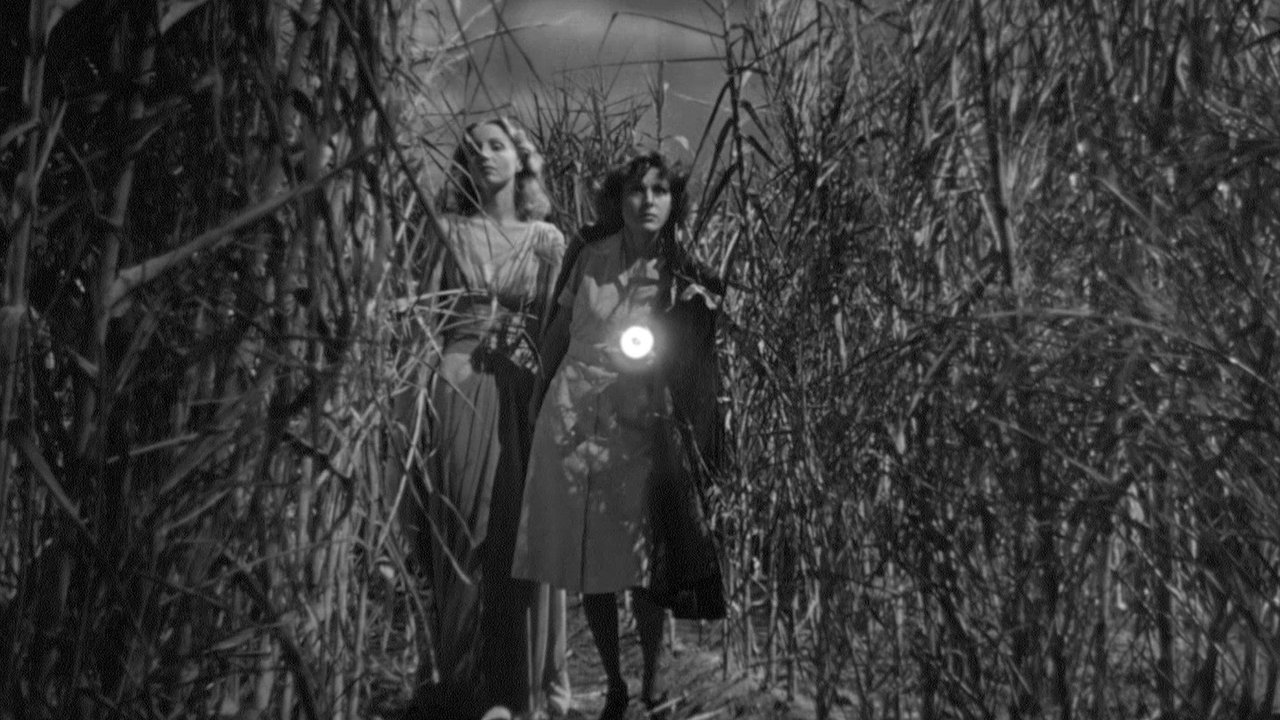
Directed by Jacques Tourneur and clocking in at just over an hour, it trades bombast for accumulation: small, unnerving discoveries, a handful of characters who don’t behave like genre shorthand, and a mood that hangs between domestic drama and something uncomfortably supernatural. Frances Dee’s Betsy sits at the centre, with Tom Conway’s Paul Holland and James Ellison’s resentful half-brother Wesley providing the family heat. And then there’s Carrefour — the slow, strange figure who interrupts the house’s rules and gives the film a memorable, quietly chilling signature image.
The idea that sets I Walked with a Zombie in motion
At its simplest, the film is about an outsider learning the rules of a household where nothing is straightforward. Betsy arrives to care for Jessica, a woman who wanders the grounds mute and without apparent will. The reason for Jessica’s condition is given clinically early on — damage after a tropical fever — but the house’s history and the island’s beliefs complicate that tidy explanation.
Betsy’s impulse is practical: she falls for Paul, and she wants to fix the obvious medical problem. That’s why she persuades him to try a risky insulin shock treatment — a hands-on solution from someone who expects problems to have a remedy.
When medical routes fail, the household is pushed into the island’s spiritual life. Betsy follows the ritual path too, lining up at the houmfort to ask for help from a spirit called Damballa. The scene isn’t spectacle for spectacle’s sake; it forces the house to confront a belief-system it has long tried to keep at bay.
The setup works because stakes are intimate. This is not a town under siege; it is a single plantation, a handful of people, their resentments and regrets. The supernatural elements arrive not to distract but to make those private conflicts louder — and, eventually, irrevocable.
Why Betsy Connell matters
Betsy is our periscope into Fort Holland. We arrive where she arrives: an intelligent, practical nurse who expects problems to be solvable and who laughs off talk of witchcraft as something for the natives. That laugh matters because she’s not unexamined — she’s changeable, and the house asks her to change.
She becomes personally invested in Paul’s affairs. Falling for him is less melodrama than a way into the family’s wounds: curing Jessica, to Betsy, is a way of restoring the household’s order — and of proving that she belongs in it.
Her decisions do real work in the story. Betsy convinces Paul to try a medical procedure, she follows the island’s spiritual route to the houmfort, and when friends urge more drastic measures — even euthanasia — she refuses. Those choices pin the film’s moral weight to a single sensible character who keeps saying no when the easiest action would be to give up.
That steadiness makes her memorable. In a picture where mysteries and rituals swirl, Betsy is the human touchstone: the person who keeps asking practical questions and, in doing so, forces the family’s private resentments into the open.
I Walked with a Zombie has more on its mind than the plot suggests
On paper it’s a horror-fantasy about a possibly undead woman. Under the skin it’s chiefly interested in mortality and what a family does when it can’t fix the damage inside its own walls. Questions of life and death are folded into domestic responsibilities — who gets looked after, who gets hidden away, who is allowed to leave.
Family is the film’s pressure-cooker. Sibling rivalry, shame and parental authority press down on Wesley, Paul and Mrs. Rand in ways that make every small decision feel loaded. The film’s supernatural episodes turn those private pressures into public spectacle.
Home and safety are complicated here. Fort Holland should be sanctuary; instead it contains secrets and rules that protect some people while harming others. Betsy arrives believing she can restore safety by practical means; the house keeps showing her that safety is often a construct that requires sacrifice. Supernatural belief is the lever that tips the household. Whether the island’s rituals are literally true or a force the community uses to exert control, they force the characters to confront freedom — who has it, who is denied it, and what costs come with trying to claim it.
I Walked with a Zombie could not belong to any other decade
I Walked with a Zombie was released in 1943, which places it neatly in the middle of the 1940s moment for compact studio storytelling.
That year matters because the film wears its time on its sleeve: it’s economical, focused and willing to let a small cast carry a strange, atmospheric idea rather than stretching it into something grander.
It’s the kind of picture the decade produced when filmmakers wanted to fold unsettling ideas into tightly constructed dramas — not showmanship for its own sake, but slow-building unease within a domestic frame.
What has aged — and what hasn't
What still matters is the story’s knot of family obligation and that stubborn, practical centre in Betsy. A modern viewer can still feel the tightness between Wesley and Paul — his resentment reads clearly — and that personal tension keeps the film grounded even when the supernatural elements arrive.
Some plot beats play strangely to modern eyes: a woman who does not bleed becomes a public sign that something is uncanny, and the community’s response — murmurs of 'zombie' and ritual tests — can feel both eerie and a little remote from how we talk about illness today.
But the film’s focus on home and safety holds up. When Paul and Betsy try to stop Jessica the first time and later fail, those attempts feel like the only honest responses the household has left; the choices are human and believable rather than purely sensational.
In short: the core conflicts — family, responsibility, the limits of medical vs spiritual remedies — still hit. The film’s specifics may show their age, but its questions about who we protect and why remain direct and uncomfortable.
Why I Walked with a Zombie still matters
People keep returning to this film for the way it mixes an intimate household drama with elements of the uncanny. The nurse arriving from Ottawa, the plantation’s history and the island’s rituals are not decorative: they’re part of how the story stokes unease while still feeling like a family tale.
Mrs. Rand’s revelation — that she has used the houngan’s authority to make islanders accept medical and sanitary advice — gives the film an uncomfortable moral twist. The idea that belief can be wielded for practical ends knots together healthcare, authority and control in a way that still prompts conversation.
Then there’s Carrefour and the ritual moments: moments where the community’s spiritual world acts on the household’s private life. Those beats are what people remember: not raw shocks, but the sense that the house’s rules are porous and that outside forces can push in. Finally, the film’s characters — Betsy, Paul, Wesley, Mrs. Rand and the silent Jessica — are compact and sharply drawn. Their moral decisions and the way they respond to scandal and investigation leave the audience with questions that linger beyond the closing moments.
Does I Walked with a Zombie still hold up?
Yes — if you want a horror picture that behaves more like a domestic mystery than a special-effects parade. It’s a 68-minute, 1943-Christmas-card-of-a-strange-movie: concise, focused and quietly unnerving, with Betsy’s arrival from a snowy Ottawa day functioning as the perfect frame to watch a household unravel.
Don’t expect loud shocks. The film’s power comes from small escalations: the non-bleeding woman who prompts whispers of 'zombie', the houmfort rituals that force private sins into public view, and the slow, tragic decisions that follow when medical attempts fail.
What keeps it watchable now is not novelty but honesty of problem: family tension, responsibility, the question of whether a home is really a safe place. Those are the same knots we recognise today, and the picture’s willingness to let them fester — rather than tidy them up — gives it a steady, unsettling heartbeat.
So watch it. Not for theatrical gore or fast thrills, but for a movie that treats the undead as a way to talk about who’s allowed to be alive, who’s protected and who gets abandoned. That’s as sharp a horror idea now as it was in 1943.