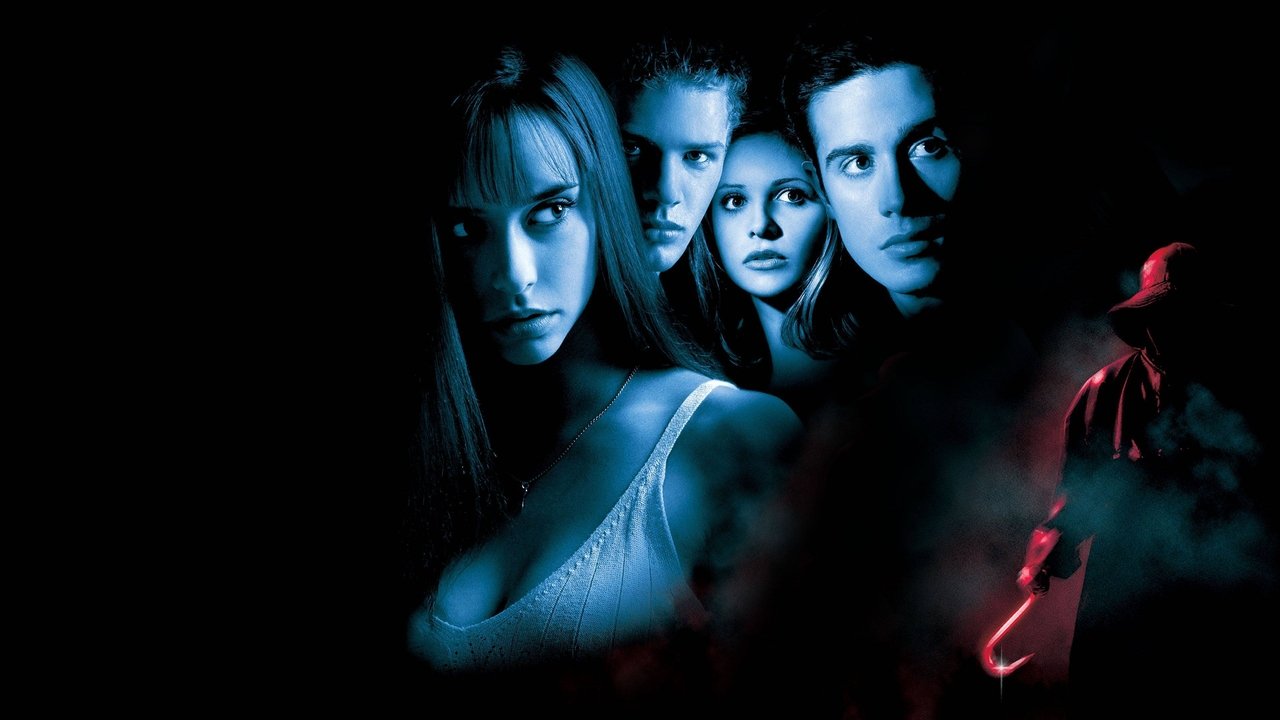

I Know What You Did Last Summer
“If you're going to bury the truth, make sure it stays buried.”
After an accident on a winding road, four teens make the fatal mistake of dumping their victim's body into the sea. Exactly one year later, the deadly secret resurfaces as they're stalked by a hook-handed figure.
About I Know What You Did Last Summer
What I Know What You Did Last Summer gets right
There’s an image that kicks the whole thing off: a celebratory night after a beauty pageant, friends in a car on July 4th, certain they’re young and untouchable. From that moment the film asks a simple question: what happens when a single drunken mistake is given time to fester?
It helps that Jim Gillespie keeps things compact. At just over 100 minutes the film moves with the kind of tidy efficiency slasher audiences expect — quick rises in tension, clear rules, and consequences that arrive sooner or later. The central quartet (including Helen Shivers, played by Sarah Michelle Gellar) feel like people whose lives were literally rerouted by that one night. And then the plot provides the mechanical hook: a letter arrives — I know what you did last summer — and the nice, coastal sleepy-town set-up starts to fray. The story trades cheap shocks for an escalating set of reckonings: friends split, ambition stalls, and the promise of safety at home begins to look fragile.
The idea that sets I Know What You Did Last Summer in motion
At its core the movie runs on a single, economical premise: a late-night accident, a panicked cover-up and a vow to keep quiet. That knot — something young people choose to pretend they can forget — becomes the film’s engine. It’s what turns ordinary paranoia into something sharply suspenseful.
One year on, the situation that felt like a one-off has teeth. Julie returns home from college, lives have stalled, and the arrival of a threatening note turns private dread into shared terror. The film thrives because the threat isn’t abstract; it’s a letter that proves someone knows. That’s a small detail that makes everything feel immediate.
From there the plot funnels into a classic slasher pattern: the friends try to outrun suspicion, clues appear and disappear, and evidence — like a corpse left and then gone again — keeps ratcheting up the stakes. The game isn’t merely who will be found out. It’s whether this wedge in their lives will destroy them.
And finally, the story’s late revelation about who was struck reframes the whole thing. The film smartly uses that discovery to turn guilt into a specific, personal reckoning rather than leaving it as an abstract punishment — which is why the set-up feels less like a trick and more like a moral pressure cooker.
Why Helen Shivers matters
Helen arrives as the kind of character you think you already know: a beauty-pageant winner, celebrated on that July night. But the film keeps nudging her away from being a one-note prop and makes her a useful barometer for the consequences the others try to dodge.
Her connection to family is explicit and painful. When she runs toward her family’s shop in panic, the situation escalates from a scary anonymous threat to a violent invasion of the people closest to her. That turn forces us to see the cost of the friends’ pact in domestic terms — it’s not just their futures at risk, it’s the safety of the people they claim to love.
Helen’s story also refracts the film’s friendship theme. The group’s trauma doesn’t bind them together in a heroic way; it frays their plans, alters ambitions and, ultimately, leaves Helen exposed in the most heartbreaking manner. Her arc reminds the audience that reputation and small-town glory are fragile when measured against real danger.
Put simply: Helen matters because the movie uses her to make its stakes human. She’s the link between a silly summer celebration and the terrible, ordinary consequences that follow — family harmed, friendships broken — and that’s what gives the film a sting it otherwise might have missed.
I Know What You Did Last Summer has more on its mind than the plot suggests
On the surface it’s a slasher: masked figure, a hook, escalating body count. Underneath, the film constantly returns to family — not as a comforting backdrop but as something fragile in constant danger. When violence reaches into Helen’s family business, the threat becomes less theatrical and more domestic.
Mortality is everywhere. The characters’ panic isn’t just about being found out; it’s about the possibility that an instant can end a life and alter everyone connected to it. The movie keeps reminding us that actions have a lifespan of consequences, which is why the group’s attempt to bury the past never feels like a neat narrative device — it’s a moral wound.
Friendship in the film is strained by silence. The pact to never discuss the accident doesn’t protect them; it isolates them. That erosion of trust is one reason the town’s supposed safety — the idea of home as sanctuary — no longer holds. Home becomes a place where danger can walk in uninvited. And loss hums like a low note through the whole film. Whether it’s the loss of innocence after that night on the road or the literal losses the characters suffer, the film is less interested in shock than in how grief and fear change ordinary lives.
I Know What You Did Last Summer could not belong to any other decade
Released in 1997, the film sits at a particular late-90s crossroads: the decade’s appetite for glossy youth-oriented thrillers meets an older appetite for straightforward slasher mechanics. That combination gives it a tone that’s both teen-focused and unashamedly murderous.
The film’s opening — a Fourth of July night after a small-town pageant — feels of its time because it frames youth as celebratory and unthreatened before insisting otherwise. That specific kind of summer-night set-up was a familiar shorthand in 90s genre cinema, and here it’s used to sharpen the contrast between innocence and consequence.
The era also favoured tight, digestible genre pictures. At 100 minutes, this movie keeps to that compact shape: it doesn’t luxuriate in ambiguity and it trusts a tidy, escalating structure to do the heavy lifting.
So while you can’t point at a single 90s fashion detail and say the film owes its charm to it, you can see how it borrows the decade’s storytelling priorities: immediacy, recognisable youth culture situations and a willingness to blend teen melodrama with old-school fear.
What has aged — and what hasn't
A lot of the film’s thematic scaffolding still reads clearly. The concerns about family, friendship and the loss of safety when a secret escapes are timeless; they translate to a contemporary viewer because they’re about how people react when trust breaks.
The idea of returning home from college — Julie’s case — remains a strong way to show dislocation. Coming back to a place that used to feel like yours and finding it quietly altered by fear is still an effective emotional beat.
Where it’s harder to stomach today are the moments that invade private spaces: the police escort murdered, the killer finding its way into family property and Helen’s sister being killed in what should have been a place of refuge. Those invasions cut through the film’s safer surfaces and can feel sharper now, because they turn the idea of home into a vulnerability rather than a sanctuary.
Still, the film’s focus on consequences rather than spectacle helps it survive. The shocks land because they’re attached to people and relationships the movie has set up, not because the script wants a big gore beat. That decision keeps the emotional undercurrent intact when you watch it now.
Why I Know What You Did Last Summer still matters
People remember the movie for handfuls of moments that stick: the anonymous letter, the fisherman’s slicker and the escalating proof that the past won’t stay quiet. Those beats are simple and memorable, which is partly why the film keeps being talked about.
There are also images that crystalised in viewers’ heads — a corpse left in a car trunk, a hair brutally sheared while someone sleeps — details that turn an otherwise conventional thriller into something a bit more unsettling. They’re the moments that make the premise feel personal rather than schematic.
The film’s narrative choices create a lasting emotional ledger. The pact among friends, the way lives stall after that night, and the slow reveals about who was actually struck give the story a sense of real consequence. That weight keeps the picture from becoming merely a collage of shocks. Finally, the ending — a domestic moment upended by one last, chilling note of unfinished business — leaves the audience with a lingering sense that the past refuses to be neatly closed. That aftertaste is part of why the movie still registers decades later.
Does I Know What You Did Last Summer still hold up?
Yes — with qualifications. The film still works when you want a tight, character-rooted slasher that cares about the fallout from one terrible night. The hit-and-run and the pact to hide it are not clever plot contrivances; they’re emotional levers that the film uses to good effect, and Julie returning home for the summer keeps the stakes intimate rather than globe-sized.
It’s also the kind of picture that refuses to let consequences be abstract. From the letter that starts the fear spiral to the domestic horrors that follow, the movie links its scares to relationships: family endangered, friendships buckling, reputations ruined. That moral specificity is why many of its shocks still land.
That said, some of the intrusions into private life — murders in family spaces and the stalking that follows — can feel harsher today. The film’s appetite for turning safety into danger is deliberate, and modern viewers may find those choices unsettling in a way that reduces easy nostalgia.
But if you’re asking whether it’s worth a watch: yes. It’s compact, purposeful and emotionally direct. It remembers that a good slasher works best when it’s not just about a mask, but about the people the mask hunts.